
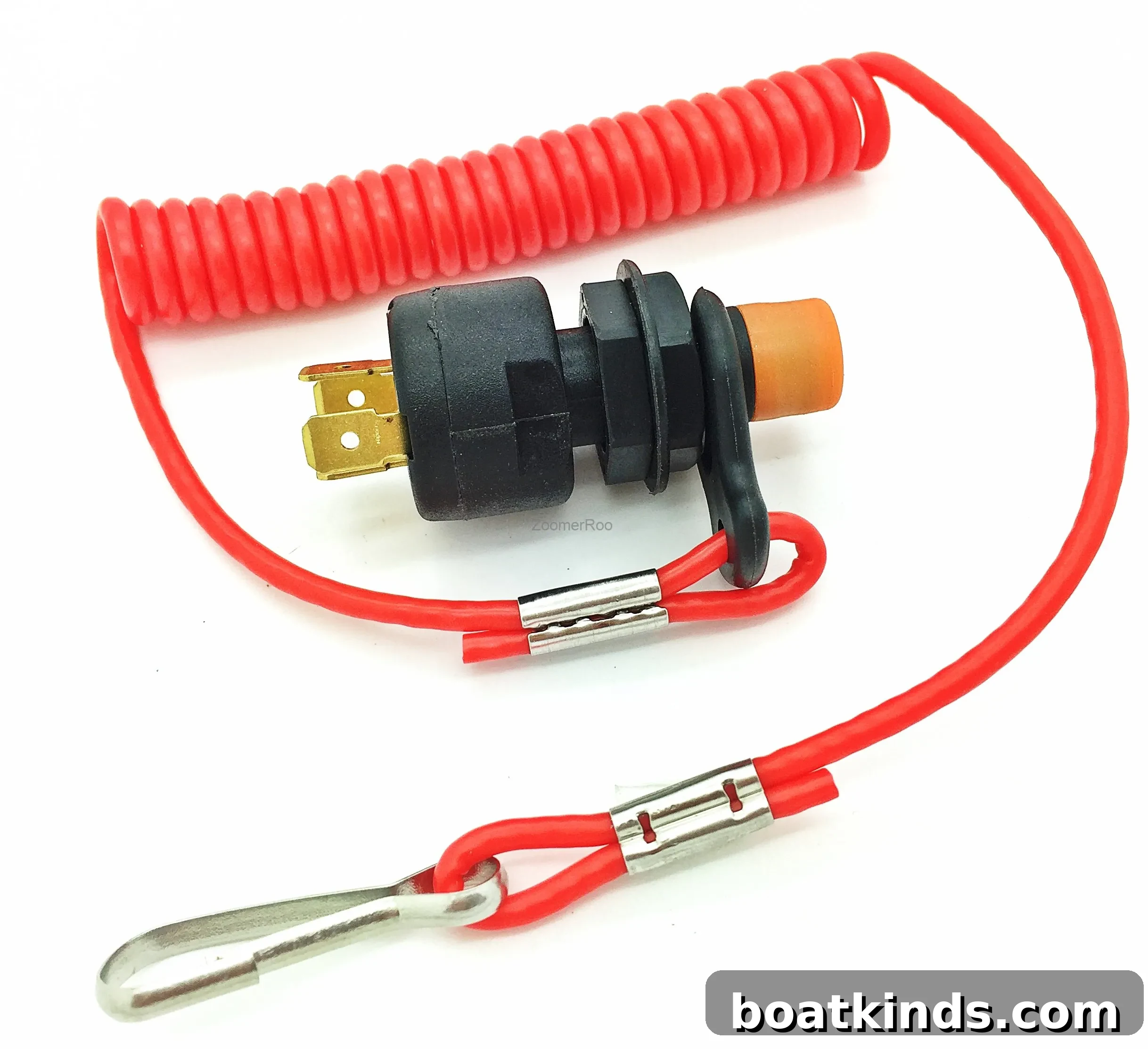
Engine Cut-Off Switch Requirement for Small Recreational Boats
Beginning April 1, 2021, operators of recreational vessels under 26 feet in length are required to use an engine cut-off switch link in certain situations, as the U.S. Coast Guard implements provisions of a 2018 federal law. This requirement is intended to reduce the number of injuries and fatalities that occur when an operator is unexpectedly displaced from the helm and the vessel continues under power.
Why the engine cut-off switch matters
When an operator falls overboard or is ejected from a boat, the vessel can continue in a tight circle due to propeller rotation. This scenario, often called the “circle of death,” can result in the vessel running over the operator or striking other occupants. Using an engine cut-off switch link prevents the engine from continuing to run unattended, stopping propulsion and reducing the risk of a collision with a person in the water.
What is an engine cut-off link?
An engine cut-off link connects the operator to a switch that stops the engine if the operator is displaced from the helm. There are two common types:
- Physical lanyards: A cord or lanyard attaches from the operator to a mechanical switch at the helm. If the operator moves away from the helm, the lanyard pulls free and trips the switch to shut off the engine.
- Wireless fobs: An electronic fob is carried by the operator and communicates with a receiver on the boat. If the fob is submerged or moved out of range, the system cuts power to the engine. Wireless systems offer greater freedom of movement while still providing automatic shutoff protection.
Manufacturers and equipment standards
The 2018 law requires manufacturers to equip new recreational boats less than 26 feet in overall length (LOA) with an engine cut-off switch on any vessel with an engine capable of at least 3 horsepower. Although many vessels have carried these switches for decades, the federal requirement led to wider standardization beginning in 2019. As wireless technologies have matured, some manufacturers now offer wireless engine cut-off links as standard or optional equipment.
Operator use and legal requirements
While the majority of recreational vessels already include an engine cut-off switch, the primary compliance issue has been consistent use by operators. The National Defense Authorization Act of 2021 addressed that gap by requiring operators of recreational vessels under 26 feet LOA to use the engine cut-off link under specific conditions. The requirement applies when the primary helm is not within an enclosed cabin and when the boat is operating on plane or above displacement speed.
There are clear exceptions where the link is not required, including while docking, trailering, trolling, and operating in designated no-wake zones. In those situations, normal operator control and low speeds reduce the risk that the engine will propel the vessel into a dangerous turn if the operator is displaced.
State laws and existing regulations
Several states already have laws addressing engine cut-off switches. As noted by federal guidance, seven states have engine cut-off switch requirements for traditional recreational vessels, and 44 states have laws requiring cut-off switches for personal watercraft (PWC). These state rules vary, so operators should be aware of both federal requirements and any applicable state regulations where they boat.
Practical safety tips for operators
To get the full safety benefit of an engine cut-off switch, operators should follow a few simple practices:
- Always attach the lanyard or carry the wireless fob when the helm is exposed and the boat is on plane or above displacement speed.
- Familiarize yourself with the switch location and operation before leaving shore. Test the switch during calm conditions to ensure it shuts the engine as intended.
- Inspect physical lanyards for wear and replace them if frayed. Check wireless systems for battery life and proper pairing with the vessel’s receiver.
- Follow the boat manufacturer’s instructions for installation, maintenance, and any recommended accessories or backup procedures.
- Educate passengers about the purpose of the cut-off switch so they do not accidentally disengage it or prevent its use.
Where to find more information
For authoritative guidance and answers to common questions, consult U.S. Coast Guard resources on engine cut-off switch requirements and safe boating practices. Reviewing official guidance from the Coast Guard can clarify compliance details, exceptions, and recommended practices for device use and maintenance.
Using an engine cut-off switch link consistently is a simple, proven measure to reduce the risk of catastrophic accidents on small recreational boats. Whether using a traditional lanyard or a modern wireless fob, operators who adopt these safety practices help protect themselves, their passengers, and others on the water.