
Going offshore in a small boat delivers both deep satisfaction and occasional frustration. Last winter, on a passage to the Caribbean, my wife and I ran headlong into that balance — and it wasn’t always pretty.
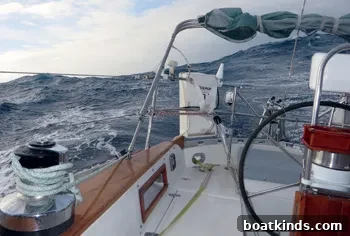
We prefer sailing our Valiant 40 in warm waters to shoveling snow in New Hampshire. Our jobs allow us flexibility, so some years we escape for six weeks, other years for months. But time is finite: the minute we walk out the office door the countdown to departure begins. That winter we planned to spend six weeks on bluewater passagemaking and island-hopping — easing sheets past gorgeous shorelines, listening to the bow wave, and anchoring in a quiet Caribbean harbor with a rum swizzle in hand.
To make that happen we followed the 7 P’s: proper prior preparation prevents poor performance. We budgeted time and money, bought spares, serviced safety gear, and hired boatyard technicians to do tasks beyond our skills or patience. After four years of ownership and about 11,000 miles under our keel, including three round trips between New Hampshire and the West Indies, we weren’t starting from scratch. But the boat was 17 years old when we bought her, and prudent maintenance had required replacing the engine, updating standing and running rigging, renewing chainplates, replacing canvas and installing modern instruments, a Monitor windvane and AIS, plus a long list of smaller repairs.
We tackled projects incrementally. Recently we replaced an aging Profurl with a Harken headsail furler and swapped an antique electronic autopilot for a Raymarine unit. Attention to detail and long checklists became routine before every departure.
Our initial plan was to dash to Bermuda in late August, haul the boat there, and return in December to head south — a strategy we’d used before. We made it only as far as Provincetown before forecasters warned of a developing tropical depression headed toward Bermuda. Its estimated arrival matched our five-day ETA. Time to change course.
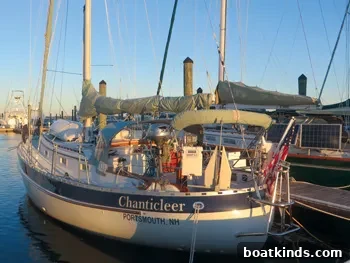
Decades ago, leaving New Hampshire for Bermuda in August during hurricane season would have seemed reckless. Lately we’ve done it a few times — it’s still a gamble. Forecasting has improved dramatically, but a 40-foot sailboat simply can’t close the miles fast enough for perfect predictability. The gamble, for better or worse, is part of the appeal of ocean voyaging.
With Tropical Depression Fiona beating toward Bermuda, we staged the boat along the East Coast: first New York City, then Chesapeake Bay, and finally, at Thanksgiving, down the Intracoastal Waterway from Norfolk to Morehead City, North Carolina. We finished some last-minute chores in Morehead City, replacing the rudder post packing and hoping that would be the final fix before sailing south in a few weeks.
By mid-December the North Atlantic was unmistakably winter. We parked in Morehead City for a week, studying weather maps while the marina shut off dock water because of freezing temperatures. On Dec. 16, bundled in long johns, wool hats and foul-weather gear, we left in a moderate northeast breeze.
Our aim is always to cross the Gulf Stream quickly and get easting early. That afternoon the tropics felt distant: sea smoke swirled around us where cold air met warm water, and no other boats were heading out. The weather router promised wind — but not the direction we needed. Our weather window, perfectly plausible a day earlier, began to evaporate.
At sea, a single problem often triggers a cascade. That night our new furler balked while we tried to roll up the genoa, and the old sail flogged itself to ruin. As we dealt with the shredded genoa, the engine overheated. We shut it down and reverted to pure sailing, bearing off under a double-reefed main and staysail. By midnight, in 40-knot winds on the beam, we were making way under staysail alone at six knots — steering a course more likely to reach Nova Scotia than the West Indies. A major winter storm was brewing between Bermuda and New England.

Regulations require a proper lookout by sight and hearing. That’s reasonable — unless you’re a two-person crew on a 40-foot boat in a heavy sea with limited visibility. We had complete confidence in our stout Valiant 40, but neither of us wanted to be alone on deck if a large wave came. We let the autopilot steer and trusted our judgment to keep watch in shifts — a decision I rarely make, but one dictated by the circumstances.
Modern long-distance cruisers generally avoid bad weather when possible, using sophisticated forecasts, GRIB files and weather routers to find suitable windows. That said, many cruisers today carry fewer traditional storm tools like storm sails or sea anchors, reasoning that they won’t need them if they can wait out bad weather. But 24 hours into this passage, in a nasty gale, I found myself rethinking the whole notion of a predictable weather window.
By the second night the wind had clocked and we were no longer bound for Nova Scotia. I got the engine running again, and by morning on the third day we were motorsailing with the staysail. Soon we set the full main, shut down the engine, and dried out soggy socks and long johns. The interior still leaked around a chainplate and the main hatch, but it would dry with time.
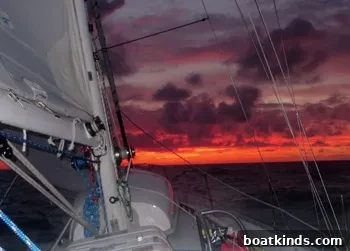
Offshore sailing delivers high highs and low lows. Cleaning the bilge pump filter that afternoon, I felt confident: we had handled the situation and the boat moved nicely on a close reach with main and staysail. It was my 22nd trip between New England and the Caribbean. We’d weathered our share of bad conditions before. As night fell, the Southern Cross seemed to beckon and Bermuda felt within reach.
We had planned to fit the headstay so the furler would run better, bend on a spare genoa, change filters, seal the leaky chainplate, buy a Bermudian Christmas pudding and then sail on. Fate had other plans.
The shaft seal began leaking more than expected. I tried the usual fix — flushing and recompressing the bellows — but it kept leaking despite expert help from Steve Hollis at Ocean Sails and his son Austin. Internal O-rings were failing; the only proper fix required hauling the boat. As a temporary measure, Steve suggested wrapping waxed sail thread around the collar — a poor man’s packing — which slowed the leak enough to continue. But sea trials in St. George’s harbor revealed additional unresolved issues.
“Safety first” is more complicated than it sounds. There’s always something more to improve, yet finite time pressures push you offshore anyway. Perfection can be the enemy of the possible; we had six weeks and commitments ashore, so we chose to go despite nagging faults.
We sailed the remaining 900 miles to the Virgin Islands with the shaft seal leaking at a manageable rate. We monitored and pumped daily and arrived in time to meet our daughter and her fiancé for an island cruise — an important family commitment. But the technical hassles never stopped: radar failed (old unit), the electric head quit and required a temporary bucket routine, the engine stalled intermittently due to salt on the ignition panel until we applied corrosion blocker, and the furler misbehaved at times because of an earlier yard installation error.
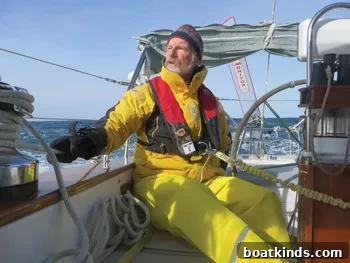
Call it whining in paradise. What made this trip frustrating was not the danger but the steady stream of small breakdowns despite careful preparation. I’ve accepted for decades that preventive maintenance can still be undone by unlucky timing. Even so, passagemaking, seamanship and island life remain deeply rewarding. The older I get, the more I expect a return on my due diligence — and the more impatient I am with recurring repairs.
Boats test us on their own terms. Maybe our earlier voyages were easy; maybe we’ve simply been due for tougher lessons. Whatever the case, we’ll be back next winter. The sea’s siren song doesn’t fade.
This article originally appeared in the June 2017 issue.