
Nimbus 495 Flybridge: A Swedish Debut in Donsö’s Archipelago
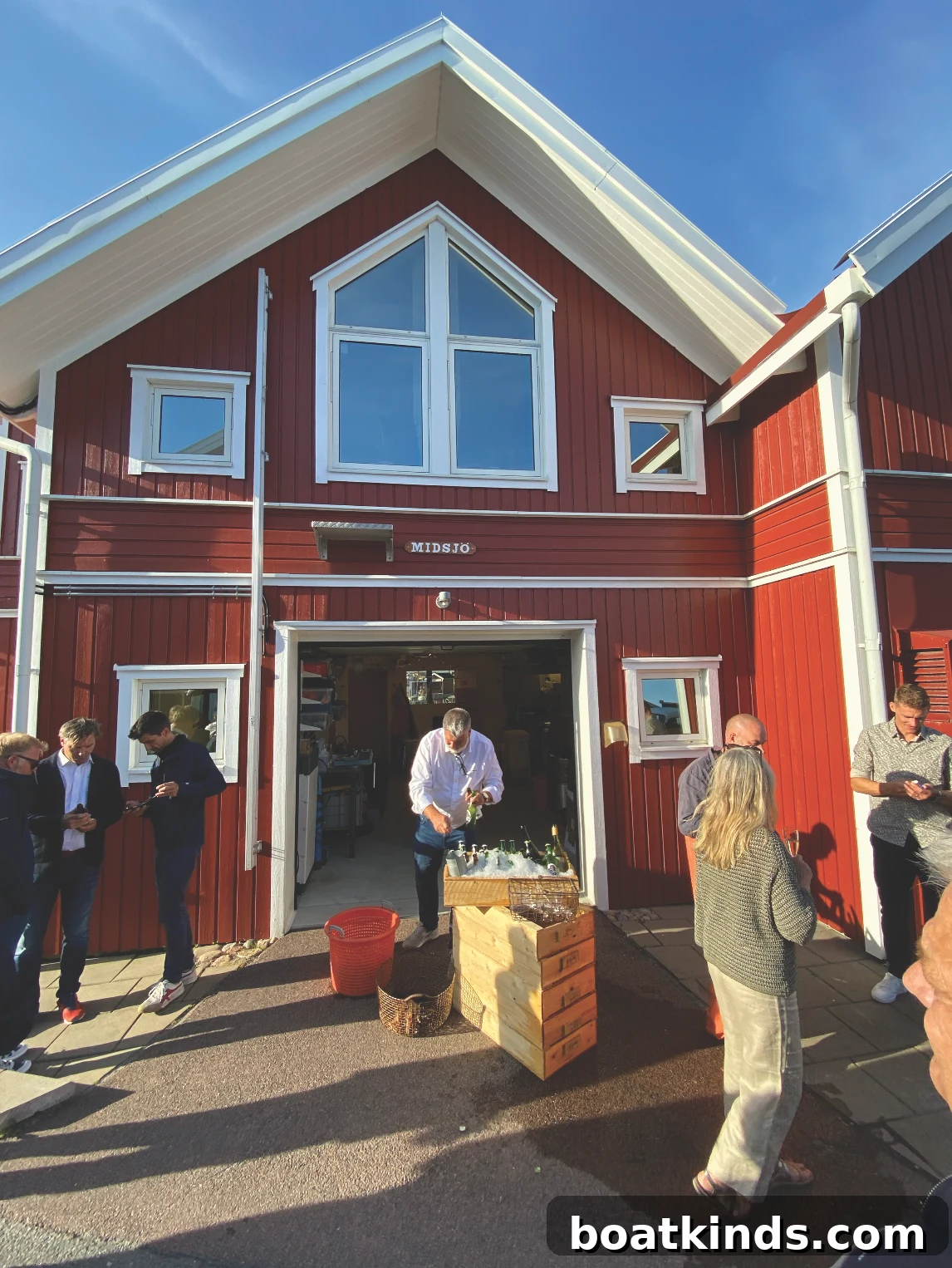
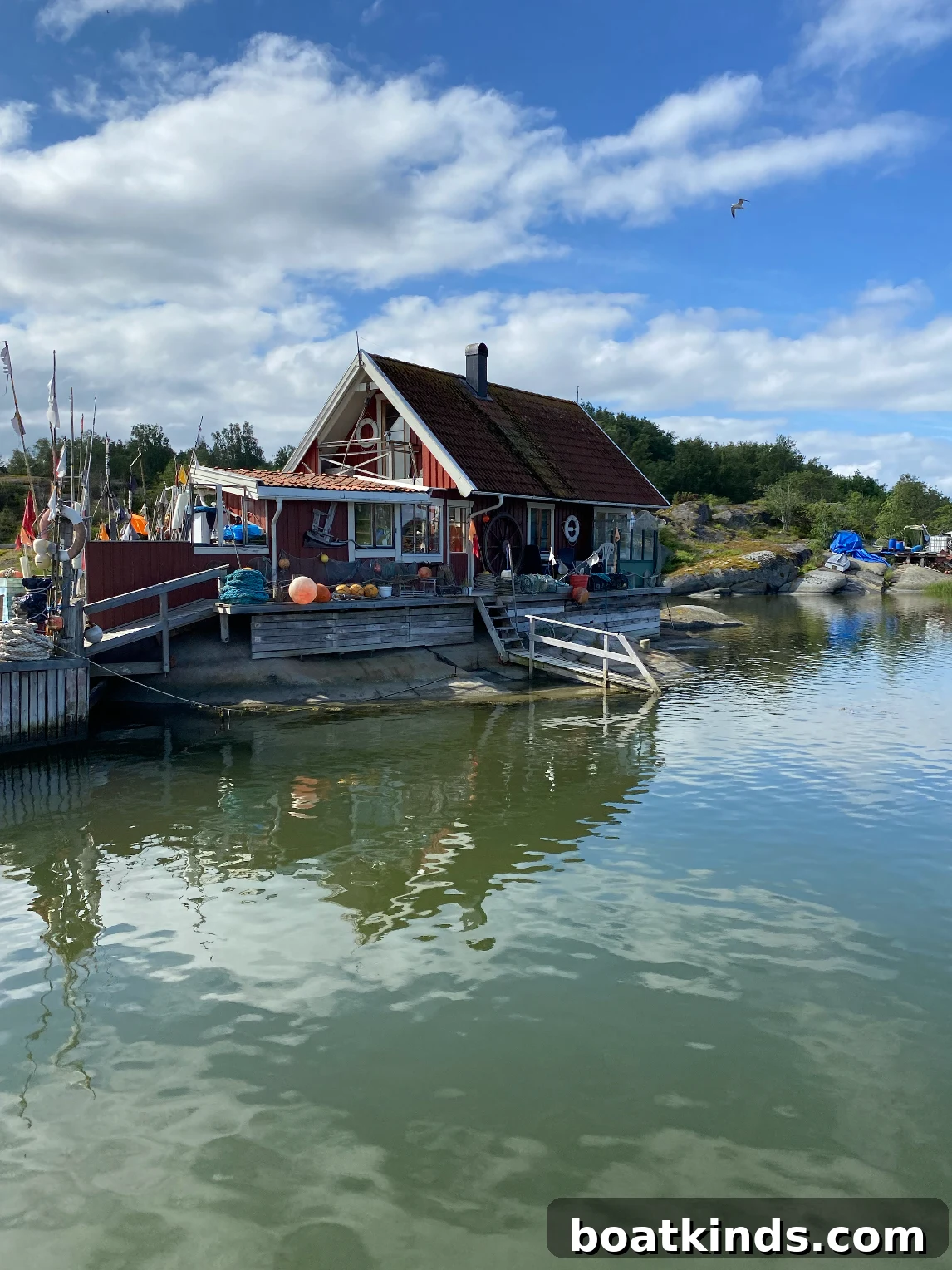
We gathered in a semicircle just outside the brightly painted fish shack, shoulder to shoulder beneath a Scandinavian evening sky that still held the long light of mid-June. Our small group sipped lagers and prosecco as the sun lingered high over the Gothenburg archipelago. I nursed an ice-cold Carlsberg, trying not to disappoint my hosts when it was time to embrace a local tradition.
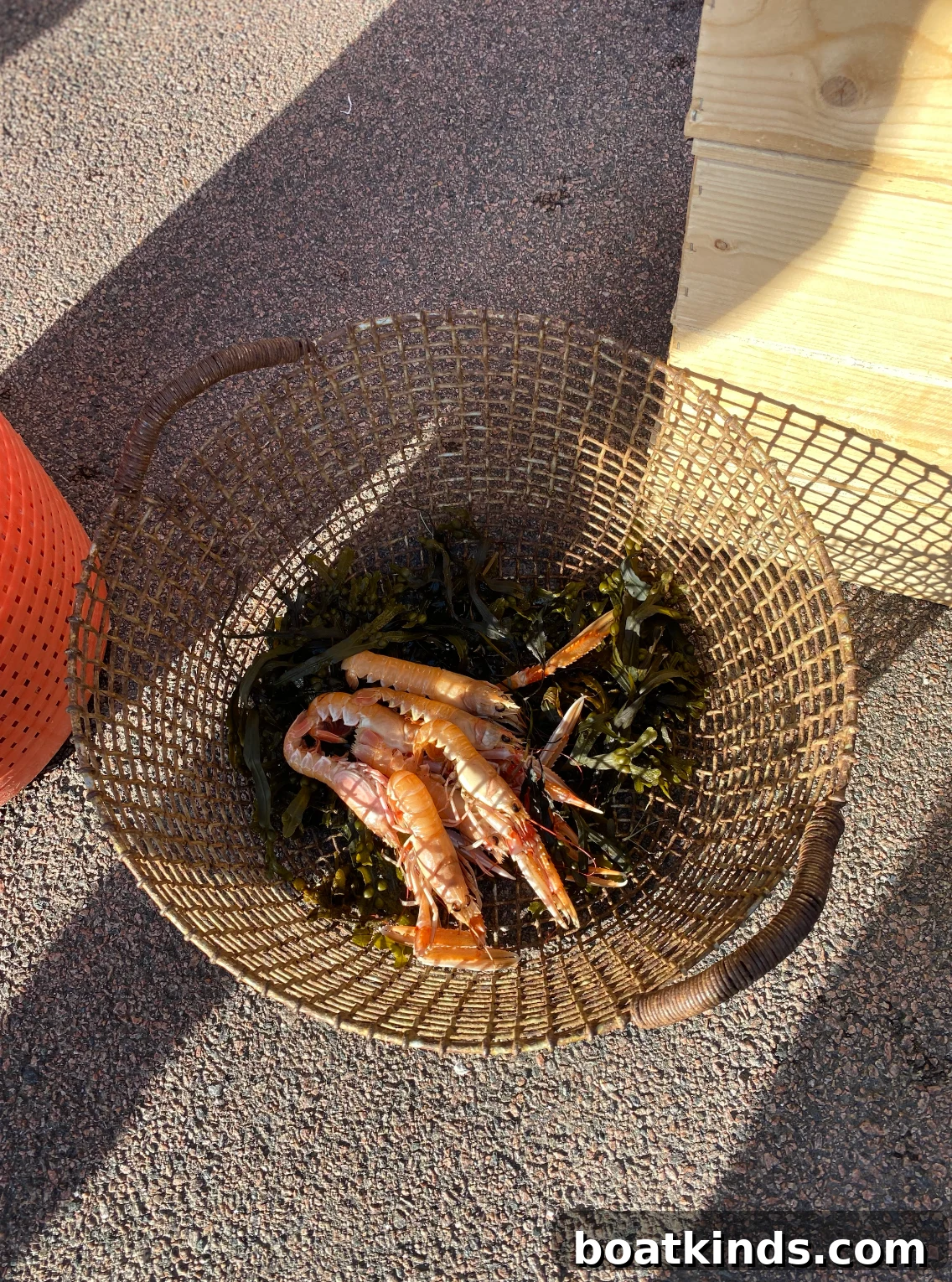
My personal mantra since arriving in Sweden two days earlier had been simple: be like a Swede. That meant diving into local cuisine and customs without hesitation. For someone who normally avoids seafood, I surprised myself. The ling and char were beautifully prepared, and at our kräftskiva—an intimate crayfish party—I sampled freshly caught crayfish dressed with lemon and butter. I wasn’t ready to tackle every antennae-laden morsel, but I happily enjoyed the tender tail meat. Small victories, but meaningful ones.
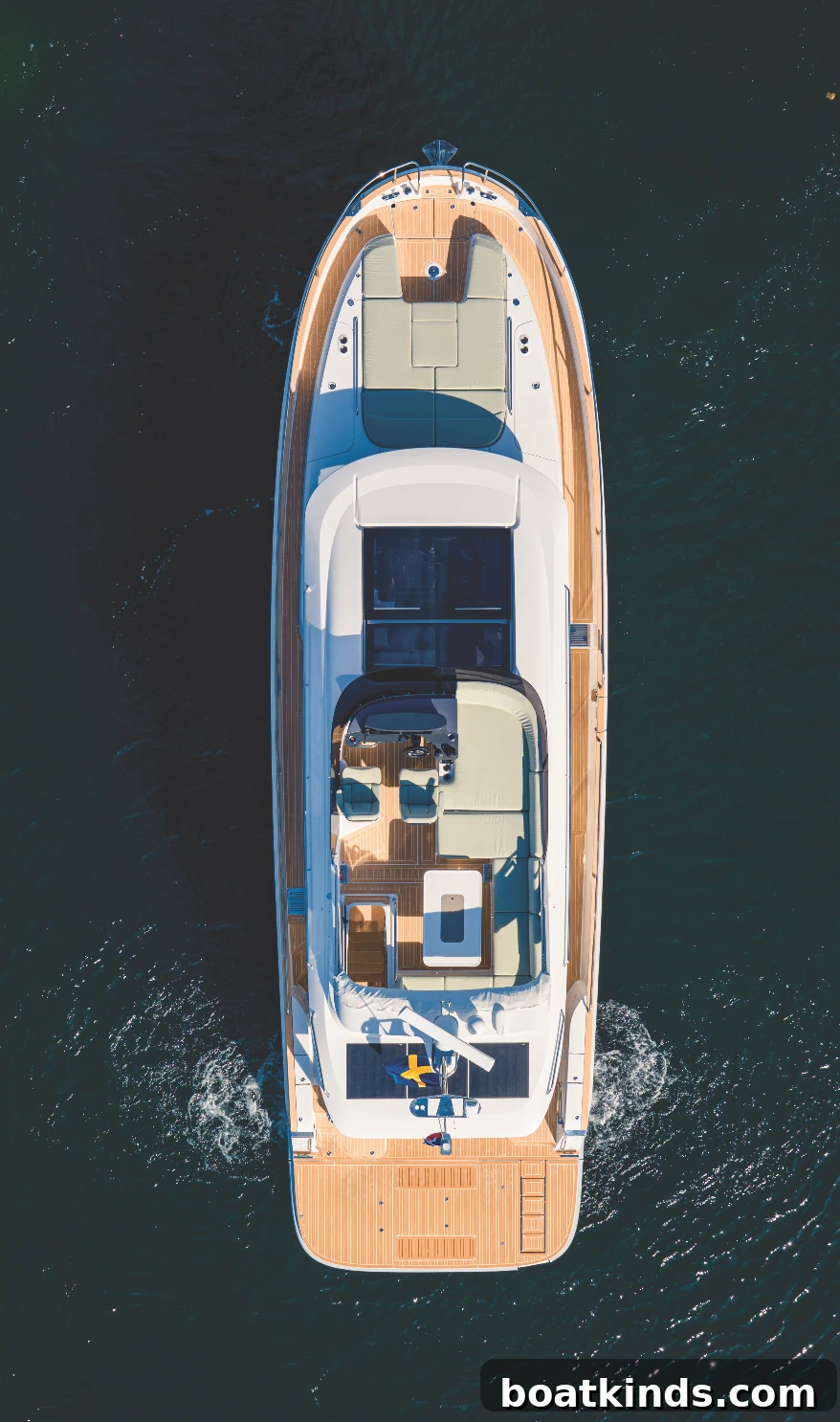
All of this took place on Donsö, a small island in Sweden’s Gothenburg archipelago, where Nimbus staged the premiere of its new flagship, the Nimbus 495 Flybridge. The 495 represents a strategic move for Nimbus, a builder known for sleek dayboats that entered the U.S. market less than a decade ago. With this model Nimbus signals its intent to compete in the fast trawler segment while preserving the brand’s Scandinavian design language.
A notable development for the 495 is its propulsion: it is the first Nimbus to be offered with Volvo Penta IPS drives. That partnership feels fitting given the historical links between Nimbus and Volvo; Nimbus tapped Pelle Petterson—the Volvo P1800 designer—at the yard’s earliest days. Since its founding in 1968, Nimbus has produced more than 12,000 boats across 86 models, and today the design continuity remains strong.
Chief Designer Joacim Gustavsson, who joined Nimbus in 2007, has carried that design DNA into the Commuter, Day Cruiser and Coupé lines and now into this flagship. The 495’s most distinctive feature is its asymmetrical superstructure: the house is offset to starboard, creating a noticeably wider starboard side deck. The offset is subtle at first glance; it becomes obvious only when viewed from the wide swim platform or when you notice the boarding gate aligned to starboard.
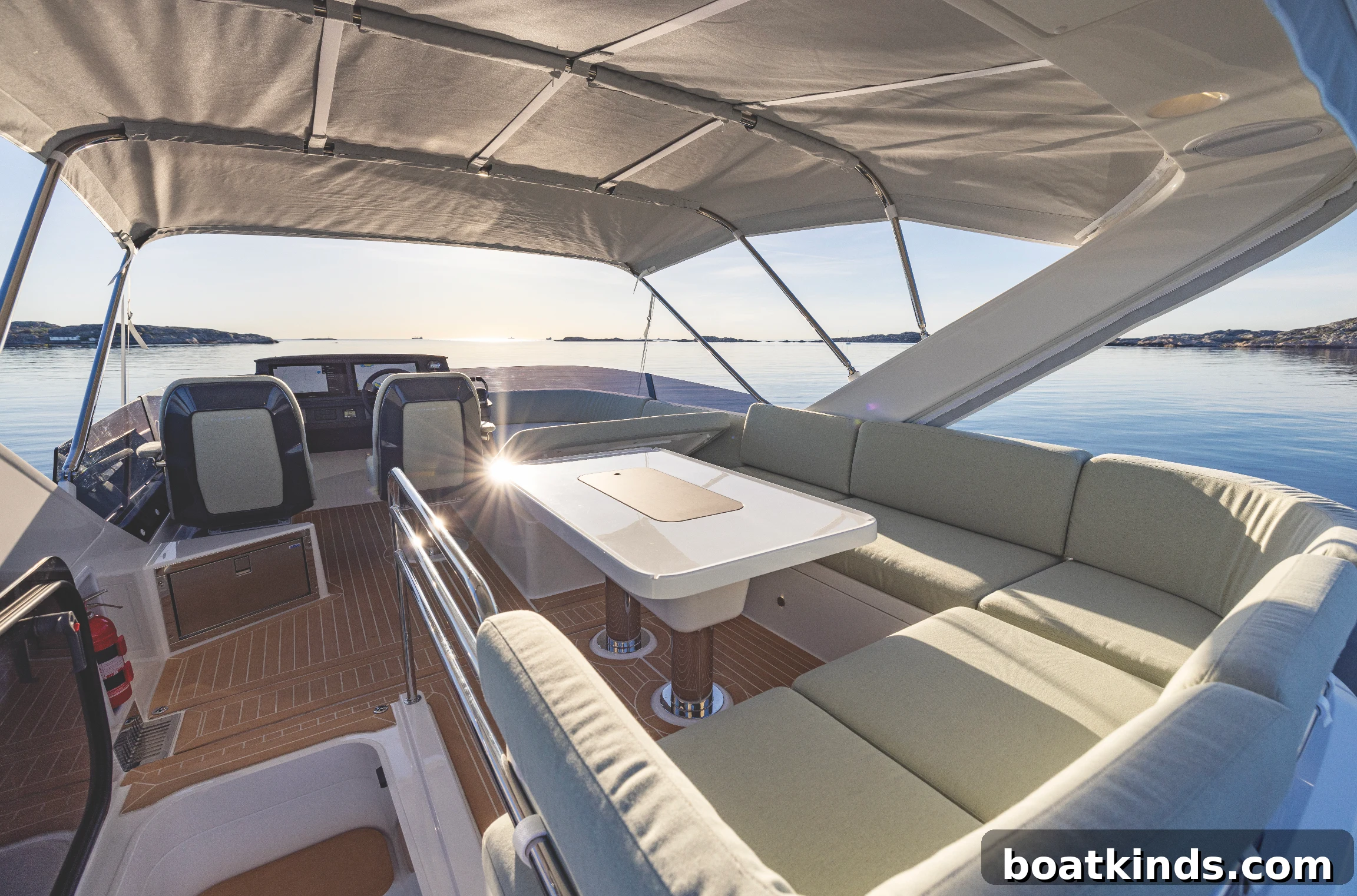
Practicality for varied weather is evident throughout the layout. The flybridge overhang shades the cockpit while a full-height glass aft wall can be raised and lowered electronically. It includes an integrated shade and provides complete protection from wind and spray, or it can be opened to create a seamless connection between salon and swim platform, where a wet bar and grill make alfresco dining effortless.
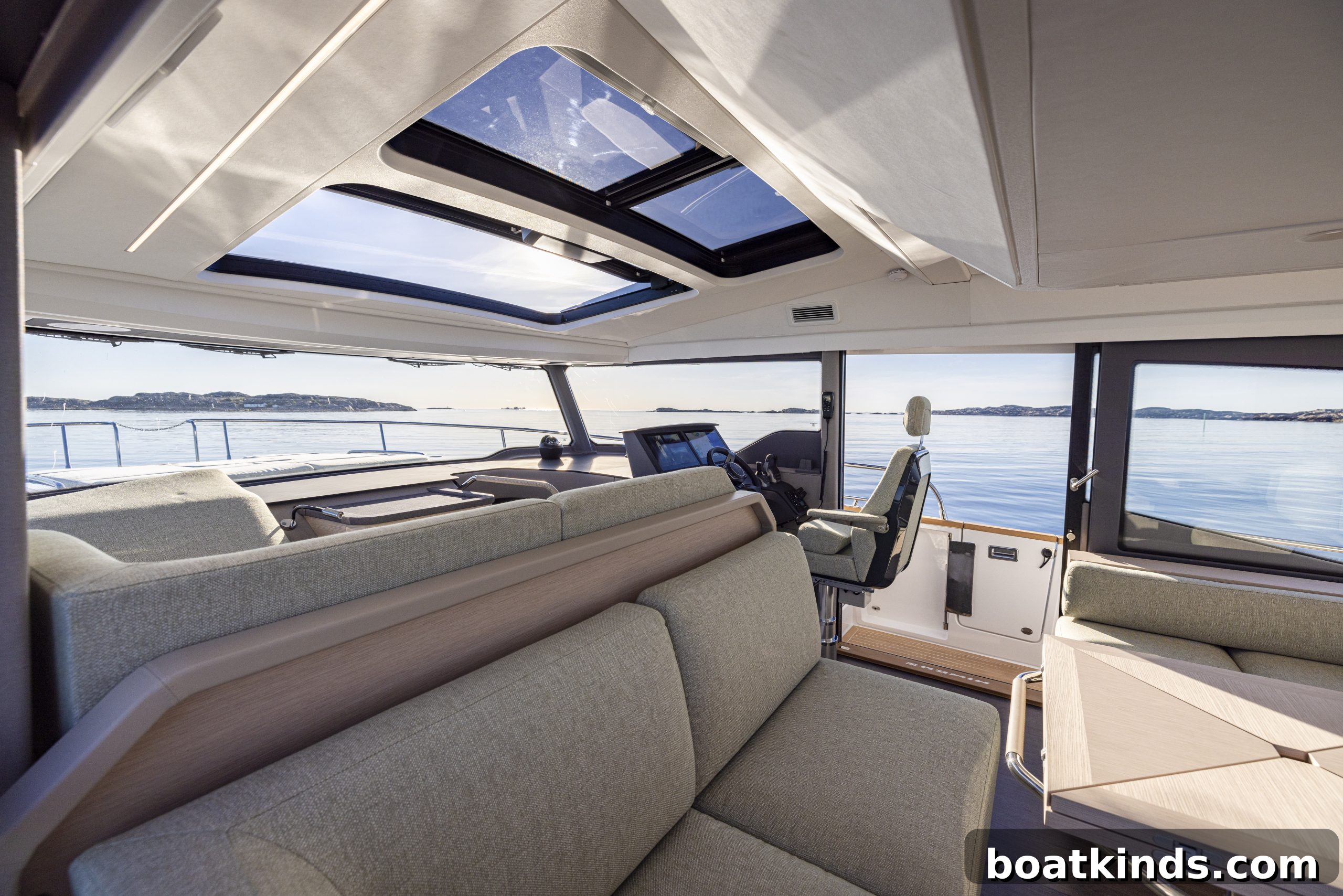
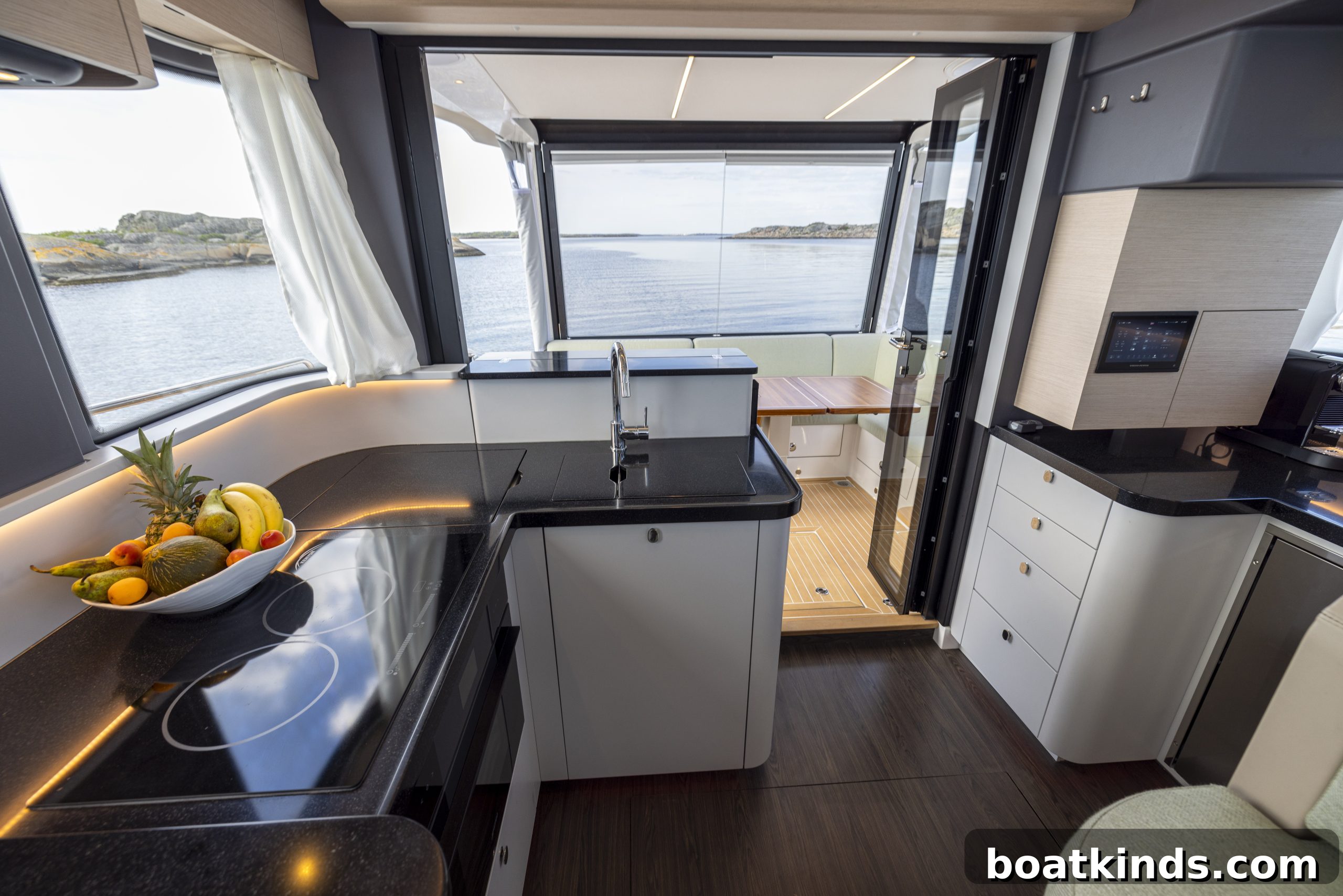
With the salon’s glass door folded away and the upper bulkhead opened, inside and outside spaces flow together naturally. The one-level salon features a galley aft, split by a centerline walkway. To port a C-shaped dinette seats six comfortably; to starboard a two-seat settee offers a cozy conversation area. Forward to starboard is the helm station, with excellent forward and lateral sightlines. Rounded glass windows and a sliding door aft enhance visibility and connection to the cockpit.
Belowdecks, a centerline companionway leads to three staterooms: an amidships, full-beam master; a bow VIP; and a twin-bunk cabin to starboard. The VIP and twin share a head and shower, providing practical arrangements for family cruising or guest accommodations.
At sea the Nimbus 495 felt spacious even with eight people aboard. With crew spread between the pilothouse, cockpit and flybridge, the boat never felt crowded. The pilothouse benefits from the opening sunroof, side windows, an open rear glass bulkhead and a wide sliding door beside the helm—features that make the space bright and airy and that support comfortable all-weather cruising in northern waters.
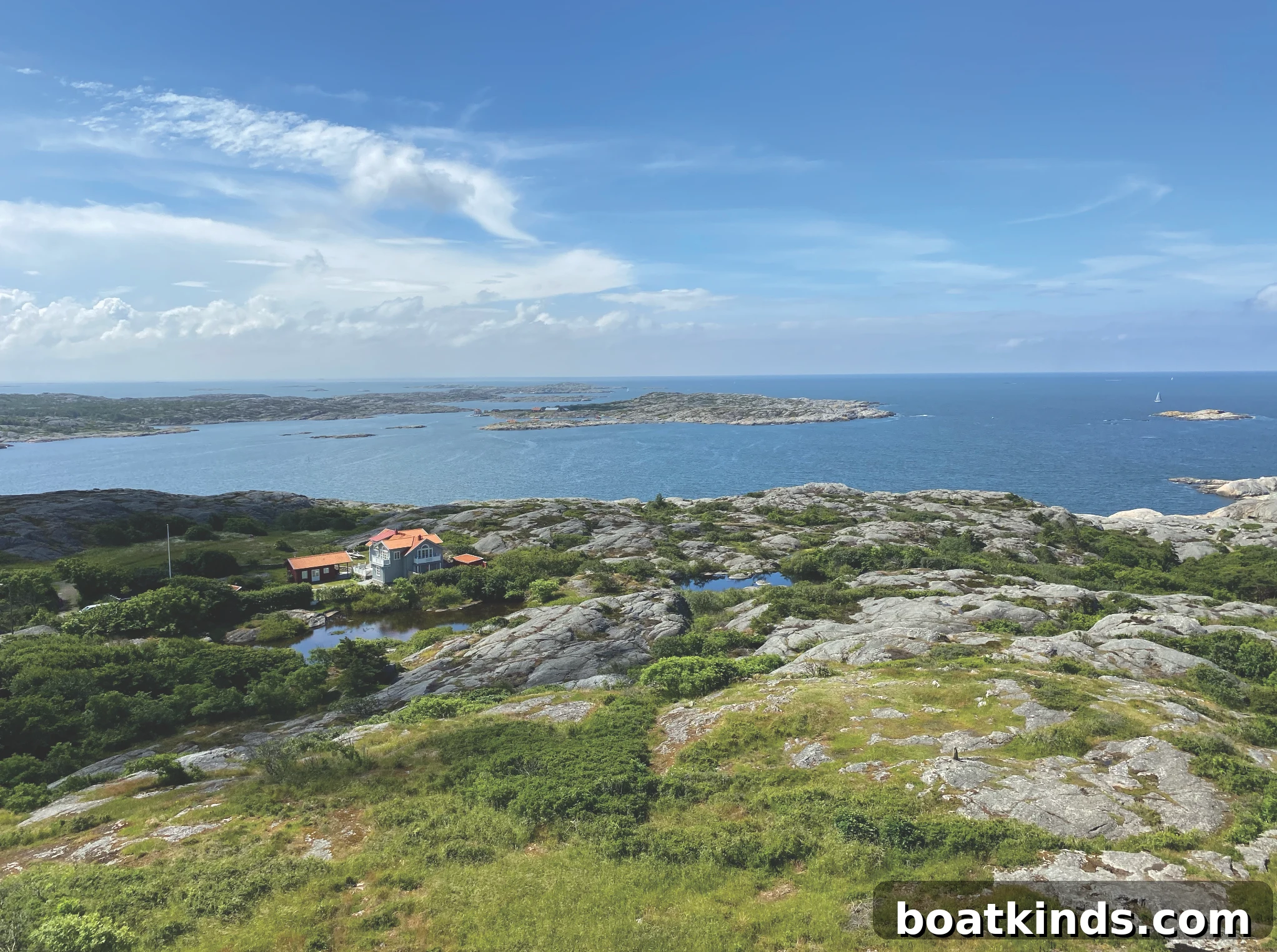
We threaded our way through roughly a hundred low, granite islands while I took the co-pilot’s seat on the passenger sofa—an L-shaped arrangement that can face forward or aft. Gustavsson’s intent for that versatile seating area is evident: it’s as comfortable for a long run as it is for socializing during a stop in a sheltered cove. The pace was relaxed until the skipper invited us to test performance.
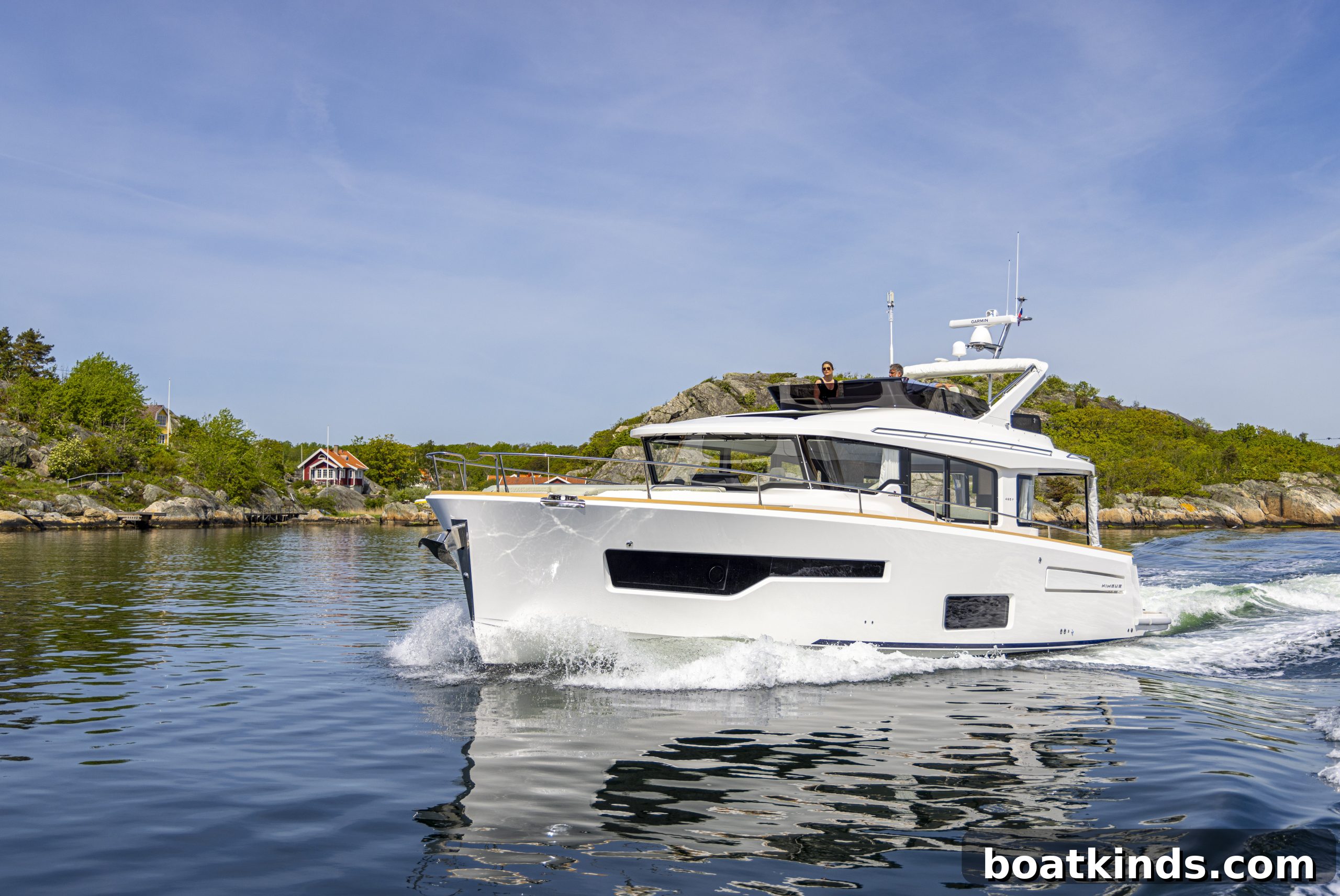
The twin 480-hp Volvo Penta IPS drives were well-matched to the 495. We cruised easily at 21 knots and reached a top speed just under 29 knots. At displacement speeds the boat showed strong long-range potential—a calculated range of 677 nautical miles at 8 knots and 1,500 rpm. Even as speed increased, the range remained practical, never falling below roughly 300 nautical miles up to about 15.3 knots and 2,750 rpm.
Coming back into Donsö, we used the wide starboard side deck to pass a few fenders while the skipper positioned the 495 using the joystick. The boat handled docking with ease; optional assisted-docking features were unnecessary. The overall impression was that a cruising couple could confidently manage the 495, both underway and when maneuvering in tight marina spaces.
That evening our dinner celebrated Midsummer: Aquavit, songs, four herring preparations and sauna plunges into chilly Baltic water. When I returned to shore among newly made friends, the Nimbus team welcomed me as an honorary Swede—baptized, if only symbolically, by a brief swim and a steaming sauna session.
This article was originally published in the November 2024 issue.