
Ropeless Fishing Gear: Reducing Prop Entanglements and Protecting Endangered Whales
For Kim Sawicki, fouled props from crab and lobster pot lines have been a personal concern for years. Growing up sailing in Connecticut, she spent long hours on the bow as a lookout. About two decades ago, friends aboard a 47-foot Pacemaker were nearly killed when entangled lobster-pot lines pulled the boat’s props together and the hull was compromised.
“The lines basically split the boat in half and it sank, right in Long Island Sound, off Stonington, Connecticut,” Sawicki recalls. Her friends survived, but the incident took only minutes—an alarming reminder of how quickly entanglement can become life-threatening for boaters.
Sawicki is now the founder of Sustainable Seas, a Connecticut-based organization launched in 2018 to promote technology-driven solutions for pot and trap fisheries. One focus is ropeless gear: systems that let fishermen set and retrieve traps without vertical surface lines by using time-release or on-demand pop-up devices. These devices trigger traps to float to the surface when anglers are ready to haul, eliminating the vertical ropes that can foul propellers and entangle marine animals.
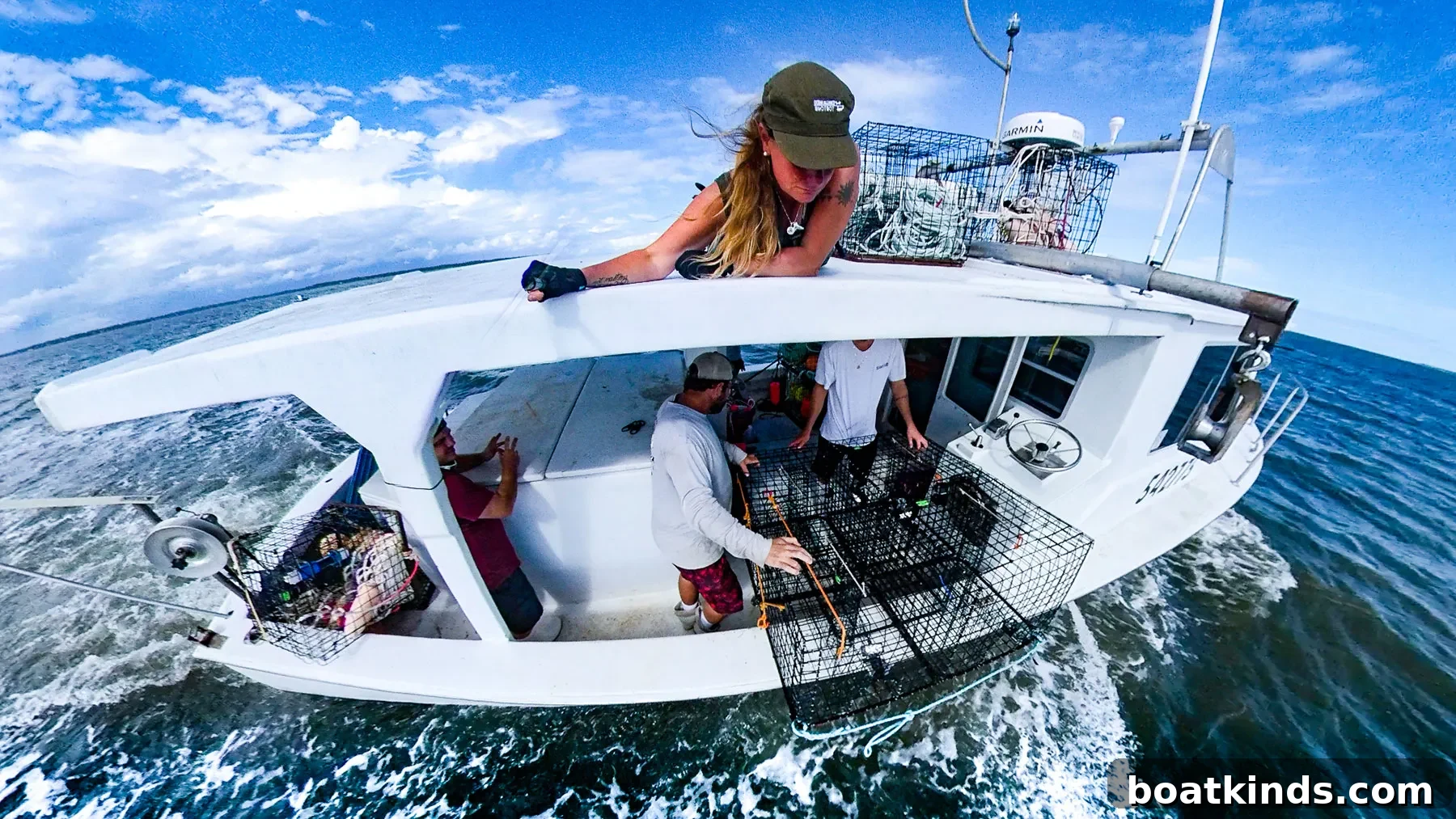
Traditionally, crab and lobster fisheries rely on vertical lines connecting surface buoys to seabed traps so crews can locate and haul gear. Ropeless systems remove those vertical lines entirely, using mechanisms—often called pop-ups—that have existed in oceanographic work since the mid-20th century. In a ropeless set-up, a trap is marked or retrieved via a buoyant release device, acoustic signal, or pre-programmed timer rather than a permanently tethered line.
Conservationists and regulators emphasize ropeless gear for its potential to reduce entanglements of critically endangered species such as the North Atlantic right whale. Recent regulatory attention has included public comment periods at the federal level and legislative proposals in several states. In California, a bill titled the Whale Entanglement Prevention Act was introduced, and Massachusetts launched a one-year study to assess ropeless technology’s feasibility in New England fisheries. These discussions focus on how to balance whale protections, boating safety, and the livelihoods of coastal fishing communities.
While ropeless gear is praised for saving marine life and preventing fouled props, significant technological, legal, operational, and economic questions remain. The Massachusetts Division of Marine Fisheries notes that research has centered on risk mitigation for endangered species but that more study is needed to understand how ropeless systems would function across fisheries, depths, and fishing practices. Cost is a primary concern: pop-up technology ranges from inexpensive prototypes to devices costing thousands of dollars. Much of the current tech was originally developed to deploy oceanographic instruments on the seafloor and has not yet been mass-produced in affordable versions optimized for commercial fishing at various depths.
Given these costs and uncertainties, many commercial fishermen have resisted rapid, blanket mandates for ropeless gear. Concerns include device reliability, potential catch loss if a mechanism fails, and the financial burden on small-scale fishers. In public comments on proposed federal changes, some lobstermen warned that mandatory conversion could threaten businesses and coastal economies, citing reported deployment failures and high equipment costs.
Sawicki acknowledges that these concerns are valid. She and several manufacturers even opposed the California bill because it proposed a blanket requirement rather than targeted measures focused on known whale habitat. Sawicki argues the goal should not be immediate, universal mandates that small-scale crabbers and lobstermen cannot afford. Instead, she supports a phased approach that allows manufacturers time to refine and mass-produce reliable, cost-effective ropeless systems while regulators craft regionally appropriate rules.
Manufacturers are responding. Competing companies are collaborating to standardize features that prevent overlapping gear conflicts—so fishermen using different brands can detect nearby gear and avoid accidentally setting on top of another’s traps. These interoperability efforts aim to reduce operational risk and boost confidence among fishers considering ropeless solutions.
Sawicki envisions gradual adoption rather than overnight change. A realistic timeline she offers points toward broader use around 2030, giving technology makers time to scale production and lower costs. If manufacturers succeed in making robust, affordable devices, ropeless gear could significantly reduce prop entanglements for recreational and commercial boaters and help protect endangered whales—while preserving viable coastal fisheries and communities.
This article was originally published in the June 2021 issue.