
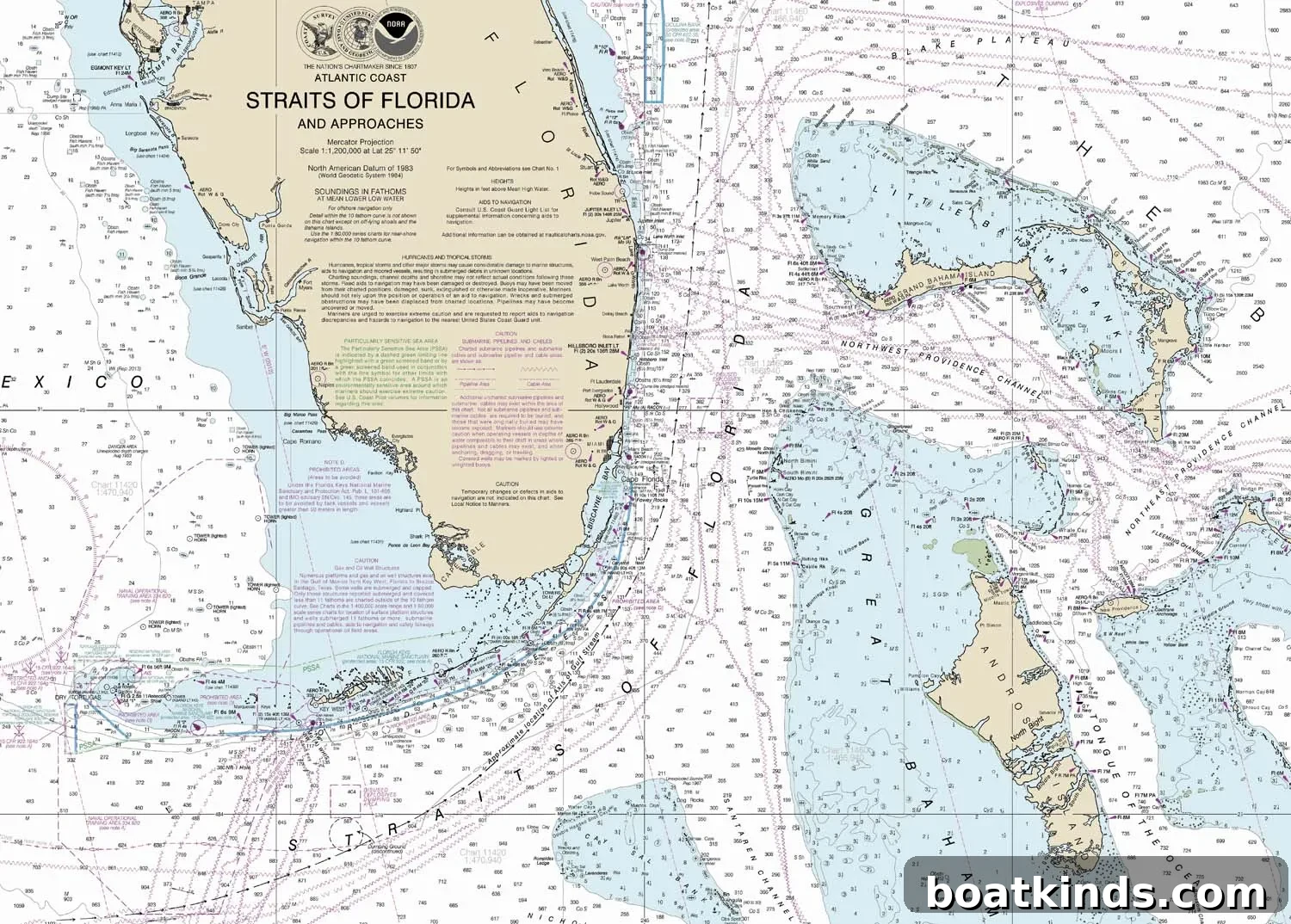
NOAA’s 2017 Charting Plan: The Future of Paper, Raster, and Electronic Nautical Charts
June 1, 2017, marked the original deadline for public comment on the National Oceanic and Atmospheric Administration’s draft strategy for navigational products and services for U.S. ocean and coastal waters, including the Great Lakes. What began as a routine consultation became a flashpoint of concern for recreational boaters, chartmakers, and the broader maritime community when rumors spread that NOAA planned to stop producing traditional charts.
Suppliers such as Maptech and Landfall Navigation shared statements suggesting NOAA intended to end production of paper-like chart images. Those claims prompted immediate rebuttals from several industry and NOAA-affiliated voices, clarifying the agency’s actual intentions and the practical realities of nautical chart production.
NOAA Clarifies: Paper and Raster Charts Are Not Being Canceled
Susan Shingledecker, vice president of the BoatUS Foundation and a member of the NOAA Hydrographic Services Review Panel, emphasized the enduring importance of multiple chart formats for boating safety. “Having nautical charts available in a range of formats is key to boating safety, and we don’t expect paper charts to go away anytime soon,” she said.
Marine-electronics commentator Ben Ellison also urged readers to examine the situation before reacting. NOAA’s Office of Coast Survey issued a public statement: the draft plan did not set a timeline for ending production of paper nautical charts or raster navigational charts (RNCs). In response to the public reaction, NOAA extended the comment period to July 1 to gather more input.
Print-on-Demand and Current Chart Production
John Nyberg, chief of NOAA’s marine chart division, explained that production methods have been stable since 2013 when NOAA shifted from lithographic printing to a print-on-demand model. That change allows charts to incorporate weekly survey updates and provides NOAA-certified chart agents the ability to sell up-to-date paper charts through retail channels.
“We have a number of print-on-demand partners with the government,” Nyberg said, noting that the model supports raster, vector, and paper products simultaneously. The production pipeline that serves those formats remains in place and NOAA has no immediate plan to discontinue any of them.
The Real Discussion: Navigational Behavior and Digital Transition
What the 2017 Charting Plan does address is the changing way people navigate. Nyberg pointed out that an increasing number of mariners and recreational boaters use laptops, tablets, and smartphones for route planning and navigation. “What we’re trying to do here is talk about possibilities for the future,” he said. “It would be irresponsible not to discuss moving toward an electronic world, because that seems to be the way the world is moving.”
The draft plan acknowledges that as the use of digital raster chart data in electronic charting systems (ECSs) increases, the demand for traditional paper charts may decline. Similarly, broader adoption of electronic navigational charts (ENCs) may reduce the need for full raster chart coverage. These are projections about future trends, not immediate policy changes.
ENCs, Raster Charts, and the Pace of Change
Nyberg emphasized that any transition from raster charts and paper to ENCs would likely be gradual and could take decades. He noted the importance of preserving the ability for the public and NOAA-certified chart agents to produce paper backups of ENC data. As ENC quality and display systems improve, mariners and recreational boaters may voluntarily transition from raster charts to ENCs.
“Our goal is for all mariners, including recreational, to prefer ENC data,” Nyberg said, explaining this was a central reason for starting the public discussion. While professional mariners and large commercial vessels already use ENC data widely, NOAA wants recreational boaters to benefit from ENC precision and updating capabilities as well.
Public Input and Charting Priorities
NOAA is actively seeking feedback from the boating community to guide future charting priorities. Nyberg invited comments about chart symbols, color schemes, and where larger-scale, more detailed charting is needed—instances where ENC data can offer improved safety and precision. He also raised practical concerns such as the distortion that occurs when users overzoom raster images on electronic devices.
Safety remains the agency’s primary concern. Input from recreational boaters will help NOAA determine which areas require higher-resolution ENC coverage or enhanced cartographic detail. After reviewing the additional public comments submitted on the 2017 Charting Plan, NOAA planned to publish a revised edition that summarizes feedback and outlines next steps.
“Honestly, I’m excited about it,” Nyberg said. “It’s a great opportunity for us to get working on a new system and data that I think people will like in the end.” The conversation reflects a careful balance: preserving trusted paper and raster products while planning responsibly for an electronic future that supports safe navigation for all mariners.
This article originally appeared in the August 2017 issue.