
At Marine Weather Center, a client recently asked why a computer model forecast showed small seas on the windward side of Saint Martin, when in reality they were experiencing strong winds and large waves. The explanation lies in how weather models are built, what they can resolve, and where they fall short.
Weather forecast models are widely used because they deliver detailed predictions for wind, waves, temperature and precipitation at specific times and locations. However, those precise numbers can be misleading unless you understand the models’ design, limits and the assumptions behind them.
Recognizing the limitations of forecast models helps mariners interpret predictions more effectively and make safer decisions on the water. Below is a clear explanation of how models represent the atmosphere and ocean, why they sometimes miss important local details, and what you can do to get a more reliable picture of marine conditions.
What’s a Weather Model?
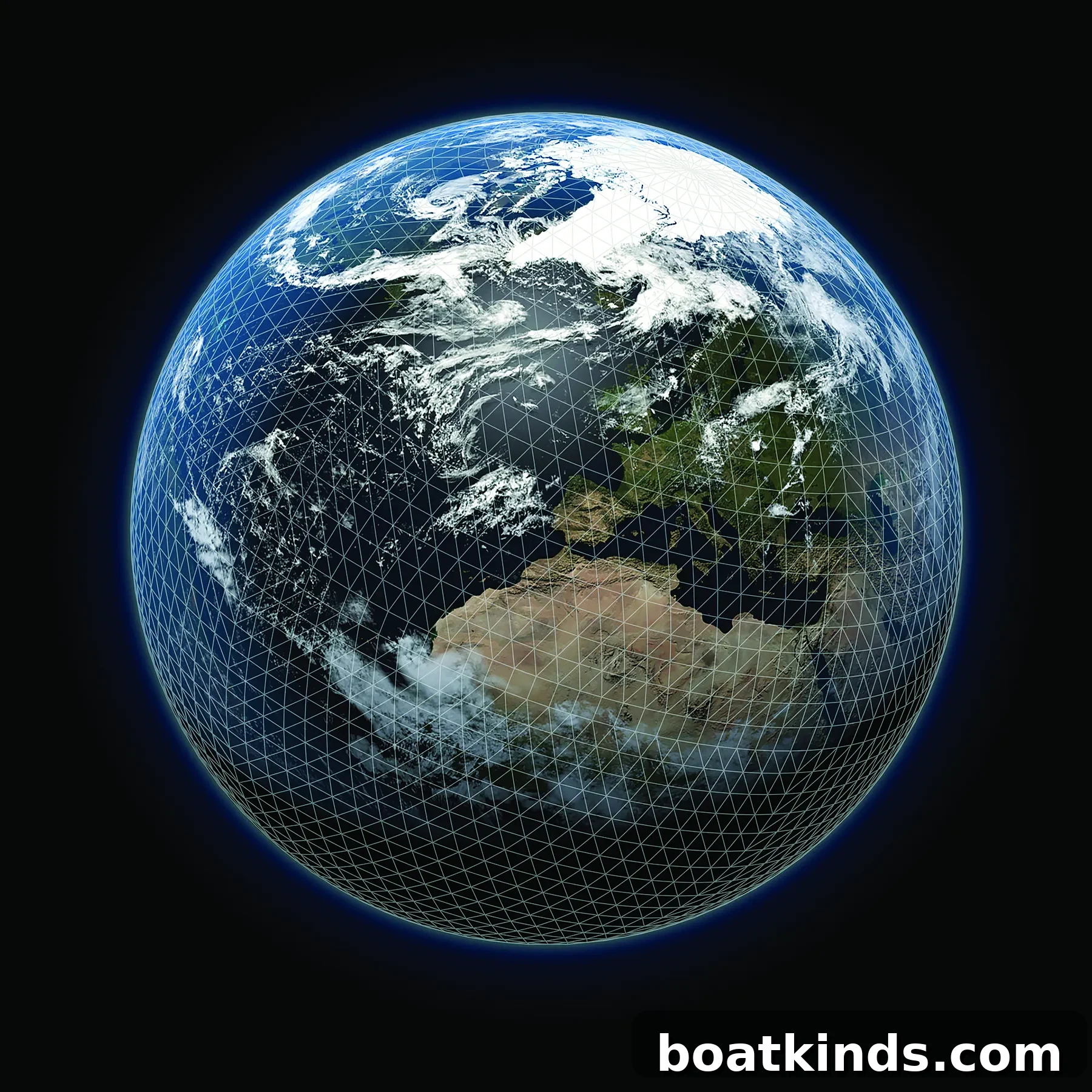
Weather models divide the Earth into grid boxes. Each grid cell represents a patch of surface and the atmosphere above it. To begin a forecast, the model assembles the best available snapshot of the current atmosphere using observations from satellites, aircraft, weather balloons, buoys, airports, ships and other stations. When observations are sparse, the model interpolates values to fill gaps and initialize every parameter for every grid box.
With that initial state, the model uses mathematical equations to evolve the atmosphere and ocean forward in time, producing forecasts of winds, seas, pressure, temperature and more at discrete times and locations.
Smaller grid cells generally yield better forecasts because they can represent smaller-scale features. But increasing resolution requires exponentially more computing power. Even today’s fastest supercomputers can’t resolve every weather process—especially small, intense features like convective thunderstorms, tornadoes and the fine structure of hurricanes.
Another source of uncertainty is the model’s initial conditions. Small errors in the initial state can grow over time. To address that, major global models run ensemble forecasts: multiple runs that start from slightly different initial conditions. The U.S. Global Forecast System (GFS) produces about 30 ensemble members; the European Centre for Medium-Range Weather Forecasts (ECMWF) runs around 50. Comparing ensemble members and their mean helps quantify forecast uncertainty and gives insight when the operational run might be off.
The Space-Time Factor
Weather evolves in space and time. Some changes are slow and broad, which models handle well. Other changes are rapid or localized and are often missed because models lack the spatial and temporal resolution needed to capture them.
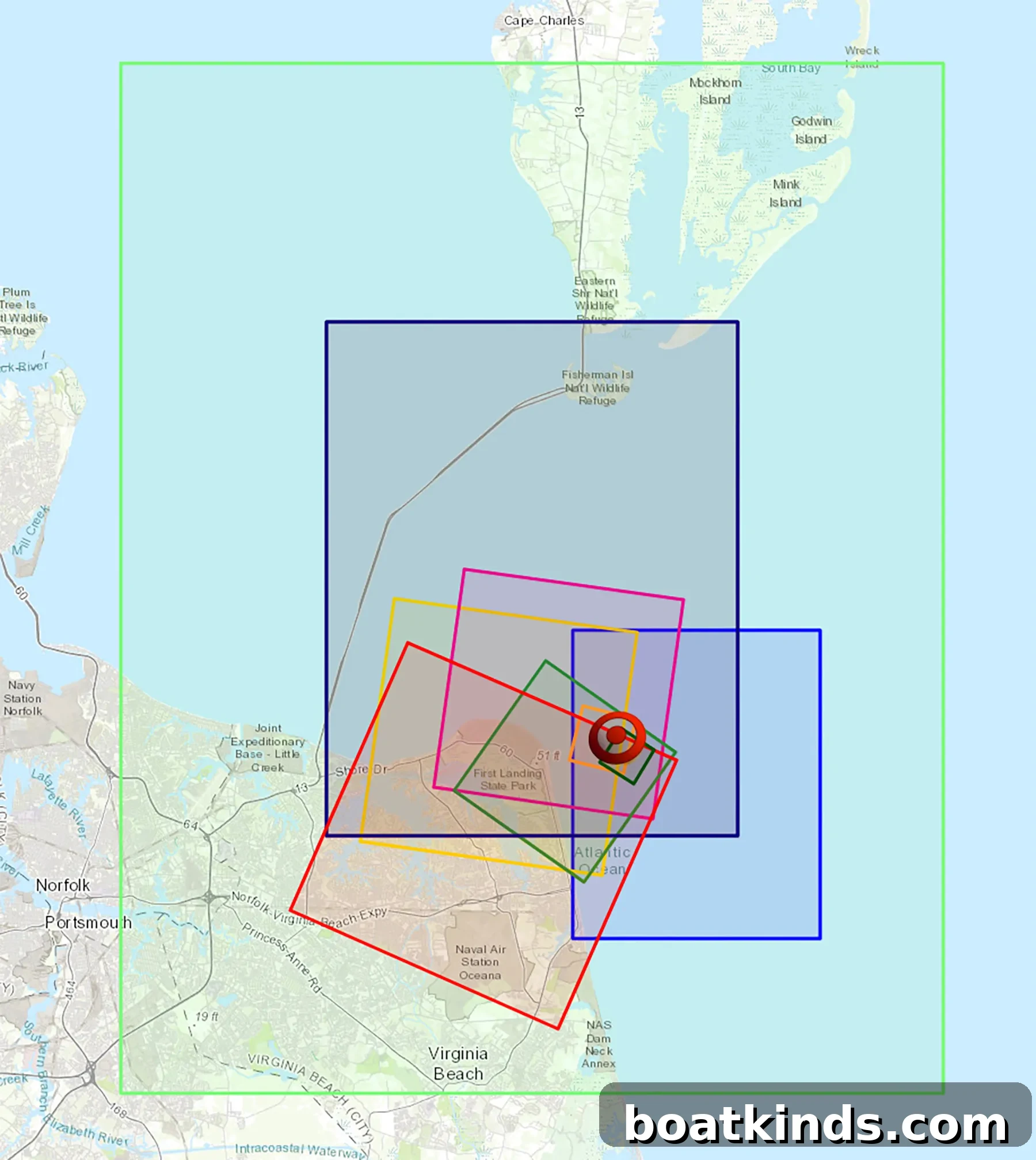
Spatial resolution depends on grid size. NOAA’s GFS grid spacing is about 13 kilometers (8 miles), so each cell covers roughly 64 square miles. ECMWF uses a finer spacing near 9 km (under 6 miles), about 36 square miles per cell. Temporal resolution is typically hourly for short-range forecasts—out to 120 hours for the GFS and about 90 hours for the ECMWF—then coarsens at longer ranges.
For every grid box and every forecast hour, models provide a single value for each parameter (e.g., wind speed or direction). If a weather change spreads over an area larger than a grid box and evolves over more than an hour, the model has a reasonable chance of predicting it. If the change is smaller or quicker, the model can miss it entirely or smear it out, producing an inaccurate local forecast.
Temporal Limits
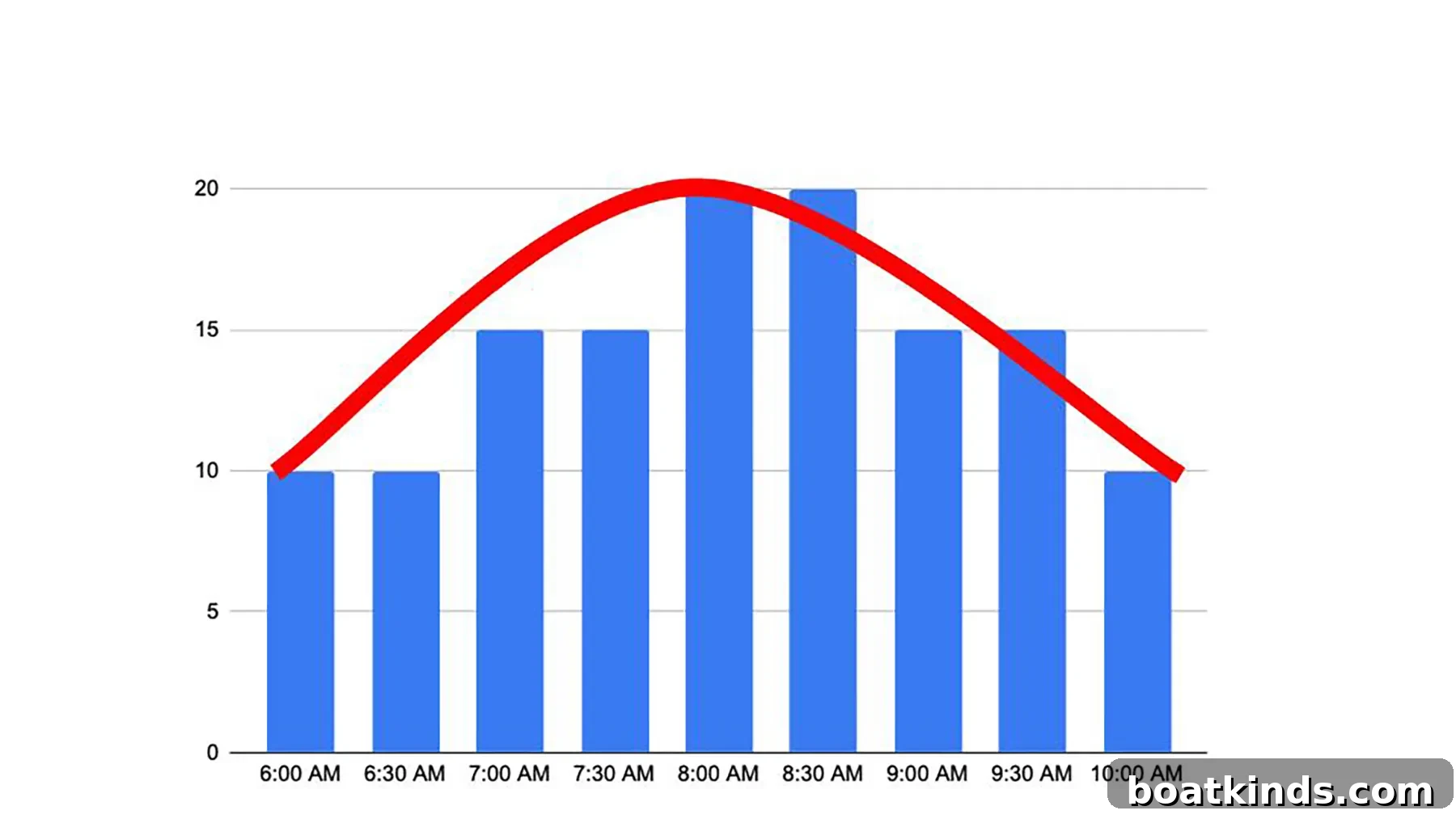
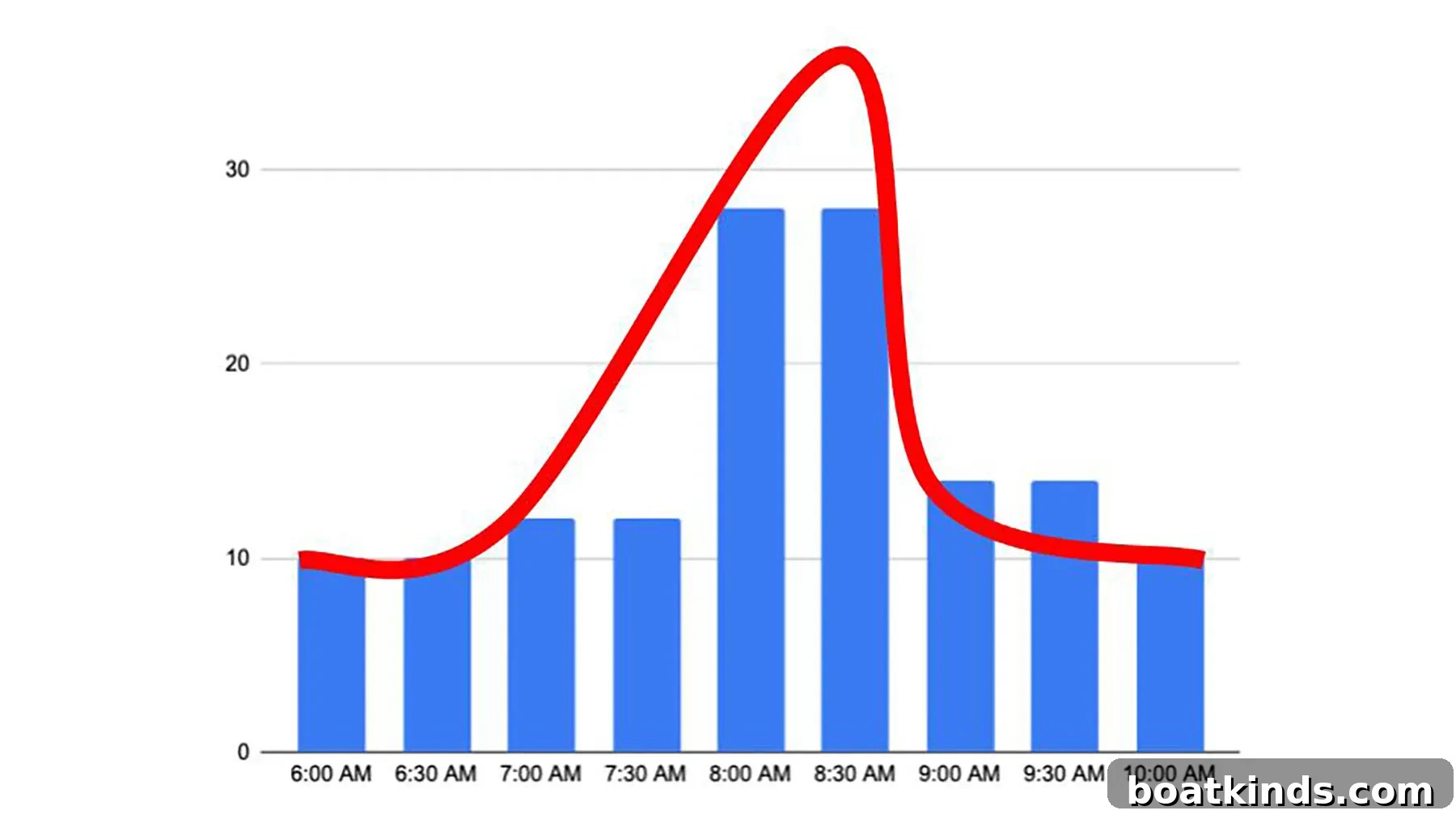
Temporal resolution can hide rapid changes. If wind increases gradually—say, 10 knots at 6 a.m., 15 at 7 a.m., 20 at 8 a.m., then eases—the model’s hourly values may match the real winds closely. But if winds jump abruptly—10 knots at 6, 12 at 7, a sudden spike to 36 knots at 8:30, then fall—the hourly model outputs can miss the peak entirely and give a false sense of safety. Even if a model’s underlying physics are perfect, its hourly sampling can lead to large forecast errors for brief, intense events.
So if you’re sailing through a region prone to sharp, short-lived changes, treat hourly model values as averages for that hour rather than exact instantaneous conditions.
Spatial Limits
Returning to the Saint Martin example: if a grid box covers both exposed windward water and a protected bay within five miles of the island, the model will return a single sea state for that whole cell. If the protected area dominates the cell, the forecast may show relatively calm seas, even though the open windward shores experience much larger waves. To get a better estimate for exposed waters, pick a grid point located entirely over open ocean, well away from coastal bathymetry and sheltered areas.
Grid geometry also varies: GFS uses a cubed-sphere grid, ECMWF uses an octahedral grid, and experimental models like MPAS use hexagonal meshes. That means you can’t assume every grid box is a neat square, and coastline representation depends on the grid layout and resolution.
Different weather processes occur at different scales. Large-scale pressure-gradient winds act over hundreds to thousands of miles and are relatively steady—models represent them well. Convection, however, involves vertical motions on scales of hundreds of feet to a few miles and can last minutes to a few hours; global models typically struggle to resolve these features because they are too small and too transient for global grid spacing.
Additional Factors
Earth’s surface area is vast—about 500 million square kilometers—and even the best global models must divide that into millions of grid cells. The GFS predicts more than 100 atmospheric variables at dozens of vertical levels for many forecast times, producing trillions of forecast values. Modern supercomputers complete those calculations in roughly an hour. As of late 2022, the GFS runs on two high-performance machines, while ECMWF runs on one of the world’s fastest supercomputers.
Model development continues rapidly. Global model resolution has improved consistently, and major systems undergo periodic upgrades—GFS, for example, increased from 64 to 127 vertical layers in 2021. ECMWF and others are researching ways to reach kilometer-scale global resolution; some groups suggest that a combination of refined grids and more computing power could make 1-km global models feasible within the next decade.
In the nearer term, meteorological agencies produce high-resolution, short-range models for coastal areas—such as HRRR and NAM variants—that can resolve details down to about 1 km for a day or two. These higher-resolution products are useful for forecasting convective storms and local sea-state variations near shore.
Understanding model limits will help you interpret forecasts correctly. When you query a model you are asking, “What is the weather likely to do at this location and time?” The model provides its best estimate for specific grid cells and times, not a continuous, perfectly precise timeline of instantaneous conditions.
Avoid the precision trap: precise numbers are not always accurate. Use model output together with local forecasts, observations, radar, satellite imagery and—when available—forecasts from your national meteorological service or a qualified private forecaster. That combined approach gives the best chance of staying safe and comfortable on the water.
Chris Parker founded Marine Weather Center in 2010 to provide routing and forecasting services for private yachts. His story was originally published in SAIL magazine.
This article was originally published in SAIL, our sister publication, and in the July 2023 issue of Soundings.