
Nearly every recreational powerboat today comes equipped with an engine cut-off switch—83.2 percent, according to the National Recreational Boating Safety Survey. How often those red lanyards are actually clipped to the captain’s belt, life jacket or wrist is anyone’s guess. Still, because many boaters find the cords inconvenient or uncomfortable, compliance is inconsistent. Beginning April 1, 2021, the U.S. Coast Guard started enforcing a rule that requires operators on boats under 26 feet LOA to use the engine cut-off device if the vessel is fitted with one, though there are exceptions.
Many skip the kill switch because the lanyard can be awkward: metal clips are often stiff, the plastic coating can snag on stainless-steel steering wheels, and the tether limits movement around the cockpit. Despite those annoyances, using a kill switch is an important safety habit. It immediately stops the engine if the operator is thrown from the helm or goes overboard, preventing the boat from running uncontrolled and reducing the risk of propeller strikes.
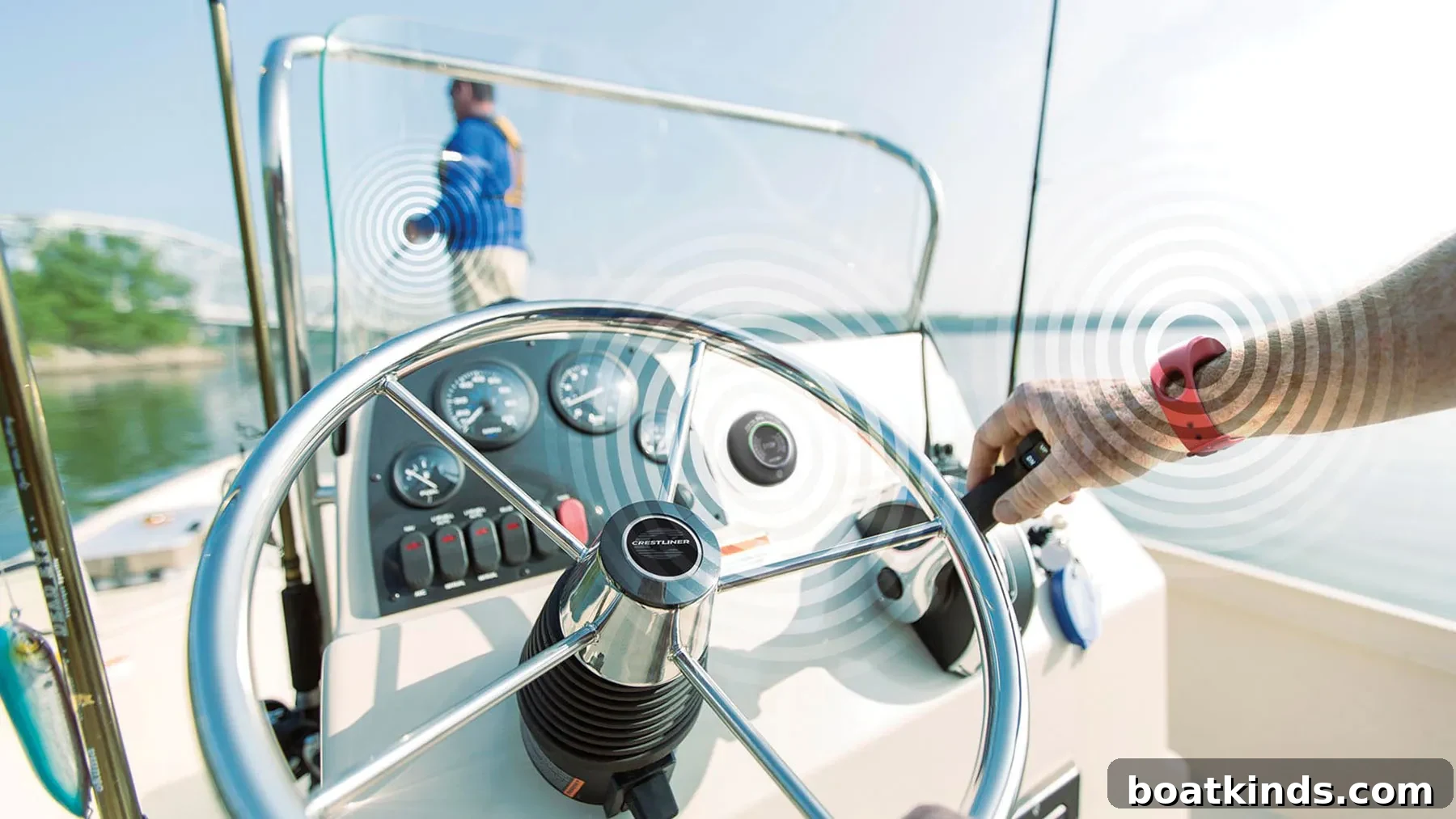
Wireless kill-switch systems offer an attractive alternative by removing the physical tether. Instead of a lanyard, the operator wears a small fob, tag or wristband that communicates with a receiver hub installed on the boat. If the wearable unit is submerged or moves out of range—because the captain, a passenger or a pet has fallen overboard—the receiver detects the loss of signal and cuts the engine electronically. Untethered, the captain can move freely around the vessel without being constrained by a cord.
There are trade-offs to consider. Because many wireless systems trigger only when a transmitter is submerged or completely out of range, they may not shut down the engine if the operator is incapacitated on deck but not immersed in water—such as being concussed after an impact. Even so, a wireless device that you will actually wear and rely on is likely safer than not using any kill switch at all. Below are three wireless solutions to consider, each with different features, compatibility and price points.
1st Mate Marine Safety and Security System
Developed through a partnership between Mercury Marine and Fell Technology, 1st Mate is designed to work with boats that use Mercury SmartCraft digital systems and can support up to six Mercury outboards or sterndrives. The hub mounts at the helm and connects directly to the boat’s CAN Bus harness. When a wearable fob is submerged, the system triggers a man-overboard (MOB) alarm, shuts the engine down, and records the location via GPS. The MOB position is displayed on a companion smartphone app and on compatible multifunction displays, and the app can send an automatic distress message with coordinates to preprogrammed emergency contacts.
1st Mate also includes a proximity-based theft deterrent: the system will disable engines if the primary fob moves out of range. Quicksilver-branded 1st Mate kits offer similar functionality and are compatible with up to three Mercury engines without SmartCraft, as well as many other engine brands. Pricing starts at about $570 for a single-engine kit, with additional wearable fobs available for roughly $128 each.
Fell MOB+
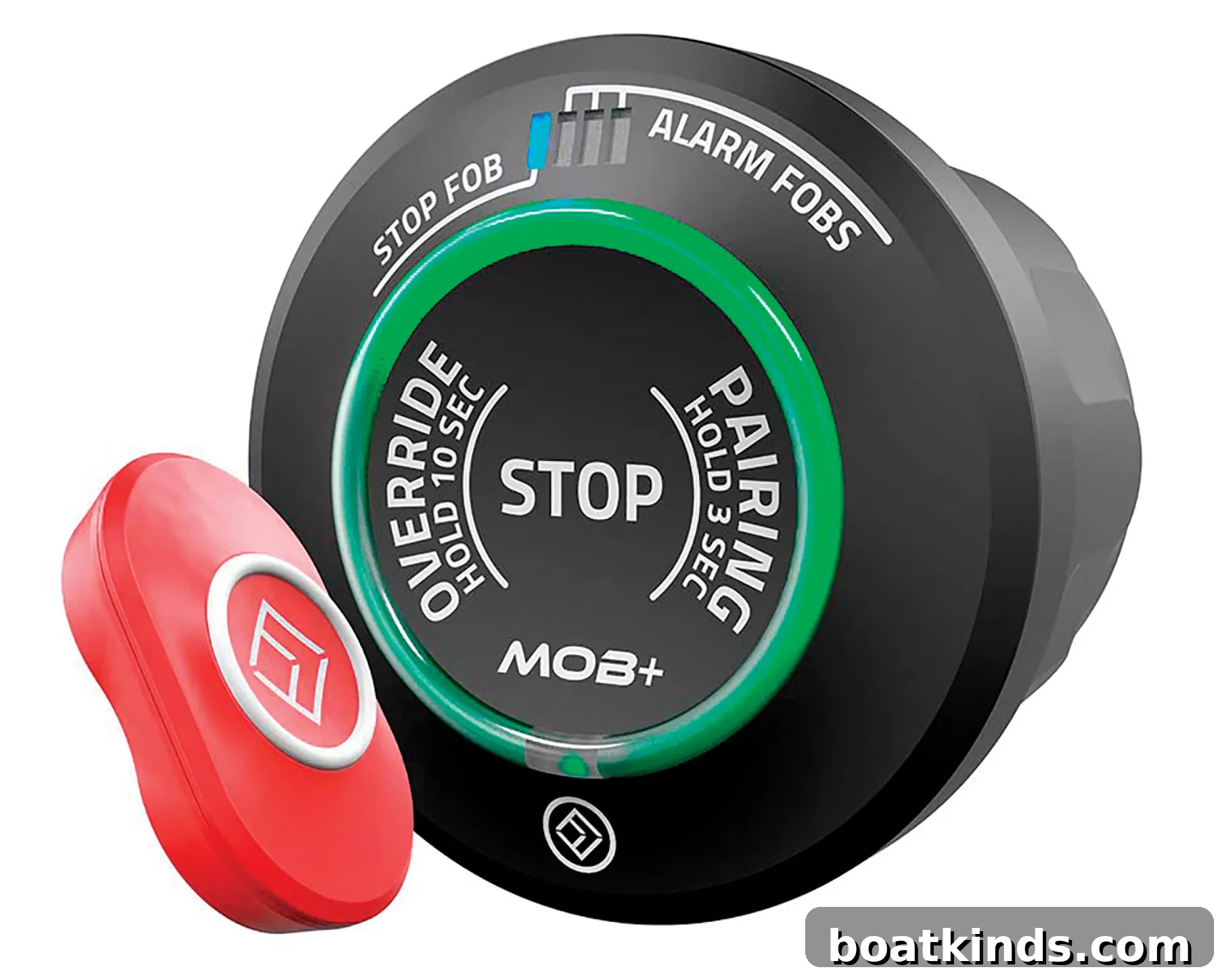
The Fell MOB+ is a brand-agnostic solution that works with all outboard and sterndrive engines. Its hub installs through a 2-inch dash opening and hardwires to the boat’s existing kill-switch wiring. The system includes one wireless fob and can support up to three extra wearable passenger fobs. If a fob is submerged or drifts more than about 50 feet from the hub, the MOB+ sounds an alarm and cuts engine power. After a short delay—six seconds—the engine can be restarted. When a passenger fob triggers an alert, the hub produces an audible alarm and a visual indicator. The MOB+ is an economical option, priced around $200 with one fob; each additional fob is about $40.
ACR OLAS Guardian
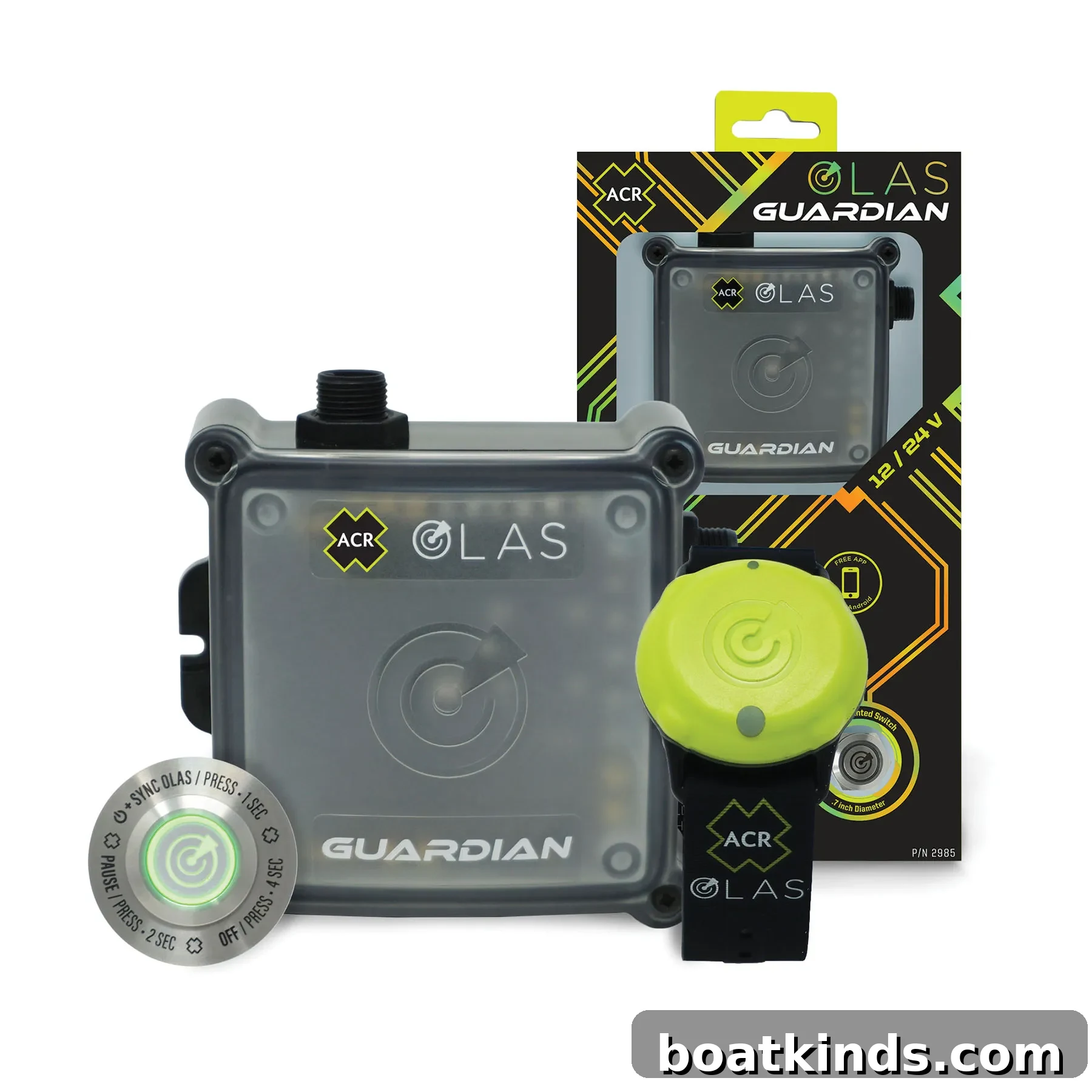
The ACR OLAS Guardian combines a wireless kill switch with a full MOB alarm system and is compatible with most engine brands. The stainless-steel switch mounts through an 18mm dash hole, while the hub mounts behind the dash and ties into the boat’s existing wiring. OLAS supports up to 15 wearable transmitters—OLAS Tags or OLAS Float-On Lights—and the companion app lets you configure how each tag behaves. You can choose tags that trigger only the MOB alarm or both the MOB alarm and an engine shutdown if a tag is submerged or moves beyond roughly 50 feet. The app logs the MOB coordinates via GPS and guides the crew back to that position; in Solo Mode it can also send a distress alert to a programmed phone number. Pricing is about $250 for a single wearable tag, with additional tags costing around $80 each.
Each of these wireless systems reduces the friction of wearing a kill switch and offers features—GPS logging, smartphone integration, theft deterrence—that traditional lanyards cannot provide. When selecting a system, verify compatibility with your engines and helm electronics, consider installation requirements, and weigh features such as range, the ability to support multiple wearable transmitters, and app-based notifications.
This article was originally published in the June 2021 issue.