
Restoring a Venetian Water Taxi: The Story of Intermezzo
Outside of James Bond films, David Snediker had never seen a Venetian water taxi up close. These boats are uncommon on American waters; they were designed for the canals of Venice and built with that environment in mind.
The wooden taxi Intermezzo was originally purchased in Venice and spent a few years in Sag Harbor, New York, where its owner maintained it as best she could. Classic wooden craft demand constant care, and by 2007 the boat required more attention than she could give. Intermezzo arrived at Snediker Yacht Restoration in Pawcatuck, Connecticut, for what began as modest repairs but quickly revealed a larger project.
“She had been nursed along for years, but it was clear she needed more work than the owner wanted to commit to,” Snediker recalls. As a wooden boat needing serious restoration, Intermezzo wasn’t a job for an amateur—but Snediker had the right client in mind.
Collector and sailor Joe Robillard had never seen a Venetian taxi until he met Intermezzo, but when he saw the photos he knew it deserved preservation. “I wasn’t looking for it, but there was only one person crazy enough to restore it,” he says. Robillard has sailed since childhood and started restoring boats as an undergraduate; though his career went into finance, restoring classic boats has remained his passion. Over the last two decades he and Snediker have collaborated on several restorations, including a 78-foot Herreshoff sloop currently under their care. When Snediker suggested Intermezzo, Robillard famously replied: “I need more varnish in my life.”
Built in 1961 by an Italian yard named Chia, Intermezzo’s early history is sparse. Snediker believes she was built on Murano—an industrial island across from Venice—and likely once shuttled passengers from the Santa Lucia train station into the city center. In Italy, wooden workboats like this were often utilitarian rather than celebrated artifacts, which explains the lack of published history.
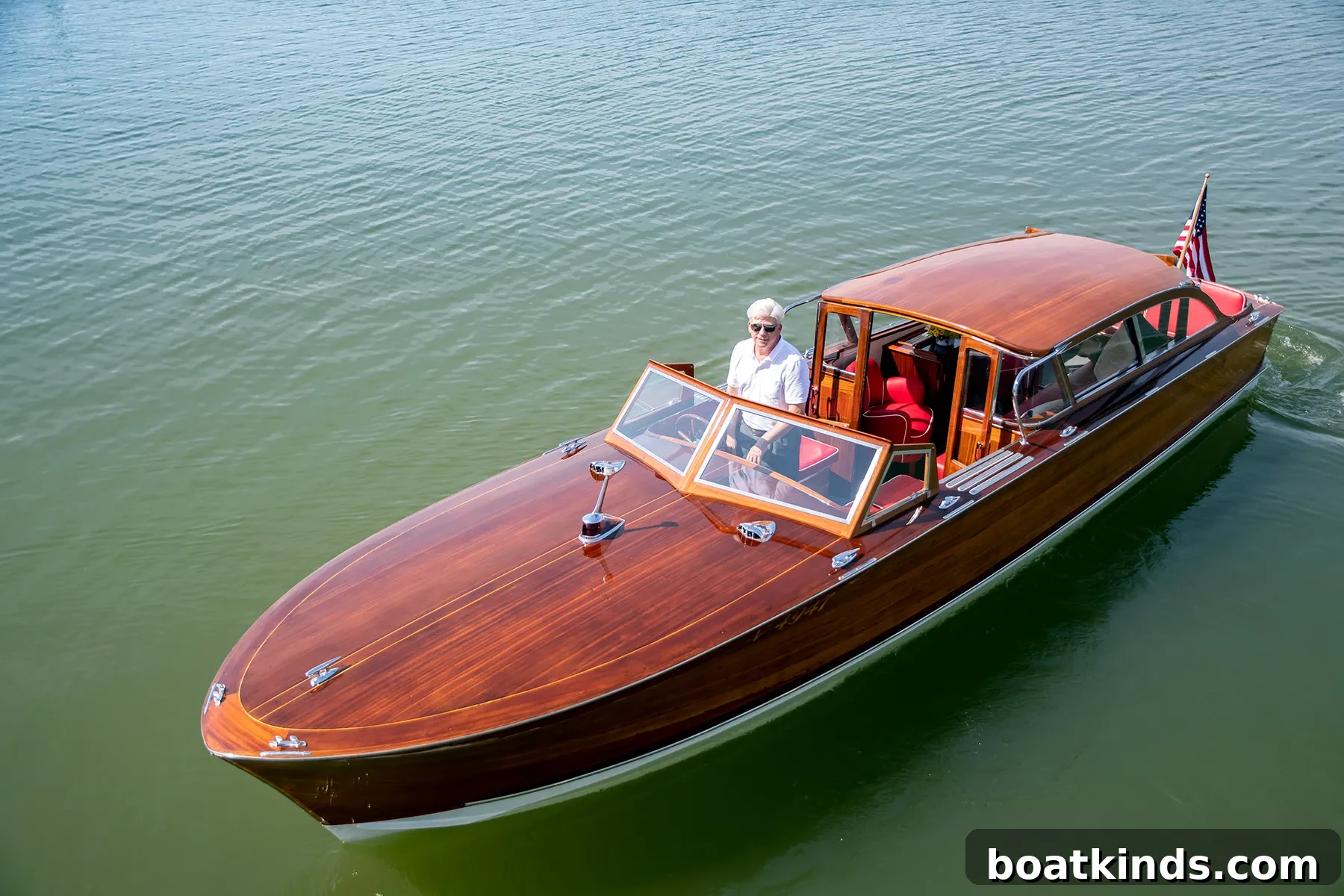
Despite that, the craftsmanship is exceptional. Intermezzo is entirely hand-built using traditional double-planking. The inner layer is laid diagonally from rail to chine, while the outer layer covers the topsides, producing a light, watertight hull. Between these planks lies a linen fabric layer, likely set in paint or white lead. The planking is book-matched across the hull—large pieces cut to make matching planks on each side—a clear sign of superior workmanship. All the timber is ribbon-striped, instrument-quality African mahogany.
Snediker and Robillard began the comprehensive restoration in the winter of 2010–2011. Intermezzo still carried her original Volvo gasoline engine—loud and hot—and the plan was to replace it. Removing the engine and running gear exposed the true condition of the hull bottom, and they decided not to attach a new powertrain to an uncertain structure. Instead, they flipped the boat and removed the entire bottom for replacement.
They installed a new keel and reconstructed the bottom using the same double-plank method. Rather than bedding the two layers in cloth and paint as originally done, they epoxied the planks together to take advantage of modern technology for greater strength. Because Robillard planned to keep the boat in Maryland—where summer humidity and wet-dry cycles are a concern—and to run her from a lift, Snediker reinforced the chine with fiberglass for structural integrity and waterproofing, then covered it with outer planking to preserve the classic appearance.
Intermezzo now runs on a 6.2-liter MerCruiser V-8 that propels the 30-foot boat to about 33 knots, a marked increase over the original engine. They added a modern transmission, shaft and prop, improved sound insulation and enclosures around the engine space, and installed air conditioning in the aft cabin.
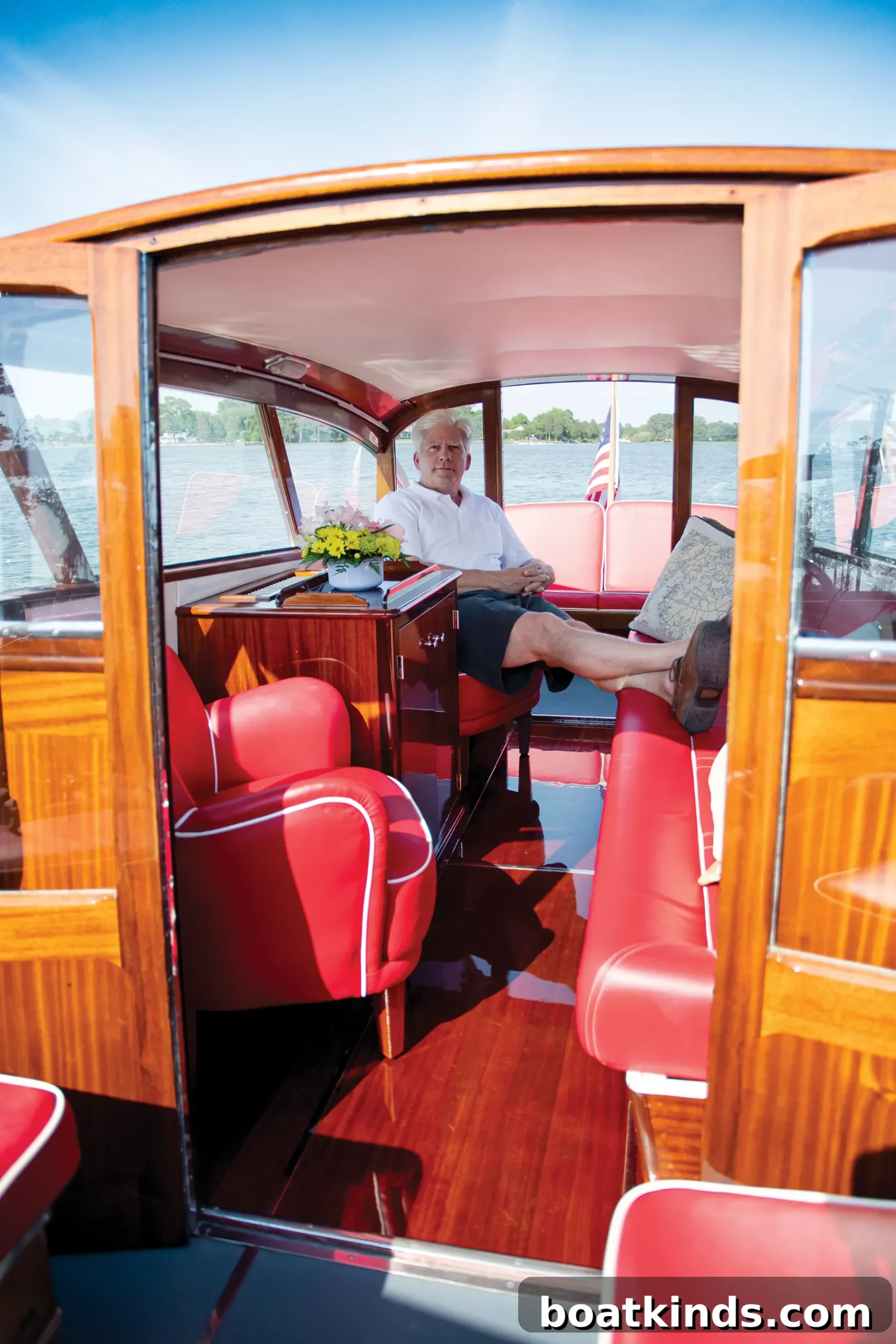
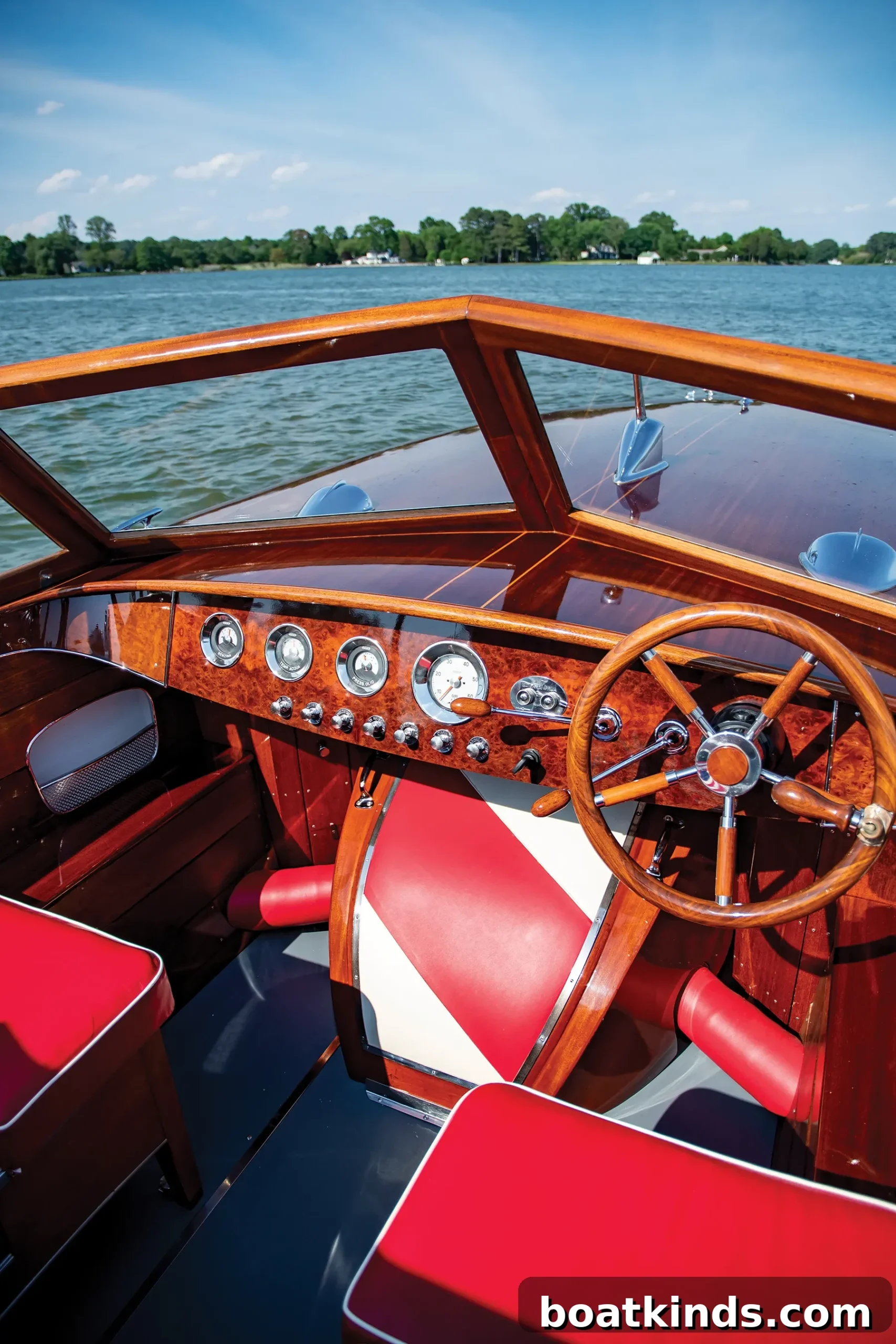
One of Robillard’s favorite discoveries was stylistic rather than structural: the passenger cabin’s side windows were designed to roll down like car windows. The original mechanism was missing, but the frame and channels were intact. Snediker and Robillard installed motors and switches to make the windows operable again. “People love pressing the little button and watching the window go down,” Robillard says. The windows complement the cabin’s armchairs upholstered in red leatherette with white piping, enhancing both comfort and period charm.
Today Intermezzo lives on a lift in Robillard’s boathouse in Oxford, Maryland. Her deep-V entry that flattens quickly gives her a comfortable ride in chop and near-displacement behavior at low speeds. Robillard limits her to sheltered waters—creeks and rivers on the Eastern Shore of the Chesapeake—where she shines as a cocktail-cruise boat and draws attention wherever she goes.
“Everyone stares when you go through town,” Robillard says. “She’s mesmerizing with the sun on the varnish and the lines of the hull.” Once a functional workboat, Intermezzo now enjoys a well-earned retirement where her craftsmanship and Italian design can be admired. Robillard intends to keep her permanently; the boat’s balance of form and function embodies the snap of Italian design—something rare and beautiful on the Bay.
This article originally appeared in the August 2020 issue.