
Don Street, Influential Caribbean Navigator and Author, Dies at 93
Donald Street Jr., the tireless sailor and author whose charts and cruising guides helped open the Caribbean to generations of charterers and cruisers, has died in Glandore, Ireland. He was 93. Street lived in Glandore with his wife, Trich, and remained actively involved with sailing into his final days. According to accounts from the sailing community, he spent April 30 working on his 87-year-old International Dragon, Gypsy, preparing her for the coming racing season, and passed away that evening.
Street’s hands-on approach to seamanship and his clear, practical writing made him a trusted authority worldwide. Late in life he was still racing and maintaining classic boats; on a recent visit a magazine editor reported Street joking about Gypsy’s age—“She’s trying to catch up to me”—and saying he planned to race her in the 100th anniversary Dragon class regatta in 2029.
His influence on individual sailors is widely noted. Andy Schell, Offshore Editor at SAIL and founder of 59° North Sailing, wrote that Street’s classic books on seamanship were a discovery from a childhood bookshelf that shaped his approach to offshore sailing. Schell and his wife, Mia, credited Street with inspiring their first transatlantic passage via the northern route from St. Pierre to Crookhaven, and recalled meeting Street in Glandore in 2011. Over the years Street became a mentor, colleague, and friend—always generous with advice, quick to respond to questions, and consistently passionate about better seamanship.
Born and raised along Manhasset Bay on Long Island, Street began his professional life at sea as crew on Huey Long’s 53-foot Abeking & Rasmussen yawl Ondine, where he eventually served briefly as skipper. In the 1950s he settled in the U.S. Virgin Islands, and in 1957 he purchased a 1905, 46-foot yawl that would become inseparable from his name: Iolaire.
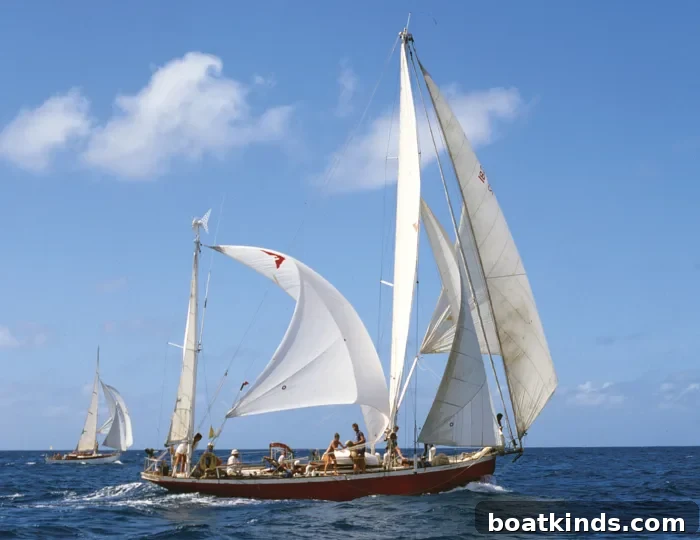
When Street first acquired Iolaire, she had a reputation for speed but suffered from severe weather helm. Street worked on the rig until he found the balance that allowed the boat to be handled easily—even by his wife Trich, who he noted could manage the vessel in all but the most extreme conditions. Without an engine, Iolaire became Street’s survey platform as he explored the Caribbean islands using the only reliable chart he could find at the time: an 1867 edition of Norie & Wilson’s Sailing Directions to the West Indies. From his careful notes he developed step-by-step sailing instructions that evolved into the first edition of his Cruising Guide to the Lesser Antilles, published in 1966.
Street’s cruising guides, together with comprehensive works such as The Ocean Sailing Yacht (Volumes I and II), became essential references for cruisers and professional mariners. In 1979 he partnered with chartmaker Imray to produce what became known as the Imray-Iolaire charts. What began as a modest project quickly proved influential: Street later joked that his wife had expected chart royalties would pay for a little whiskey at boat shows, only to find the income far exceeded those modest expectations. Today, major navigation companies still make use of information originally developed for those charts.
Street also played a role—somewhat reluctantly acknowledged—in the emergence of the modern bareboat charter industry. In the 1960s and ’70s charter fleets were an eclectic mix of vessels and standards. Street collaborated with designers and entrepreneurs to sketch out a purpose-built 41-foot charter yacht, a concept that helped launch what became Caribbean Sailing Yachts (CSY). The underlying idea was practical: owners could buy a boat, place it in a managed charter fleet, recover costs while retaining seasonal use themselves, and thereby expand access to island sailing for many new sailors.
He was a prolific writer and storyteller. Street often described the moment his writing career began in an anecdote about John Steinbeck at Caneel Bay. Steinbeck reportedly urged him to write regardless of perceived limitations, advising that persistence, practice, and editors’ help were part of the craft. That conversation encouraged Street to begin publishing—and to keep going—eventually producing a body of work that continues to inform and instruct sailors around the world.
Don Street’s legacy is visible in the charts, guides, and technical books that remain on cruising bookshelves, and in the generations of sailors who learned to navigate the Caribbean because of his careful observations and practical advice. He is survived by his wife, Trich; his children Dory, Donald, Richard, and Mark (Ted); and nine grandchildren. His practical seamanship, plainspoken wisdom, and lifelong devotion to sailing leave a lasting imprint on the cruising community.