
Crossing the Baltic: Testing XO Boats’ DFNDR 9 and EXPLR 9
I had planned a swim in the Baltic—but not like that.
We’d just tied up for lunch at Fjäderholmarna, a Swedish islet close to central Stockholm. I jumped ashore to secure the bow and began walking the narrow, foot-wide pier to the stern when the dock beneath me started to sink. The tiny float that supported it began bobbing, weaving and oscillating. I froze on a wooden tightrope while the restaurant’s diners enjoyed an unexpected show. I was moments away from embarrassing myself in front of three Finns I had just met and with whom I’d be spending the next four days.
It was an inauspicious start to my first Baltic crossing. The trip had begun a few hours earlier outside Stockholm’s Viking Museum. Erkki Talvela, CEO of Finnish builder XO Boats, had invited four marine journalists to cross from Sweden to Finland aboard two XO models: an inboard EXPLR 9 and the prototype outboard DFNDR 9. Along for the ride were DFNDR 9 designer Jaakko Kantola and adventure photographer Valtteri Hirvonen.
We reached lunch after a leisurely cruise through Stockholm’s inner harbor, passing historic vessels, threading under the city’s many bridges and skimming by the Royal Palace, where a naval parade—complete with marching band and dress uniforms—processed through the streets.
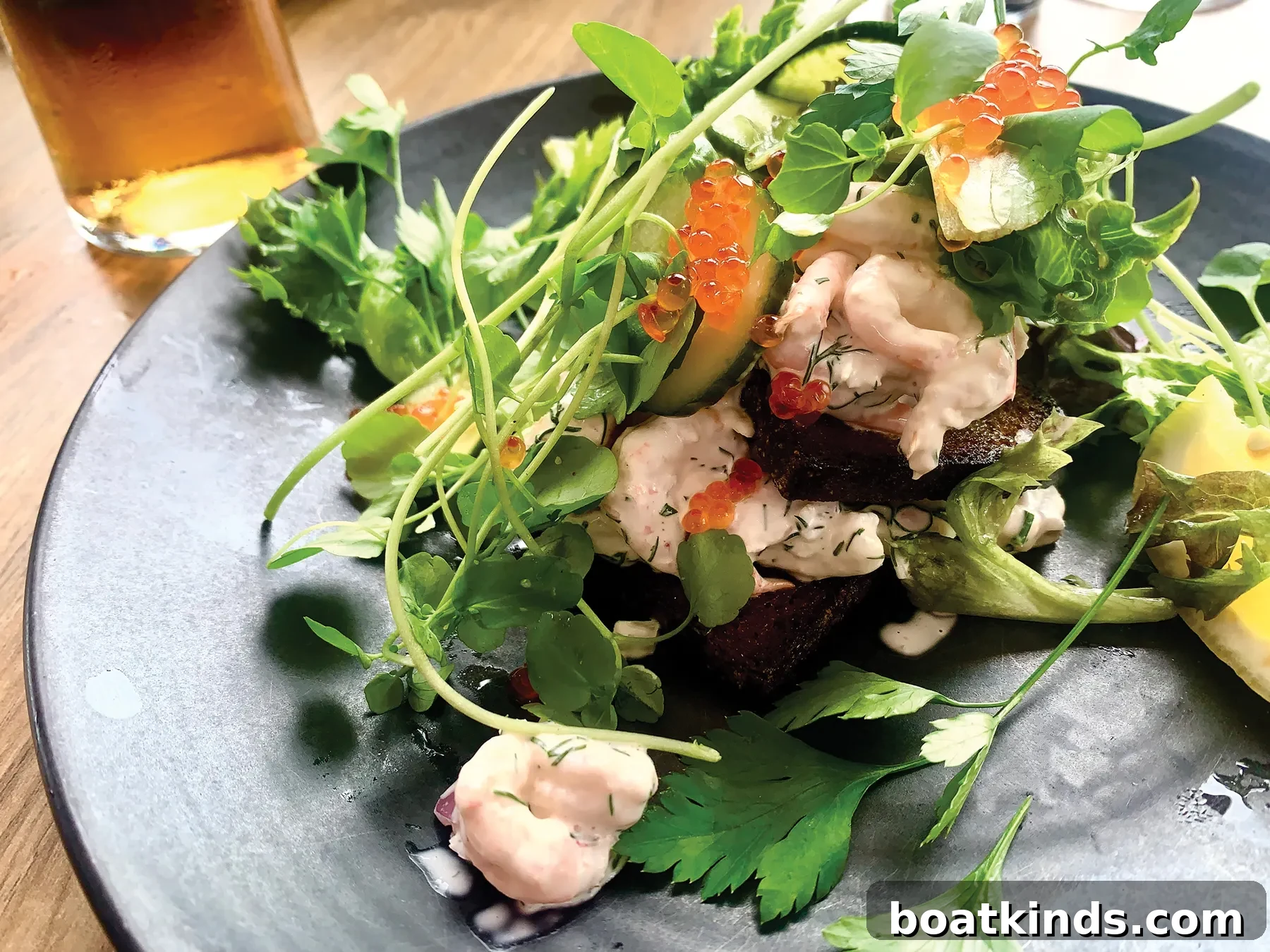
Outside the city, Jaakko had pushed the DFNDR up past 30 knots to reach the 17th‑century castle and fishing cottages of Vaxholm. After a brief tour we docked at the island restaurant, where my swim was fortunately postponed. I climbed back aboard the DFNDR 9 and joined the others inside Restaurant Rökeriet, where I had my first encounter with Toast Skagen—an appetizer that would become a minor obsession for our crew over the next few days.
Toast Skagen is said to have been invented by Swedish chef Tore Wretman in 1956. The dish pairs shrimp, mayonnaise, fish roe and dill atop toasted bread and remains a Nordic staple across the Baltic region. Ironically, the shrimp used are from the North Sea and Atlantic; the Baltic itself is brackish and supports a different ecology. The Baltic’s low tidal range and narrow sills limit the inflow of North Sea saltwater, while heavy freshwater runoff from its 14 bordering countries keeps salinity low. It takes decades for the North Sea to replace the Baltic’s water, making the Baltic Sea the world’s largest brackish-water system.
Like other large seas, the Baltic faces mounting pressures: reduced salinity from increased runoff, eutrophication that lowers oxygen levels, overfishing and pollution that has raised PCB levels in Baltic salmon. Yet despite these challenges the region remains spectacularly beautiful. In summer the water can appear glassy and calm, which is why boaters flock out in force for the short cruising season after the summer solstice. The main boating window lasts only a couple of months; outside it, storms can make the Baltic treacherous. In winter waves can reach extraordinary heights, and the sea is littered with wrecks—grim reminders of its unpredictable nature.
Those conditions inspired Erkki and his friend Sakari Mattila to found XO Boats in 2007. Erkki’s reputation for breaking fiberglass hulls led them to choose aluminum construction for XO. “I was an enthusiastic driver,” Erkki said with Finnish understatement. “Sakari says I can drive any boat to pieces. I wanted a boat I couldn’t break.”
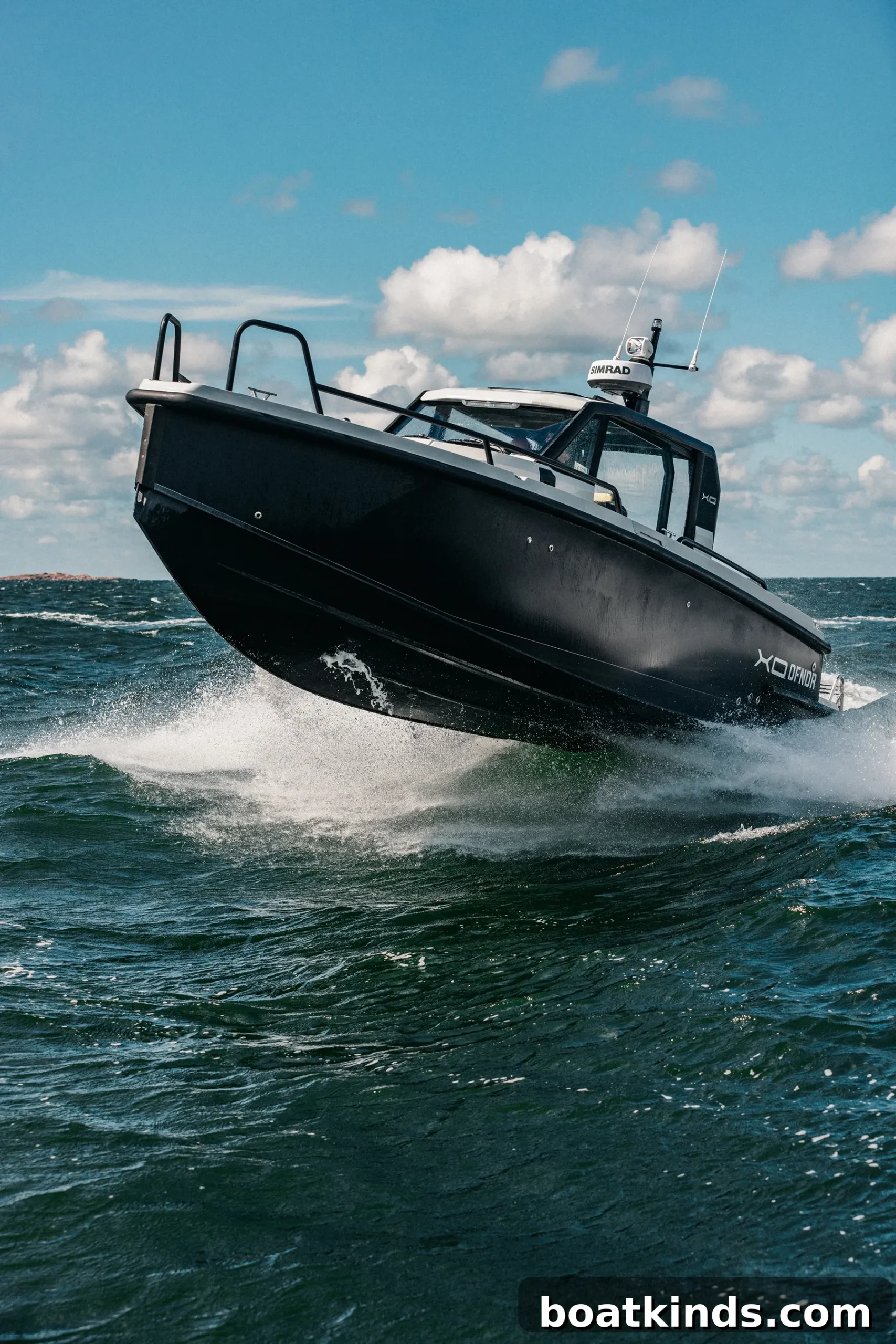
Breaking a DFNDR 9 would be difficult. Built in Poland from military‑grade aluminum, the hull features a 5/16‑inch keel, 13/64‑inch bottom panels, 5/32‑inch topsides and an internally reinforced aluminum honeycomb bottom. For a 28‑foot‑8‑inch boat, that’s a heavy dose of metal. “You can’t break it by driving it,” Erkki said. “You have to hit the rocks to break it.”
We avoided rocks—there are many in the Baltic—but Erkki and Jaakko were eager to demonstrate the DFNDR’s strength and handling. After lunch Jaakko suggested we “play a little.” He accelerated past 45 knots, drifted into a hard turn that had me sliding across the cabin bench, then carved figure‑eights that forced me to hang onto the center support and lean into the Gs.
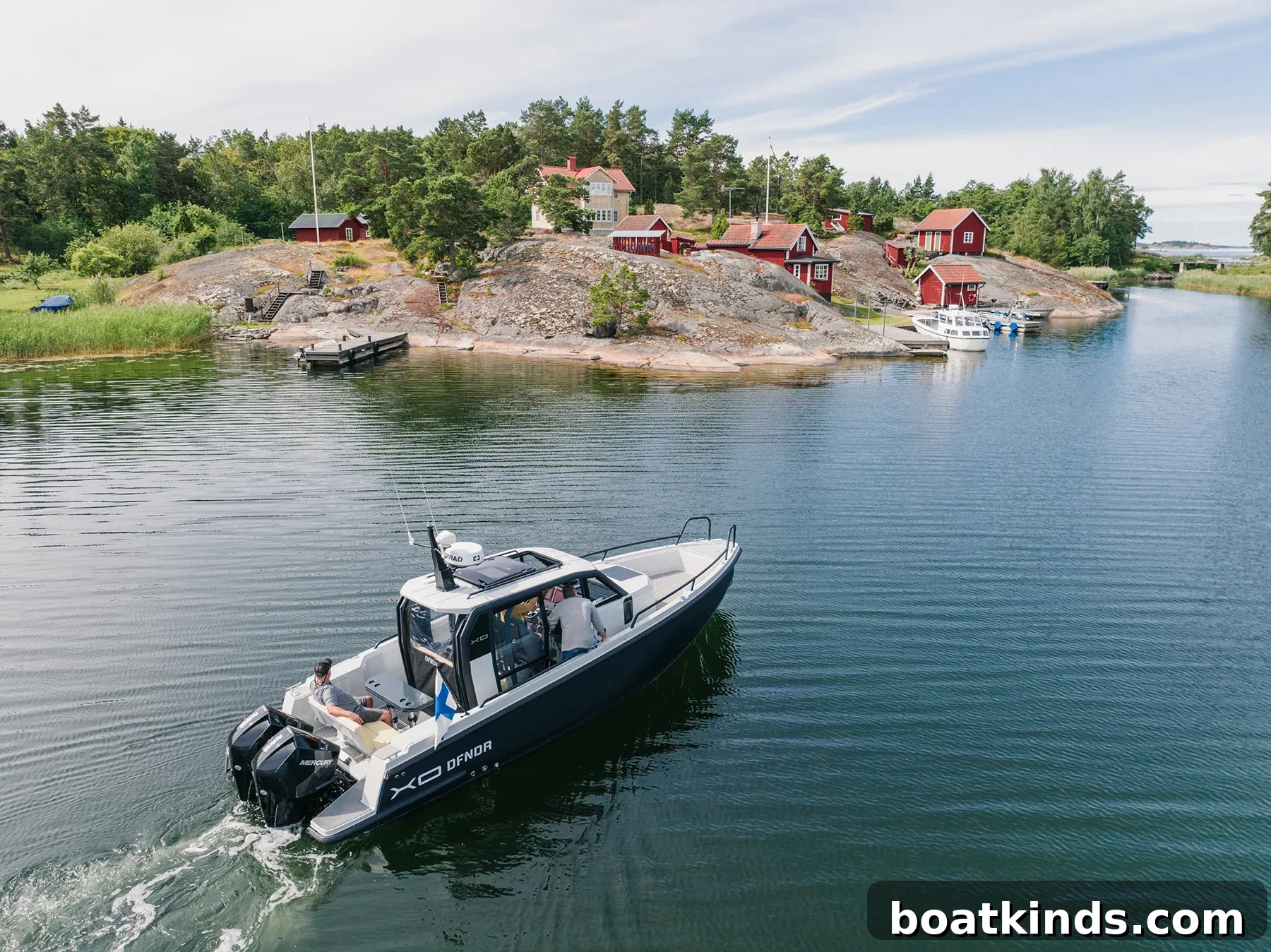
We later traded back to the inboard EXPLR 9 and cruised at more than 30 knots toward Sandhamn, an eastern island in the Stockholm Archipelago. Sandhamn, a historic pilot station and popular boating destination, hosts the prestigious Round Gotland Race each year and is sometimes called Sweden’s Newport. With just 100 year‑round residents and few cars, its charm felt more like a remote island outpost than an upscale resort town.
The next morning, over a Swedish breakfast of cold cuts, bread, eggs, yogurt and fruit, Jaakko outlined the westerly inland route through the Stockholm Archipelago that we’d take before crossing the Åland Sea to Finland. Although 91 nautical miles—about 21 miles longer than the outside route—it promised more comfort and better scenery.
He then showed us the Finnish Archipelago on his tablet. At first glance it looked like roughly 80 islands, but zooming in revealed thousands. With more than 20,000 islands, Finland’s archipelago is the largest in the world—granite outcrops carpeted with spruce, pine and birch, some islands with lakes of their own, and even islands with lakes that contain islands.
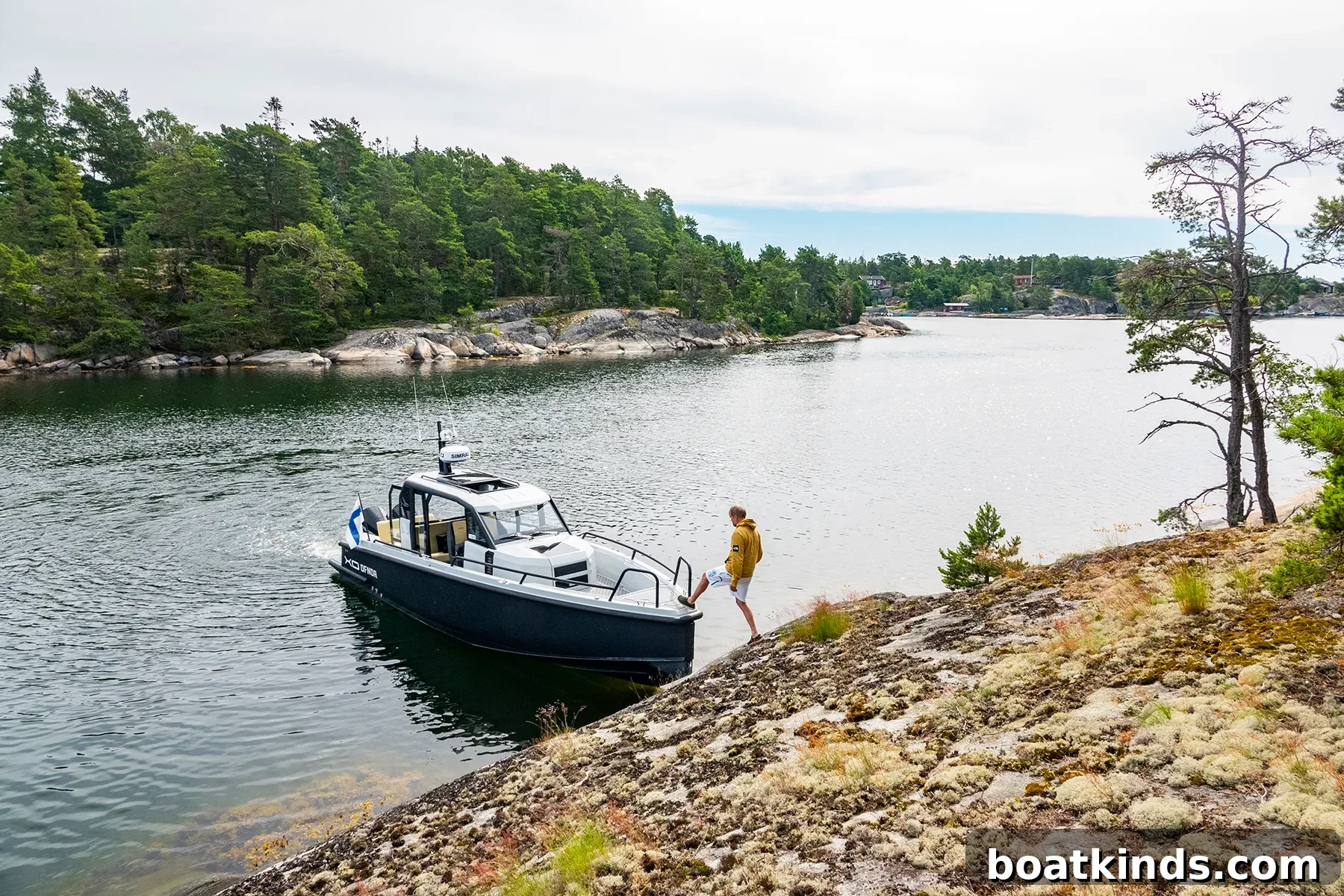
An aluminum hull proved useful as we gunkholed through narrow passages. Jaakko nosed the DFNDR’s blunt bow onto a rocky ledge so we could step ashore, then quietly held position with the engines while he hopped off.
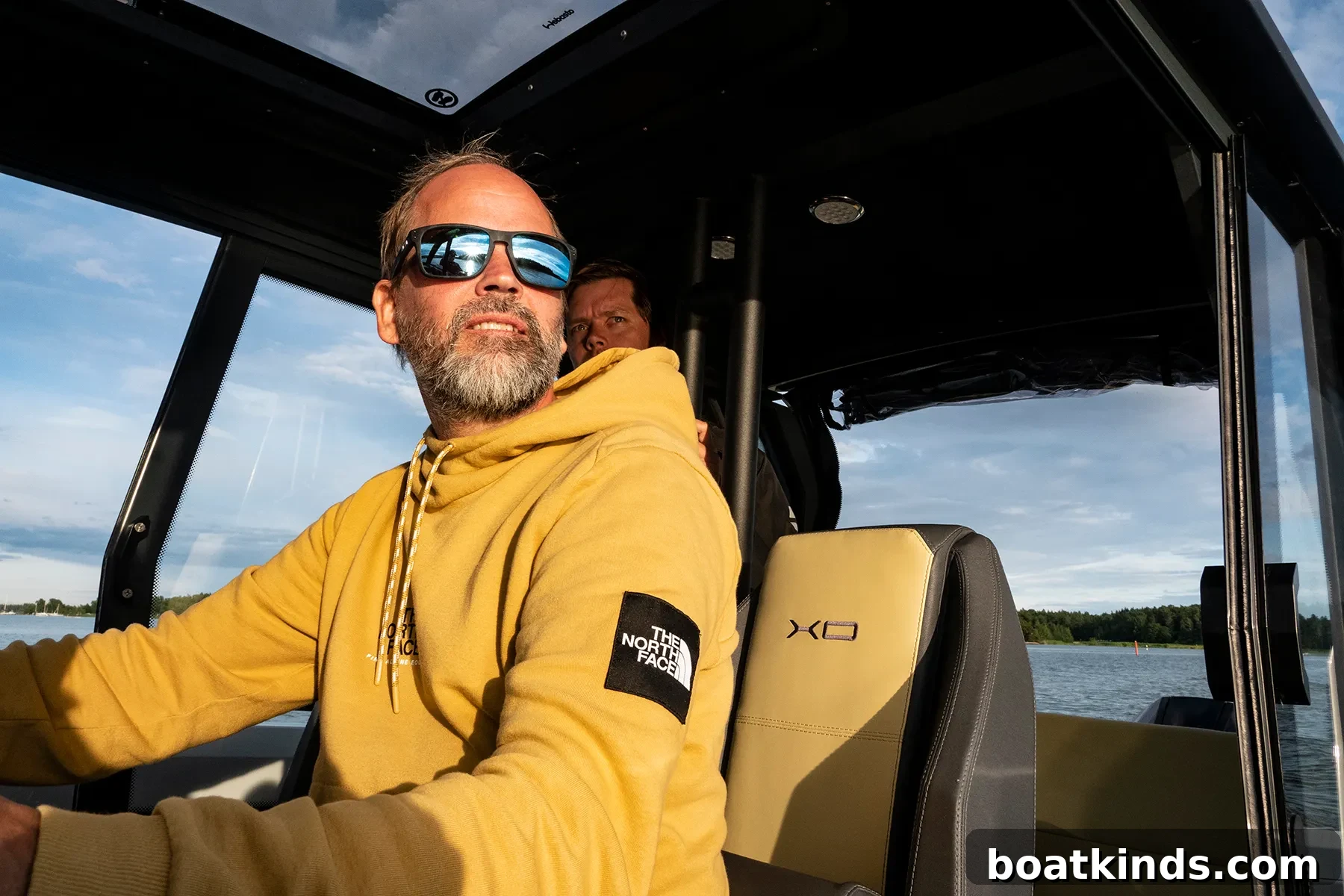
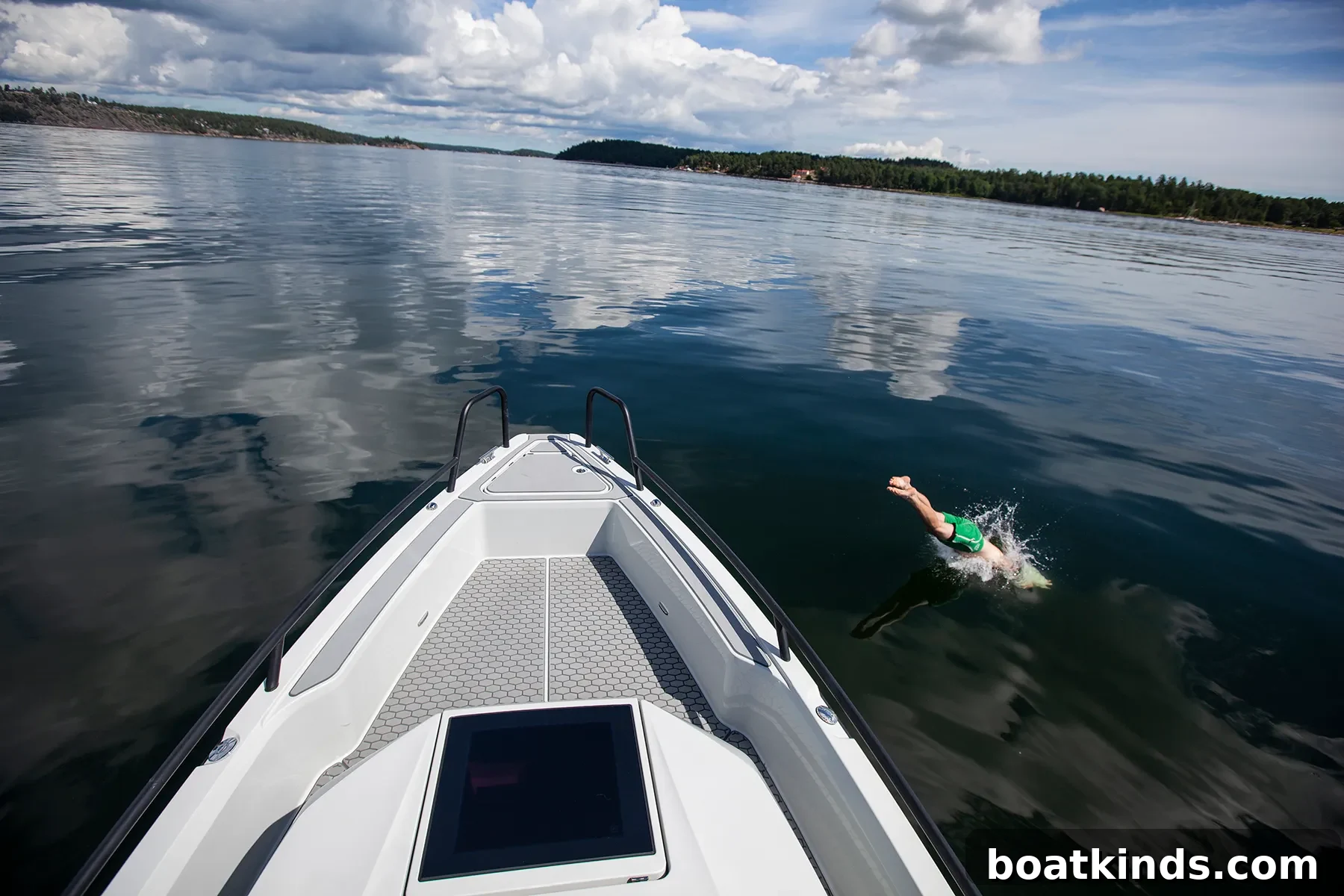
Jaakko enjoyed a bit of cat‑and‑mouse with the inboard EXPLR 9, though the DFNDR’s twin outboards gave it a clear speed edge. On calm, sunlit stretches we dove overboard; the water was warmer than I expected and the sky reflected like a mirror. After the EXPLR passed, we accelerated to catch Erkki, who was cruising steadily toward Helsinki at 30 knots.
Before the crossing to Finland we paused for a waterfront meal—more Toast Skagen for those who’d surrendered—and set off across 26 miles of open Baltic. Conditions were mild, 1‑ to 2‑foot seas with 8‑ to 15‑knot winds, and we averaged better than 30 knots.
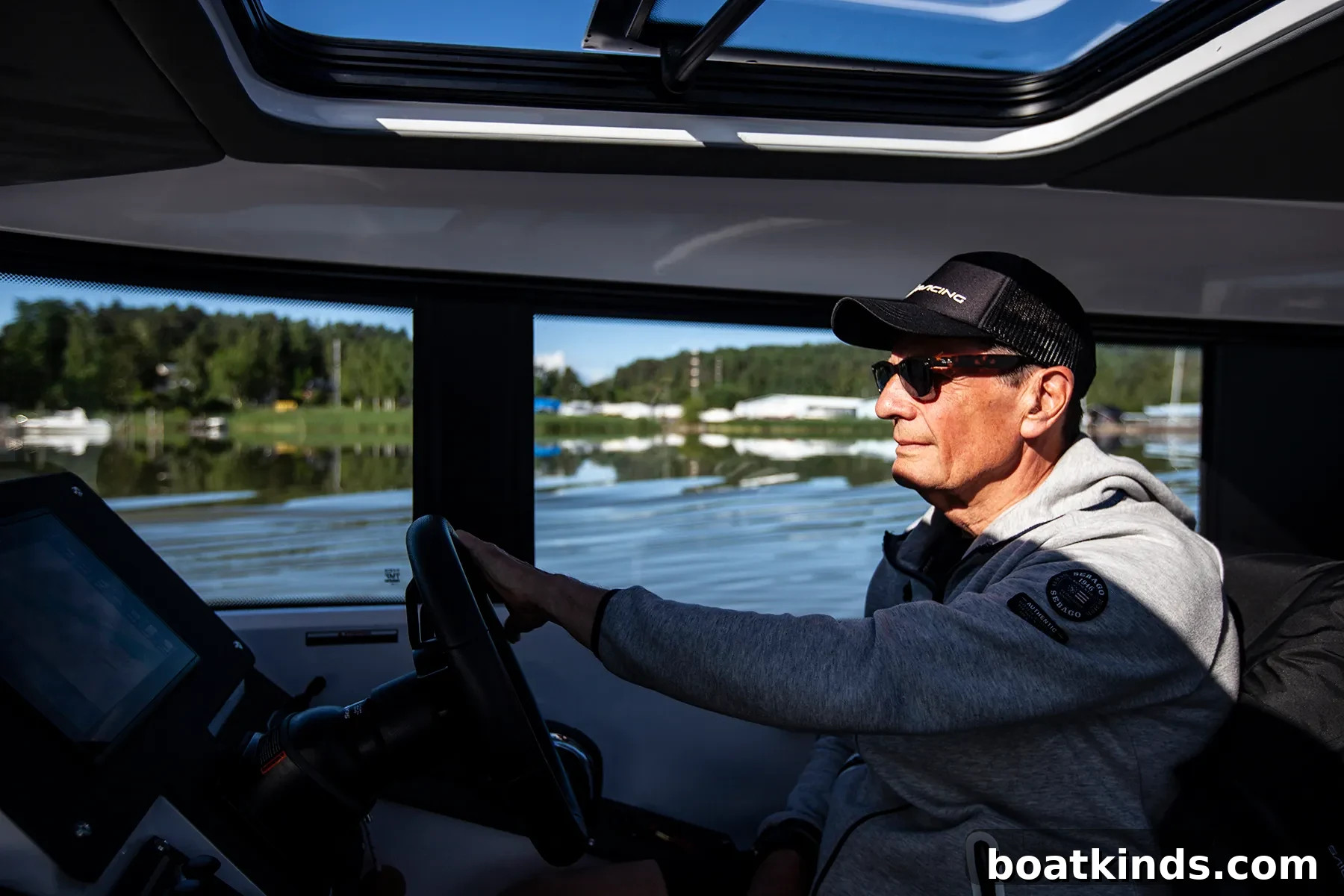
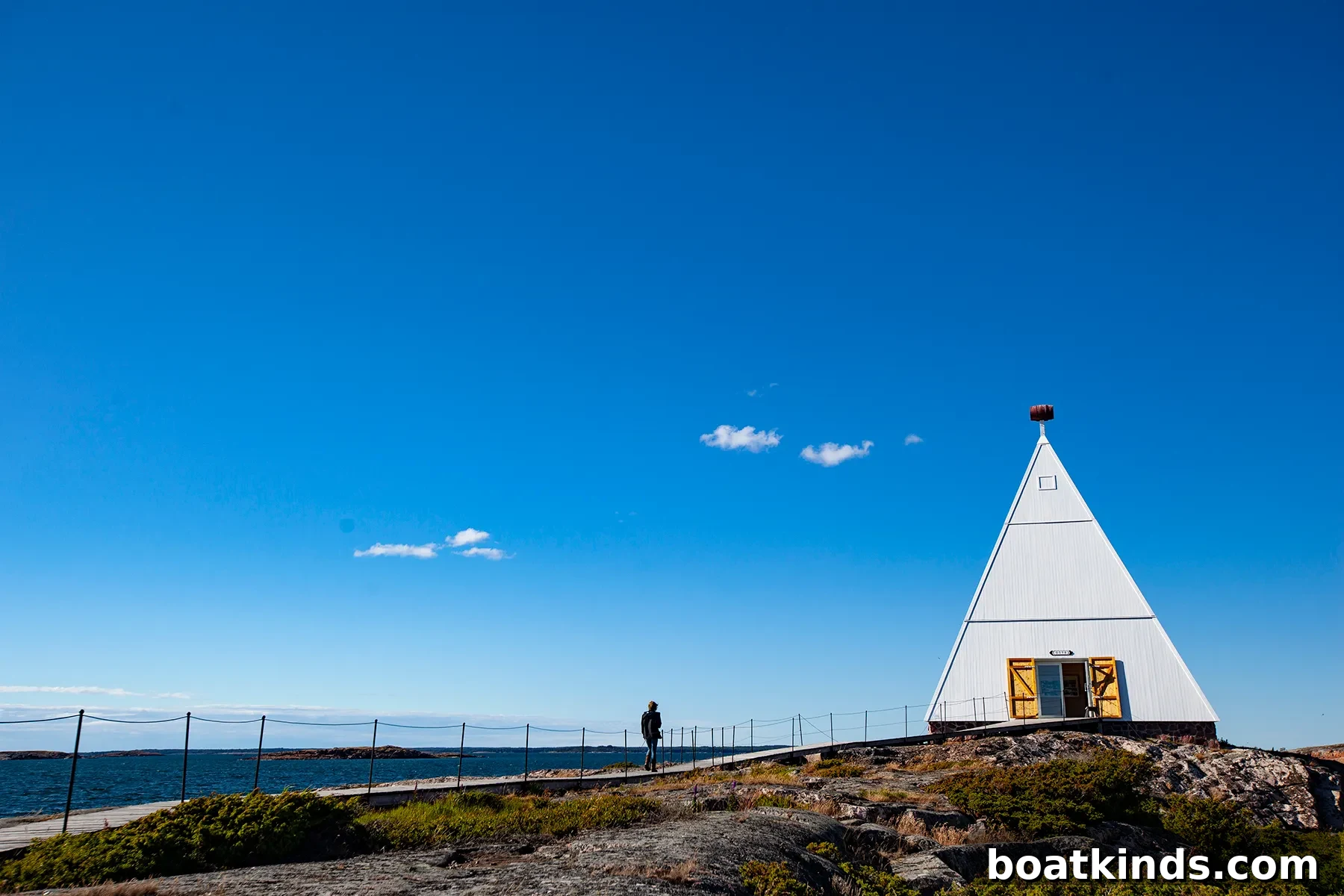
Midway across we stopped, jumped in for a bucket‑list swim and, after Jaakko pushed the DFNDR over 40 knots, reached Finnish soil at Kobba Klintar in the Åland islands. Once a pilot station, now a museum, Kobba Klintar felt raw and remote. A striking white pyramid marks the site where a beacon once stood. Time slipped by quickly—what I thought was 3 p.m. turned out to be 6 p.m.—and we nearly missed our yacht club dinner reservation in Mariehamn, Åland’s capital.
Åland is an autonomous Finnish territory with a predominantly Swedish‑speaking population and a complex identity since Finland’s 1917 independence. The islands were strategic in World War II and the seabed nearby still holds wrecks. With current geopolitics, Åland’s status remains sensitive: residents rely on Finland for defense even as they retain cultural ties to Sweden.
After checking in, we strolled Mariehamn’s linden‑lined boulevard and dined at ÅSS, the Åland sailing club. Erkki explained that the DFNDR hull was developed by J&J Design of Slovenia with input from XO and offshore racer/designer Egil Ranvig. The collaboration aimed to deliver a robust, high‑performance hull suited to northern seas.
The next morning we pushed toward Turku, Finland’s former capital. While I drove, Jaakko encouraged me to “play.” I switched the shock‑absorbing seat into bolster mode, accelerated to 46 knots and put the DFNDR into a tight turn. The boat tracked perfectly—no skidding, no wander—feeling as if it were glued to the water.
We threaded the archipelago at speed, then sheltered from a downpour on Nauvo island before ducking into a restaurant. I passed on another Toast Skagen and immediately regretted it when Valtteri pronounced that plate “perhaps the best yet.”
Over dinner, three young Finnish sailors approached—smitten by the speed and black carbon‑look wraps of the XOs. They’d mistaken us for official transport; when they discovered we were just American journalists, the conversation turned to boat details and national pride.
Back on the water, a big wake sent the DFNDR into a hobby‑horse rhythm. Jaakko adjusted throttles to steady the motion and we laughed like kids. It was clear he loved showing off the boat he designed from the hull up. The DFNDR takes visual and conceptual cues from off‑road adventure vehicles: an aluminum safety cage inside the cabin, a thermoplastic overhead liner, vertically raked windshield, and side doors that open—practical features that reinforce its “adventure boat” identity. The prototype had soft walls; the production boats now use sliding glass doors.
When I asked about refinements, Jaakko’s answer was playful: “You’ll see them on Erkki’s DFNDR when we get to his island tomorrow.” Sure enough, aboard hull No. 3—Erkki’s personal boat—most suggested changes had been implemented. Fit and finish, doors, hatches and latches all performed well.
Initially I’d found some spaces on the DFNDR compact: a tight head and a passage narrowed by the sliding doors and stern fender lockers. But as we used the boat for its intended purpose—fast passages, island hopping and unplanned shoreline stops—I came to appreciate its strengths: excellent helm sightlines, minimal bow rise, a secure open bow pulpit for diving, high gunwales and wide side views that make the archipelago feel intimate and lake‑like.
At 60, I’m no longer driven by speed alone, but there’s undeniable pleasure in covering 400 nautical miles from Stockholm to Helsinki in four days on a performance hull while still finding time for gunkholing, swims and memorable meals with fun‑loving Finns.
On our final day we observed a classic Finnish ritual: sauna. With roughly 3.3 million saunas in a population of 5.5 million, Finland takes its saunas seriously. Erkki lit his island sauna, we took a cold Baltic dip and toasted the trip with a lonkero—Helsinki’s gin‑and‑grapefruit long drink first served at the 1952 Olympics.
Sitting by the water, listening to silence and watching terns skim the surface, I could easily imagine returning. But a plane awaited in Helsinki, and it was time to head home.
The sun shone as the DFNDR sliced across glassy water at better than 40 knots. As we sped toward the capital, Jaakko pointed to the open Gulf of Finland on our starboard side. “OK. Last chance,” he said. “Tallinn is just 50 miles away. We could be there in an hour.”
Valtteri added with a grin, “And they have cheap beer.” Have I mentioned I love the Finns?
XO Boats is launching the 26‑foot DFNDR 8 this year and plans a DFNDR 12 in 2023. If the larger hulls follow the DFNDR 9’s performance and durability, they promise to be impressive adventure boats.
This article was originally published in the October 2022 issue.