
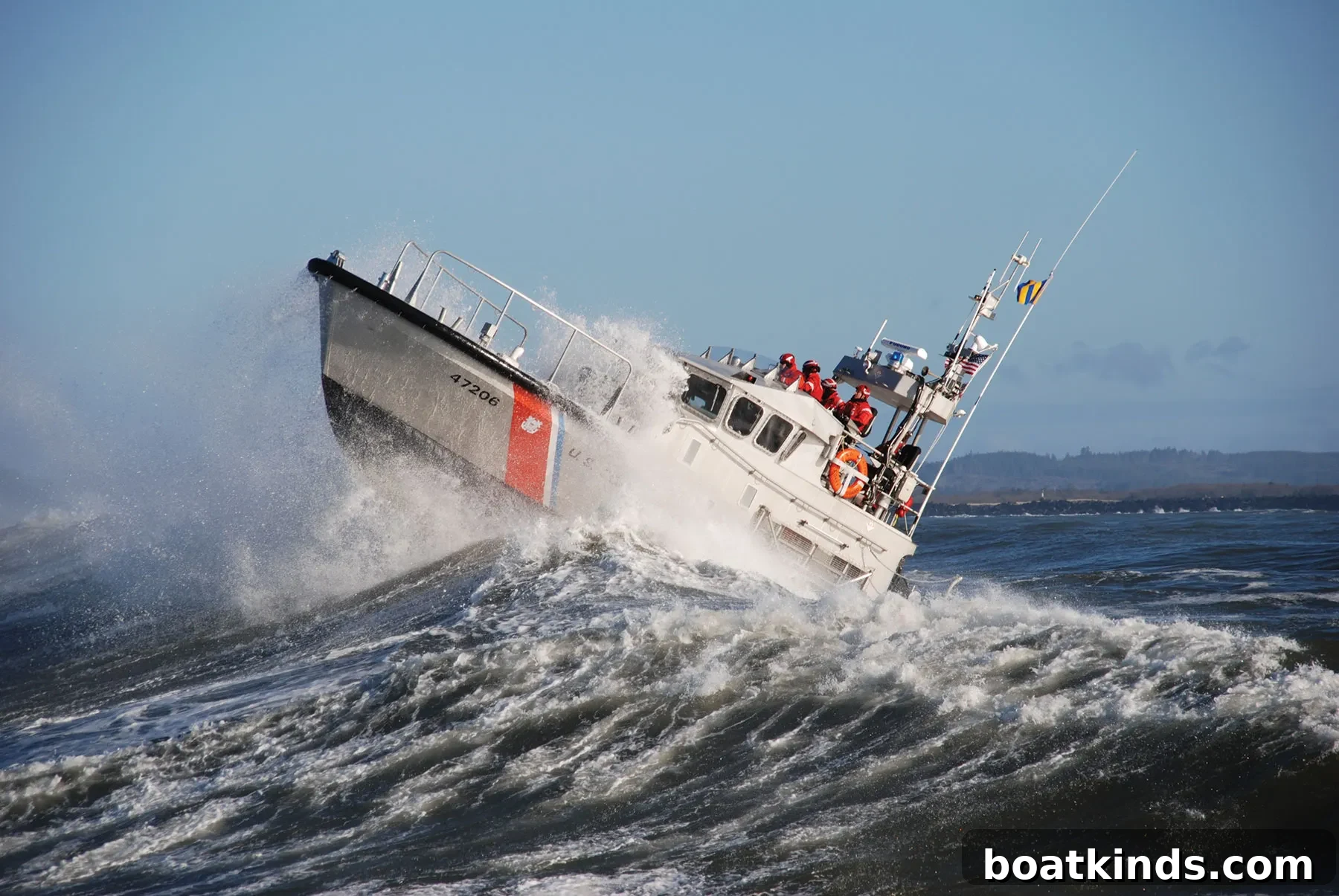
Alfred Tennyson’s poem “Crossing the Bar” uses the image of a bar — the shallow seam between river and sea — as a metaphor for dying. The comparison is apt: for boaters, crossing a bar can be one of the most intimidating and hazardous parts of a voyage. Many mariners, myself included, have watched steep seas on a bar and wondered whether the boat would make it through.
A bar is a shallow ridge of sand or mud that typically forms where a river meets the ocean. As fast-moving river water slows at the mouth, it drops the sediment it carries, creating a submerged or partially exposed shoal that often runs across an inlet. Because bars usually sit at roughly right angles to an outgoing river current and incoming ocean swell and wind, they can transform relatively moderate conditions into steep, breaking seas.
Some bars are infamous for their danger. The Columbia River Bar on the U.S. West Coast, for example, is often called the “Graveyard of the Pacific” because a broad area of shallow water and shifting sand spits creates violent surf and complex currents. On an ebb tide, the river’s outflow accelerates over the bar and collides with the incoming swell, producing very steep breaking waves even when conditions offshore are calm. Add shifting channels and shallow patches and you have a serious navigational challenge. But a safe crossing is achievable with preparation, good judgment and a seaworthy vessel.
GOOD TIMING IS KEY
Tides are the single most important factor in planning a bar crossing. Outgoing (ebb) tides can dramatically strengthen the river current, sometimes to the point where a smaller or slower boat cannot make progress and risks being swept into shallow water and breaking surf. At many bars, conditions calm significantly when the tide turns, so knowing the tidal cycle at your crossing point is essential.
Many bar accidents happen because mariners either do not consult tides or choose to cross at the wrong part of the tidal cycle. Carry tide tables and learn to read them; even if your chartplotter displays tides, carry printed tables as a backup. Tide books are often referenced to a limited set of stations, so learn the local corrections needed to estimate tides at the bar you will cross.
As a rule of thumb, avoid crossing on an ebb tide when currents and seas are usually at their strongest. The safest time is typically the slack-water interval between flood and ebb tides, when currents are at a minimum. In areas with semidiurnal tides (two highs and two lows per day, such as much of the U.S. West Coast), there are four slack periods daily, offering multiple opportunities for a safer passage.
When planning, check whether the day you intend to cross will have unusually large tidal ranges. Larger swings between high and low tides tend to produce stronger currents and rougher bar conditions. If the two daily tide cycles differ in size, aim for the smaller cycle if possible. Also avoid attempting an unfamiliar bar crossing at night unless the channel is well marked and you have local knowledge.
On long bars, such as the Columbia, crossing at low slack (the end of the ebb) has advantages: as the tide turns to flood, the incoming flow can assist a vessel entering from the ocean, and a rising tide can help refloat a boat that has become grounded on a shoal. River runoff also matters — spring snowmelt or unusually high flows increase ebb currents and change conditions. Offshore swell and wind waves will magnify bar hazards, so include sea state in your assessment.
Finally, patience is a critical component of safe bar work. Tired, cold or seasick crews make poor decisions. If conditions look unsafe, wait for a better tide or calmer weather. Often a short delay or a wide loop outside the bar is the wisest course.
CHECK BAR CONDITIONS
Even with careful tidal planning, other factors can make a bar unsafe. Wind, ocean swell and river runoff combine with tides to create the sea state at the bar. For that reason, always seek current local condition reports before attempting a crossing.
NOAA and the U.S. Coast Guard provide routine bar-condition information at many major river mouths. The Coast Guard may also impose temporary restrictions or closures at some bars to protect smaller vessels. Local Coast Guard stations and harbormasters can provide timely advice. Where available, bar-condition warning lights or published notices can indicate restrictions or hazards. In ports with heavy commercial traffic, professional bar pilots and local captains are an excellent source of practical information — consider asking for advice or hiring a captain familiar with the bar if you have any doubt about your skills or the conditions.
WHERE TO CROSS
The main channel is generally the safest route across a bar because it is the deepest and, when maintained, marked with buoys and ranges. However, channels shift on unmaintained bars, and some bars have no clearly defined channel at all. Every crossing requires up-to-date local knowledge: consult charts, recent notices to mariners and local authorities. When crossing in a channel with commercial traffic, keep a careful lookout and give larger vessels plenty of room. Staying near the channel edge may help avoid larger ships, but areas outside the marked channel can be dangerously shoal and change rapidly.
OTHER BAR HAZARDS
Fog compounds the navigational challenges on a bar, concentrating traffic into short slack periods and making collision risk higher. If you must cross in reduced visibility, be proficient with radar and consider using AIS for situational awareness. Know your position relative to the channel at all times so you can avoid or yield to large commercial vessels. When in doubt about passing a ship, hail it early on VHF Channel 13.
Dredges and their associated markers and floating pipes are common on larger bars. Learn the daymarks and lights used by dredging equipment; typically, two green lights or two vertically stacked diamond shapes indicate the safe side to pass. Floating discharge lines are usually lit but sit low in the water and can be hard to see at night — call the dredge if you’re uncertain how to proceed.
PREPARATION IS KEY
Preparing your boat for a bar crossing follows the same principles as any rough-weather passage. Complete routine engine and systems maintenance, stow loose gear, secure hatches and consider wearing personal flotation devices during the transit. Be comfortable handling your vessel in steep head or following seas before attempting a confined bar crossing; the channel is not the place to learn rough-water boat handling.
With careful planning, understanding of tides and weather, and sound seamanship, crossing a bar can be a routine part of cruising that opens access to protected harbors and rewarding destinations.
This article was originally published in the January 2023 issue.