
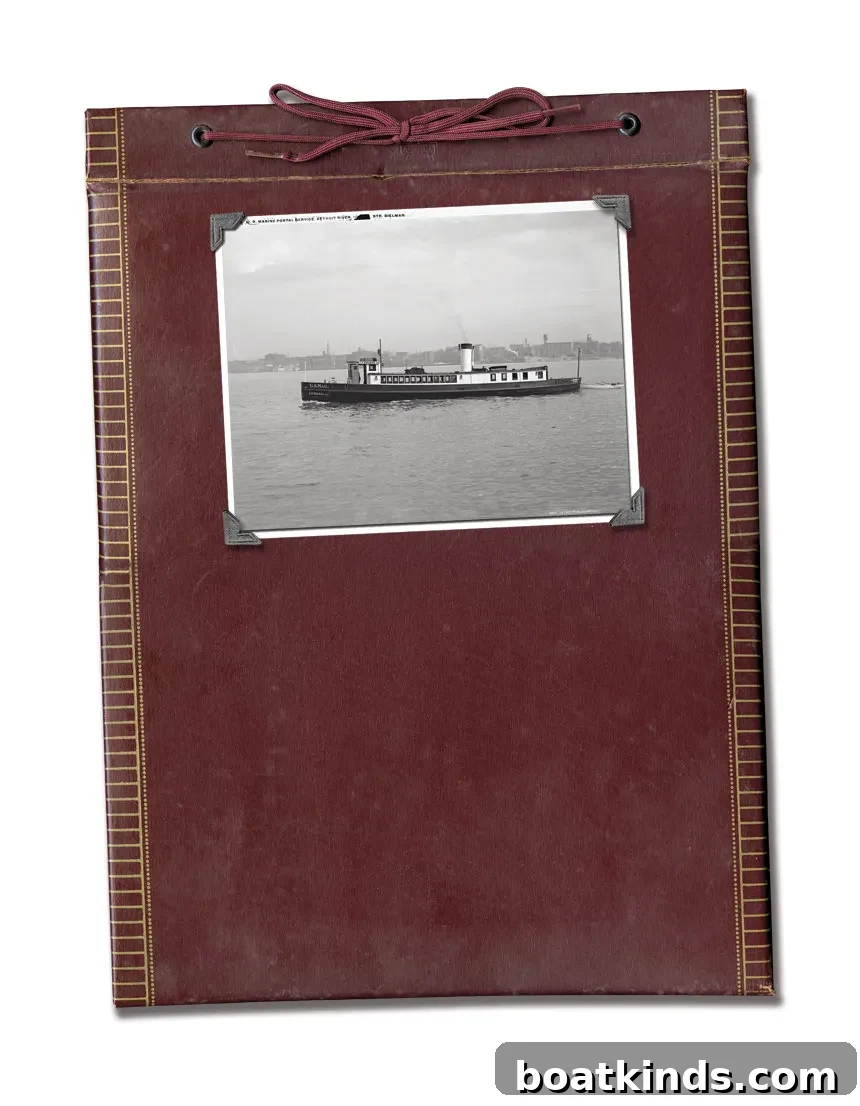
How Steamboats Shaped Early U.S. Mail Delivery
Imagine a time when a single innovation could reshape how a young nation communicated. In an Oct. 2, 1807 editorial in the New York Evening Post, a bold question was posed: would it not be well if she could contract with the Postmaster General to carry the mail from this city to Albany? The “she” in that question was Robert Fulton’s Clermont, the pioneering steamboat that could travel a steady six miles per hour between Manhattan and Albany, independent of tides and river currents.
The Clermont’s reliable speed and mechanical control transformed expectations about mail delivery. By November 1808 the steamboat was already acting as an unofficial mail carrier along the Hudson River, carrying letters up and down the waterway on a schedule that sailing vessels could not match. Within a few years the concept matured from experiment to policy: Congress authorized the Postmaster General to contract with steamer companies to carry mail, requiring those companies to take custody of letters and deliver them to postmasters at destination ports. This marked the beginning of a steamer-based mail system integrated with the early U.S. Postal Service.
As steamboat mail delivery expanded, waterways became official arteries of communication. In 1823, waterways were designated as “post roads,” which effectively made it illegal for private carriers to use those routes for mail delivery in competition with contracted steamship lines. The decision concentrated federal mail contracts on steamer operators and encouraged investment in regular, scheduled service. Hudson River steamers soon linked New York with major Atlantic cities such as Washington, Baltimore and Philadelphia, while the Mississippi steamboats connected New Orleans and St. Louis. On the Ohio River, mail boats kept Cincinnati and Louisville supplied with correspondence and commerce.
By the mid-1800s, the mileage of steamship mail routes had doubled. The national expansion of steamboat mail coincided with westward growth and new coastal opportunities. Steamers played a critical role in bridging long distances and difficult overland terrain: mail could transit by ship to Panama, be carried across the isthmus by pack animals and then be forwarded by another steamer on the Pacific side, allowing a letter to travel from one coast to the other in as little as three weeks.
The arrival of the Klondike Gold Rush in 1896 and the subsequent opening of Alaska further emphasized how essential steamer routes had become. Tens of thousands of miners and settlers traveled north, dependent on supplies and communication with families and markets in the lower 48 states. At one point, nearly a third of the Postal Service’s 42,181 miles of steamer routes served Alaska alone, illustrating how maritime mail infrastructure adapted to the nation’s shifting population and economic centers.
Steamboat mail service was more than an operational detail; it was an engine of social and economic connectivity. Regular routes and dependable schedules shaped business practices, supported regional newspapers and enabled migrants to maintain ties with distant communities. Mail contracts helped fund and legitimize steamship companies, and the resulting network laid groundwork for later innovations in rail and transcontinental mail delivery.
Over decades, the steamer-based system evolved alongside changing technology and transportation patterns. Railroads, telegraph, and eventually steam-powered ocean liners and airplanes took on larger roles, but the era when paddle and screw steamers navigated rivers and coasts to deliver letters remains a key chapter in the history of the United States Postal Service. Those early agreements—sparked by a simple editorial and by Fulton’s Clermont—demonstrate how transportation innovations can rapidly alter the pace and reach of communication.
This article originally appeared in the May 2018 issue.