
The cruiser had twin 5.7‑liter engines, and the Connecticut owner enlisted friends to help winterize it. They did many things correctly, according to marine mechanic Erik Klockars, but they made a critical mistake. Although they used plenty of antifreeze, they didn’t realize the engines’ raw‑water thermostats were preventing antifreeze from circulating through the blocks and heads. Water remained in the blocks all winter and froze. When the owner started the boat for a potential buyer in spring, water erupted from six‑inch cracks in the engine blocks, Klockars — who worked on the case as a surveyor — reports.
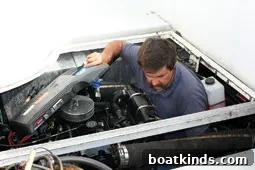
“That sale fell through,” Klockars says, and the owner ultimately paid $15,000 to have two new blocks installed. The episode is a clear lesson for boat owners who plan to winterize their own vessels. “When it comes to the engine, you need to know what you’re doing,” Klockars emphasizes. You don’t have to be a veteran mechanic — though Klockars brings nearly 34 years of experience and serves as a technical consultant for Soundings — but a quick check of the owner’s manual would have prevented the mistake. In this case, the men should have drained the water from the engine blocks before pumping in antifreeze.
Klockars recommends focusing winterization efforts on four essentials: fuel, freezing protection, moving parts, and the hull.
Fuel
Fuel must be stabilized and preserved through the off‑season. For Klockars’ customers, fuel treatment begins right before they finish the season. “I have my customers add treatment to the fuel before their last trip,” he says. That allows the stabilizer to circulate through the engine and fuel filters. He also recommends changing fuel filters so dirt and moisture don’t sit in the system over winter.
How much gasoline to leave in tanks remains a debated topic because of ethanol in modern fuel. Ethanol attracts moisture and can dissolve deposits in tanks and lines, which then can reach the engine. Some experts advise filling tanks to reduce condensation; others suggest draining them to eliminate ethanol risks. Klockars advises not filling gasoline tanks: empty them as much as possible before winter so you can add fresh, high‑octane fuel in spring and dilute any degraded fuel left in the tank. “You actually lose octane on stored fuel,” he explains. For diesel engines, he recommends leaving tanks roughly seven‑eighths full to allow room for thermal expansion as temperatures warm.
Freezing
“You want to make sure nothing in the boat can freeze,” Klockars says. He starts with the freshwater system: turn on the pump, drain the main water tank, then add non‑toxic marine antifreeze and open every faucet. Run the pump until antifreeze appears from both hot and cold sides. If possible, drain and bypass the hot water tank to use less antifreeze and to avoid exposing heating elements to antifreeze. Bypassing makes it easier in spring to refill and purge the system before reconnecting the hot water heater.
Winterizing onboard air conditioning is straightforward: remove the seacock hose, use a funnel to pour in antifreeze, start the unit, and run it until antifreeze exits through the hull. One caution: the AC pump is not self‑priming, so the funnel must be positioned above the pump so antifreeze can be force‑fed into the system. The same approach works for raw‑water washdowns and bait wells: remove the hose, introduce antifreeze, and run until it flows out the other end. For engines with closed cooling systems, check the antifreeze concentration to ensure adequate protection.
Movement
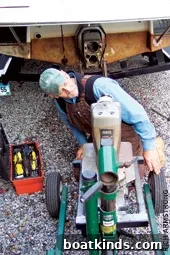
“Whatever moves, you want it to move in the spring,” Klockars says. Begin with routine service: change all engine oil and oil filters, and lubricate moving parts such as shift and throttle linkages and steering systems. Grease all fittings. Outboards fall into four basic categories — carbureted or fuel‑injected two‑strokes and carbureted or fuel‑injected four‑strokes — and each has specific winterizing needs.
Carbureted two‑stroke outboards require fuel system treatment and fogging oil sprayed into the carburetor and intake to leave a protective oil film on internal bearings and cylinder walls. “A two‑stroke relies on oil for internal lubrication, so you need heavy oil inside the motor,” Klockars says. Four‑strokes are winterized with a fuel treatment that circulates lubrication to the tops of pistons, cylinders, and injectors.
For outboards and inboard/outboard drives, remove and grease propellers before reinstalling. Don’t forget to change lower‑unit or outdrive gear oil and grease drive fittings, using the gear or engine oil specified by the manufacturer. Klockars also recommends spraying the exterior of the engine with a water‑displacing product such as CRC 6‑56, avoiding belts and pulleys when applying it.
Hull
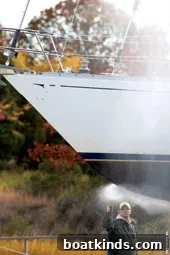
Waxing the hull in fall is a personal choice. If you do wax, thoroughly clean the hull first so dirt won’t stain or clog through‑hulls and drains over winter. Leave drawers, cabinets and the refrigerator open where possible to promote air circulation and prevent mold, and remove the drain plug so any water entering the bilge can escape.
Owners who operate boats year‑round should follow service‑interval guidance in the owner’s manual to track engine hours and maintenance needs. Warm‑weather owners storing boats for only a few months don’t need antifreeze, but they should flush and dry the water systems before laying up the boat.
Winterization carries real consequences: costly repairs can result from mistakes like the Connecticut cruiser case. But the process is straightforward when approached with clear goals. “You’re trying to stabilize and treat fuel so it’s usable in spring,” Klockars says. “You’re preventing freezing damage in freshwater and raw‑water systems. You’re keeping moving parts lubricated and ready to turn. And you’re keeping the hull clean and dry so it doesn’t develop mold or deterioration while it’s stored.”
This article originally appeared in the November 2011 issue.