
Sensible Cruising Designs by L. Francis Herreshoff: A Timeless Look at Practical Yacht Design
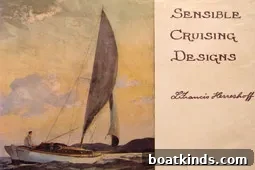
A classic volume by L. Francis Herreshoff entertains with elegant lines, candid prose and plain common sense. Sensible Cruising Designs, first published in 1973 by International Marine, collects Herreshoff’s plans and essays and showcases the clarity and practicality that made him a respected voice in yacht design.
One afternoon, while wandering the used-book aisles far from the marina, I almost left with a meditation guide. Instead, I found Sensible Cruising Designs and decided there was no better way to honor the designer’s legacy than to sit down with the book and savor it. What I discovered is not a dry technical manual but a lively, opinionated collection that mixes solid design plans with practical advice and unmistakable personality.

Of words and lines
Sensible Cruising Designs was published posthumously with assistance from Stuart James of Rudder magazine and Muriel Vaughn, Herreshoff’s longtime secretary. The book gathers plans L. Francis contributed to Rudder’s “How to Build” series and adds a substantial appendix covering many of his sailboat designs and a few paddleboats. Beyond the plans, what stands out is his writing: plainspoken, often opinionated, and never shy about challenging prevailing tastes.
Those who appreciate yacht history have long treasured other Herreshoff works—titles such as Capt. Nat Herreshoff: The Wizard of Bristol, The Common Sense of Yacht Design and The Compleat Cruiser—because they blend technical insight with storytelling. W. Starling Burgess once observed that Herreshoff’s prose had the clarity and brevity of Thoreau had he been a sailor—a fitting compliment to the man who combined drawing-room elegance with workshop pragmatism.
The artistry of design
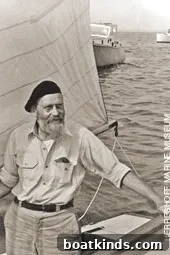
Born in 1890 in Bristol, Rhode Island, L. Francis Herreshoff came from a remarkable lineage: his father, Nathanael Herreshoff, was a legendary yacht designer and innovator. After a brief stint in agriculture and service in the U.S. Navy during World War I, L. Francis apprenticed with Burgess, Swasey & Paine in Boston and later set up his own practice in Marblehead, Massachusetts, in 1926. He worked from an atelier known as Herreshoff Castle, drafting on a vast 25-foot table.
Colleagues and family remembered him as intensely capable—able to design and build with the same hand—and discerning about what belonged on a boat. His eye for proportion and his “keep it simple, sensible” approach influenced later designers who valued practical elegance over fashionable excess.
Among Herreshoff’s most enduring creations is the 72-foot ketch Ticonderoga, launched originally as Tioga II in 1936 and renamed a decade later. Ticonderoga, known affectionately as “Big Ti,” set standards for style and performance in ocean-going yachts and inspired subsequent designs like Quiet Tune, a fast, simple weekender, and Araminta, which echoed Big Ti’s clipper bow. Herreshoff’s range also included smaller cruising types such as the H-28 ketch, the canoe-yawl Rozinante, the 23-foot sloop Prudence and the Buzzards Bay 14, a larger take on his father’s famed 12-1/2.
Calling a spade a spade
Herreshoff’s essays are filled with practical judgments that cut through sentiment. He debated the merits of a plumbed head versus a cedar bucket, calling the former expensive and high-maintenance and praising the latter for cleanliness and simplicity. Those passages reveal the author’s preference for solutions that stay seaworthy and straightforward over glamorous but impractical gadgets.
He also wrote on surprising topics for a design book—how to prevent guns from rusting aboard, how to take useful photographs on deck, what to wear when sailing—and he did not spare magazines of his day from criticism. His wit could be blunt: he worried that some publications traded the romantic image of men at sea for pictures that emphasized fashion over seamanship.
Advice on many levels
Herreshoff believed the company you keep matters more to the enjoyment of a cruise than any layout of bunks and lockers. He warned against companions whose priorities and possessions would interfere with the smooth-running of a small cruising boat, delivering his warning in language that reflects the period in which he wrote but conveys a timeless point: a small boat demands compatibility, not just charm.
Though he never married, and a tragic ice-boating accident reportedly curtailed a courtship, Herreshoff sketched a portrait of the ideal cruising partner: someone who relishes an east wind off the Gulf Stream, who can appreciate a thunder squall’s drama, and who will hand you the right chart and help take a true fix when visibility narrows. The point is simple—seamanship is a shared skill, and companionship at sea merges temperament and competence.

Reading Sensible Cruising Designs is a reminder that good design pairs beautiful lines with practical thinking, and that plain, honest writing can do as much to teach as any set of plans. Herreshoff mixed artistry with utility, and his voice—wry, observant and direct—remains enjoyable and instructive decades after publication.
As he put it with characteristic bluntness in his introduction: he was not sure whether his approach was “horse sense or horse something else,” but he knew there was plenty of it to go around. For anyone interested in classic yacht design or practical cruising advice, Sensible Cruising Designs is a rewarding read.
This article originally appeared in the January 2010 issue.