
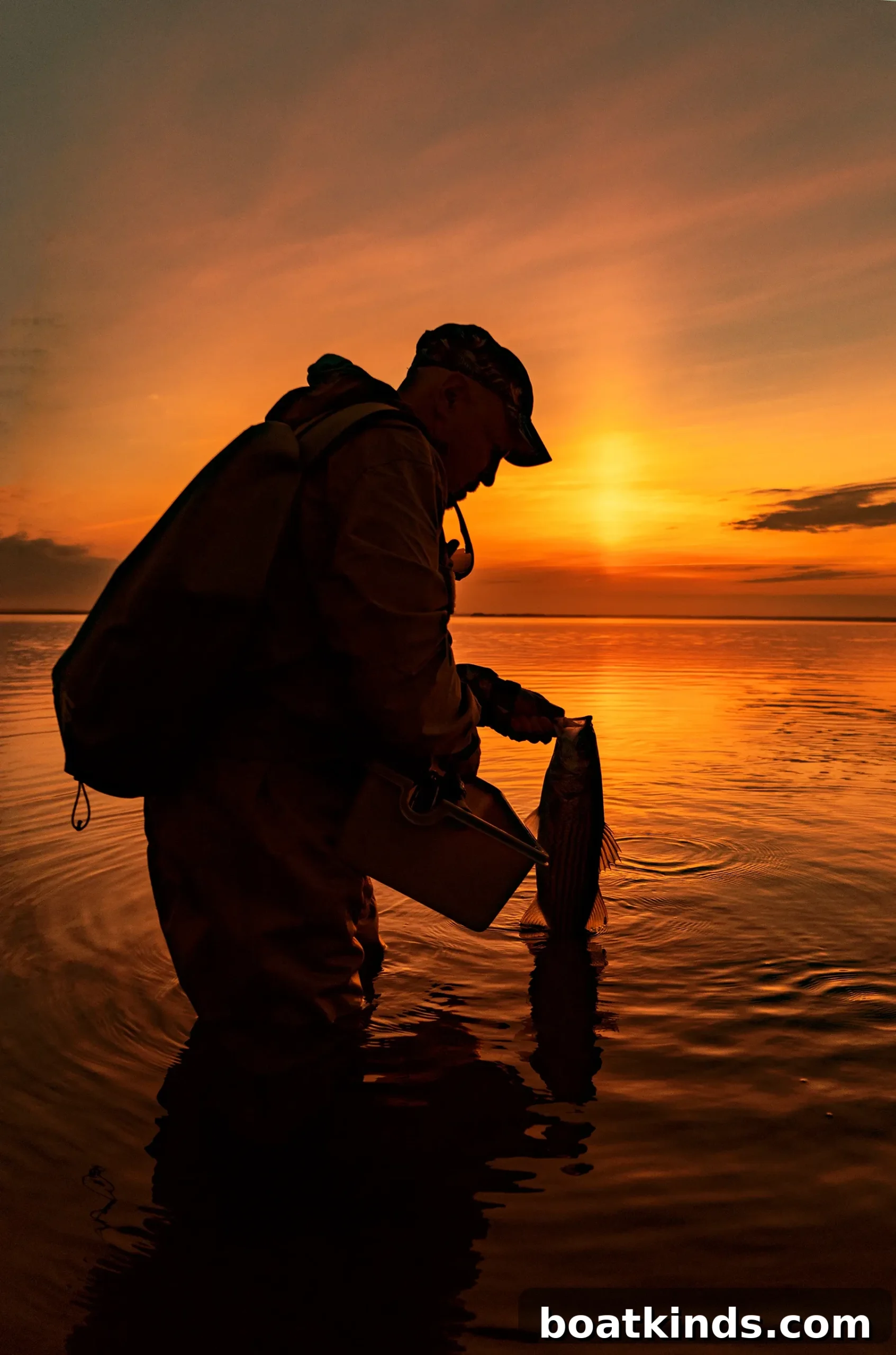
New England anglers have long prized fall for striped bass, but June can be the most rewarding month to chase linesiders. Unlike the fall run—where nor’easters can scatter schools and shift their route—spring and early summer offer steadier conditions. Returning fish are hungry and aggressive, found from tidal rivers and bays to beaches, rips and offshore reefs. Cooler water in the 50s keeps stripers powerful and energetic; they run, shake their heads and put up a spirited fight that makes landing one especially satisfying.
By late June, many stripers are moving into summer patterns. Nighttime feeding increases, but dependable daytime bites still happen—especially around first light and dusk when tides and feeding windows align. These transitional weeks are prime for exploring a variety of fishing methods, from bait to plugs, plastics and fly tackle.
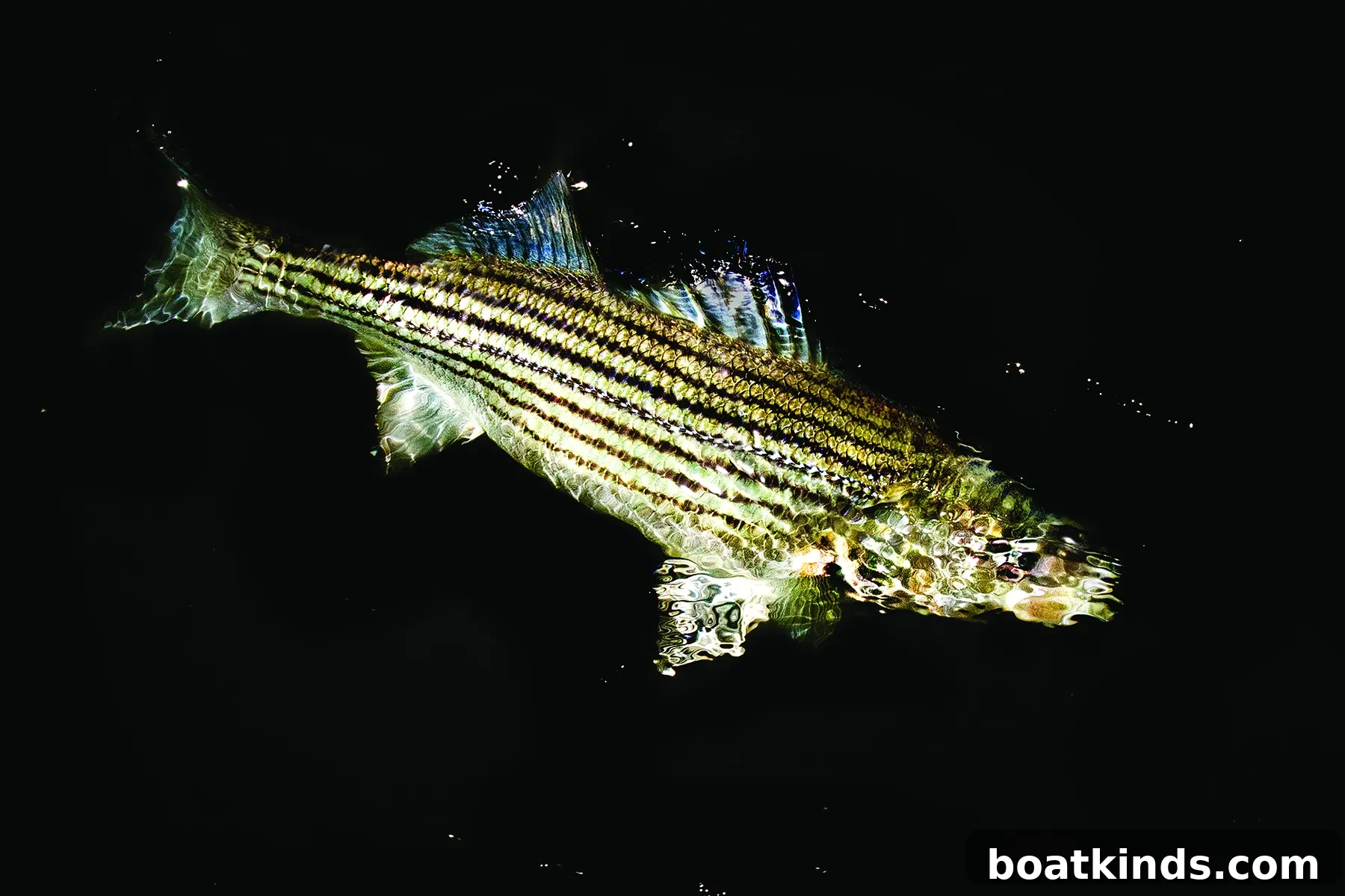
One advantage of June is versatility. Stripers readily take artificials: bucktails, swimming plugs, soft plastics and noisy top-water lures all trigger strikes. Live bait remains productive—menhaden, eels and sandworms draw aggressive hits. On foggy June days, popping plugs and white surface plugs like the classic Doc can produce explosive top-water action as fish use low light to ambush prey.
Fly anglers also find June excellent for striped bass. Bays and salt ponds fill with hatching worms, silversides and sand eels, all of which are easy to match on the fly. Most anglers use 8- or 9-weight setups for bigger fish, though a 6- or 7-weight can be plenty of fun on school-sized bass. A floating line with a sand-eel or small epoxy bait often tempts hard-charging schoolies in the twilight hours.
From my kayak I often troll mud flats, coves and rockpiles in May and June with a small tube lure tipped with a fresh sandworm. Slow trolling a tube-and-worm across shallow feeding areas during worm hatch season is a reliable way to locate fish when scouting new water. I love the simple thrill of hearing the spinning-rod thump in the holder as a bass takes the bait, then reaching back for the rod as the drag screams. Kayaks offer stealth advantages over small outboards in tannin-stained shallows and debris-strewn pockets where stripers spook easily.
In recent seasons I’ve spent more time casting small soft plastics from both kayak and center-console than any other approach. My go-to is a 5-inch Albie Snax in amber or amber-and-white. It casts well, weighs about half an ounce and has a darting action that drives stripers wild. I rig them on an Owner Twistlock Beast Hook in 4/0 or 5/0 to keep the plastic secure; you can also use a jig head when you need to get deeper, though fishing them weightless often produces the best strikes.
The tube-and-worm approach remains valuable, too. Large sandworms dug on Maine mudflats are becoming less common, and big worms are harder to find at tackle shops, but spring stripers rarely resist a slow-trolled sandworm. When you locate a productive worm patch, the payoff can be immediate and consistent.
After 55 seasons pursuing striped bass, I still find new lessons and fresh rewards each spring. The species keeps me engaged and respectful—there’s always something to learn about tides, bait behavior and where fish choose to feed. As a young angler my friends and I chased stripers with obsessive devotion: tides dictated our schedules, and we traded tips in breakfast diners, boat yards and tackle shops, always on the lookout for any edge.
Striped bass fishing rewards attention to the natural world and a willingness to experiment. Sometimes tweaking tackle or trying a new lure yields a breakthrough; other times the best spots are hiding in plain sight. A word of caution from hard-earned experience: match your gear to the fish you expect. My partner Bruce and I once tried lighter tackle on big spring bass and learned the hard way that underpowered rods let big fish bury themselves in rocks and end the fight—and your tackle.
Check local regulations and fishing reports for timing and location details. Note current size and bag limits—if you haven’t fished in a while, regulations can change. For live bait, in-line circle hooks are often required; handle fish carefully and release quickly when appropriate.
One of my favorite June evenings: the tide floods, twilight gathers, and stripers feed along a narrow bar where current speeds up over hard bottom. Terns scream and plunge on schools of silversides, then depart as darkness deepens and the bass bite intensifies. A slight breeze keeps insects away. Casting a small sand-eel pattern on a 7-weight with a floating line often draws eager schoolies that smash the surface fly. Time slows as the bay fills with water and the world quiets—moments like that are why anglers keep returning. Spring and early-summer stripers are endlessly rewarding for both the sport and the soul.
William Sisson is the executive editor of Anglers Journal and author of Seasons of the Striper, Pursuing the Great American Game Fish (Rizzoli New York). It’s on our Editors’ list of top Father’s Day gifts for 2023.
This article was originally published in the June 2023 issue.