
E15 Fuel Waiver Raises Concerns for Boat Owners
On April 12, the Biden administration issued a Clean Air Act waiver that permits the sale of gasoline containing 15 percent ethanol (commonly called E15). While the move targets broader fuel supply and emissions goals, the decision has alarmed recreational boat owners and marine advocates. The Boat Owners Association of The United States (BoatU.S.) has warned that E15 is not safe or legal for use in most recreational marine engines and could lead to costly damage and voided warranties.
BoatU.S. emphasizes that federal law and many engine manufacturers restrict recreational vessel engines to gasoline blends that contain no more than 10 percent ethanol (E10). Using E15 in boats is explicitly not permitted and can create several risks for marine engines and fuel systems. Higher ethanol blends like E15 contain less energy per gallon than E10, which can reduce engine performance and cause engines to run hotter. In addition, increased ethanol content has been associated with fuel system degradation and other forms of engine damage in marine applications.
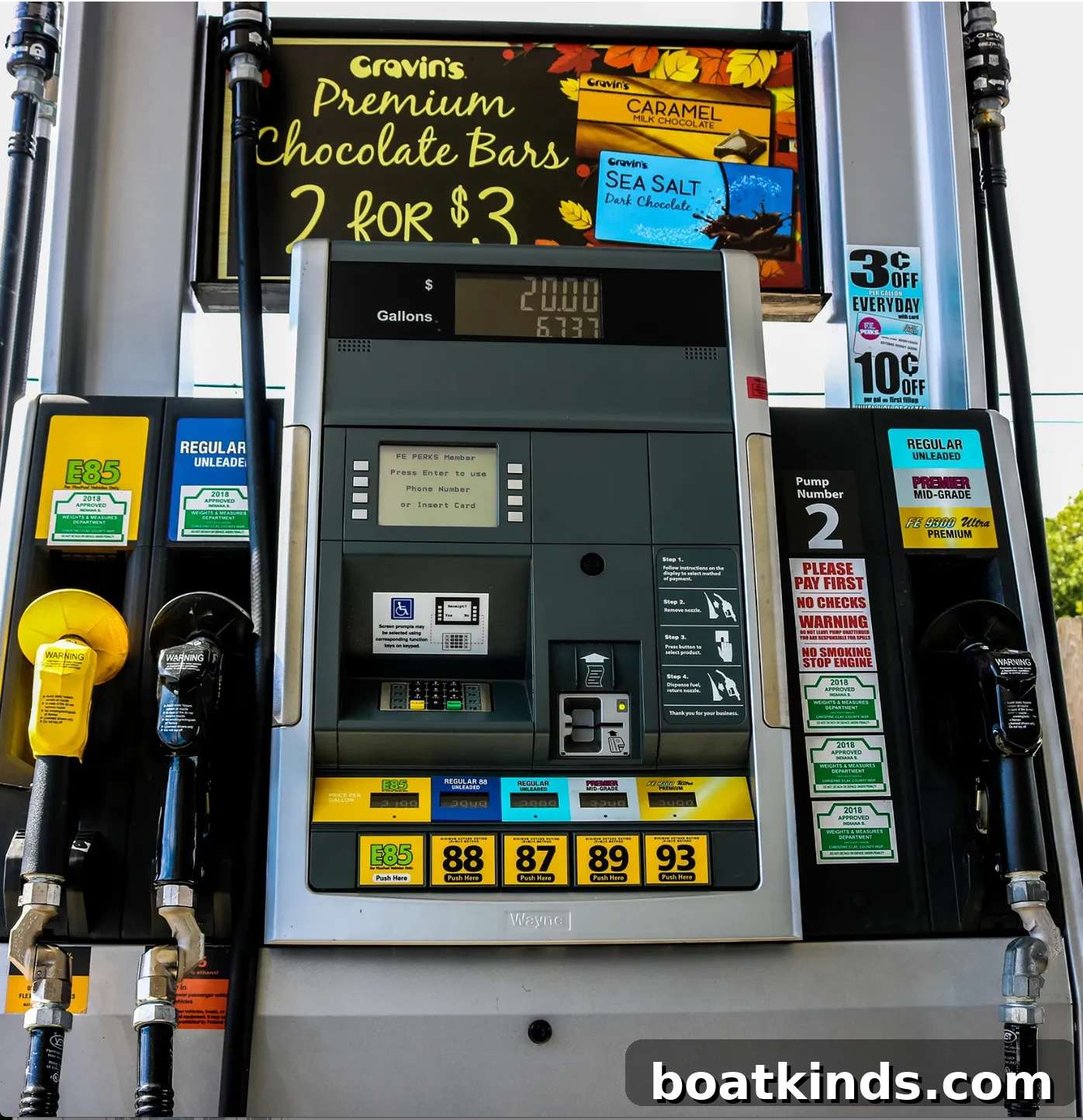
One major concern for recreational boaters is how and where they obtain fuel. Most boat owners refuel at roadside gas stations rather than dedicated marine fuel docks. Roadside pumps now may carry E15, and BoatU.S. notes that pump labeling is often inconsistent or unclear. Poor or confusing labels increase the chance that a boater will inadvertently put E15 into a boat fuel tank. Because E15 is prohibited for marine use and can lead to engine failure or void warranties, the association is working with the Environmental Protection Agency (EPA) to improve pump labeling and public awareness.
Until labeling and public education improve, boaters are advised to exercise caution at the pump. Confirm the pump displays the ethanol level before fueling. Look for pumps labeled E10 or explicitly marked as safe for marine engines. If a pump carries an “E15” label, avoid using that fuel for any recreational vessel. When in doubt, ask the station attendant or seek out a marina, marina fuel dock, or service that specializes in marine gasoline. Consulting your engine owner’s manual and your manufacturer’s recommendations is also critical—using fuel contrary to those guidelines can void warranties and complicate repairs.
Why E15 poses a risk to marine engines: ethanol attracts moisture and can promote corrosion and contamination in fuel systems designed for lower ethanol levels. It can also degrade certain rubber, plastic, and fuel-system materials commonly used in marine engines and outboard components. Because boats typically sit unused for periods of time, the combination of ethanol’s water-attracting properties and idling/storage conditions increases the chance of phase separation and fuel instability—issues that are less common with E10 blends. For these reasons, many manufacturers and marine service professionals explicitly recommend using gasoline with no more than 10 percent ethanol for recreational vessels.
If you are a boater, follow these practical steps to protect your engine and avoid accidental use of E15:
- Always check the pump label before fueling and choose E10 or a lower-ethanol fuel whenever possible.
- Refuel at marina fuel docks or trusted suppliers that clearly label fuel and cater to marine customers.
- Keep your engine owner’s manual and manufacturer fuel recommendations on hand and follow their guidance to preserve warranties and ensure safe operation.
- Ask station attendants about their fuel blends if labeling is unclear, and avoid filling portable marine tanks from pumps that do not clearly identify ethanol content.
- If you suspect E15 contamination, stop using the fuel and contact a qualified marine mechanic or your engine manufacturer for inspection and advice.
BoatU.S. is actively engaging with regulators to demand clearer pump labeling and stronger protections for recreational boaters. In the meantime, heightened vigilance at the pump remains the best defense. Boaters should take steps to confirm ethanol levels before fueling, follow manufacturer guidance, and prioritize marine-specific fuel sources to prevent damage, protect warranties, and keep their engines running reliably.