Recreating a Classic: Pellew, a Reproduction of the 1852 Falmouth Pilot Cutter Vincent
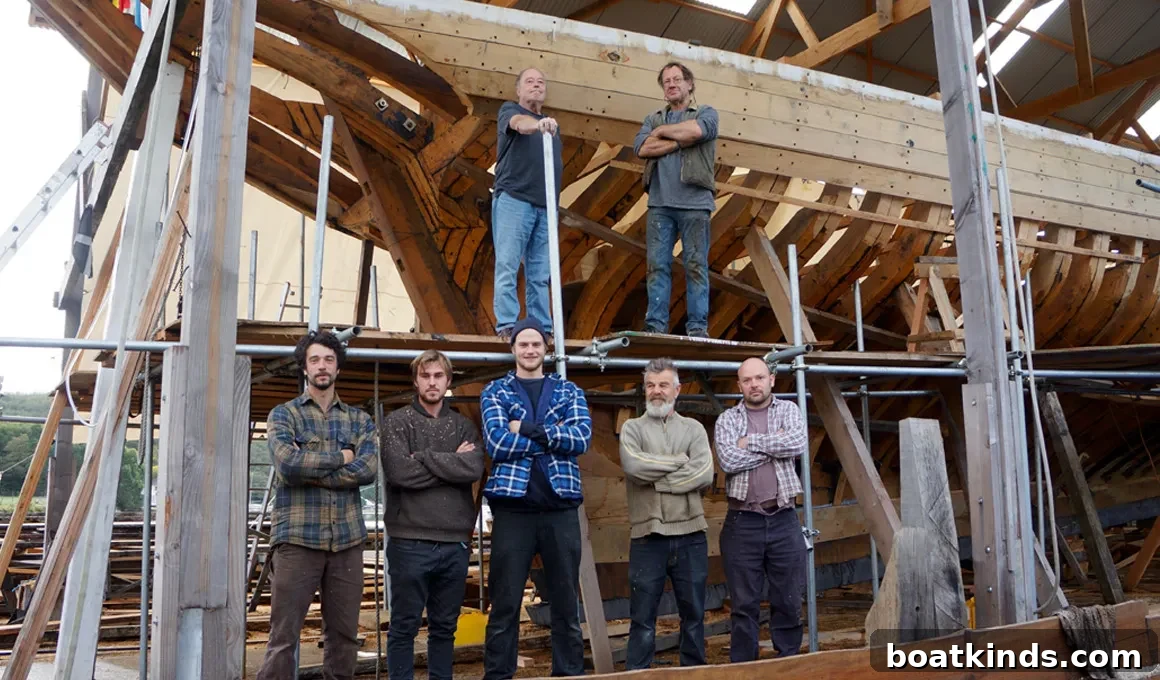
In a busy workshop in Cornwall, United Kingdom, the team from Working Sail is immersed in traditional wooden boatbuilding as they construct Pellew, a faithful reproduction of the 68-foot Falmouth Pilot Cutter originally launched as Vincent in 1852. Surrounded by sawdust and wood shavings, shipwrights and apprentices are shaping planks, framing the hull, and forming deck beams by hand, employing time-honoured techniques that reflect the craft and character of the original vessel.
Falmouth pilot cutters like Vincent were renowned for their speed, seaworthiness, and elegance—qualities that made them essential in the days when skilled local pilots needed fast boats to meet incoming ships and guide them safely to harbour. Pellew’s rebuild focuses on capturing both the lines and the working spirit of that heritage: the hull form, the traditional joinery, and the classical deck layout are all being recreated with attention to historical detail and practical durability.
The construction process at Working Sail blends practical training with authentic boatbuilding methods. Trainees are learning how to loft and shape frames, steam and bend timbers where required, and plank the hull using historically appropriate species and techniques. This hands-on education covers spiling and scarfing planks, fairing the frames, and setting up the backbone and keel, as well as the finer joinery needed for cabinetry and deck fittings. The project provides a living classroom where skills that might otherwise be lost are being passed to a new generation of shipwrights.
Using traditional materials means choosing timbers and fastenings that suit the design and intended longevity of a classic cutter. The crew select appropriate hardwoods for frames and deck beams and durable plank timbers for the hull, paying careful attention to grain, seasoning, and structural principals. The emphasis is not simply on recreation for its own sake but on producing a seaworthy and robust vessel that performs well under sail while retaining the aesthetic and functional qualities of the original 1852 design.
Workshops like Working Sail also highlight the cultural and vocational value of maritime heritage projects. Beyond producing a single boat, the Pellew build is a platform for apprenticeships and community engagement, offering training in lofting, timber selection, hand tools, and traditional finishing techniques. This combination of heritage conservation and skills development helps ensure that those traditional crafts remain viable career paths and that local maritime history continues to be tangible and relevant.
Funding for the Pellew project has come in part from a Community Interest Grant, supporting both the physical construction of the cutter and the educational elements that accompany it. With that support, the team at Working Sail aims to complete a faithful and functional reproduction that honours the legacy of the Falmouth pilot cutters while providing practical learning opportunities and community value.
While the original Vincent dates from the mid-19th century, Pellew represents a contemporary commitment to conservation and craft. The build process documented here focuses on authenticity and skill rather than speed: fairing frames, fitting planks, and spar-making all progress methodically. The workshop atmosphere—filled with the sounds and smells of woodworking—is also a reminder of the craft’s tactile nature, where each plank and joint is shaped by hand as much as by plan.
For anyone interested in traditional boatbuilding, maritime heritage, or the specific lineage of the Falmouth pilot cutter, the Pellew project at Working Sail offers a clear example of how careful research, skilled workmanship, and community-backed funding can bring historic designs back to life. The result will be a working cutter that both reflects a storied past and serves as a training vessel and symbol of living craftsmanship in Cornwall.
Updates on construction progress and the training programme have been shared by the team, highlighting milestones such as frame setting, planking stages, and the fitting of deck structures. The project demonstrates how the revival of an historic vessel can also foster sustainable skills development and community involvement in maritime heritage.