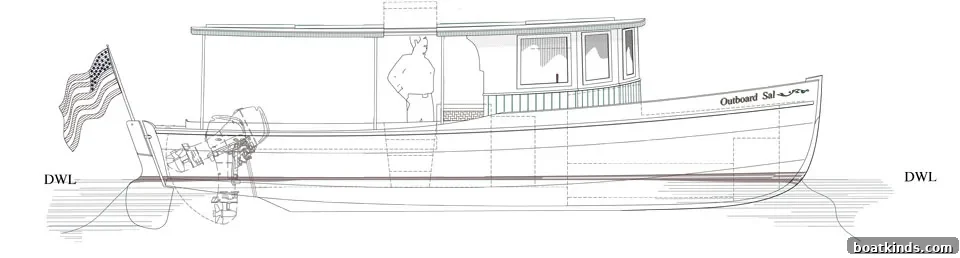
Solar Sal 27: A Quiet Electric Launch for Northwest Summers
Many boaters tell me they love the moment they shut down the engine and hear only the water. I feel the same way—there’s a calm that comes when the mechanical noise fades and the hull slips through the water. In the Northwest, however, summer winds can be light and unreliable, so I often choose a powerboat that can still deliver that near-silent experience. That desire led me to design a classic launch with electric propulsion: the Solar Sal 27.
The goal was simple: an efficient, displacement-hull launch that moves easily with minimal horsepower so an electric drive can perform well. A slippery, easily driven hull minimizes drag and stern squat, reduces wasted energy and limits wake—key characteristics when pairing a boat with a modest electric motor and battery bank.
For propulsion I looked at proven systems rather than experimental gear. Torqeedo’s Cruise 4.0 options fit the bill—either the Cruise 4.0 FP pod drive, a fixed saildrive mounted through the hull, or the Cruise 4.0 R outboard mounted in a well that can tilt up and out of the water. Each has advantages: the tilting outboard minimizes fouling and corrosion by staying out of the water when stowed, while the pod drive keeps the cockpit clear for seating all around the stern and conceals the drive head below the sole.
Specifications:
LOD: 26 feet, 9 inches
BEAM: 7 feet, 1 inch
DRAFT: 2 feet, 1 inch (outboard up)
DISPLACEMENT (light): 3,200 pounds
The Solar Sal 27 blends traditional launch aesthetics with modern electric propulsion and solar power. Accommodation is focused on day trips and occasional short overnights. The layout includes a small forward house with two berths and space for a Porta Potti or a compact marine toilet. The house is not a full enclosed pilothouse—the forward cabin locks while the aft section remains open—so the skipper gets shelter from wind and chill on shoulder-season outings but can open the house completely for warm summer days.
Remote steering from the pilothouse plus a removable tiller at the rudder head provide redundancy and a direct feel when desired. In warm weather I plan to remove and stow the house windows in a rack in the fo’c’sle, leaving an open, shaded helm that benefits from the light breeze generated as the boat moves.
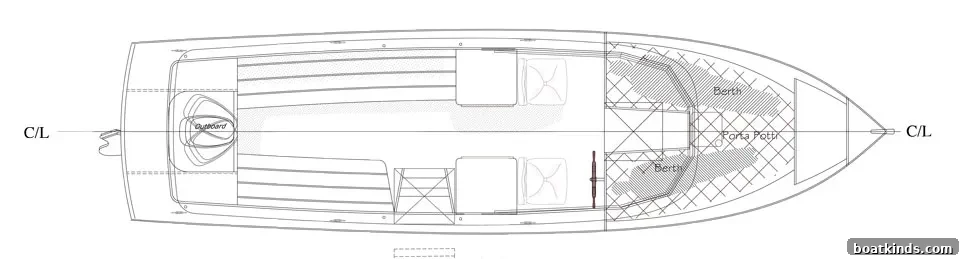
Solar power is integral to the design. The roof carries four 265-watt solar panels—about 1,060 watts of peak charging—which augment four batteries in the bilge. That combination extends range and allows long, quiet days on the water without relying solely on shore charging. Under battery power alone the predicted range at 6 knots is close to 28 nautical miles, roughly 4.6 hours of continuous running. The solar array helps replenish energy while at anchor or cruising slowly, reducing the need for external charging and lowering operating cost.
What this design offers is the feeling of shutting down a noisy internal-combustion engine and returning to the simple pleasure of the water moving by the hull. With electric propulsion there’s no engine smell or constant vibration; conversations on deck remain natural and calm. For many boaters who want to enjoy scenery, wildlife and company without mechanical intrusion, an electric launch like the Solar Sal 27 delivers that serene experience.
Seasonal use in the Pacific Northwest shapes how I think about outfitting a boat. Summers are when I want a comfortable, open launch; shoulder seasons need some protection. Winters still call me out for crisp, clear days when high pressure brings frosts and brilliant skies—short trips that make scenic sailing and powerboating rewarding even in cold weather. Solar Sal 27’s balance of shelter, efficiency and quiet power makes those outings all the more enjoyable.
In short, the Solar Sal 27 combines a traditional launch look with modern electric propulsion and solar charging to create a near-silent, low-maintenance boat suited to day cruising and short overnights. It’s designed to let you savor the sound of water against the hull—the very pleasure that inspires many of us to go boating in the first place.
This article originally appeared in the December 2017 issue.