
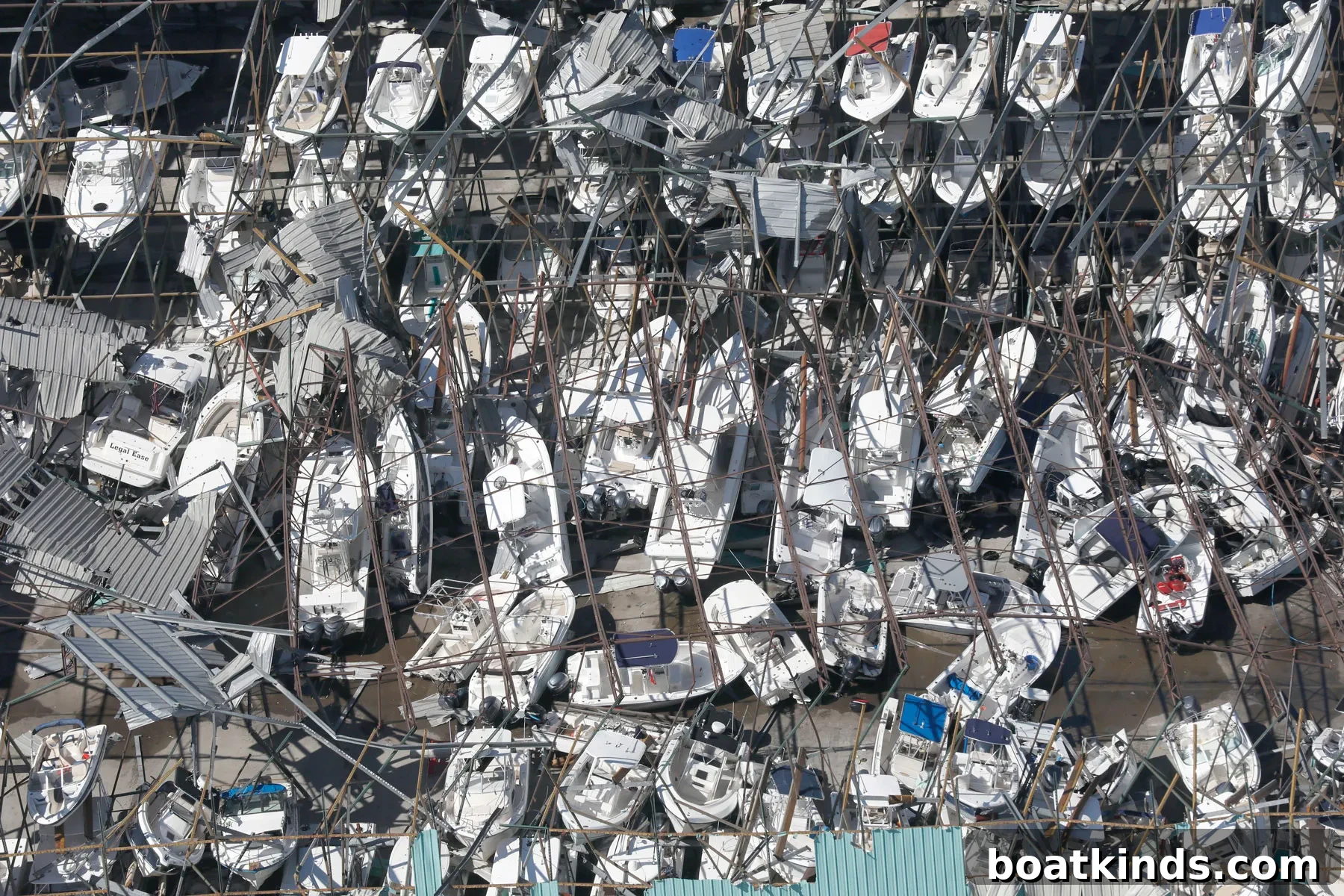
When Hurricane Michael struck the Florida Panhandle with sustained winds topping 150 mph, a boat warehouse near Panama City failed under the force of the storm, collapsing like a house of cards. The dramatic image of metal, wood and fiberglass strewn across the lot became a stark example of how quickly severe wind and storm surge can overwhelm marine storage facilities and the vessels they shelter.
This article originally appeared in the December 2018 issue.
Widespread Damage, Immediate Consequences
Wind-driven structural failure in boat warehouses can result in a chain reaction: damaged roofs and walls expose boats to rain and debris, internal racks and supports break, and loose craft are tossed or crushed. When a storage building collapses, owners face multiple simultaneous problems — physical damage to vessels, potential fuel and oil leaks, broken equipment, and the logistical challenge of sorting and documenting losses for insurance and recovery.
Why Marine Storage Is Vulnerable
Boat storage facilities range from simple open racks and pole-frame sheds to fully engineered metal buildings. Many older or lightly engineered structures were not designed to resist sustained hurricane-force winds and flying debris. Even well-built facilities can suffer if anchoring and connections are inadequate or if storm surge and flooding undermine foundations. Location matters too: facilities in low-lying coastal areas face both wind damage and water-related impacts that can accelerate structural collapse.
Immediate Response and Safety Steps
In the hours and days after a collapse, safety is the top priority. Keep clear of unstable structures and falling debris, and do not attempt to move large items or damaged boats without professional help. Property owners should document damage with photos and notes for insurance claims, secure the site to prevent further harm, and contact local authorities about hazardous materials such as fuel or batteries. If boats have spilled fuel or fluids, notify local environmental authorities to coordinate containment and cleanup.
Insurance, Documentation and Salvage
Thorough documentation accelerates insurance claims and helps establish the scope of loss. Take comprehensive photographs and lists of damaged items, and preserve any identifying information from hulls, titles or equipment. Engage a marine surveyor or qualified adjuster to assess seaworthiness and repairability. In many cases, salvage operations will separate repairable vessels from total losses; decisions should be guided by professional assessments that weigh structural integrity, mechanical condition and cost of repair.
Lessons for Future Resilience
Owners and managers of marine storage facilities can take practical steps to reduce future risk. Key measures include building to current wind- and flood-resistant codes, improving anchoring and connections, elevating critical equipment and foundations where feasible, and reinforcing doors and roof systems. For boat owners, options include relocating high-value vessels inland during hurricane season, removing canvas and unsecured gear, and ensuring proper insurance coverage that accounts for storm damage and storage risks.
Community and Long-Term Recovery
Recovery after a major storm is a coordinated effort among owners, insurance companies, local government and contractors. Cleanup and rebuilding can take months or longer, depending on the extent of damage and availability of materials and labor. Community coordination helps prioritize removal of environmental hazards, restore infrastructure access, and support affected businesses and residents. For facility owners, strategic planning that incorporates lessons learned from events like this can improve preparedness and reduce future losses.
Hurricane Michael’s destructive impact on a Panama City boat warehouse underscores the importance of preparedness, resilient construction and rapid, safety-first responses. While storms of this magnitude are devastating, careful planning, proper documentation and timely professional assistance can make recovery more manageable for boat owners and facility operators alike.