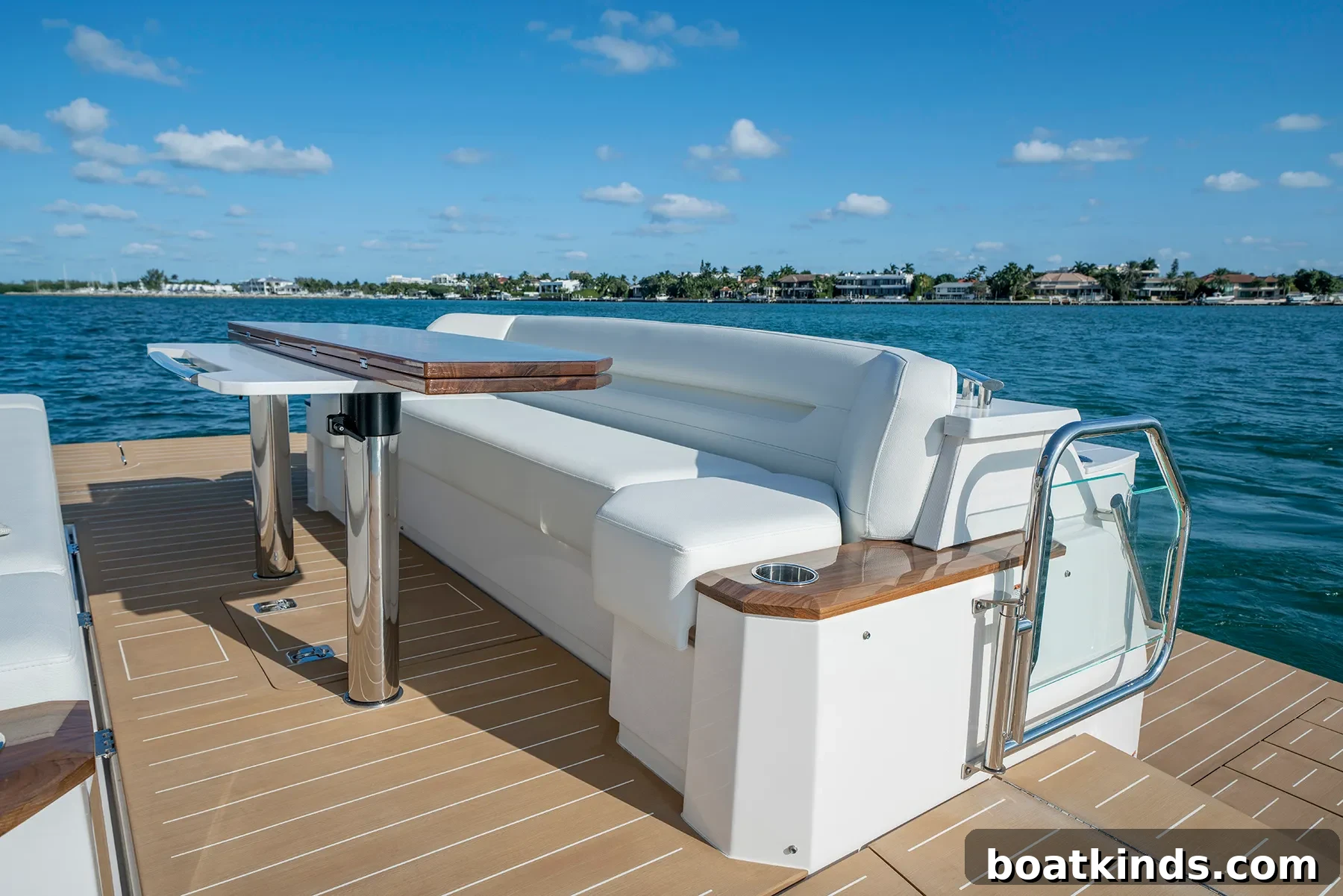
You don’t need to wear out your knees and backside scrubbing real teak anymore. Synthetic or faux teak offers the look and secure footing of traditional teak without the relentless upkeep. It’s easier to clean, resists instant graying, and won’t stain after the occasional spilled glass of wine. While not inexpensive, high-quality faux teak typically costs less than genuine teak and dramatically reduces the time spent on maintenance, leaving you more hours on the water.
Historically, teak decks were thick planks fastened over deck beams. Most modern boats, however, use thin planking glued or screwed to a cored fiberglass deck. Thin wood planking is vulnerable to heavy scrubbing and sanding: too much sanding exposes screw bungs and can create entry points for water to penetrate the cored structure. Switching to glued faux teak panels can seal screw holes and protect the deck core while eliminating the scrubbing cycle. Note that some builders now bond real teak to a man-made backing and glue that to the deck without fasteners—if you insist on genuine teak, that method preserves many of its advantages without the same structural risks.
Is swapping real teak for molded synthetic material a downgrade? That’s a matter of taste. For many boat owners, faux teak delivers the aesthetic and functional benefits without the burden of constant maintenance. If you choose a product made from recycled materials, you also reduce plastic waste and may keep material out of landfills. When the boat’s life ends, some faux teak can be removed and recycled, too.
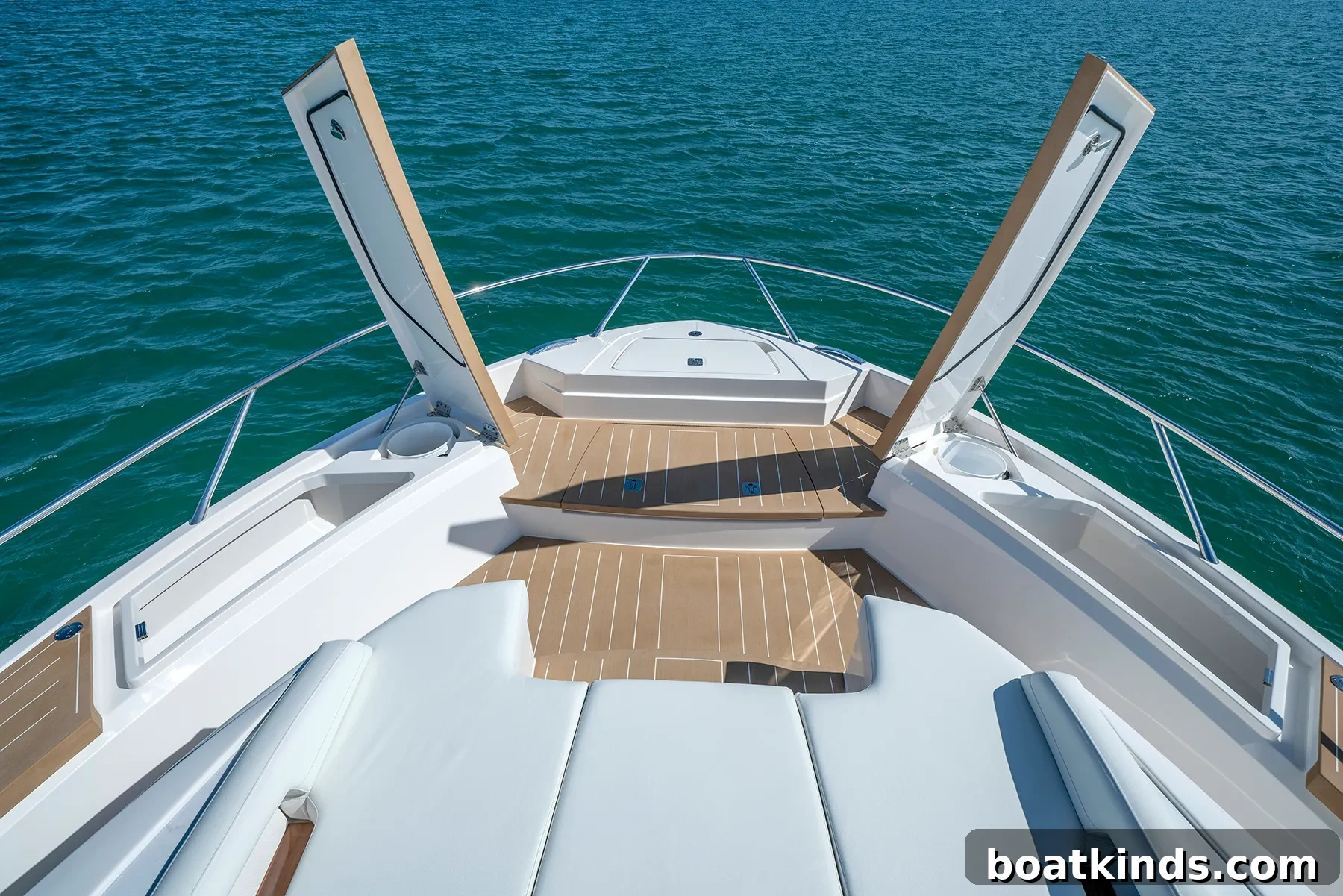
Most convincing faux teak is made from PVC (polyvinyl chloride). Brands commonly seen in the marine market include Nuteak, Permateek, Flexiteek and PlasDECK, among others. The products vary primarily in color options and surface finishes more than in basic construction. Typical color choices include light brown with black or white caulking lines or a weathered silver-gray that mimics aged teak. Because these materials are long-lived, request and compare samples from manufacturers before committing—the right color and grain pattern matters.
Non-PVC faux teak typically uses closed-cell EVA (ethylene vinyl acetate) foam. SeaDek is the best-known EVA brand, but there are many manufacturers supplying marine EVA in a wide range of styles. EVA decking won’t look quite as much like wood as PVC, nor is it as rugged or as stain-resistant, but it does offer excellent traction and cushioning for deck surfaces, and it is generally less expensive. EVA often comes with adhesive backing for a peel-and-stick installation that’s simpler to apply and easier to replace if damaged. For a true teak appearance, however, PVC products are the closest match.
Sailboats particularly benefit from teak-like decking fore and aft because sailing often requires moving about on wet, heeled decks—improved footing makes a real difference. On powerboats, most use concentrates around the helm, cockpit and companionway, so installing faux teak where people actually stand provides the most practical return on investment. If you do cover the weather deck, plan installations around cleats, windlasses, stanchions and other hardware to simplify cutting and reduce costs. Leaving a clear waterway along the gunwale preserves scupper and drain function.
Plan your plank layout before buying material. Traditional teak decks often include margin planks running along the gunwale curve, with inboard planks tied into a centerline king plank. Alternatively, planks can run fore-and-aft parallel to the centerline. In cockpit and bridgedeck areas, planking usually runs fore-and-aft with margin planks around the perimeter. Deck hatch framing is often done with margin planks on wooden decks to limit exposed end grain, but with faux teak this is an aesthetic choice rather than a structural one. Margin details add visual complexity and cost; some prefer a continuous plank flow for a cleaner look. Review examples from manufacturers to decide which style suits your boat.
There are three essential steps to a durable PVC faux teak installation. First, create a precise template of the deck using clear plastic sheeting and markers. Templating is the most important and most nerve-wracking part of the project: accuracy dictates the final fit. Most manufacturers provide templating instructions online, or you can hire a local distributor or installer to create a digital or physical template. Professionals can produce highly accurate templates, and having a pro handle this step is a wise investment if you want to minimize risk.
Second, build the panels that form the finished deck surface. PVC planks are assembled into panels—typically about 60 mm wide and ~5 mm thick—that interlock and are bonded with adhesive and caulking. Manufacturers will cut these panels to your template; many owners choose to have the fabricator build and ship the finished panels rolled up and ready to glue down. This factory-made panel approach reduces on-boat labor and improves final fit.
Third, apply the panels to the structural deck. Long-term performance depends on perfect adhesion between the faux teak panels and the substrate. Thorough surface preparation, use of recommended high-quality adhesives, and aggressive rolling to press the panels down are essential. Proper adhesion prevents spongy spots and water intrusion that can lead to lifting—especially important in freezing climates. You may need to perform final caulking around edges and seams for a finished look. Manufacturers typically claim long service life for properly installed PVC decks, and careful installation by an experienced technician will give you the best outcome.
Installation can look straightforward, but there are nuances to achieve a top-quality job, which is why hiring a professional installer is recommended for most owners. Faux teak is a significant investment and you don’t want a poor installation to compromise the finish or the deck structure. Many installers include templating in their fees and will handle adhesive application and finishing.
If you want a yacht-style appearance without constant maintenance, consider synthetic teak for your boat. It reduces cleaning and sanding chores, resists stains, provides secure footing, and can be more affordable than real teak. Write the check, retire the deck brush, and spend more time enjoying the water—spill a little wine if you like; faux teak is forgiving.
This story originally appeared in the December 2022 issue of Power & Motoryacht magazine and appears in Soundings May 2023 issue.