We were anchored in a sheltered Bahamian harbor when a 70-foot sailboat glided in from the ocean. Its size, finish and obvious quality drew attention from everyone ashore and on the VHF. People assumed the owner must be wealthy and experienced — how could you not be with a boat like that?
The next day a gentleman pulled up to our boat, Chez Nous, in the dinghy from that very yacht and shyly asked a practical question. I was hoping for an invitation to dinner or drinks; instead he asked, “I understand you sometimes have to add water to batteries. I don’t know how — where do you add it, how much and when?”
This wasn’t a “more money than sense” story. It was a common scenario: after years of work, people in their late 40s to mid-60s finally buy a large, complex boat to enjoy life. Often it’s their first experience with a vessel of that size and sophistication, and expectations don’t always match reality.
Know what you’re getting into
Boating is not like biking or RVing. Those activities have learning curves, but they happen on land. Boats operate in a different environment — the water — and that changes everything. Many advertisements make boating look effortless, but the consequences of misunderstanding the sea can be severe. You don’t need to be alarmist, but you do need to be realistic.
If you’re planning to get into boating or step up to longer passages on a larger vessel, think carefully about what being at sea entails. Movies and books rarely convey the full experience. Even if you plan to stay in bays, lakes or rivers, conditions can shift quickly and create situations very different from life ashore.
Different world, different skills
To enjoy boating safely you must develop seamanship: practical skills and experience for living and operating on the water. Start by appreciating the differences between ashore and afloat. You can’t simply walk away if something goes wrong; you can’t stop the boat and expect it to stay put; and you can’t always shelter from a storm.
Other differences are subtler. A boat’s momentum keeps it moving in its original direction when you turn. Heavier-than-air fumes won’t dissipate the way they do on land; they can collect low in enclosed spaces and become deadly. Seasickness can rapidly degrade judgment and stamina. Mechanical failures are more likely because of the marine environment, and charts can be misleading as bottoms and buoys shift.
Formal boating licenses or basic courses help with rules of the road, but they don’t teach seamanship. Learn ashore first: attend reputable seamanship schools, take manufacturer training when you buy a new boat, and insist on a thorough handover with your broker or dealer. No short course replaces time on the water; training is a beginning, not an end.
Progress to specialized training: weather interpretation is critical, especially offshore. Modern services can provide sophisticated forecasts, but you must learn to interpret large systems and apply forecasts to your precise situation. We consult offshore forecasters (for example, Chris Parker at www.mwxc.com) but always cross-check forecasts with our own observations and understanding.
Also take engine and systems courses. Even if you plan to use professionals for maintenance, there will be times when you must troubleshoot or effect temporary repairs yourself. Watching and learning while technicians work, or hiring a mechanic to explain systems, pays dividends.
Chartering vessels similar to what you plan to buy can be invaluable. Quality charter companies often provide training or captain-for-hire options, which build both boat-handling skills and confidence. Crewing for experienced friends is another great way to learn.
Following the leader
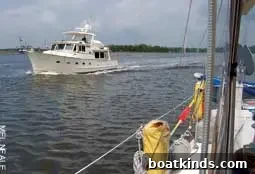
Group cruises and fleet events have many benefits — camaraderie, shared knowledge and support — but don’t rely on a leader to keep you safe. In severe weather or a major breakdown, you may be on your own. The ultimate responsibility for the boat and crew rests with the skipper. Avoid a false sense of security and ensure you and your crew can handle emergencies independently.
Practice, practice, practice
Seamanship is acquired through deliberate practice. Once you own your boat, spend time learning how it behaves: how it handles in different seas and winds, its maneuvering characteristics, how it performs in reverse, and its stopping distance. Test these traits in calm, open water first.
Practice close-quarters maneuvering away from the dock using visual references or temporary markers. Learn how your hull type, propulsion and appendages react to wind and current — a displacement single-engine boat behaves very differently from a flat-bottomed, twin-screw craft. Train for docking in various conditions and practice using lines, thrusters and engine thrust as needed.

Gradually increase difficulty with stronger wind, waves and current, but don’t seek extremes just to test limits. Begin cruising close to home so you know where to find help and become familiar with local hazards. Each cruising area has unique challenges; learning them at home is safer than immediately undertaking long offshore passages.
Share the learning with everyone aboard. When more people understand systems, navigation and emergency procedures, the boat becomes safer and more enjoyable for all.
Navigation for real
Navigation is inseparable from seamanship. Decades ago, navigating the shallow Bahamian banks required careful compass work, counting islands and using landmarks to avoid reefs and bars. Electronic aids like GPS and chartplotters have made navigation more precise and safer, but they are supplements — not substitutes — for traditional skills.
Know how to navigate without electronics. Learn to read charts, account for current, maintain a compass course and use visual ranges and landmarks. Watch the water: fan coral and sea grasses reveal current direction and strength. If you rely solely on electronics, you risk making serious errors when equipment fails.
Never off watch
On small yachts the skipper is always on watch. Continuously monitor weather, clouds, sea state, wind and barometer. Learn to interpret subtle changes: shifts in swell, a drop in barometric pressure, or the smell of hot oil or battery gas can foretell trouble.
Keep an eye on instruments and physical systems. Regularly inspect the engine room, bilges and electrical components. Alarms can miss slow-developing problems; hands-on checks, listening and smelling for anomalies are essential. At night or in poor visibility, supplement radar with binoculars and a compass to verify what you see.
Gadgets galore — useful but not a crutch
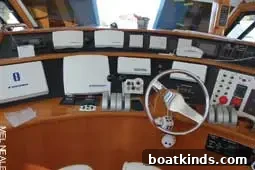
Modern boats come equipped with remarkable electronics: joystick docking, thrusters, autopilots and advanced navigation systems. These tools make boating more comfortable and can increase safety, but they don’t replace basic skills. We’ve seen owners rely on joystick control and forget to secure their boat — with predictable consequences.
Buy useful, reliable equipment, but also learn to handle the boat the traditional way: steering, engine control and seamanship fundamentals. Technology can fail; your ability to operate without it will keep you and your crew safe.
If you have the dream of cruising on a larger boat, it’s achievable. Buying the boat may be the easy part; building the skills and experience that let you enjoy it is the essential, rewarding work. Shortcutting that process can quickly spoil the dream; embracing it can make the voyage part of the joy.
Tom Neale is the technical editor for Soundings and lives aboard a Gulfstar 53 motorsailer. He has written All in the Same Boat and produced a two-disc DVD, Cruising the East Coast With Tom Neale. More information: www.tomneale.com.
This article originally appeared in the June 2011 issue.