
E15 Gasoline and Boaters: Risks, Labeling, and What You Need to Know
The Trump Administration recently approved year-round sales of gasoline blended with up to 15 percent ethanol (commonly called E15). While this fuel is legal for many automobiles, it is explicitly prohibited for use in recreational boats and has the potential to cause serious damage to marine engines and fuel systems. Boaters who refuel at land-based gas stations must be alert to the risk of mis-fueling and take precautions to avoid putting E15 into marine tanks.
Why E15 Is a Concern for Marine Engines
Ethanol-blended fuels behave differently than pure gasoline. Ethanol is hygroscopic (it absorbs water), and when mixed with gasoline it can increase the likelihood of water contamination and phase separation in fuel tanks. Marine fuel systems and outboard motors are often more sensitive to fuel that contains higher ethanol content. This sensitivity can lead to engine hesitation, stalling, degraded performance, corrosion of fuel system components, clogged fuel filters, and in severe cases, costly repairs. For these reasons, manufacturers and boating organizations advise against using E15 in recreational vessels.
Labeling Problems at Land-Based Gas Stations
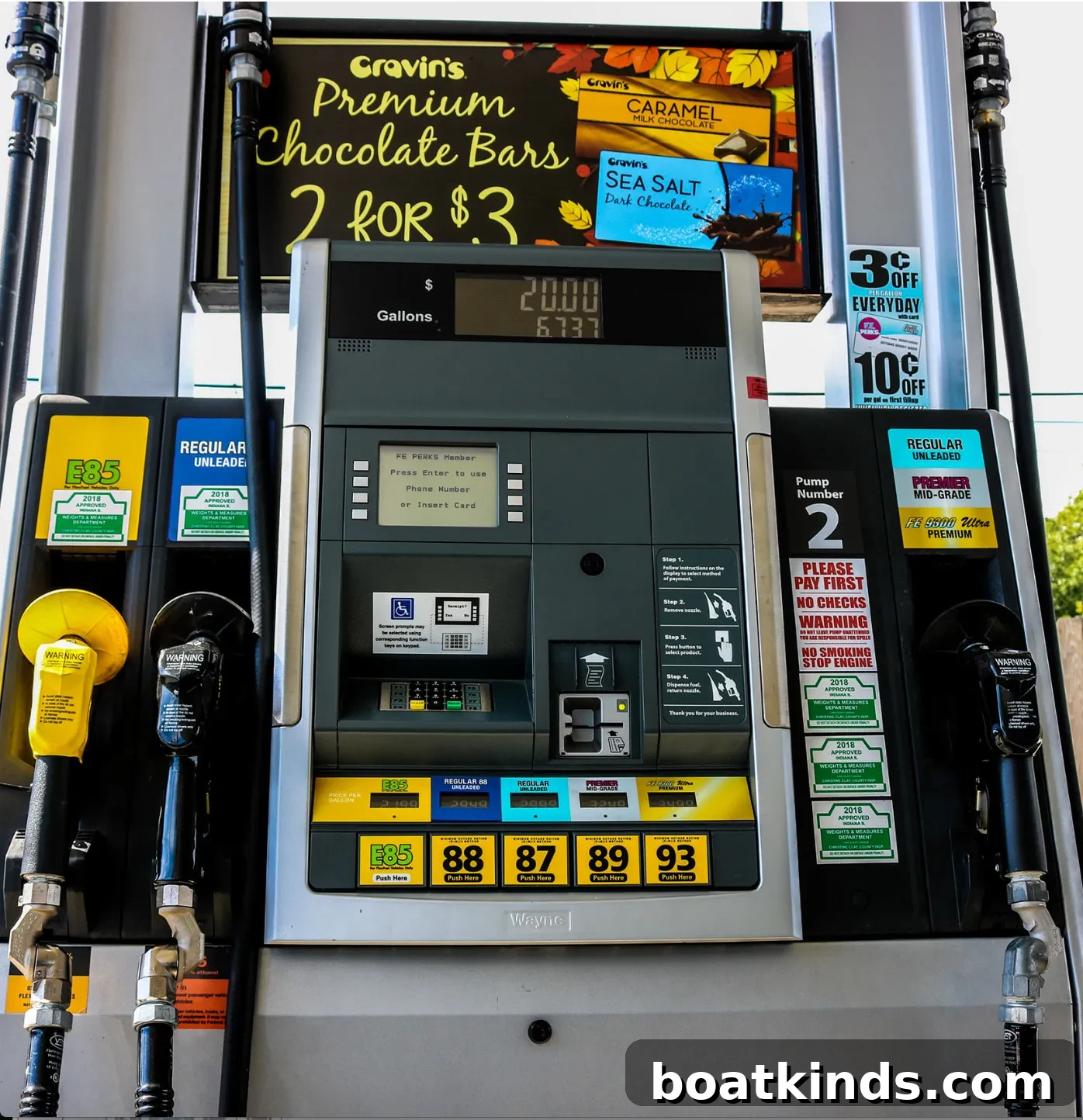
One practical problem for boaters is that many land-based gas pumps are not clearly labeled to indicate ethanol content. The image below shows a gas pump in the Midwest with little to no clear labeling about ethanol percentages. When pumps do not display the ethanol blend for each grade of fuel, consumers can easily mis-fuel without realizing it. BoatUS, a leading marine advocacy and assistance organization, recommends refusing to fuel at land-based stations unless the pump is clearly marked with the ethanol percentage for the product being dispensed.
Regulatory Background and the Renewable Fuel Standard
BoatUS notes that E15 is currently restricted in many states during summer months by the Environmental Protection Agency (EPA) because of concerns that higher ethanol blends can contribute to smog on hot days. The push to increase ethanol content in the nation’s fuel supply is driven by the Renewable Fuel Standard (RFS), a federal program created in 2005. At the time the RFS was written, policymakers assumed that overall gasoline consumption would grow. Because actual gasoline usage did not rise as projected, the RFS effectively requires a larger share of biofuel to be blended into each gallon of gasoline, which is one factor behind wider availability of E15.
Practical Advice for Boaters
To reduce the risk of mis-fueling and protect your boat’s engine, follow these practical steps:
- Only purchase fuel from pumps that clearly display the ethanol content. If a pump lacks labeling, choose another station or grade that is clearly marked.
- Use fuels recommended by your engine manufacturer. Check the owner’s manual or consult the manufacturer if you are unsure which fuel blends are acceptable for your engine.
- When possible, buy marine-grade gasoline from marina fuel docks. Marine fuel suppliers are more likely to offer ethanol-free or low-ethanol fuels specifically intended for boats.
- Inspect fuel filters and water separators routinely and replace them according to the engine manufacturer’s maintenance schedule to limit damage from contaminated or water-laden fuel.
- Keep accurate records of fuel purchases and the fuel type used. If an engine problem develops soon after refueling, these records can help diagnose whether fuel quality or mis-fueling was a factor.
What to Do If You Suspect Mis-Fueling
If you believe E15 was accidentally used in your boat, stop operating the vessel and consult a qualified marine mechanic or your dealer. Continuing to run the engine on fuel that is incompatible can worsen damage. A professional can advise on whether draining the tank, flushing the fuel system, and replacing fuel filters are necessary to avoid long-term harm.
Ultimately, clear pump labeling and increased public awareness are the best defenses against mis-fueling. Until labeling practices improve widely, boaters must be proactive about where and how they refuel. Following manufacturer guidance and taking routine maintenance precautions will help protect marine engines from the heightened risks associated with E15 and other high-ethanol blends.