An aspiring boatbuilder finds inspiration amidst the craftsmanship at the WoodenBoat Show
Photos by Kim Tyler
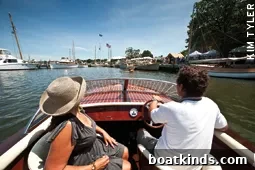
Strolling among the booths, stalls and the gleaming vessels lined up along the waterfront at this year’s WoodenBoat Show at Mystic Seaport, a simple refrain kept returning to me: “It’s easy if you know how.” That phrase — part encouragement, part craft wisdom — seemed to echo through the aisles, from varnished decks to crowded work tents.
I first heard those words decades earlier while courting my wife, then a potter. Watching her throw one pot after another with apparent ease, trimming rims and attaching handles, glazing with practiced, flowing motions, I would ask how she managed it. Her answer was the same each time: “It’s easy if you know how. That’s what my teacher told me.” The WoodenBoat Show brought that same lesson back to life for me, but this time with planes, adzes and copper fastenings in place of the potter’s wheel.
WoodenBoat magazine’s annual show, held June 29–July 1 at Mystic Seaport, has long been a gathering place for some of the finest wooden-boat builders and restorers. The event presents eye-catching centerpieces: Rebecca, a 75-foot schooner built by Gannon and Benjamin; Aida, a 1926 Herreshoff yawl restored by Doug Hylan and Associates; the lavish motorsailer Trade Wind, fully rebuilt by Rockport Marine; and several immaculate daysailers from Artisan Boatworks. These flagship boats showcase a level of finish and detail that can feel almost unattainable — breathtaking examples of traditional boatbuilding at its peak.
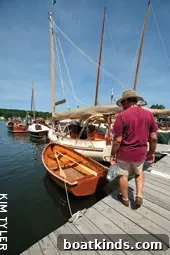
But what drew me in more than the polished classics was the accessible side of the show: the owner-built boats, the instructional booths, the kit suppliers and the schools. In the owner-built section, people stood proudly beside boats they had made themselves and were ready to talk about the challenges and rewards of building in a garage or on a spare stretch of shoreline. Stalls offered stitch-and-glue and plywood-lap kits, complete with step-by-step guidance for someone who wants to learn boatbuilding fundamentals at home.
Representatives from institutions such as the International Yacht Restoration School and The Landing School were present, offering pathways for learners who might want to change careers or deepen their skills. These programs have trained many students who now work in the wooden-boat field, and hearing instructors and alumni describe their experiences and projects helped clarify how structured education can accelerate practical learning in boatbuilding and restoration.
On the north end of the show I discovered the Family Boat Building tent, where 28 families were working together on several plywood designs. The third day of the event sounded like a hive of activity as sanders hummed across glued-up hulls and families collaborated on shaping, sanding and finishing. Watching parents and children learning together underscored how boatbuilding can be both a craft and a way to pass skills and values across generations.
Throughout the grounds I watched tool demonstrations, picked up adzes, sighted along plane blades and listened to builders explain their approaches. Conversations with veteran craftsmen such as Nat Benjamin, Warren Barker and Harry Bryan revealed a common, grounded advice: take it step by step. Slow down, pay attention to the grain, sharpen your tools, and let your hands learn the work. That advice felt less like a how-to manual and more like permission to embrace patience and focus.
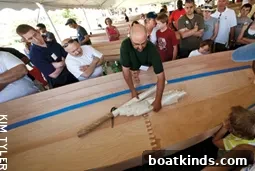
Some visitors might be intimidated by the flawless varnish and perfectly aligned screw slots on display. I experienced the opposite. Immersed in the show’s atmosphere of skill and shared conviction, I felt inspired and confident. The builders’ calm competence — a sort of practical rightness earned over years of practice — made the craft feel approachable. It wasn’t magic; it was technique, discipline and the steady accumulation of experience.
As the weather cools and I sharpen my plane blades and chisels this coming fall, the lessons of Mystic Seaport will be among my most useful tools. The show reminded me that learning the how is a process: a series of small steps, repeated with attention, that eventually make difficult work feel natural. With that clarity and a willingness to practice, the work truly becomes easier.
This article originally appeared in the September 2012 issue.