How This Couple Sees the World Without Breaking the Bank
Nearly 20 years ago, we chose to sell our property and business, buy a boat and start cruising while we were still young and healthy enough to enjoy it. Watching friends postpone their plans — only to have health or family issues derail their dreams — made us decide not to wait.
Planning for Long-Term Cruising on a Budget
Money was the biggest obstacle. We weren’t wealthy, retired with a pension, or expecting an inheritance. Our plan was simple and realistic: sell our land and business, buy a seaworthy boat, outfit it for long-distance cruising, and keep enough savings to support ourselves until we could find work in another port to replenish our cruising fund. The goal wasn’t bare survival — it was to enjoy the lifestyle without wasting money.
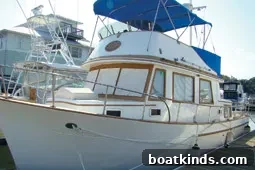
We spent 17 years aboard Sea Trek, a Mariner 40 ketch, covering tens of thousands of miles. Recently we shifted to a 1980 Marine Trader 34 trawler to explore shallower inland waterways and parts of the Great Loop not accessible to a deep-draft sailboat. The trawler’s single diesel engine is fuel-efficient — roughly 1.2 gallons per hour — which matters a lot because fuel is a major expense even for sailors: sometimes the wind isn’t cooperative.

Investing Upfront to Save Over Time
We’re doing a full refit to make the new boat comfortable and self-sufficient. Some purchases look expensive at first but quickly pay for themselves. For example, a watermaker may cost $3,000 up front, but if it allows us to stay at anchor instead of paying for dockage and filling water tanks ashore, it soon becomes a money-saver. Similarly, investing in a robust charging system—solar panels and wind generators—reduces the hours we run the engine, lowering fuel costs and marina stays.
Anchoring, Free Dockage and Dinghy Tips
One of the best-kept secrets among cruisers is the abundance of free or low-cost dockage along the East Coast for those who’ve made local friends. We prefer anchoring for peace, privacy and savings. Finding a free dinghy dock is getting harder as waterfronts develop, but options still exist: friendly restaurants will often let you tie up if you patronize them, and some shopping centers provide dinghy access for customers.
We enjoy eating ashore occasionally, and we find that local, lesser-known eateries usually offer better food at lower prices than tourist-focused restaurants. Choosing where to dine is both a cultural experience and a budget decision.
Affordable Land Travel and Local Experiences
When we travel outside the U.S., we love exploring the countryside, meeting locals and experiencing culture. Group outings with other cruisers make local transportation affordable: hiring a van and driver for a day and splitting the cost across two to four couples gives access to supermarkets, wholesale stores and parts suppliers at a reasonable price. Those same trips often include visits to museums, historic sites and rural areas many cruising guides don’t show.
We frequently use local transit as part of the adventure. Riding crowded “chicken buses” or local buses is inexpensive and puts you in direct contact with residents. It’s not for everyone, but it’s a memorable way to learn about a place. If comfort matters more, air-conditioned buses with more amenities are also available at modest cost.
We tend to avoid heavily advertised tourist zones in favor of quieter places and walk a lot. Walking is healthy, immersive and often leads to unexpected local interactions, like a friendly ride with a resident who offers a lift along the way.
Health Care and Risk Management
Many people ask how we handle health care while cruising. We have chosen not to maintain traditional health insurance because most plans don’t provide coverage outside the U.S., and international plans can be prohibitively expensive. Instead, we rely on staying active and healthy, local medical services where they are more affordable than in the United States, and careful planning. Each cruiser must weigh their own medical needs and risks when choosing coverage.
Managing the Cruising Kitty
Our average cruising budget runs around $1,500 per month. Budgets vary widely among cruisers—some get by on $500 monthly, others spend $5,000—but every choice we make aims to protect the cruising kitty. Preventive maintenance reduces breakdowns and costly repairs, and learning to do most repairs ourselves keeps money in the bank.
Provisioning smartly makes a big difference. We shop local markets for fresh produce and meats at lower prices than supermarkets, clip coupons when in the U.S., and buy fuel from the most affordable docks, even if it means filling up early. The trawler’s 300-gallon fuel capacity lets us take advantage of volume discounts, something our sailboat’s smaller tank didn’t allow.
Many activities are nearly free: a dinghy ride to a beach or snorkeling spot costs only a little outboard fuel. The dinghy is our daily transport—like a car for shore trips. Potlucks hosted by other cruisers provide a feast for the price of one shared dish, and informal gatherings often deliver music and camaraderie you won’t find in tourist venues. The friendships and shared knowledge among cruisers are priceless for both enjoyment and practical tips to stretch the cruising budget.
Live Simply, Cruise Fully
Don’t let economic concerns stop you from pursuing your cruising dreams. Living aboard taught us to enjoy simple pleasures and live within our means while still having rich experiences. That balance between frugality and enjoyment is the heart of our cruising philosophy.
About the Authors
Chuck Baier and Susan Landry spent 17 years living and cruising aboard their Mariner 40 ketch, Sea Trek, exploring Florida, the Caribbean, the Gulf of Mexico and Central America. They are now refitting a 1980 Marine Trader 34 trawler to cruise inland lakes, waterways and parts of the Great Loop.
trawler-beach-house.blogspot.com
Related articles: “Cruising Tales – Near and far” and “Cruising Tales – Taking those first steps.”
This article originally appeared in the June 2009 issue.