
Mark Grady hadn’t been looking for another boat—he already owned one—but a call from boatbuilder Tommy Townsend in Mystic, Connecticut changed that. Townsend told him a 1966, 41-foot Penbo trawler yacht was about to be cut up. The trawler, Annie Glynn, had been on the market for years with no takers, even though the owner was willing to give her away.
Townsend knew Grady’s appreciation for Penbos; two years earlier Grady had bought a 1965, 37-foot Penbo sardine carrier, restored it and renamed it Mary Curtis. That boat had just taken best powerboat at the 2018 Antique & Classic Boat Festival in Salem, Massachusetts after Grady spent two summers enjoying her. Townsend urged Grady to at least look at the 41-footer, pointing out that it offered more living space and excellent systems.
Grady drove from his Scituate, Massachusetts home to Chester, Connecticut to inspect the boat. It was the dead of winter, and the visit confirmed the worst: Annie Glynn had been shrink-wrapped for five years and the elements had taken a toll. Rain had worked its way from the pulpit across the foredeck to the wooden mooring bit on the bow, causing rot. Planking had dried and mildew had taken over both inside and out. Still, Grady found many positives.
Despite cosmetic and weather-related damage, the boat’s mechanical and electrical systems were solid and of relatively recent vintage. The owner, an industrial designer, had wired the boat to marine standards, supplied three laminated sets of schematics in binders, and installed shore power on both sides with breakers and proper grounding. Annie Glynn also featured two new freshwater tanks, a new water heater, a new water pump, PEX plumbing and two unused VacuFlush heads. The plywood decks and cabin tops were glass-sheathed, and the hull was cedar over oak with no fiberglass—exactly the kind of wooden construction Grady prefers. The Cummins diesel repower installed by Billings Diesel & Marine in 1998 was a 185-hp unit, and a 2013 survey had given the boat a clean bill of health.
Encouraged by the hull’s condition, Grady decided to take the boat. On his way to finalize the transfer he had set a private rule: if the owner asked for any money at all, he would walk away. When he arrived the boat’s new cushions were sitting outside the garage and curtains still hung in dry-cleaner plastic. As the owner hesitated while filling out the paperwork, he sheepishly asked, “Is it okay if we do a dollar?” Grady handed him a single dollar in the driveway and drove Annie Glynn home.
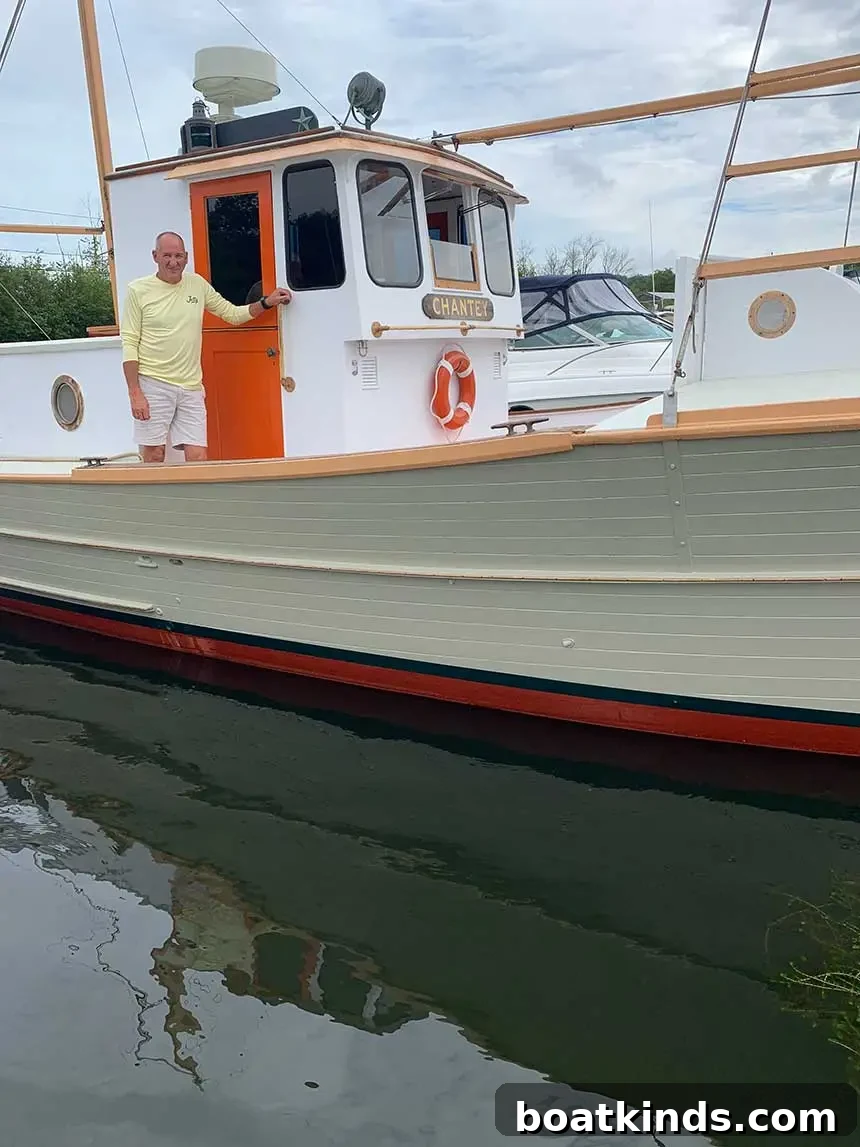
Work began immediately on December 30, 2018. Grady spent every weekend for the next seven months commuting from Massachusetts to Chrisholm Marina in Chester, sleeping in Townsend’s loft through the winter and bringing parts home to work on after his day job as a residential general contractor. By July he moved Mary Curtis down to Chrisholm so he could sleep aboard while finishing the 41-footer.
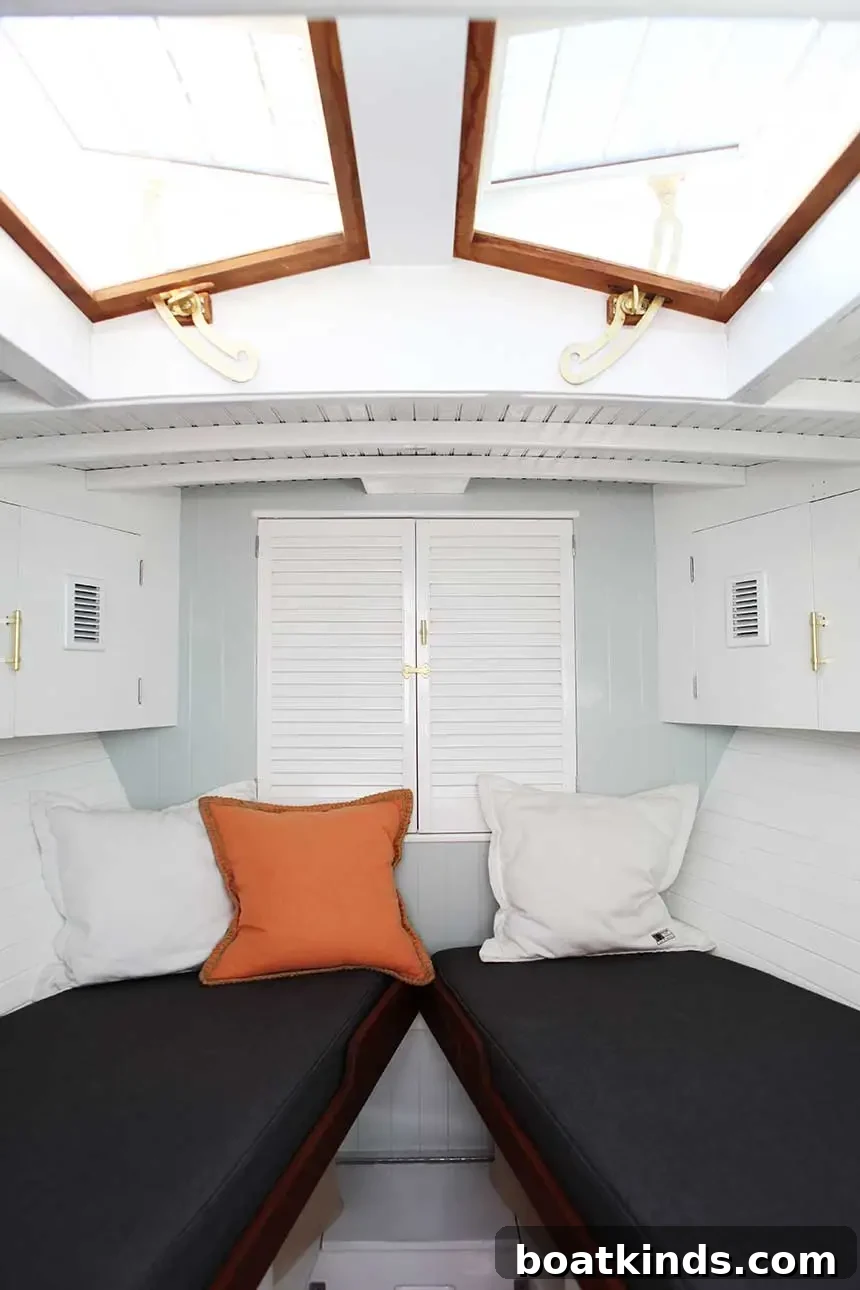
Although not a professional boatbuilder, Grady’s carpentry skills and comfort with woodworking made him well suited to the restoration. With guidance from Townsend, he cut out and replaced rotten sections on the bow, using leftover Danish oak from the Mystic Seaport Mayflower II project to reconstruct the mooring bit. He glued up a new three-inch-thick mahogany pulpit, replaced the rotted toerail, and removed non-original plywood benches and stainless-steel railings from the cabin roof. He reversed the swing of the pilothouse doors and converted them into Dutch doors for better ventilation. The galley received practical upgrades—striped sapele countertops, new sinks and faucets, and a built-in microwave—and the heads were fitted with matching countertops.
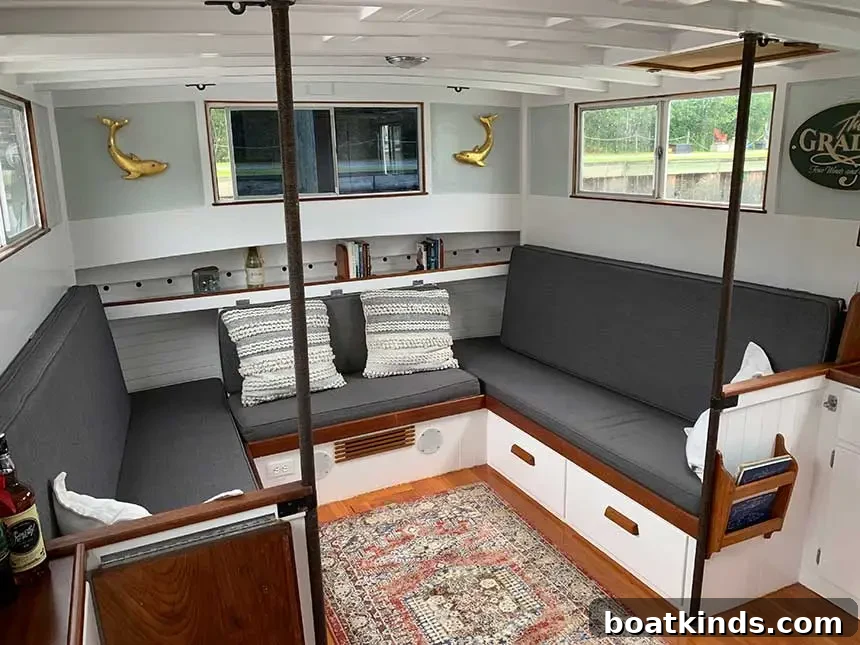
Friends and local professionals pitched in. A close friend painted both the interior and exterior, and Chrisholm Marina owner Victor Matz cleared a boat shed so the spars could be finished out of the weather. Matz also supplied a vintage Buell duplex air horn he’d salvaged. While sanding the topsides, Grady found the boat’s old name, Chantey, painted under later layers. He liked it and chose to restore the name.
By midsummer Grady hoped to have Chantey ready for the 2019 Antique & Classic Boat Festival in late August. The major remaining task was caulking and painting the bottom. Townsend and two of his crew arrived one weekend to help seal the seams. “They sealed the whole bottom in one day,” Grady recalls. “It took 17 tubs of Slick Seam.” Townsend, particular about finishes, also insisted on changing some of Grady’s color choices—he rejected the orange pilothouse doors and the black bottom. After a quick vote, the bottom was painted red, and Chantey spent time in the Travelift slings in the water to let the hull swell properly.
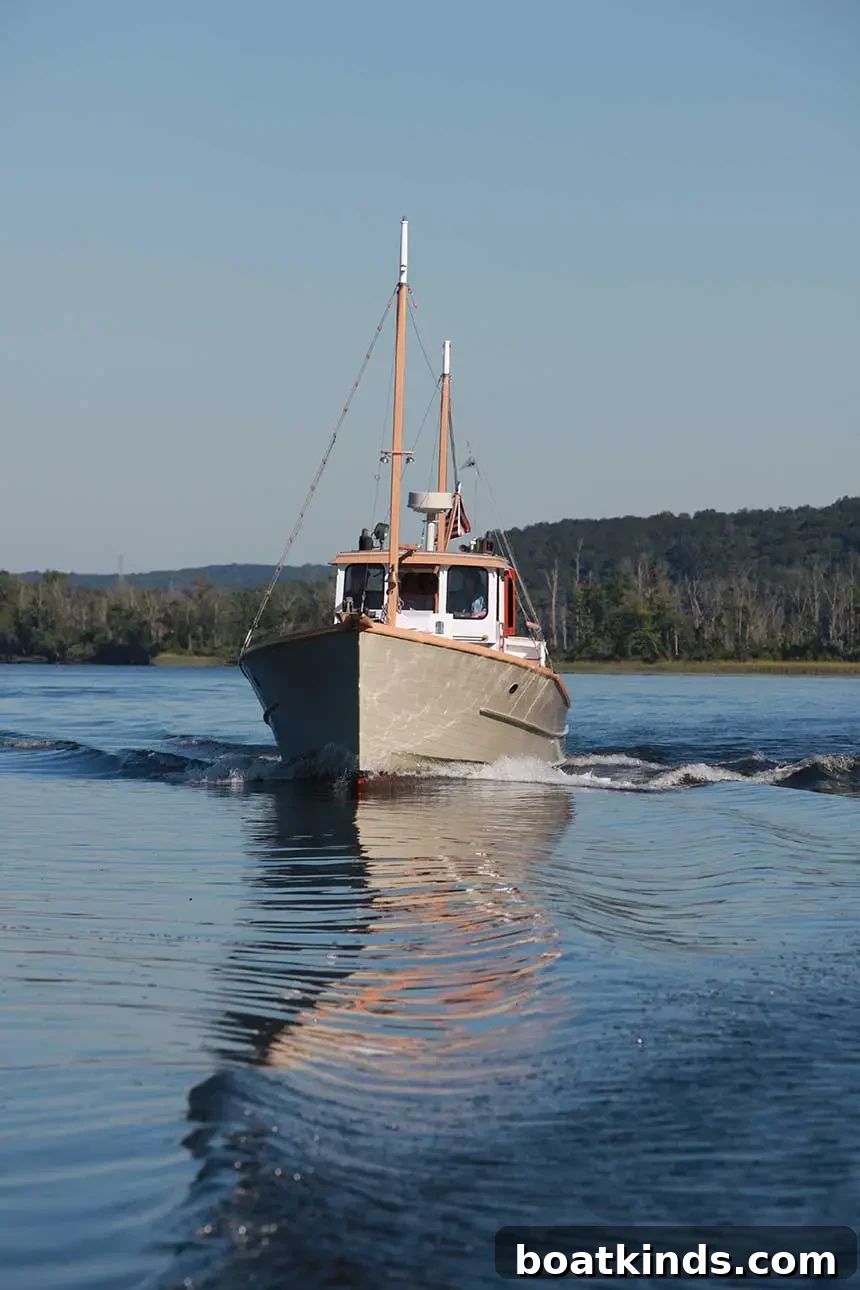
Townsend advised against a hurried cruise, suggesting the boat remain in the water a bit longer to ensure the seams were fully tight. Grady delayed his plan to motor up to Salem and instead waited, finally bringing Chantey home when he and Townsend agreed she was seaworthy. He missed the festival that year but knew he had done the right thing by taking the time the restoration demanded.
“Tommy thinks I’m out of my mind turning this thing around in nine months,” Grady says, “but this is what I do. I love my work, and bringing a boat like this back to life is very satisfying.”
PENBO’S HISTORY
The Penobscot Boat Works was founded in 1951 in Rockport, Maine, by Bob Lane and his father, Carl D. Lane. They produced skiffs, sloops and a line of semi-custom cruising houseboats that became known as Penbos. Carl Lane designed the boats, which were lightly built but well constructed and often included practical, sometimes improvised features—lumberyard finds such as louver boards and pegboard overheads were not uncommon. Each Penbo was unique, with the Lanes adapting features from one model to the next.
Grady owns two Penbos and appreciates their pragmatic layouts and thoughtful, common-sense design. On his 41-foot trawler a boathook is stowed in a custom cradle on the forestay so it’s within easy reach to pick up a mooring line. Penbo’s last boat rolled off the ways in 1975; Bob Lane and his wife then took that boat to the Bahamas for a decade. Although wooden construction can deter some modern boaters, Penbo owners remain loyal to these timeless craft. Grady notes that preparing his 1965 Mary Curtis for the season takes him only a couple of days—something he considers less work than some fiberglass boats.
This article originally appeared in the December 2019 issue.