
How to Train and Keep Your Dog Safe on Boats and Paddleboards
Pamela Douglas Webster knew she had work to do before moving aboard a Pacific Seacraft 34 five years ago with her golden retriever, Honey. Honey is naturally timid and sometimes reacts poorly to new situations, so Webster consulted trainers and developed a step-by-step plan to prepare her dog for life on the water.
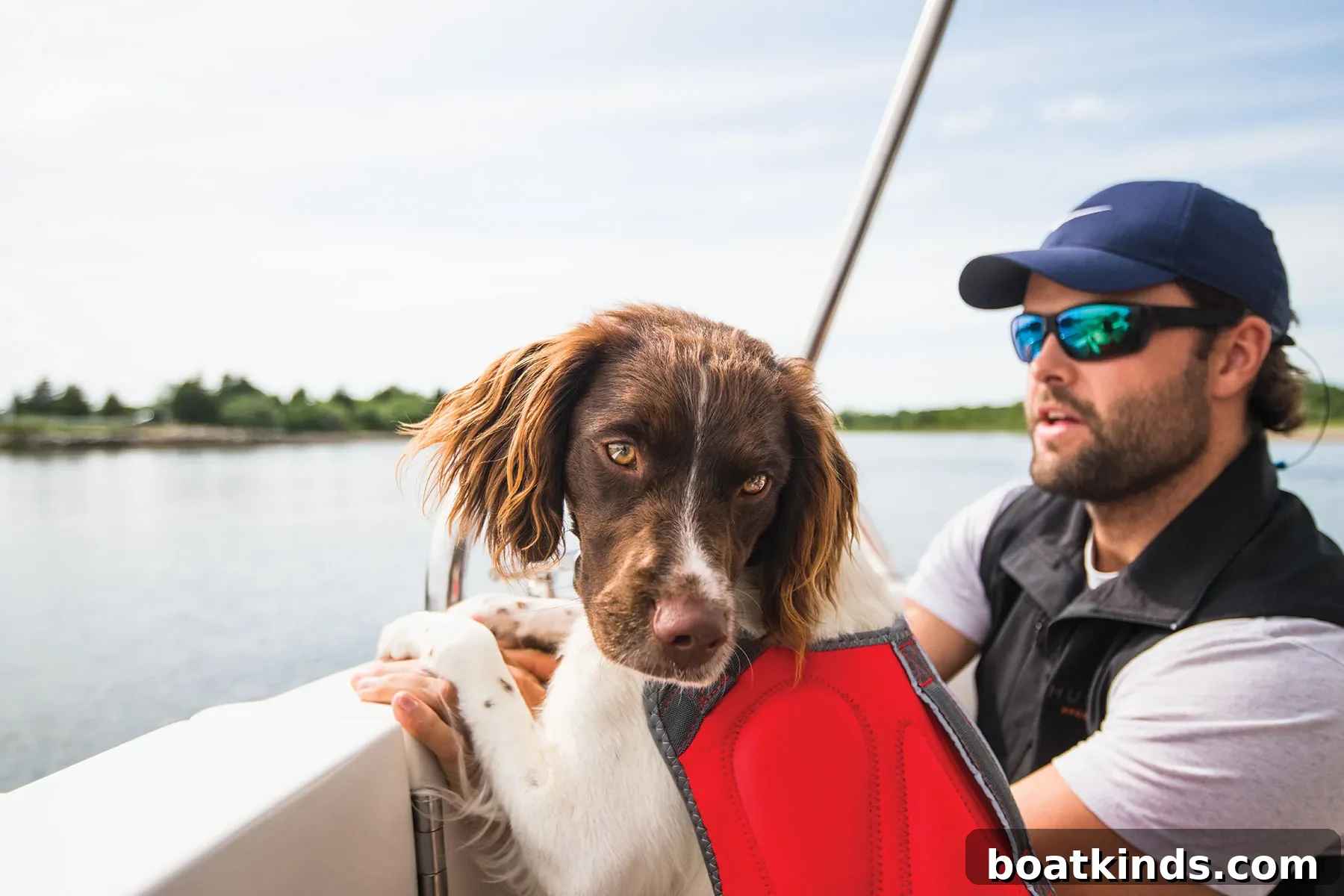
“We bought a wobble board and put it in our backyard and taught her to stand on it, so that when she got on the boat and things started to move, she wouldn’t be nervous,” Webster says. She also used a tarp on a clothesline on windy days to simulate noisy, flapping sails and practiced tricks closer and closer to that noise so Honey would stay calm. Those small, intentional steps made the transition to living aboard much smoother.
Millions of boaters bring their dogs along for rides, whether for a peaceful day cruising with the dog at the bow, or for more active pursuits like paddleboarding, kayaking, and dock diving. With the right training and gear, most dogs—mixed breeds and purebreds alike—can safely enjoy time on the water and add to the enjoyment of everyone on board.
“A lot of people will just throw their dog on the boat the first time and assume it will be OK, and then when the dog freaks out, they figure they can’t take the dog on the boat anymore,” Webster says. She advises gradual exposure: bring the dog to the boat several times before heading out, let them experience wakes, and allow them to hear the engine start and stop so the sounds don’t become frightening surprises.
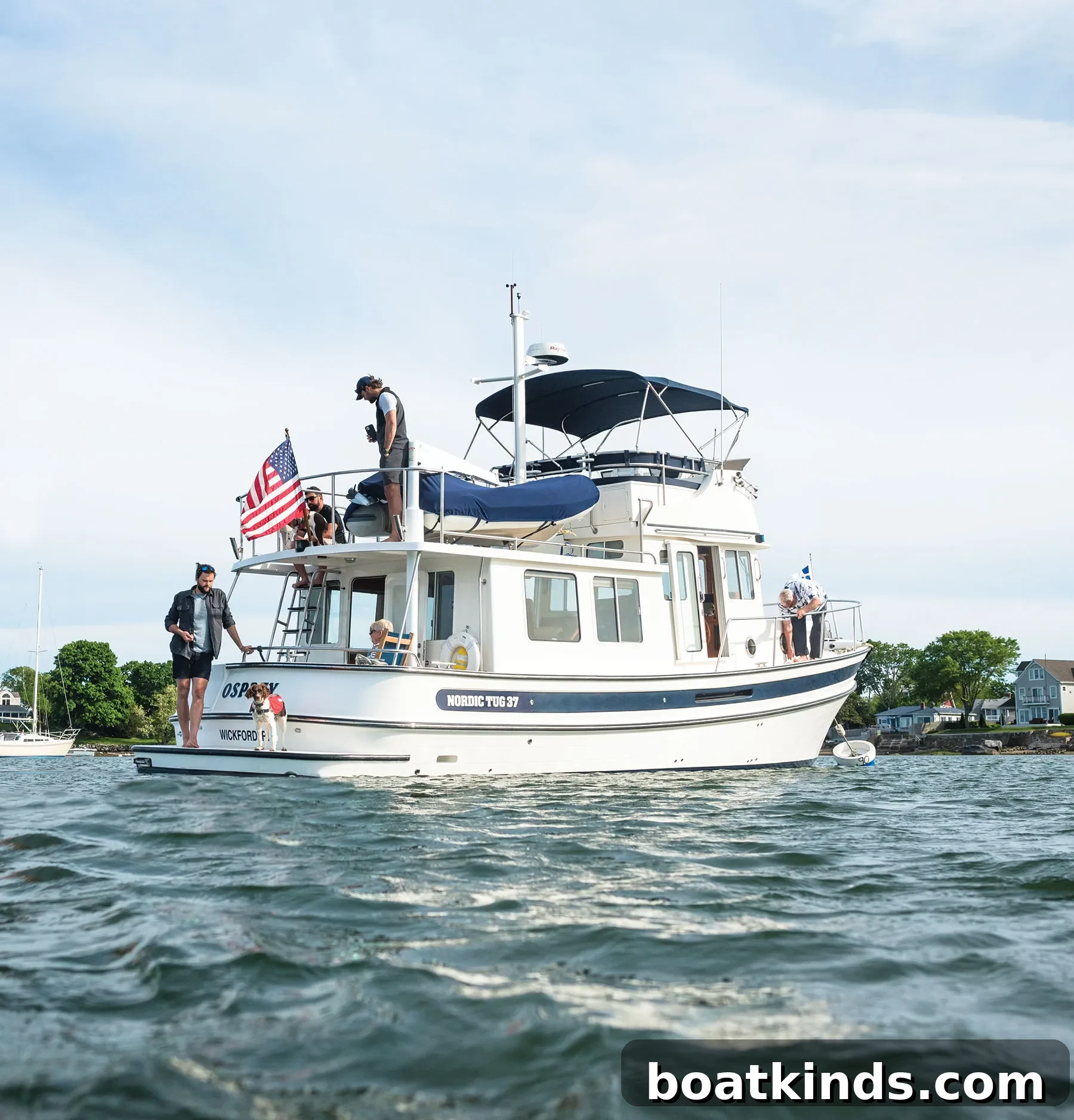
Across the country, trainers offer lessons tailored to boating activities. Classes range from basic water retrieval—fetching a floating toy—to canine boat work, where dogs learn to deliver a line to a person, and to the high-energy sport of dock diving. Local trainers and community programs can help boat owners develop appropriate, safe training plans for their dog’s temperament and skill level.
Chris Carragher, who runs the Seacoast Paddleboard Club, organizes community events like the annual Paddle for the Pups to benefit the New Hampshire SPCA. At that event, 20 to 30 dogs ride standup paddleboards with their owners over a few calm miles. Carragher recommends breaking paddleboard training into small, manageable steps to build confidence for both dog and owner.
“Start small,” Carragher advises. “Start on land. Put the paddleboard in your backyard, get them to stand on the board, and give them lots of treats. Maybe sit on the board with them.” Once a dog is comfortable being on the board with its owner, introduce the paddle and then move to calm water. Kneeling on the board during initial water sessions—ideally in a pool, lake, or slow river—reduces motion and helps the dog decide whether they enjoy the experience.
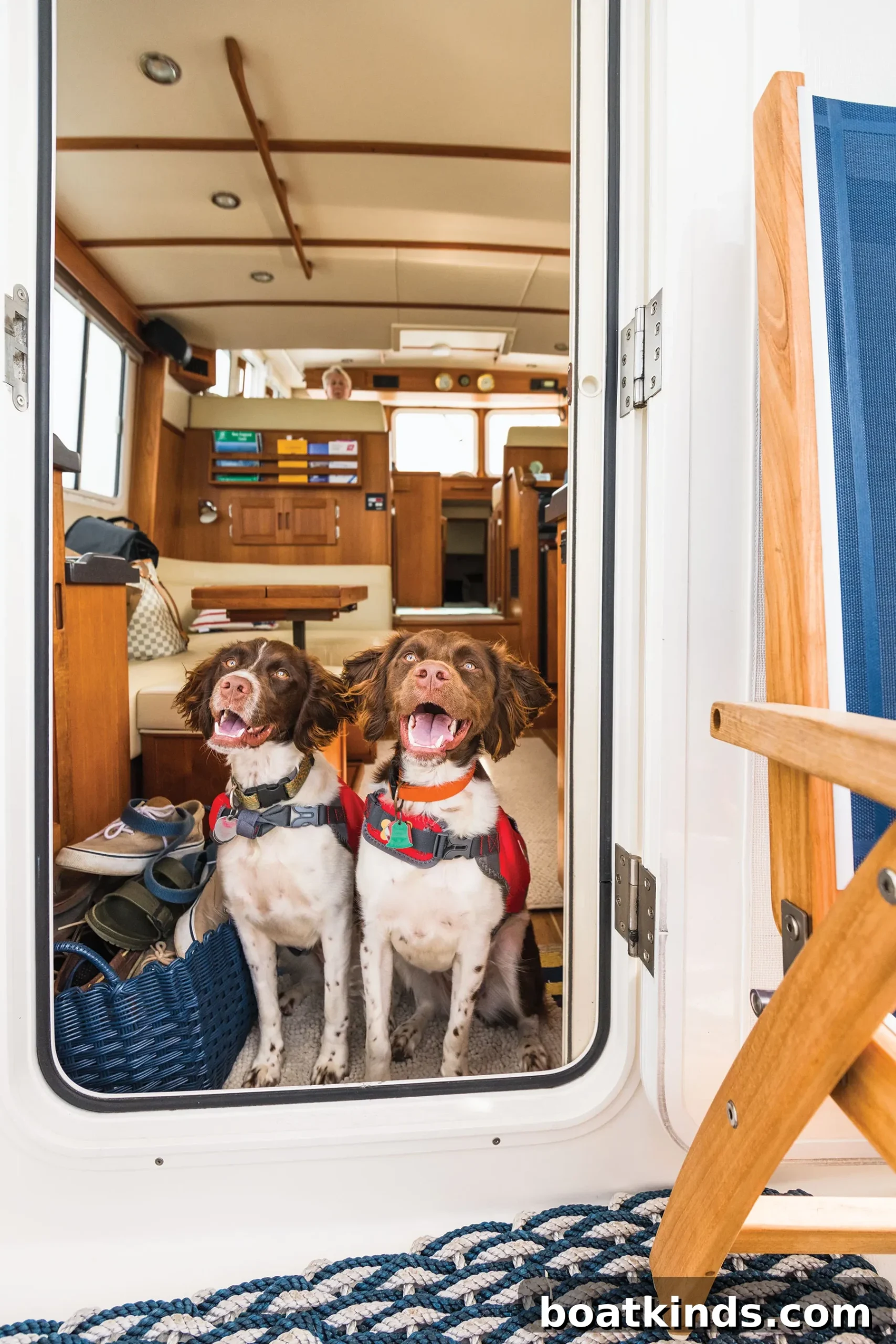
Understanding your dog’s personality is crucial. Timid dogs need confidence-building exercises while high-energy or impulsive dogs require training that teaches restraint and reliable recall. “If the dog is really bold and fearless and wants to jump into the water, then you need to work on impulse control,” Webster says. You don’t want a dog jumping off to chase wildlife or jumping into unsafe conditions.
Safety gear is non-negotiable. A well-fitted canine life jacket (PFD) should be worn whenever a dog is on a boat or paddleboard. Carragher stresses that even the best swimmer can tire or become disoriented if they fall into the water: “I don’t care how good you think your skill set is. If your dog falls off and has to swim ashore and gets tired, you want that PFD to be on. You’re doing your dog a favor.”
Consider adding a personal locator beacon (PLB) or a small waterproof GPS tag to the dog’s harness or life jacket as an extra layer of security. Some compact tags send a location alert to your smartphone if the device separates from the boat, which can help you find a dog that has gone overboard more quickly.
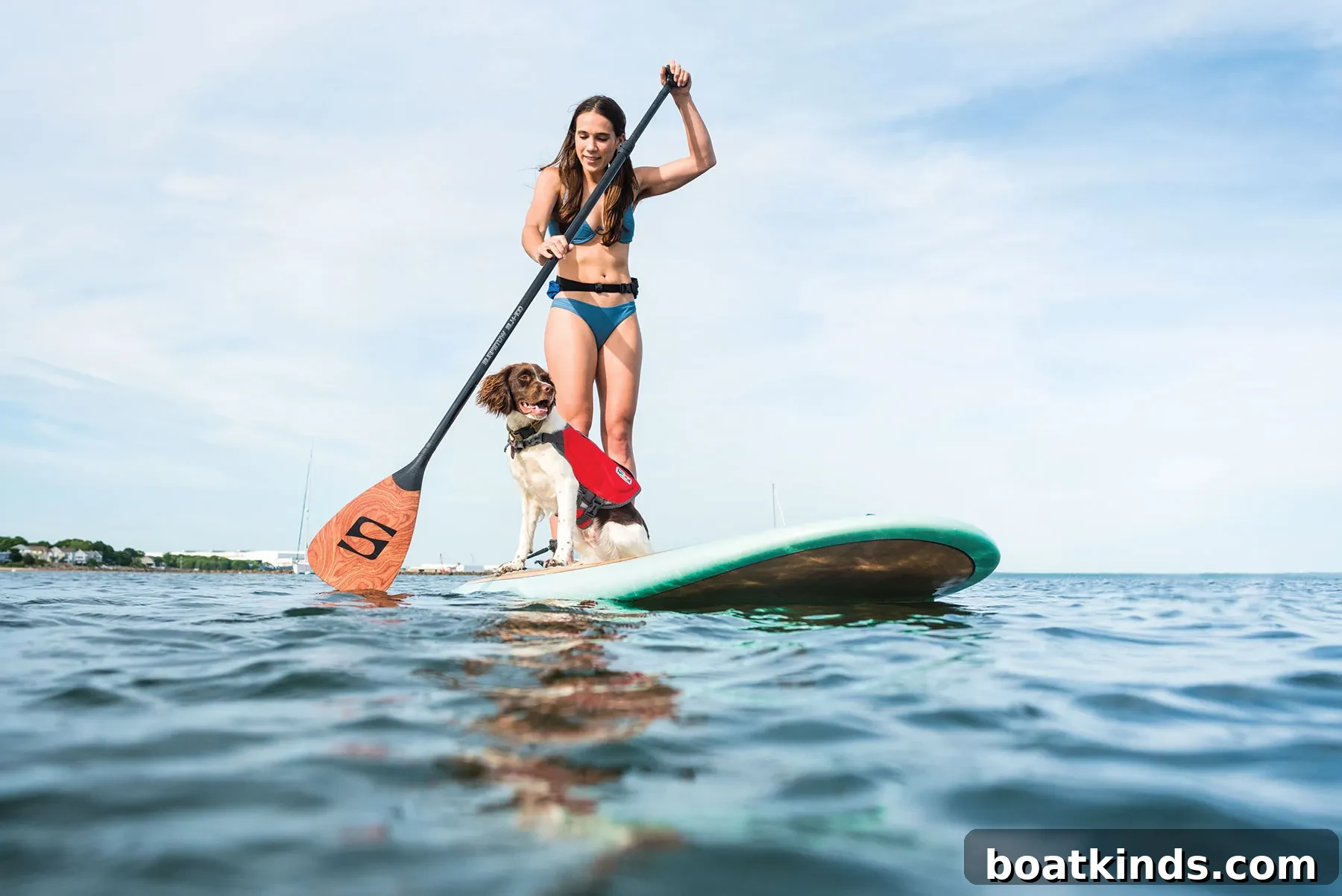
With basic training, the right equipment, and careful progression from land to water, dogs can enjoy many pleasant and memorable boating experiences. From riding in a kayak or sitting on an inflatable tow raft to calmly sharing a paddleboard, the most important elements are preparation, patience, and safety. “What better way is there to spend time with your dog than on the water?” Carragher asks. “It’s the ultimate.”
This article was originally published in the August 2021 issue.