
Why Two High-Profile Yacht Searches Had Different Outcomes
The attempts to find survivors from the sailboats Niña and Cheeki Rafiki both ended tragically, with no lives saved. Yet the two cases followed very different paths: the Cheeki Rafiki search was resumed after a high-profile public and political campaign, while calls to renew the search for Niña in New Zealand largely went unanswered. The contrast highlights how public pressure, international relationships and search logistics can shape rescue decisions.
Ralph Baird, a volunteer technical consultant for Texas Equuserve—the non-profit that coordinated a private search for Niña—says the difference was primarily public engagement. He credits the Cheeki Rafiki families and supporters with mounting an exceptionally aggressive campaign that caught the attention of decision-makers. “You have to get paralyzingly angry and stand on your head if you have to, to make people believe that this is important to you,” Baird says. He acknowledges that this level of public pressure is uncomfortable and not something he would necessarily endorse as a personal example, but he argues it can be decisive in persuading authorities to extend or reopen a search.
Baird points to other high-profile missing-person cases—such as Natalee Holloway’s disappearance in Aruba in 2005—as examples where persistent family advocacy kept media and institutions engaged for years. Equuserve was involved in the Holloway search as well, and Baird sees similarities in how public persistence can drive continued attention and resources.
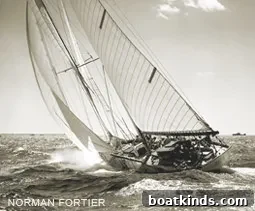
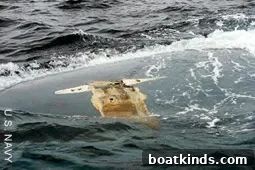
Niña, an 84-foot historic racing schooner and former New York Yacht Club flagship, vanished in June 2013 after a final transmission while in severe weather roughly 370 miles west-northwest of Cape Reinga, New Zealand. The vessel and her six crew members—including the owner of 25 years and his family—disappeared without trace. By contrast, Cheeki Rafiki, a U.K.-flagged Beneteau First 40.7 en route from Antigua to the United Kingdom, triggered emergency locator beacons 620 miles off Cape Cod, Massachusetts. The vessel was later located overturned, without its keel; its life raft remained tied to the stern.
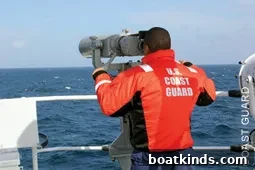
The U.S. Coast Guard called off its initial 4,250-square-mile search for Cheeki Rafiki after 53 hours. Survivability models, which account for water temperature, weather, emergency equipment and likely physical condition of those aboard, indicated only about 20 hours of likely survival in the conditions encountered. Capt. Anthony Popiel, chief of response at the First Coast Guard District in Boston, said he had spoken personally with the families and appreciated their dignity after the difficult decision to suspend the official search.
Despite professional assessments that chances of survival were extremely slim, relatives, friends and prominent public figures mounted an intense campaign to restart the Cheeki Rafiki search. Broadcaster and adventurer Ben Fogle and seasoned sailors such as Tracey Edwards, Tony Bullimore, Peter Goss and Sir Ben Ainslie supported renewed efforts. The campaign gathered 233,954 online signatures and drew support from the highest levels of government, including a formal request from the British Foreign Office and public backing from Prime Minister David Cameron. Facing pressure from an allied nation and an outspoken public, the U.S. Coast Guard resumed the search, covering an additional 21,000 square miles over four days.
Former U.S. Coast Guard commandant Adm. James Loy told London’s Telegraph that the decision to reopen the Cheeki Rafiki search reflected respect for an American ally, though he remained skeptical about finding survivors. Baird concurs that diplomatic relations played a role: “The U.S. and England have a strong family relationship. When family ask family for help, family respond.” That dynamic helped tip the balance in favor of an extended search for the British-flagged yacht.
By contrast, the Rescue Coordination Centre New Zealand (RCCNZ) mounted what it called its most exhaustive search for Niña. Over 11 days, New Zealand Air Force P-3K2 Orion aircraft, other fixed-wing planes and helicopters scoured more than 737,000 square miles of the Tasman Sea, between New Zealand and Australia and along coastlines including Lord Howe and Norfolk islands. No trace of the vessel, its life raft or crew was found. Baird notes that the delayed start—searching began about 10 days after Niña’s last transmission—meant drift modeling produced an enormous search area, increasing the likelihood that a life raft or small wreckage could have been missed.
Relations between the United States and New Zealand were tense during the Niña case, Baird says. He describes a standoff in which the U.S. waited for New Zealand to request help while New Zealand expected the U.S. to offer assistance. That lack of clear, immediate bilateral coordination may have reduced the window for an international response. When Niña’s families raised funds for a private search, Baird says Equuserve received limited cooperation from RCCNZ.
Baird’s broader point is that ordinary boaters without political connections often need an advocate inside government to press for extra search time or to unlock additional resources. In many cases, public visibility and diplomatic pressure make the difference between a definitive end to official efforts and a renewed attempt that might, by chance, find survivors or critical evidence.
Originally published in the October 2014 issue