
High Summer Yachting at Bar Harbor, Maine — A 1901 Harbor Scene
It is the height of summer on the Maine coast in 1901, and the waters off Mount Desert Island are alive with activity. What began as the small village of Eden has by this time become known as Bar Harbor, the seasonal playground and yachting center for the Gilded Age’s well-to-do rusticators. Wealthy families such as the Vanderbilts, Rockefellers and Pulitzers have established their seasonal “cottages” among the island’s rocky headlands and pine‑clad slopes, turning the shore into a magnet for pleasure craft and fashionable marine life.
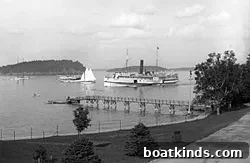
The picture at the pier of the Eastern Yacht Club captures this prosperity and variety perfectly. A large, Maine-built sidewheeler, the 260-foot Frank Jones, stands out as a proud flagship of the Portland, Mount Desert and Machias Steamboat Company. She serves regular overnight runs between Portland and Jonesport—complete with connections to the Maine Central Railroad—and represents one practical way many visitors and summer residents travel along the coast.
Closer to the club’s moorings, the scene shifts to smaller, more graceful craft. Two sleek one-design sailboats have slipped their lines and, with sails set, appear ready for friendly competition. In this era, sail racing was not only a local pastime but also a national spectacle, reported in newspapers across the country. Clubs like the Eastern Yacht Club fostered serious racing talent, and soon the iconic Bar Harbor 31, designed by Nathanael Herreshoff, would dominate the local regattas and define the aesthetic of competitive keelboats in the area.
Beyond these racing sloops, a trio of yachts drifts in the background. A large, white-hulled steam yacht with short, stubby masts lies at the pier with her gangway lowered and her tender—a small boat shaded by a surrey-fringe top—tied up alongside. Further out in the lee of the island, two dignified topsail schooners ride at anchor. Built for comfortable bluewater passages, their tall spars and elegant profiles suggest they are ready for more distant voyages. Observers have speculated that these ships might be the rivals Taormina and Verona; the possibility adds a touch of mystery that contemporary readers and maritime historians still enjoy debating.
In contrast to the larger vessels and competitive racers, the foreground features a timeless, graceful pulling boat. Small and easily managed by a father at the oars, it provides a safe, roomy and steady ride for mother and child. This simple craft encapsulates the familial pleasures of the season: ease of handling, stability, and the quiet enjoyment of harbor life.
Taken together, these boats illustrate the many ways people of the period experienced the water. From the large sidewheeler that ferried visitors along Maine’s coast to the nimble one-designs slicing through the harbor, from the stately steam yacht and anchored schooners to the modest pulling skiff, the harbor offers choices for every inclination and social class. The image conveys both the leisure and the enterprise of a coastal summer: the practical movement of people and goods, the serious pursuit of sport, and the relaxed pleasure of cruising and family outings.
It is a beautiful day to be on the water—clear light on pine and granite, sails filled by a coastal breeze, and a panorama of vessels that together create the distinctive maritime culture of Bar Harbor at the turn of the twentieth century.
This article originally appeared in the August 2011 issue.