When James A. “Jim” McCurdy of McCurdy & Rhodes designed the 38-foot cutter Selkie for his family in 1985, entering the Newport Bermuda Race was always part of the plan.
“My father had been doing Bermuda races since the 1950s,” Sheila McCurdy explains. “Every two years he would disappear for a week or so and my mother would meet him in Bermuda. It was just what you did.”
That family tradition made the result of the 1994 race especially meaningful: Sheila called her father—by then retired from offshore racing—to tell him she, her fiancé and her two brothers had sailed Selkie to second place overall in the prestigious St. David’s Lighthouse Division. It was the kind of finish any competitor in the Newport Bermuda Race dreams of. (Selkie repeated the feat in 2008 and finished second in class again in 2016.)
“He was pretty much speechless,” she recalls. “That was wonderful—he died suddenly a couple of months later.”
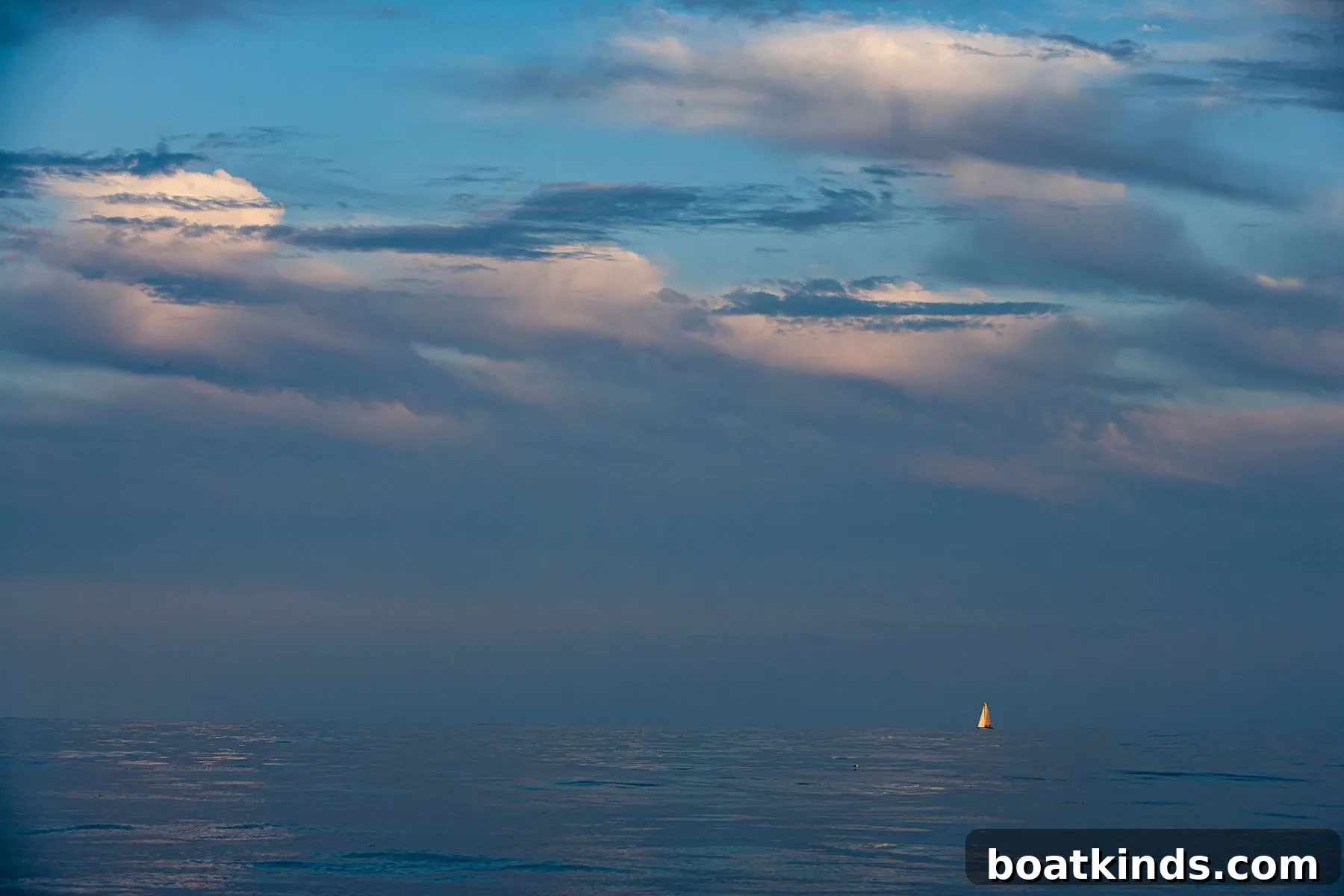
On June 17, McCurdy and Selkie will be back on the starting line when more than 200 boats and roughly 2,000 sailors set out in the 52nd biennial Newport Bermuda Race. Known widely as the Bermuda Race and affectionately as the “Thrash to the Onion Patch,” the event covers about 635 nautical miles from Newport, Rhode Island, through the challenging Gulf Stream to the reefs protecting Bermuda and the finish at St. David’s Head—where celebrations and traditional drinks await.
For McCurdy it will be her 19th Bermuda Race, a sign of what she jokingly calls a “chronic condition”: that irresistible urge some sailors have to invest time, money, skill and sweat into racing fast over the course. Since 1926 the race has been cancelled only four times—during World War II in 1940, 1942 and 1944, and in 2020 because of Covid-19. This year’s fleet of 215 boats is the second largest in the event’s history, behind the 265 entries in the 2006 centennial.
The fleet spans a wide range of boats, from a cruising Pacific Seacraft 37 to a MOD70 trimaran that recently set a new Caribbean 600 record. The Gibbs Hill Lighthouse Division will feature 27 of the fastest designs sailed by professional crews; the St. David’s Lighthouse Division, as usual, is the largest, with 121 racer-cruisers sailed by mostly amateur crews of six to ten and a handful of professionals—many carrying on multi-generational family traditions.
Those families are continuing a vision set in motion 116 years ago by Thomas Fleming Day, who launched the first informal Bermuda passage from Brooklyn in May 1906 with 12 other sailors, including the race’s first female participant, Thora Lund Robinson. As publisher of The Rudder, Day challenged the prevailing idea that the ocean was only for wealthy yachtsmen. “Small vessels are safer than large, provided they are properly designed, strongly built, thoroughly equipped and skillfully manned,” he wrote.
Sailing his 38-foot yawl Tamerlane, Day ignored critics and completed the voyage in 120 hours, averaging about 5.5 knots. Other boats, like the 28-foot sloop Gauntlet, followed. The 40-foot yawl Lila suffered a dismasting shortly after the start, returned to New York for repairs and attempted to continue, only to be driven back by a strong gale.
The race became an annual event for several years, paused after 1910 and resumed in 1923. In 1926 the Cruising Club of America (CCA) and the Royal Bermuda Yacht Club (RBYC) formalized the biennial schedule that continues today. Over the decades race committees from both clubs have shepherded the event through evolving boat designs and rating rules, encouraging innovation while preserving the original spirit of offshore seamanship.
“Good seamanship and getting the best performance from whatever boat you have should be rewarded,” McCurdy says. “Old boats win and new boats win. The teams that find the right spots on the course and sail their boats exceptionally tend to do well—whether that’s a professional crew or a group of wily Chesapeake sailors in Cal 40s. Every race is different, and luck plays a role. Throwing money at it doesn’t guarantee victory.”
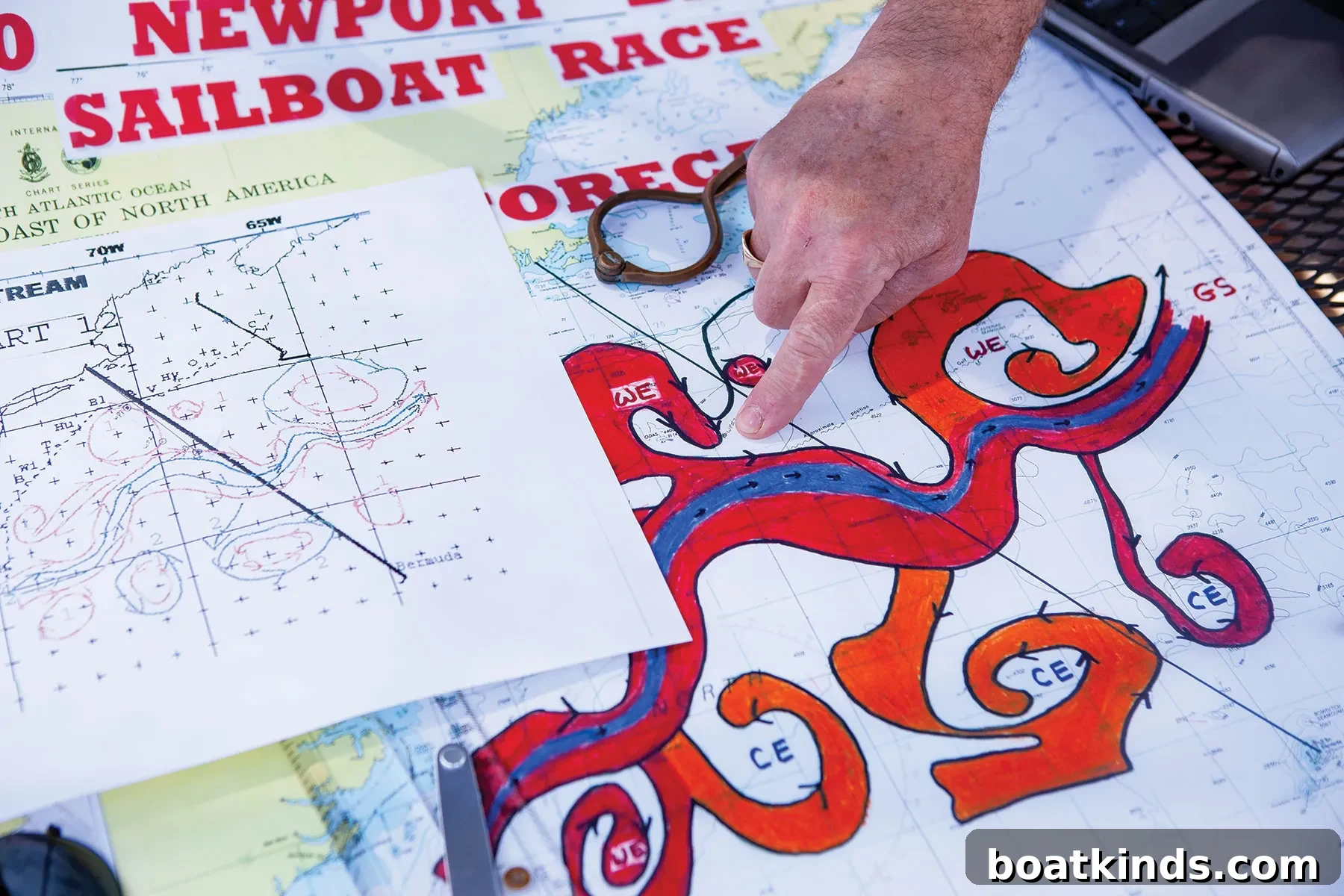
“Luck” may sound odd for a race where every mile is studied for months, but the Bermuda Race is effectively three races in one, and it has long been known as a navigator’s contest. After the often upwind start from Newport the crucial strategic decision is how and when to enter the Gulf Stream, how to use its meanders and how to avoid its sharp eddies that can slow or scatter a fleet.
“Especially in a small boat, you must enter the Stream to optimize the current,” veteran racer Rich du Moulin tells John Rousmaniere in his history, A Berth to Bermuda. A 26-time competitor who has won the Double-Handed Division four times, du Moulin emphasizes that traditional “sail the favored tack” thinking must give way to bold deviations of course—sailing from “doughnut to doughnut,” moving between favorable eddies and current features.
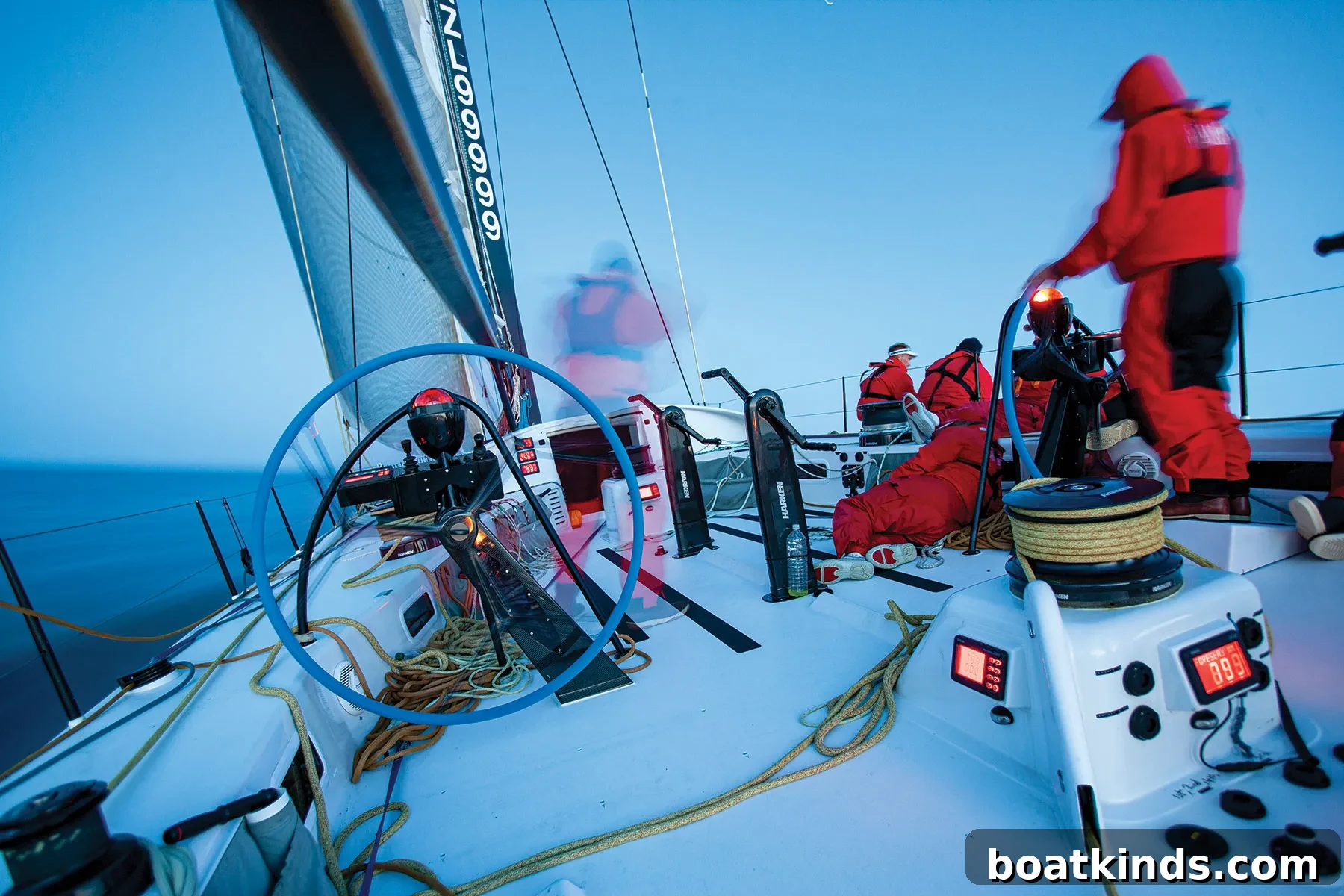
Such tactics can be uncomfortable. McCurdy recalls a mid-1980s race she navigated when she sent the boat on a 90-mile meander through the Stream that at times pushed them to 10 knots over ground on a direct route to Bermuda. It was wind against current and violently rough—so uncomfortable that only she could stay below. When the owner poked his head through the hatch and weakly asked, “Sheila, how much longer?” she replied, “With any luck about 10 hours.” He slid the hatch shut and they kept going. “It’s a great race for sea stories,” she says.
After the Stream there’s often a reprieve—runners call it “the happy valley”—where the sea calms, gear dries and the sun feels soothing. But that zone can also be plagued by light air that punishes tired crews and lets smaller, well-sailed boats catch up to those that charged ahead. The final leg around the reef to the finish has been made far safer by modern navigation, but for generations it was a celestial gamble: when it worked, the payoff was incomparable.
“I’m going to sound like an old fart, but there is nothing as satisfying as celestial navigation,” du Moulin says. “To be independent and get your positions from the stars was thrilling and adventurous.”
The destination itself remains a huge draw: Bermudians extend a warm welcome, and the post-race celebrations are renowned. But many sailors return for the challenge of the course, the seamanship it demands, and the deep camaraderie formed offshore.
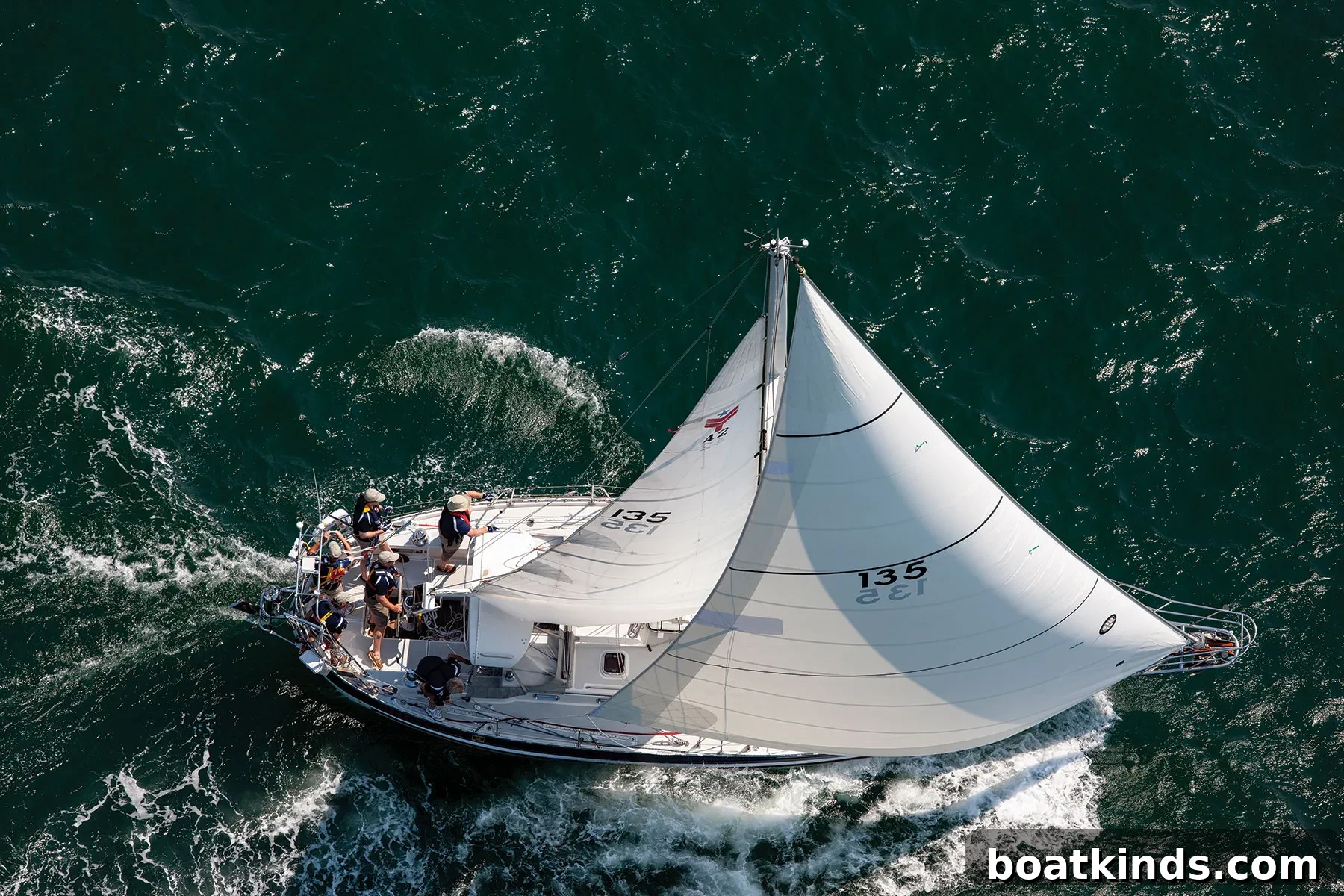
“Could we hire more experienced drivers or a professional navigator? Sure, but at what cost?” asks Julie Kallfelz, who with her husband Andrew raced their 1972 Tartan 41 Aurora six times between 2004 and 2014. This year they sail a new-to-them Arcona 460, Safir. “Much of the joy of this event is sharing it with friends. You undergo intensive togetherness—day and night, in stressful weather—so you want those adventures with people you care about.”
A.J. Evans, a long-time race committee member and former chair, recalls a glassy, light-air night on a J/44 where the crew relaxed, laughed and told jokes under a sky filled with stars. Nearby boats were doing the same, and comparing notes afterward revealed an extraordinary shared moment of fellowship. “The experience creates bonds that last a long time,” he says.
Whether for history, competition, destination or friendship, the Newport Bermuda Race inspires deep devotion—measured in statistics, stories and traditions. One emblematic figure was Jim Mertz, who completed his final Bermuda Race at age 91 and holds the record for most finishes at 30. After his death in 2006, his partner on the Beneteau 42 Allegra, David Schwartz-Leeper, scattered half his ashes at the finish line; du Moulin carried the remainder home and spread them in the Gulf Stream.
This article was originally published in the June 2022 issue.