Drift Wood: A Handbuilt Mahogany Tender by Kelvin Franks
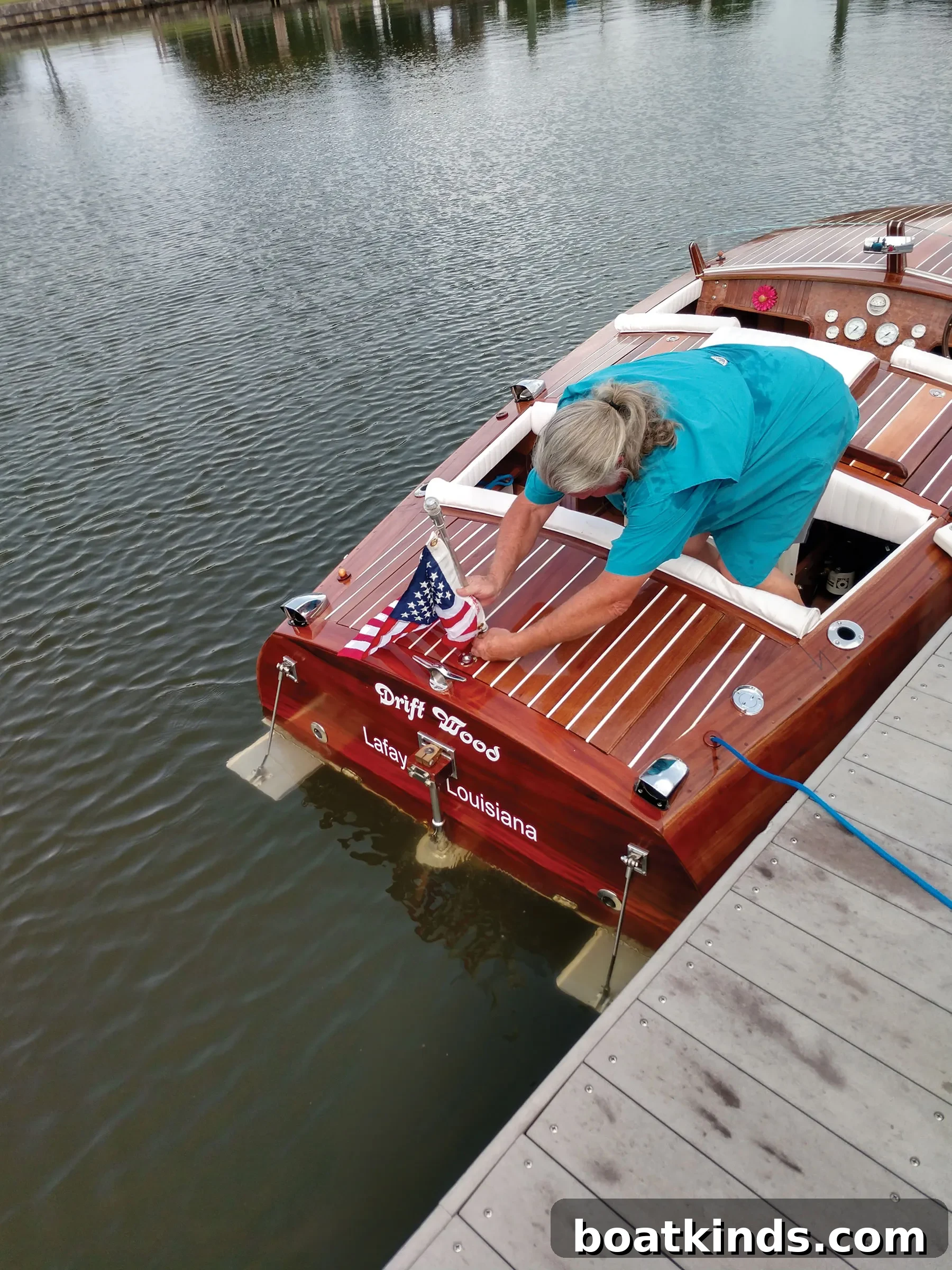
Kelvin Franks of Duson, Louisiana, estimates that his wife believes he spent about $30,000 and four-and-a-half years creating his 15-foot mahogany tender. Franks says the precise cost and timeline are fuzzy—he sometimes paused work for a month to take on other projects—yet the result is unmistakable: a handbuilt boat named Drift Wood that recently drew an $80,000 offer from an interested buyer.
“I told him I just finished it—I’m not selling it,” Franks recalls. “But that was a good note.”
A retired mechanical engineer, Franks began the Drift Wood project while consulting for an oil company. Browsing the web, he found plans for the Glen-L Ski King and decided the design, with his own modifications, would make a handsome and practical tender for his 52-foot Harbormaster, Cajun Drifter. He kept the basic lines and plywood-based approach from the original plan but personalized nearly every detail.
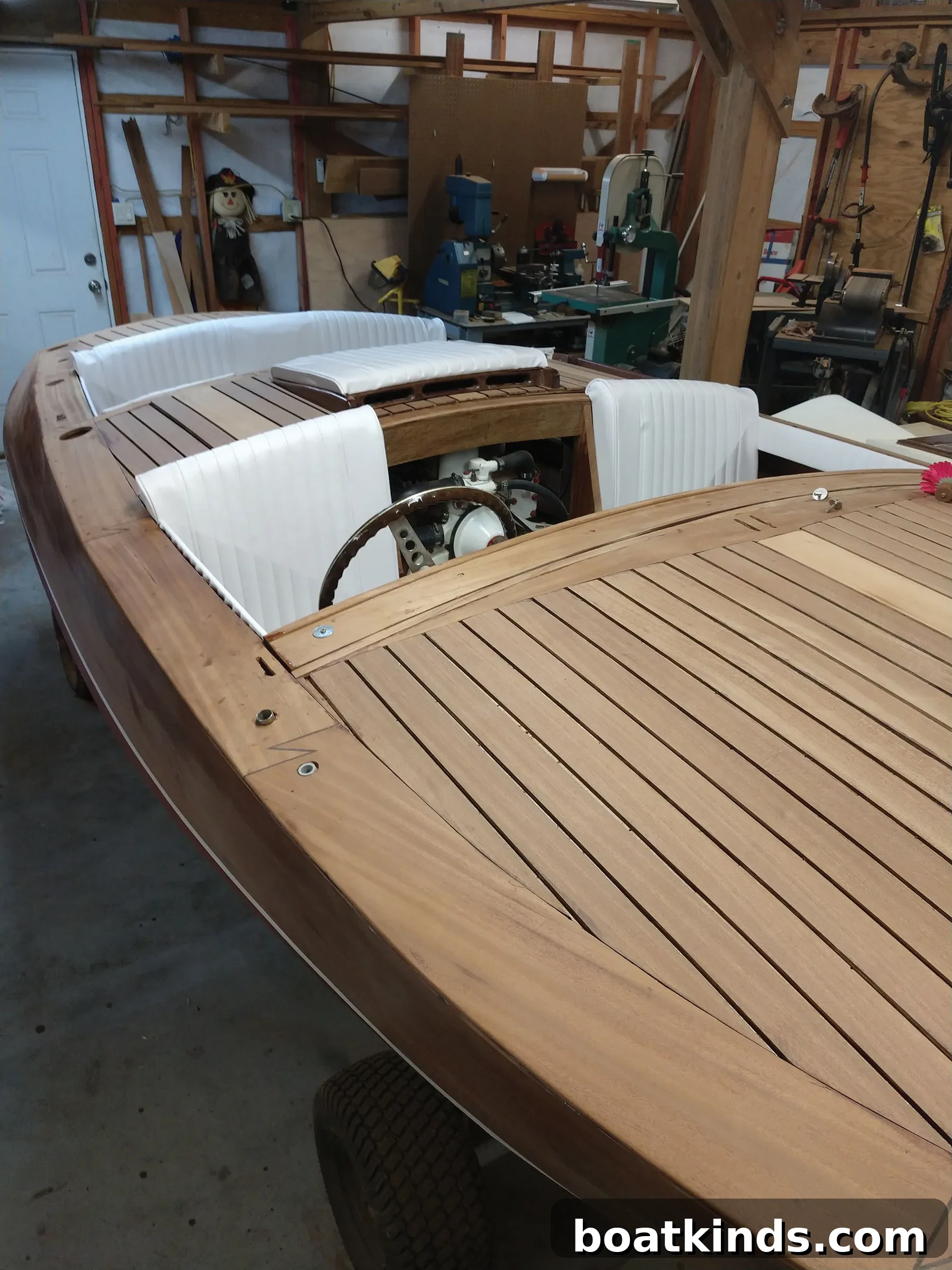
“It had several variations to it, which I pretty much scrapped and did it my way,” he says. “I liked the looks and simplicity of it. The design was made for plywood. I did okoume plywood, but then I overlayed that with mahogany planking. I wanted something with more character.”
Drift Wood is not Franks’s first boatbuilding project. Decades earlier, as a teenager in Louisiana, he used a single sheet of plywood to make a small bateau for duck hunting. That early experience was followed by years of owning and maintaining an array of boats: a Hobie Sunfish, a MacGregor 22 and, later, an Irwin 40 that he bought in poor condition. Franks and his wife lived aboard the Irwin for a period, performing extensive DIY maintenance—including sanding and repainting the hull—before moving on to other cruising adventures.
The couple cruised widely when work brought them to the West Coast—racing and cruising along California’s shoreline, down to Mexico, through the Panama Canal and eventually up to Florida before returning home to Louisiana. As they grew older, they transitioned away from sailboats and purchased a Harbormaster, which they used for coastal cruising and hosting large gatherings on board. By the time Franks began the mahogany tender, he was in his mid-60s and had plenty of hands-on boating experience.
Construction of Drift Wood proceeded mostly as a satisfying hobby. Franks says the woodworking and assembly were straightforward for a craftsman with his background, though he struggled with the exterior finish. After applying three coats of epoxy to the planking, he varnished too soon and had to sand the whole boat back to bare wood and start the finishing process again. The result carried uneven, weathered patches that didn’t match his original plan—yet, in time, Franks came to appreciate that imperfect, “old boat” appearance and now tells visitors it was intentional.
Under the skin, he modified the boat for performance. Franks acquired a 1969 ski boat solely for its 120-horsepower Mercruiser, removed the engine and discarded the donor hull. He rebuilt the engine and its outdrive, added performance parts including a higher-lift camshaft and slightly longer exhaust duration, and tuned the setup to improve breathing and power. The modifications raised output to roughly 130 horsepower at the prop—enough for lively performance from a small tender.
Franks also spent considerable effort on the exhaust system because he wanted Drift Wood to sound like a muscle car. He designed an expansion-chamber exhaust with twin tailpipes that, at about 3,000 rpm, produces a deep, V-8–like rumble. “I wasn’t sure—I downloaded the program from somewhere on Google to do all the calculations, and I just thought, what do I have to lose?” he says.
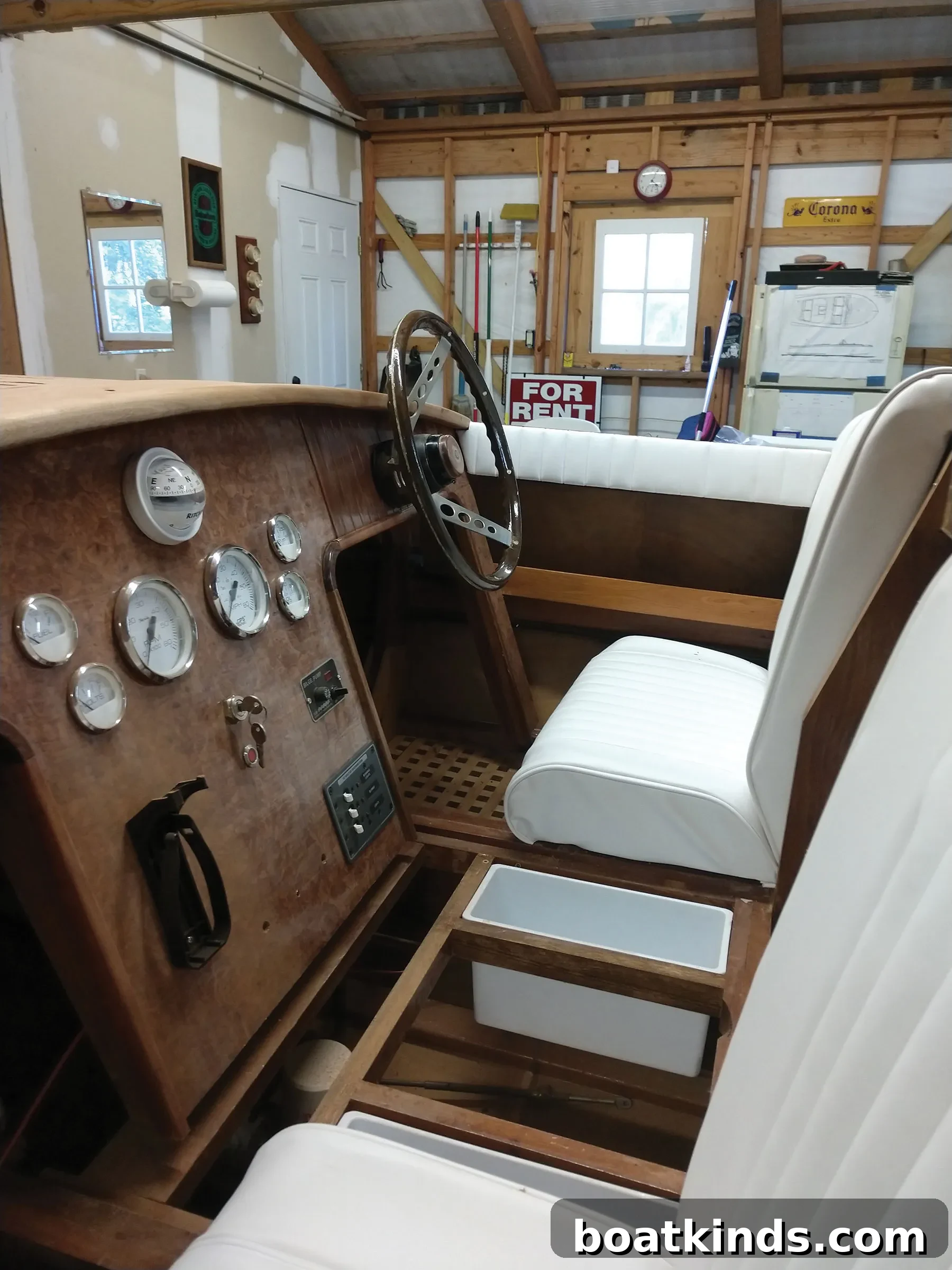
The customization extends to creature comforts and playful features. Franks installed a small beer keg and tap forward on the console, ice buckets built into each side of the center console, and a drop-down compartment in the aft bench that will hold two wine bottles, two wineglasses on a rack and a corkscrew—an arrangement his wife particularly appreciates. For social boating, he added removable steering capability on both sides: the wheel is mounted on a splined shaft so it can be shifted from the helmsman’s side to the passenger side, allowing a friend to take the wheel once the boat is underway.
Drift Wood launched on July 4, 2020. With two adults seated forward, Franks reports the tender will hit about 38 knots—fast enough for wake-jumping fun but well suited as a capable, stylish ship’s boat. Dockside and at dock-and-dine spots, the little mahogany tender draws plenty of attention and compliments; admirers often assume it’s an old family heirloom. Franks likes to point out that the boat is unique: a one-of-a-kind build shaped by his experience, taste and sense of humor.
“I’ve ended up with a unique boat that has never been duplicated,” he says, “and probably never will be.”
This article was originally published in the July 2021 issue.