
When a problem appears on a boat it often happens right before or during a trip. One moment you’re looking forward to a good day on the water; the next you’re dealing with a delay, a costly repair, or a ruined outing. The good news is that many of the gremlins that derail days afloat are easier to fix than most people think. Others are routine maintenance tasks that feel painful to start but become straightforward with the right tools and techniques. Below are practical, down-to-earth solutions for common issues boaters face, from sanitation systems to trailer maintenance and simple fabrication projects.
Macerator Pumps and Sanitation Hoses
When a macerator pump fails, it can quickly lead to a messy, stressful situation. Failures are usually caused by overloads, worn seals, or motor overheating. Many prefer to replace a failed pump rather than repair it, but replacing one without preparation often leads to a soggy catastrophe when the pump is disconnected from the hoses.
A simple improvement is to install a properly sized ball valve upstream (and possibly downstream) of the pump so you can isolate the line before removing the pump. That turns a panic replacement into a near plug-and-play swap.
Removing sanitation hose from barb fittings is another common struggle—stiff hose tears, torn skin and damaged barbs are frequent results. Heat makes the hose pliable. A practical method is to soak a towel in very hot water, wrap it quickly around the hose at the barb (wear heavy rubber gloves), and let the heat soften the hose. If this doesn’t work, repeat with hotter water. Heat guns and hair dryers work but are often impractical because of space or power limitations.
Always carry a short length of spare sanitation hose and a few correctly sized couplers. If a hose is too rigid to remove, cutting it off and replacing that section is usually the fastest fix—use a sharp knife with patience or, if needed, an oscillating saw or a Dremel cutting wheel.
Hose rigidity often results from calcium-like deposits inside the hose. Regularly flushing the head with vinegar or using manufacturer-recommended hose-cleaning products can slow that buildup and extend pump life. Follow all equipment and product instructions to avoid damage.
Winterizing: Easier Options
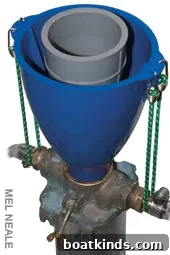
Winterizing raw-water systems traditionally requires removing hoses from through-hulls and forcing antifreeze through the lines. That task is often awkward because hose ends are hard to reach and become stiff over time. The Sea Flush concept simplifies this by fitting into seawater strainers and allowing antifreeze to be introduced and withdrawn without removing hoses. By filling the Sea Flush funnel and running the engine, you can suck antifreeze through the cooling passages. An adapter and hose let you draw antifreeze from a bucket or connect to a small shop vacuum to purge lines down to the through-hull. The tool also makes descaling heat exchangers easier if you use a manufacturer-approved descaler.
Another approach for some owners is the Xtreme Heater, which uses PTC (positive temperature coefficient) technology rather than conventional exposed metal elements. The self-regulating design reduces fire risk associated with failed fans or thermostats and uses relatively low power. The heater activates around 40°F and shuts off near 50°F, helping prevent freeze damage as long as shore power remains available. Consider redundancy—if shore power fails, antifreeze or running the engine may still be necessary.
Trailer Lights and Electrical Contacts
Trailer lights are a perennial annoyance for many boaters. Exposure to weather, immersion, and rough handling make sockets and harnesses prone to corrosion and failure. Instead of constant troubleshooting at the roadside, replace the entire lighting set, including wiring, every few seasons. Replacement sets are affordable, widely available, and installing new wiring using the old runs to pull through the new harness reduces future failures.
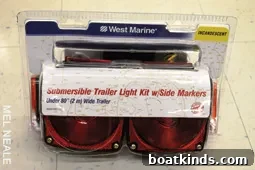
When new wires are longer than needed, avoid cutting and splicing; neatly bundle any extra length and secure it with cable ties. Route wires to avoid sharp bends, chafing or contact with rough edges, and protect connections from water intrusion.
For corroded contacts, specialized tools such as fiber-bristle contact cleaners are far more effective than improvised methods. These tools reach recessed contacts like bulb sockets and remove corrosion without causing accidental shorts.
Trailer Rollers vs. Bunk Boards
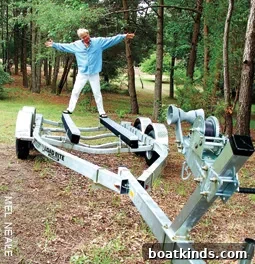
Replacing trailer rollers can be heavy, messy work that often involves cutting away brackets and pounding out old parts. A simpler, low-maintenance alternative is using covered bunk boards. Modern bunk boards come with slick surfaces such as Teflon or similar low-friction materials, making loading easier and distributing hull support more evenly than rollers. If the surface loses slickness, a lubricant can restore performance. Replace or repair the covering when needed rather than wrestling with roller replacement.

Well-installed bunks guide the hull into place and eliminate moving parts that can fail or corrode. If you’re unsure about layout or alignment, have a shop install the bunks the first time; afterward replacement and maintenance are straightforward.
Small Fabrication and Woodworking Projects
Simple fabrication jobs on boats—mounting hardware, transducer brackets, or replacing rotted decking—are often easier and cleaner using modern marine-grade plastics rather than wood. Materials such as high-density polymers are easy to saw, drill and shape, do not rot, and come in colors and thicknesses suited to structural or cosmetic uses. Products like Starboard and similar sheet materials make tidy, durable mounting bases and trim pieces.
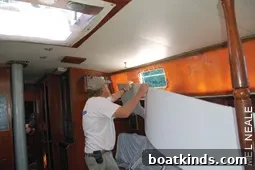
For example, rather than screwing a transducer mount directly into a transom below the waterline (which invites leaks and core damage), epoxy a shaped plastic backing plate to the hull with its lower edge at or slightly above the transom edge, and through-bolt well above the waterline. Then fasten the transducer mount to that backing plate. When the transducer eventually needs replacement, you’ll be making holes in the backing plate—not the hull—avoiding long-term damage.
Using modern materials and a few better tools can turn dread jobs into manageable projects. The key is preparation—carry spare hose and fittings, install isolation valves where useful, replace aging wiring before it fails, and consider updated products designed for marine use. These small investments save time, money and headaches, and make boating more enjoyable.
April 2013 issue