
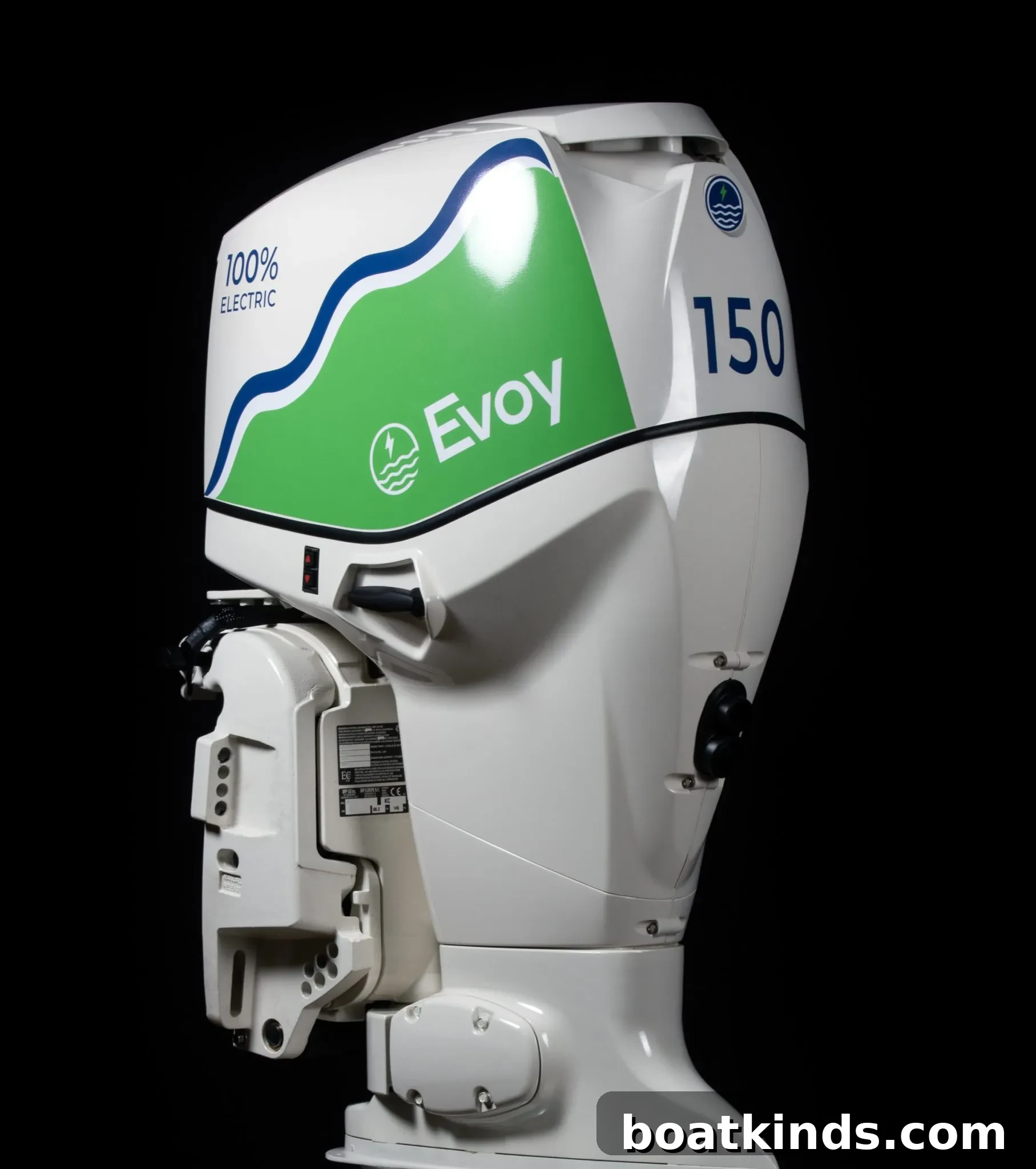
Evoy Unveils Battery-Powered Outboard Prototype to Drive Cleaner Marine Propulsion
Norway-based Evoy is accelerating the shift to clean energy in the marine sector with a new battery-powered outboard prototype. Known for its high-performance electric propulsion systems for fast boats, the company is expanding its product line from inboard motors to an outboard solution aimed at replacing small to mid-range gasoline engines. This move responds to growing demand from commercial operators—particularly in Polar Cruise operations—seeking quieter, cleaner propulsion options.
From Inboard Power to an Electric Outboard
Evoy already supplies electric inboard systems delivering up to 800 hp to commercial buyers. After receiving numerous requests for outboard solutions, the company developed this prototype to meet the needs of operators who require an external engine format for easier retrofits and specific vessel types. The outboard design leverages Evoy’s existing expertise in battery technology, motor control, and marine integration to offer a compact, battery-powered alternative to conventional combustion outboards.
Collaboration with Hurtigruten and Frydenbø Marine
To build and test the prototype, Evoy partnered with Hurtigruten and Frydenbø Marine. These collaborations bring together operator experience and marine engineering knowledge to accelerate development and ensure the outboard is practical for real-world commercial use. In working with partners that operate in demanding environments, Evoy can refine the system for reliability, safety, and ease of installation on vessels serving remote and sensitive regions.
Performance Expectations and Industry Claims
Evoy expects the prototype to deliver performance equivalent to a 150-hp gasoline outboard. The company also claims the system represents the world’s most powerful electric outboard currently under development. Final performance specifications, including continuous power output and operational range, will be confirmed through field testing scheduled for the coming months. These tests will provide concrete data on speed, endurance, and energy consumption under typical operating conditions.
Testing, Timeline, and Real-World Validation
Field testing will take place over the summer and fall, with trials designed to validate acceleration, top speed, charging behavior, and battery endurance in commercial use cases. Data collected during these test runs will inform final tuning of the powertrain, thermal management, and software controls. The staged testing approach allows Evoy and its partners to identify practical considerations such as mounting options, cooling requirements, and ease of maintenance—important factors for commercial operators considering electrification.
Potential Benefits for the Marine Industry
By offering an electric outboard option, Evoy aims to reduce emissions from vessels during operation and support quieter, lower-vibration propulsion compared with internal combustion engines. For operators in environmentally sensitive regions, including polar and coastal cruise activities, electrified propulsion systems can help meet stricter environmental standards and improve the onboard passenger experience by cutting noise and exhaust exposure. Additionally, electric propulsion can simplify drivetrain layouts and reduce the number of moving parts, which may translate to lower maintenance demands over time.
Next Steps and Market Implications
As the prototype moves through testing, Evoy and its partners will evaluate commercial viability and potential production timelines. If tests confirm the expected performance and durability, the outboard could open new electrification pathways for workboats, passenger vessels, and leisure craft that have traditionally relied on gasoline outboards. For the broader marine industry, viable electric outboard options represent another practical step toward reducing operational emissions and transitioning to cleaner propulsion technologies.
Evoy’s development of a battery-powered outboard reflects growing interest across the maritime sector in electrification. With collaborative testing and real-world validation planned, the coming months should clarify how this prototype performs and what role it may play in accelerating sustainable marine transport.