
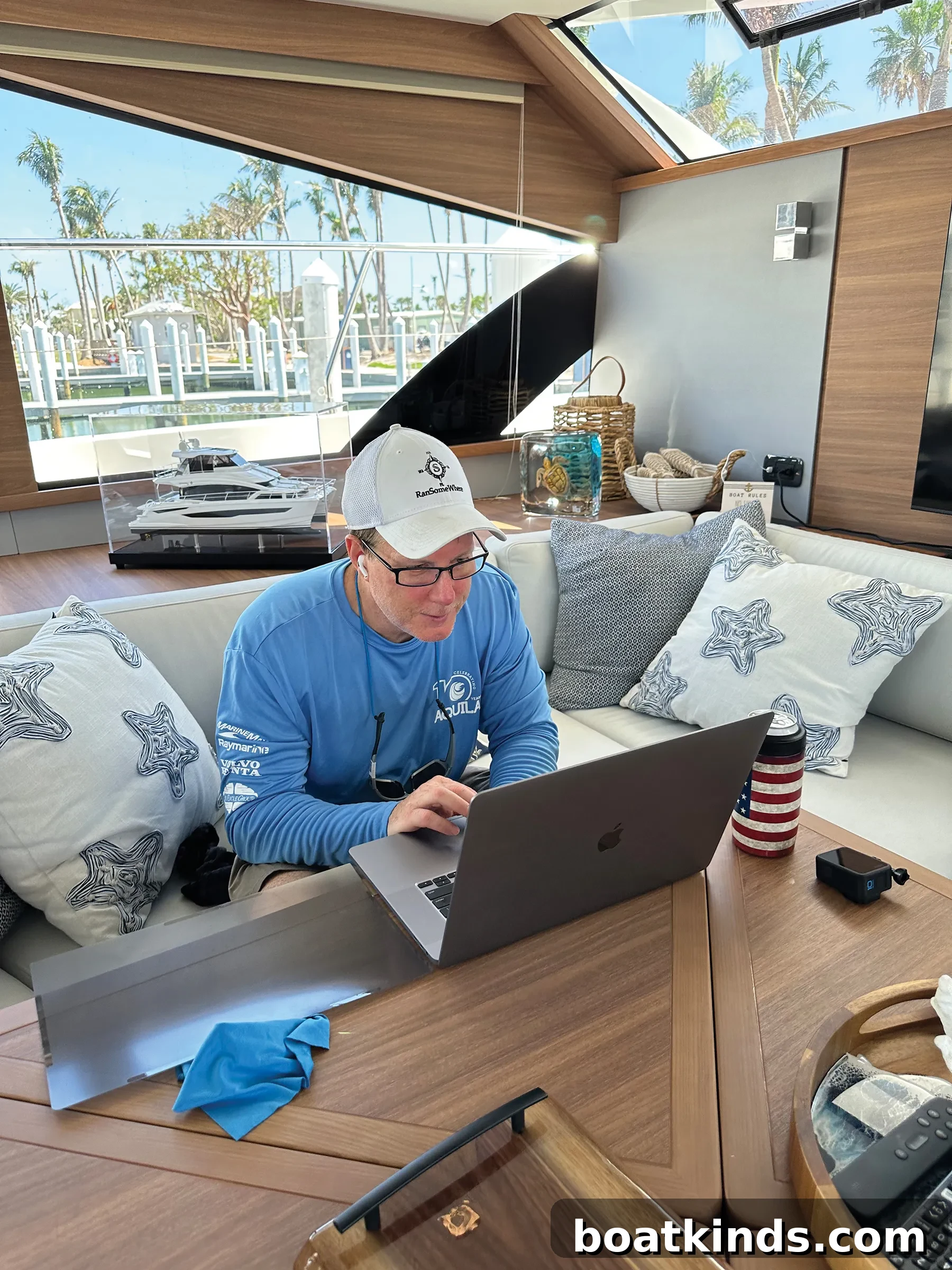
Dan Schiappa is a seasoned cybersecurity professional who works remotely from his home on the Gulf Coast of Florida. He regularly spends a week or more aboard his Aquila 54, RanSomeWhere Else, and simply brings his work with him without missing a beat.
“I never feel like I’m away from the home office,” Schiappa says. “I’m just as productive on the boat as I am at home. Except when I look out the window of the Aquila, I have a much better view. You can walk around the entire boat with the laptop. You can sit in the cockpit one day, on the sundeck another day. It’s freedom you can’t get anywhere else.”
Paul Bultema working aboard his Nordhavn 43.
He is far from alone. Two major forces—the shift to remote work during the pandemic and wider availability of Starlink satellite internet—are reshaping how boaters live, work and homeschool while cruising. The pandemic normalized working from outside the traditional office, and affordable satellite connectivity has made reliable internet at sea accessible to many more people. What once required expensive domes, heavy equipment and high monthly fees can now be achieved with relatively modest hardware and subscription costs. That change enables children to stream class lessons, adults to take video calls, and households to run a full range of online tasks from virtually any size boat.
“Any new boat that’s getting commissioned for cruising is going to have Starlink on board,” says Larry Schildwachter, owner of Emerald Harbor Marine in Seattle. “We add it to boats all the time. It’s becoming almost a standard. It’s a lot like watermakers—twenty years ago they were options. Now, we don’t see any serious boats leaving the marina without them.”
Starlink is a high-speed, low-latency satellite internet service that relies on a large constellation of low-earth-orbit satellites. Typical DIY kits include a terminal—nicknamed Dishy McFlatface—that communicates with the satellites, a Wi‑Fi router, cables and a mounting base. An app guides setup, configures the network and provides access to support. For many cruisers, installing Starlink means real-time video calls, cloud access and streaming that previously wasn’t reliable offshore.
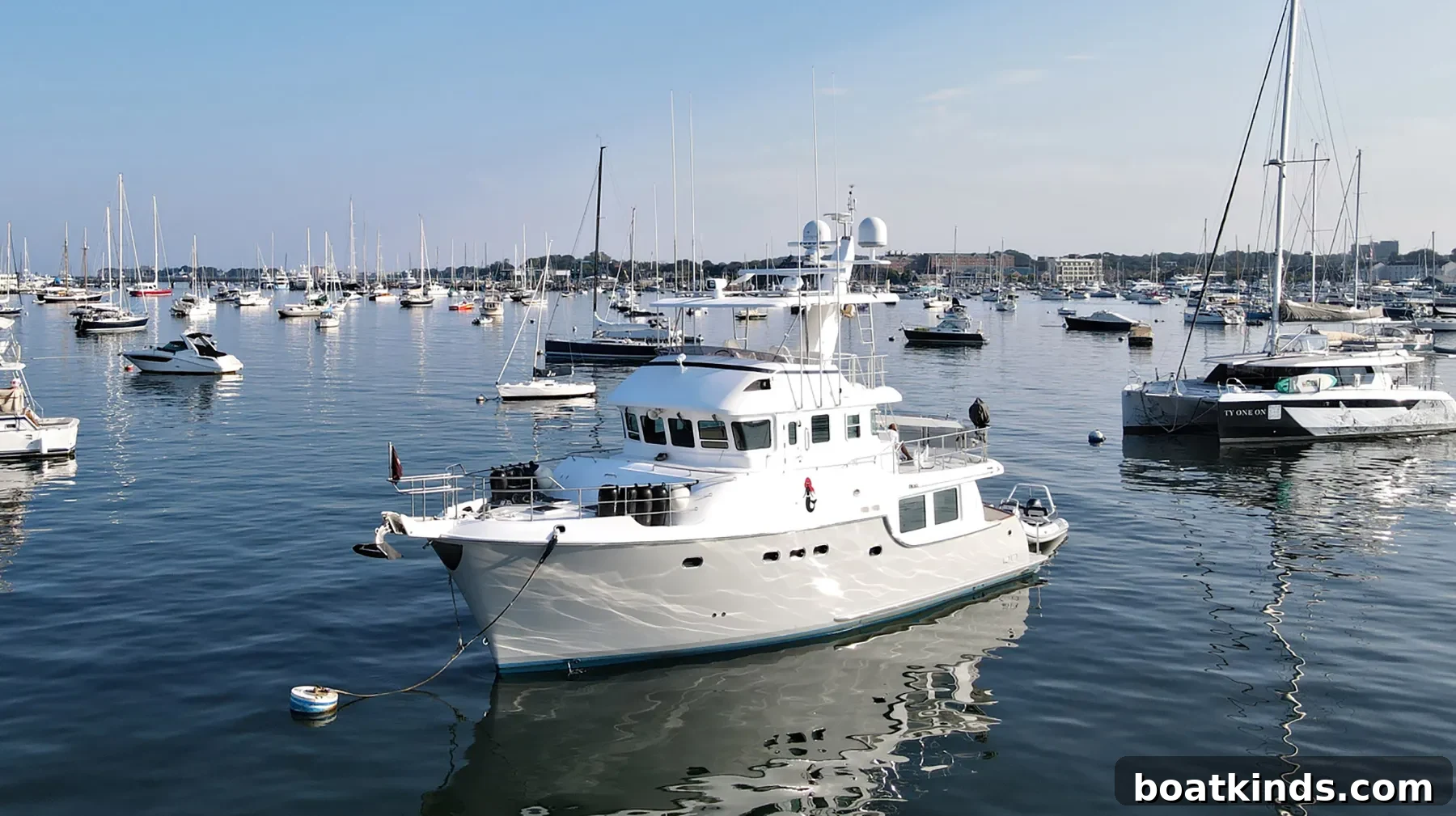
Brooke and Braden Palmer, digital content creators who homeschool their 11- and 9-year-old children aboard their Nordhavn 55, Mermaid Monster, use Starlink as their primary connection and 5G cellular as backup. “If both kids are on a video call at the same time, the hotspot can be a little better with the 5G,” Braden explains.
Initially the family used a book-based curriculum because they weren’t sure how reliable boat internet would be. With improved connectivity, they now employ tutors who work with the children while Brooke and Braden manage their online business and care for their infant. Their routine blends structured lessons, field trips and year‑round learning: “We’ll do math on worksheets in the morning, go visit a museum in the middle of the day, then the kids do tutoring later,” Brooke says. “They usually do something educational every single day because we’re always traveling.”
Space and separation are key when multiple people work from the same vessel. Each child studies at their own desk—either the galley table or the pilothouse table—so everyone can focus. A similar setup works for another couple cruising on a Marlow Explorer 70E: the wife’s office is in the command bridge, and her husband’s workspace is in the galley. “That way, we have our separate space,” she says, preferring to remain anonymous.
She works in bookkeeping for investment firms and keeps up with deadlines even when they cruise away from their North Carolina home for months at a time. Her laptop pairs with a TV-sized monitor through Starlink, and she sometimes finds herself working longer hours at sea than she did on land. “If we’re out on the ocean, my husband drives some and I drive some. Otherwise I’m on the bridge working,” she says. “It’s a nice office. Not many people have the view that I do.”

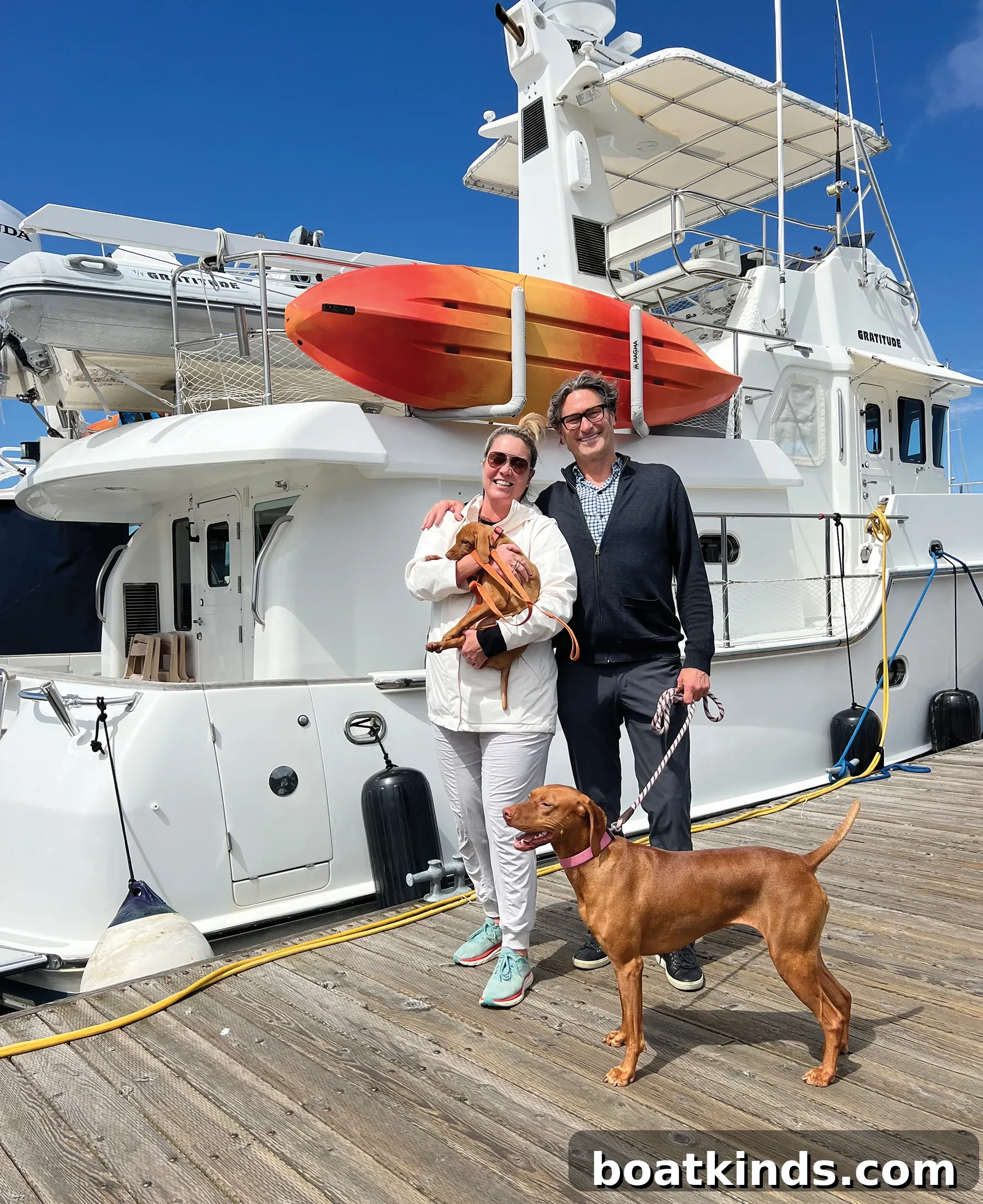
Heather Brewer and Paul Bultema, both in the tech industry and based in Seattle, began working from their Nordhavn 43, Gratitude, during the pandemic—before Starlink was widely available. To sustain two simultaneous video streams anywhere in the world, they copied a high-end setup used by an Amazon chief scientist, based on KVH’s VSAT equipment. That system cost roughly $30,000 in hardware and, along with cellular hotspots, averaged about $3,500 per month while they worked full time from the boat.
When Starlink launched broadly in 2022, they decommissioned the expensive VSAT gear. They paid about $600 for a new Starlink installation, dropped monthly communications costs to roughly $150, and gained faster, more reliable bandwidth. “With the satellite, we did spend more on communications than we did on diesel,” Heather says, “but it allowed us to do what we wanted to do, and it was pretty amazing.”

Technology isn’t the only hurdle—boating raises expectations and practical challenges that land-based employers and clients may not fully understand. “You can have all the right technology, but if the weather changes or you have to move, you might have to drop that conference call,” Heather warns. “If you have customer calls and the boat’s rocking, it can feel unprofessional. People don’t understand the amount of work it takes to operate a boat, and that you’re not out there sipping margaritas.”
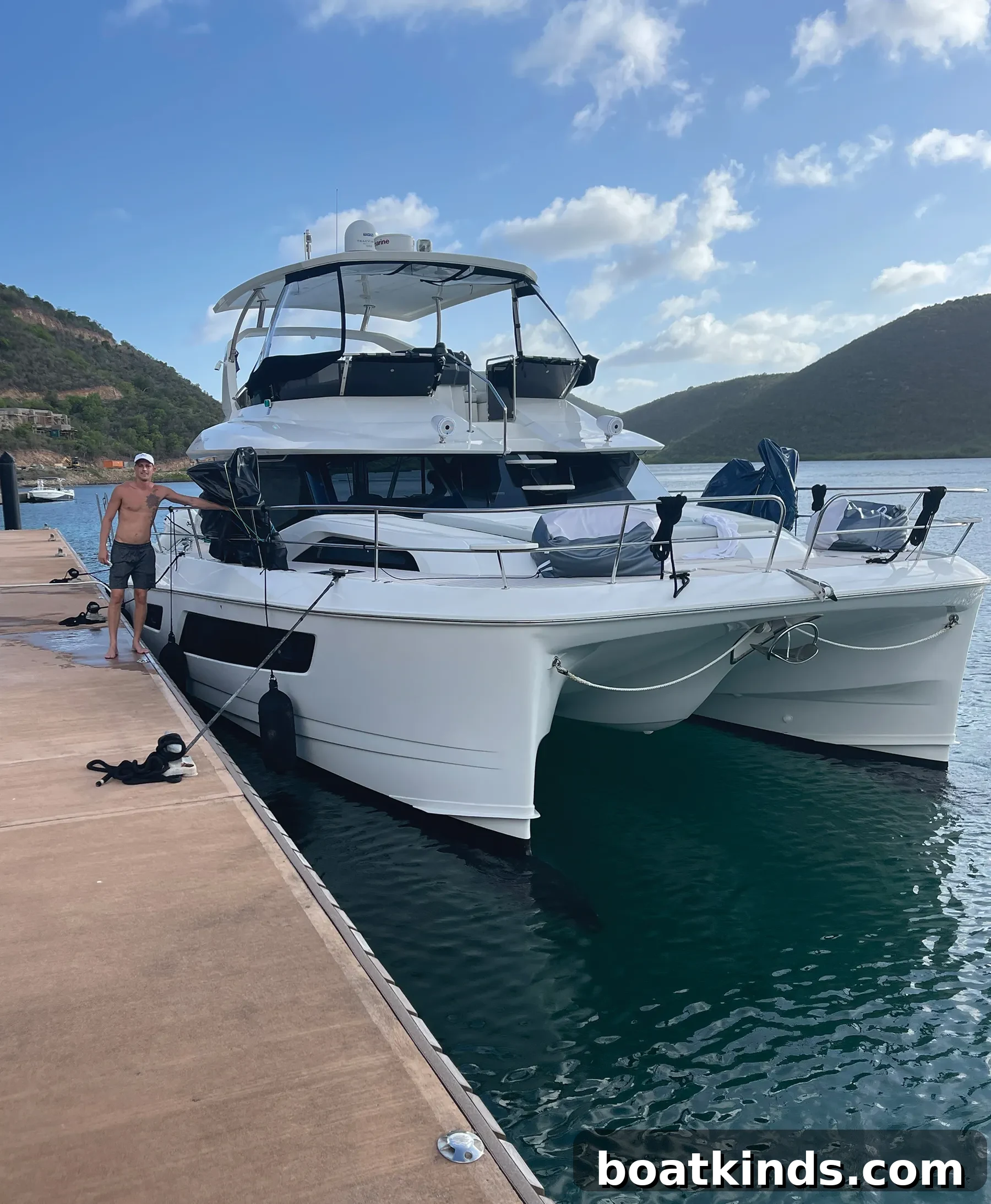
Lee Wesson, who winters in Naples, Florida and spends spring and early summer in the Caribbean, runs his consulting, real estate and day-trading business from his Aquila 44, Queen of Virginia. He sometimes works eight to ten hours a day aboard using Starlink. “Prior to Covid, it was harder to do everything electronically,” he says. “Now you can pretty much do anything online. This is much better.”
Wesson bought his boat after a serious health scare and now has an Aquila 54 on order, which he plans to outfit with Starlink and multiple other upgrades—including night-vision, premium audio and custom finishes. “I’m 70 and this will be the last boat I buy, so I’m going to get it exactly how I want it and be able to work from anywhere in the world I want to go,” he says. “It’s going to be a hell of a boat.”
Schildwachter sees the same trend at his Seattle yard: satellite internet has lowered the financial barrier so a far broader range of boaters can run businesses or schools from the water. “It used to be you had to be running a sizeable company to justify those costs—phone and satellite bills could be massive,” he says. “With Starlink, customers of all kinds can do it. A 35-foot pocket cruiser can have internet access. New technology has opened the door for so many more folks. It has changed the game.”
This article was originally published in the November 2023 issue.