
Frank Pembroke Huckins: The Visionary Behind the Quadraconic Hull
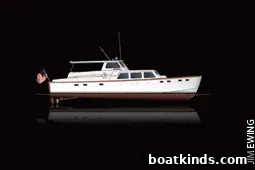
Frank Pembroke Huckins is widely recognized as one of the pioneering powerboat designers of the 20th century. Often described as an irascible genius, he combined fierce confidence with a single-minded devotion to his ideas. That stubborn streak proved essential: Huckins insisted on doing things his way, and those uncompromising standards produced boats that remain admired for their looks, handling and long-lasting family-built quality.
Born in New England, Huckins left the lumber business in the late 1920s and moved to Florida, where pleasure boating and powerboat technology were expanding rapidly. Self-taught as a naval architect, he pursued a bold aim at a time when conventional thinking favored displacement hulls. The result was his radical “Quadraconic” hull form. With a deep forefoot and what he described as “four conical intersections,” the Quadraconic shape was designed to combine seaworthiness at low speeds with quick, smooth planing and reduced pounding when running fast.
Huckins’ first notable design, the 42-foot Fairform Flyer, displayed that new approach and instantly attracted attention. The boat’s unique lines and the performance it delivered validated his ideas and launched a family enterprise that turned his drawings into a distinctive fleet of yachts. Even decades after hull No. 1 was launched, Huckins boats are still recognized for the same qualities their designer prized: a dry, confident ride; robust construction; and elegant, purposeful styling.
One example of that continuity is the Linwood model from the 1950s, a handsome power cruiser that reflects Huckins’ intent from hull shape to finish. Huckins prepared meticulous, detailed plans for production. Workers in his yards followed those plans precisely; deviations were not tolerated. The reason was simple: even small changes could alter the hull’s behavior. By controlling every aspect of construction, Huckins ensured that each boat performed as the design required.
Huckins often explained his thinking in plain terms. He argued that a well-executed Quadraconic hull made it easier to maintain balance and comfort at high speeds than a displacement hull would at much lower speeds. “It is easier to keep your balance in a Fairform Flyer at 20 knots than a displacement boat at half that speed,” he wrote. He emphasized practical markers of stability: chairs staying put and a glass on the chart table not sliding off—simple tests that spoke to the everyday comfort of owners and guests.
Huckins’ personal commitment to his work was intense. For more than two decades he worked long hours—often 80 to 100 hours a week—on designs and building methods for “something I loved.” He died in 1951 at age 65, leaving behind a legacy of boats and a circle of grateful owners. Many early customers became loyal to the brand: several owned multiple Huckins hulls over the years, a testament to the company’s combination of performance, durability and style.
The business remained family-run and continued to emphasize the standards Huckins set. Today, his granddaughter Cindy Purcell serves as company president and the yard still champions Huckins’ original tagline, the “Symbol of Yacht Perfection.” The continuity of ownership and the preservation of design intent have helped keep the brand’s identity clear: a focus on seaworthy, well-built cruisers with distinctive lines and proven handling characteristics.
Huckins’ influence resonates beyond any single model. His insistence on detailed plans, precise construction and an unconventional hull form challenged prevailing ideas about powerboat performance and comfort. Those choices helped establish a strong niche in classic American yacht design: confident, elegant cruisers that prize a smooth ride and solid construction as much as speed and appearance.
For owners, restorers and enthusiasts, Huckins boats remain a living connection to a period of rapid innovation in recreational powerboating. Whether encountered at a marina, preserved as a classic or discussed in design histories, the boats display a coherent philosophy: design for real-world comfort and seaworthiness, and build to exacting standards. That combination explains why Huckins’ work continues to be admired and why his family’s yard still produces craft that follow the principles he established.
Illustration by Jim Ewing
December 2012 issue
Company: Huckins Yacht Company (www.huckinsyacht.com)