
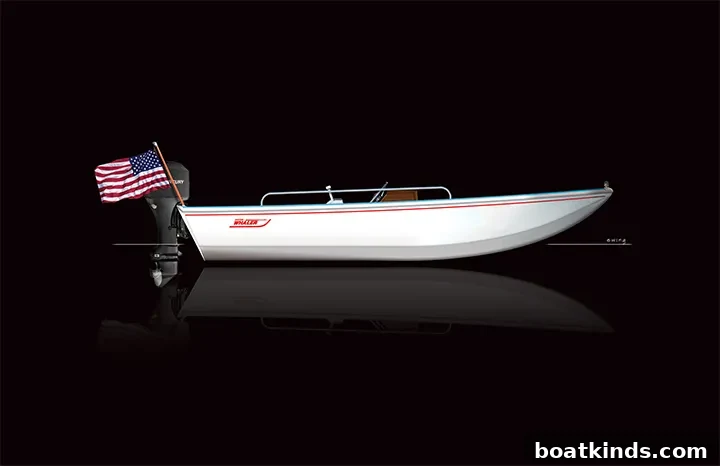
In 1956 a Harvard graduate with a degree in philosophy set out to transform small-boat design and the very way Americans went boating. Dick Fisher combined unconventional thinking with new materials and an inventive building process to create a 13-foot outboard that stood apart from everything else on the water.
Fisher gave his creation a memorable, nautical name — Boston Whaler — and launched it with an advertising campaign that many still recall as one of the most striking of the 20th century. The boat’s success grew from a blend of imaginative engineering, bold marketing, and an insistence on solving practical problems for ordinary boaters.
Fisher’s interest in lightweight boats dated back to the 1940s, when he sketched plans for a small sailboat to be built of balsa wood. He never built that original balsa design, but the idea stayed with him. In the mid-1950s he discovered a new material, polyurethane foam, and immediately saw its potential as a kind of synthetic balsa. That insight steered him toward a different approach to boatbuilding: foam cores encased in fiberglass and finished with gelcoat for a clean, durable surface.
Experimenting with these materials, Fisher built a small sailing dinghy made of foam, fiberglass and gelcoat. He showed the prototype to designer Ray Hunt, who recognized the concept’s promise and encouraged Fisher to adapt it for outboard powerboats. The collaboration that followed led to one of the most recognizable small-boat hulls in American recreational boating history.
Together, Fisher and Hunt developed what became known as the cathedral hull: a distinctive tri-hull arrangement with two outer runners and a central pointed keel or “pointed keel,” as Fisher described it. The resulting Boston Whaler tri-hull combined exceptional initial stability with a dry ride and efficient performance. The cathedral hull shape allowed a small outboard engine to propel the lightweight craft effectively while providing predictable handling for novice and experienced operators alike.
The Boston Whaler’s construction was as innovative as its hull form. Fisher built the 13-foot model from two major molded components — an outer hull shell and an inner cockpit module — which were joined at the gunwales. The cavity between the two molded pieces was then filled with polyurethane foam. That combination produced a hull that was rigid, buoyant, and remarkably resistant to sinking. At the time, the method was unorthodox; decades later, similar foam-core construction has become common in many forms of marine and composite construction.
To demonstrate the boat’s buoyancy and durability, Fisher staged a dramatic public proof: a photo shoot for Life magazine captured him sitting in a Boston Whaler as workers sawed the hull in half. When the hull sections separated, Fisher was shown calmly motoring away in the stern section — a vivid, attention-grabbing demonstration of the craft’s ability to remain afloat even when severely compromised. That image reinforced the boat’s “unsinkable” reputation and was central to the brand’s early marketing.
Fisher’s blend of practical experiments, material innovation, and bold promotion paid off. The Boston Whaler appealed to recreational boaters who valued safety, ease of use, and low-maintenance construction. Fisher later recalled that he understood the boat’s potential for success when “a kid in Cohasset stole one,” a testament to how quickly the model captured public imagination and demand.
What began as a philosophical grad’s experiment with foam, fiberglass and gelcoat became a defining chapter in small-boat history. The Boston Whaler’s tri-hull design, foam-filled construction, and memorable early advertising left a lasting mark on how builders and buyers think about stability, safety and the possibilities of modern materials in recreational boating.
October 2013 issue