
A Foggy Tour of Vinalhaven Aboard a Pulsifer Hampton
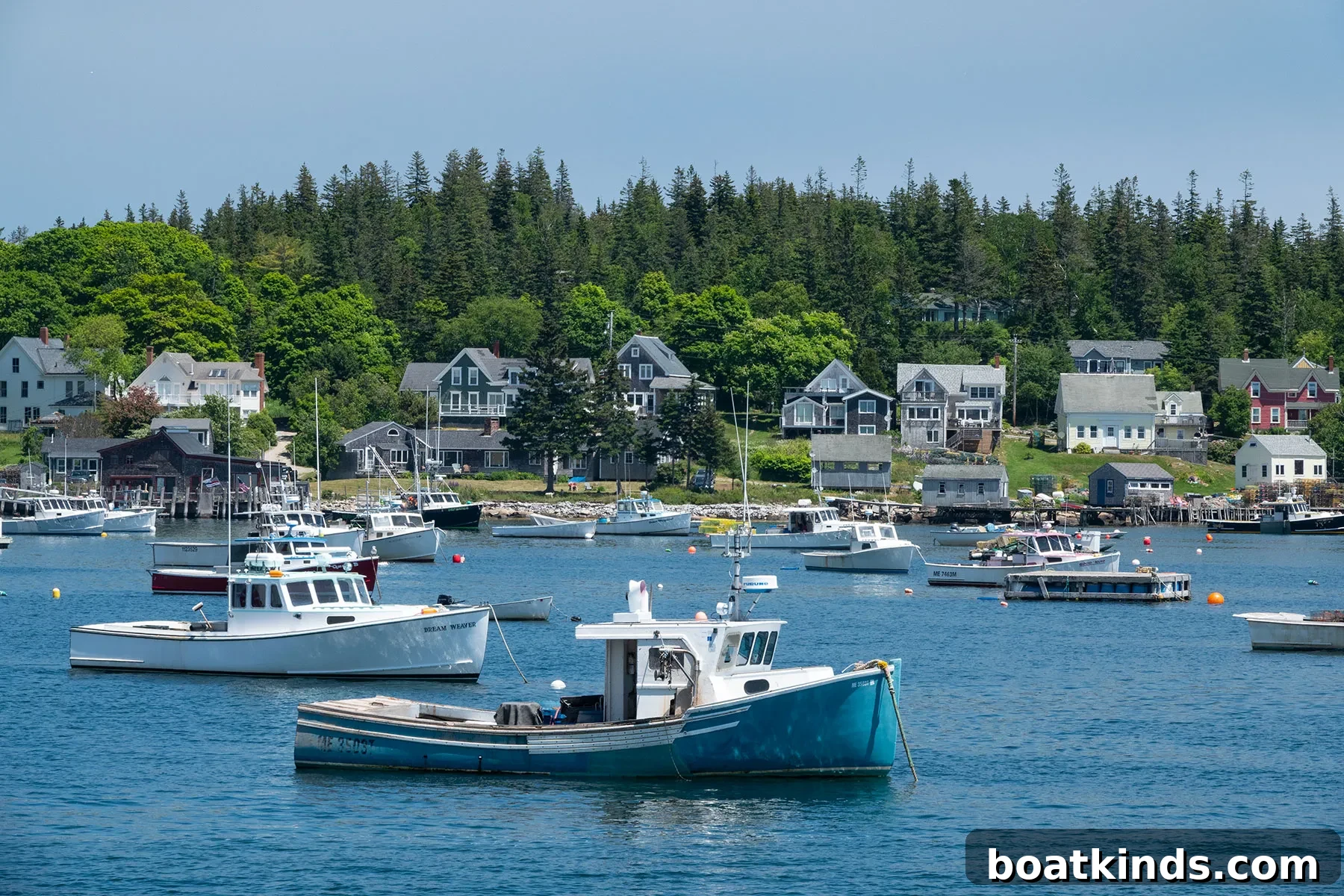
I stepped off the Rockland ferry into a fog so thick it felt like cotton batting. The bay stayed shrouded for the entire hourlong crossing of Penobscot Bay, only beginning to thin as we neared Vinalhaven. Even then the sun didn’t appear, though the island’s lobster fleet came into view across Carvers Harbor.
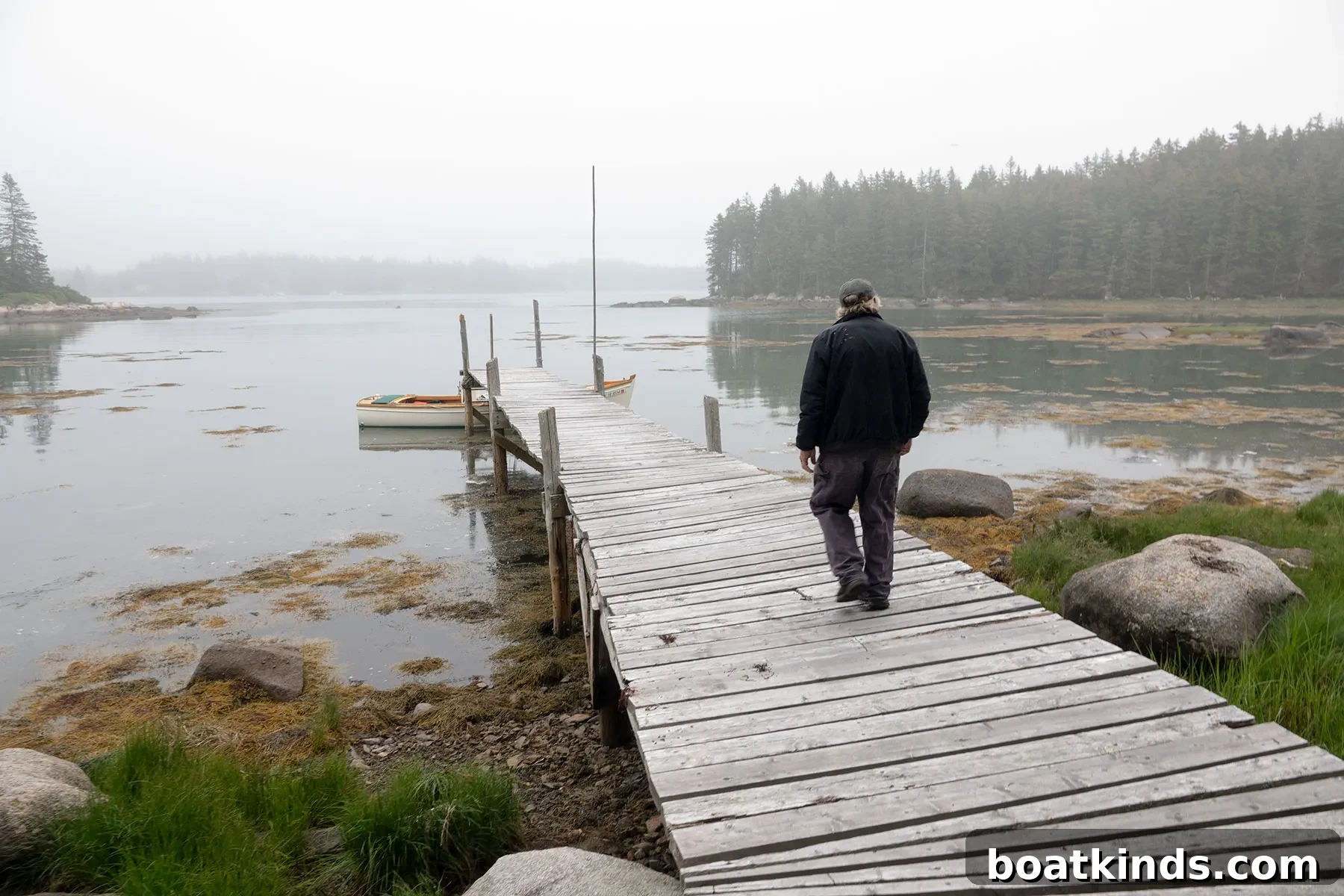
Mark Jackson met me at the landing and walked me down to his floating dock where his 2000 Pulsifer Hampton awaited. Jackson runs Vinalhaven by Boat, offering tours around the island chain. He bought the boat five years ago after retiring from teaching vocational skills at Vinalhaven School. “I get paid to boat,” he said. “And it pays for the boat.”
A Storied Maine Dayboat
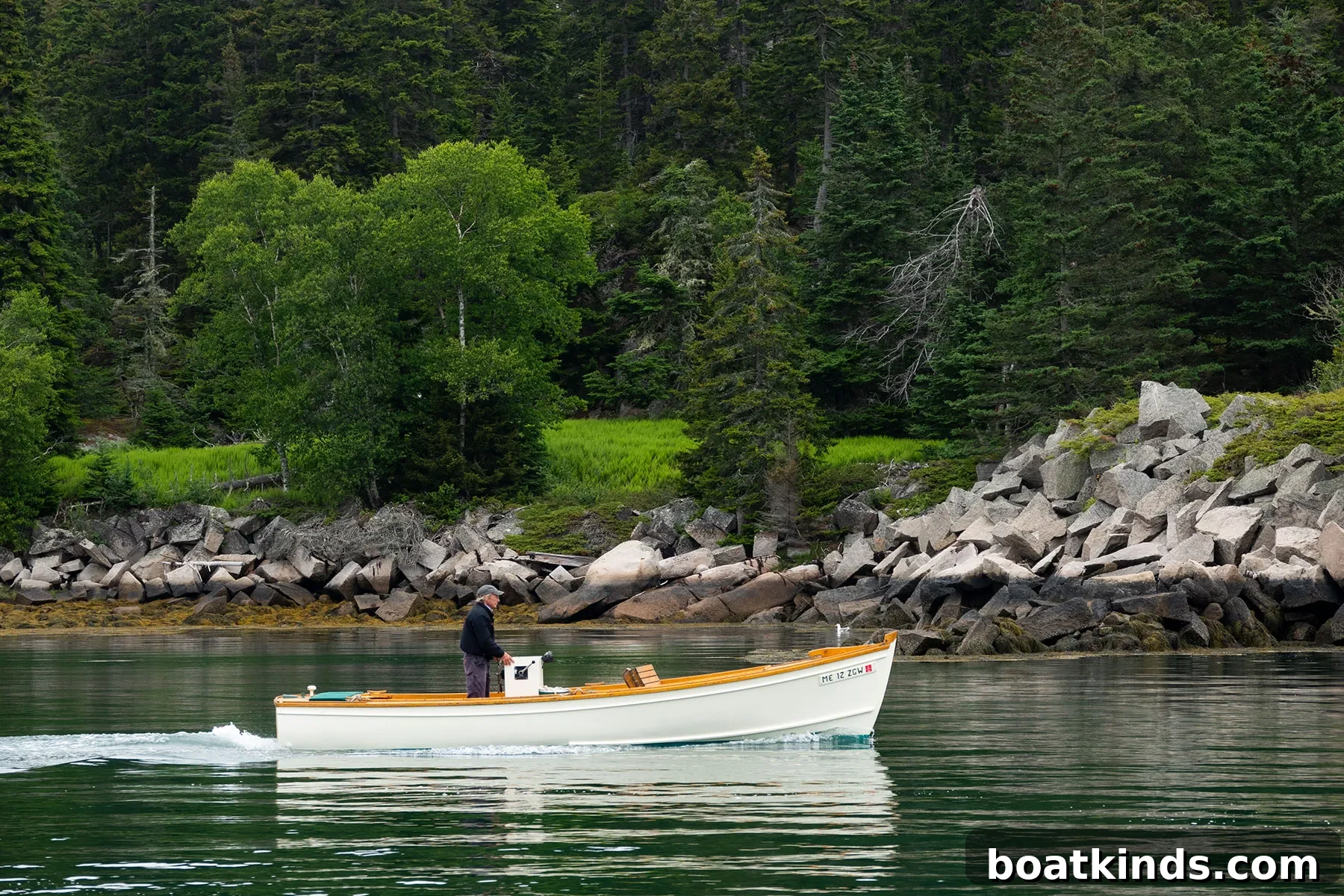
Hamptons trace their lineage to the wooden lobster boats of Casco Bay, built by Charlie Gomes beginning in the early 1900s. Designed for inshore lobstering along Maine’s rugged coast, these workboats are tough, seaworthy and enduring. The Pulsifer Hampton is the modern interpretation from builder Dick Pulsifer in Brunswick, Maine. From 1973 to 2018 Pulsifer produced 113 strip-planked, pine-over-oak Hamptons. He had a strict specification—22 feet long and, traditionally, white—though his successor John Lentz in Topsham now offers more color and power options. A new Lentz-built Pulsifer Hampton lists for about $59,000, a reasonable price for a hand-built 22-foot dayboat.
Jackson’s Hampton—number 76 from Pulsifer—came to him used from resident Ruth Sayward after her husband Gary Torborg died. The boat remains largely original, with an added wooden mooring bit crafted by local lobsterman and boatbuilder Richard “Gweeka” Williams. Jackson admires Williams for his speed and boatbuilding skill. Pulsifer-built boats tend to hold their value; clean used examples rarely sell for under $20,000. Jackson’s came with only 200 engine hours originally; he’s added another thousand over the past four seasons. When I asked how much he paid, he smiled and said, “Less than what she’s worth. It’s why I named her Ruth.”
Heading Out: Islands and Stories
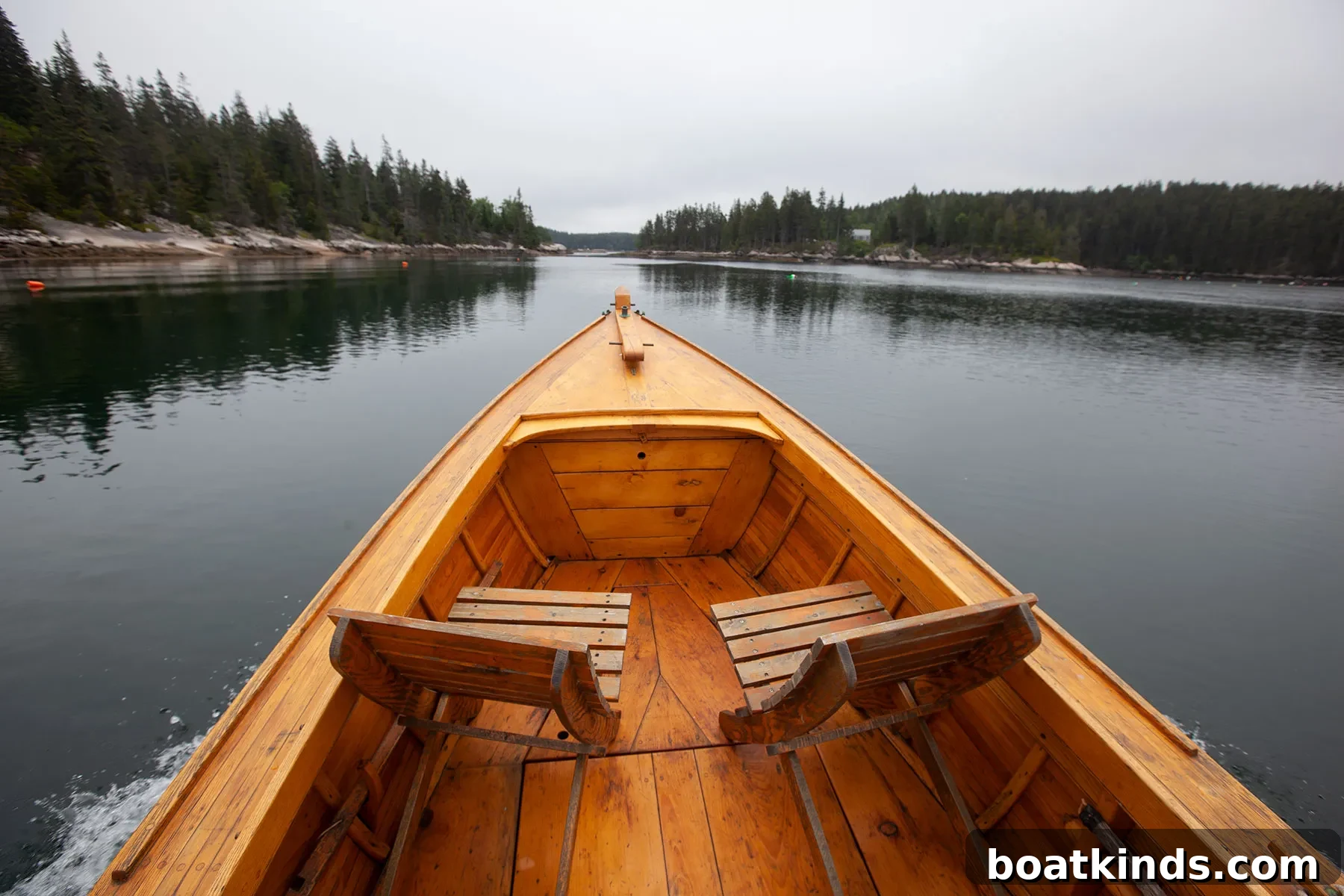
Jackson unfolded a chart and asked where I wanted to go. I told him to choose; I’d never been to the Fox Islands. He suggested a tour of the outer western islands. Boarding Ruth, I noticed two ingeniously designed collapsible pine-on-oak chairs forward, but I settled onto the engine box in front of the helm.
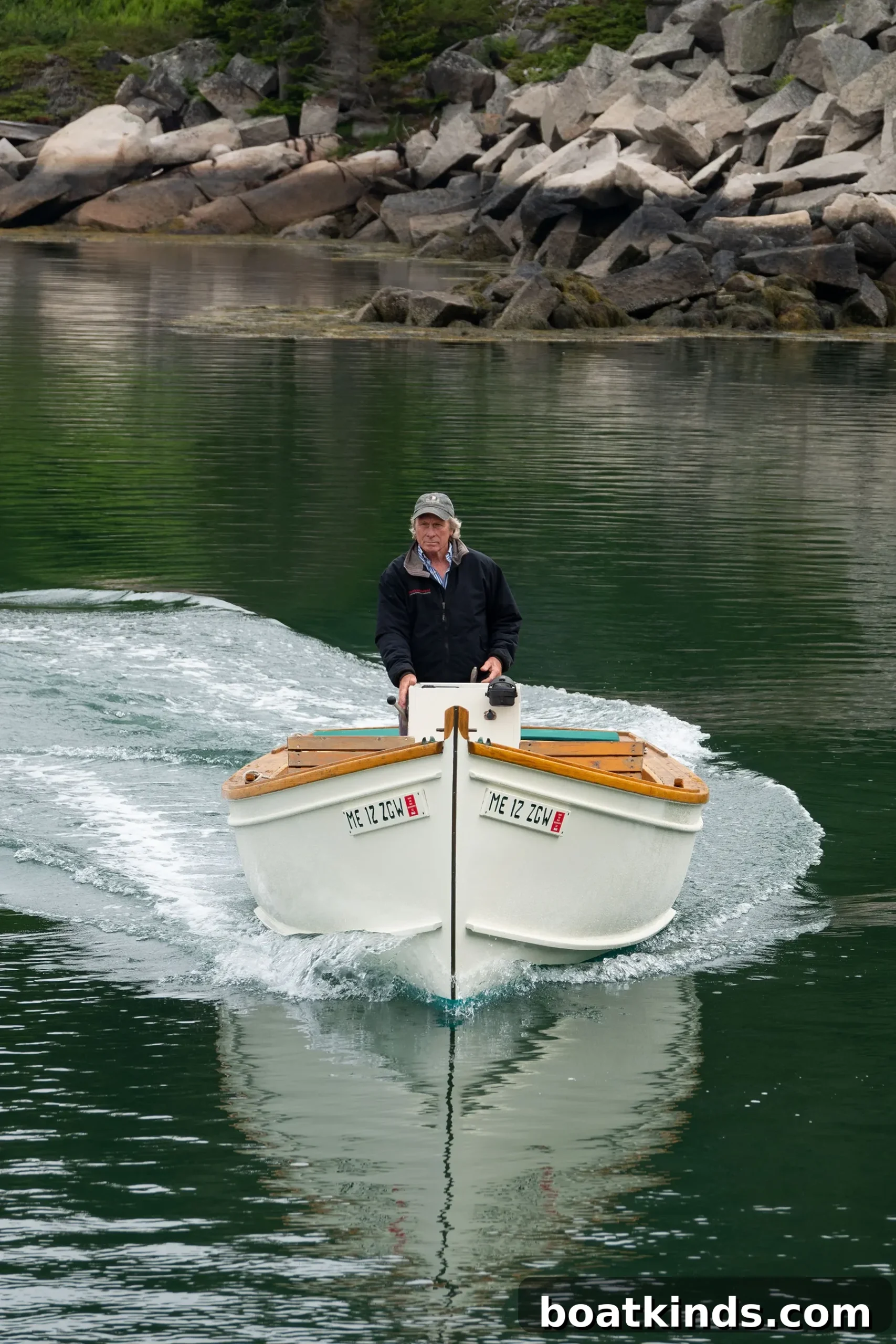
Jackson typically carries three or four passengers on a tour, sometimes up to six. The Hampton rides dry, and when encountering rougher chop he’ll have people move aft to sit on the stern cushion for a steadier, scenic view. We left the harbor, crossed The Reach, and circled below Greens Island—named for an early settler, Joseph Green—where Jackson lived for nearly thirty years.
Originally from Kansas, Jackson came “from away,” as Mainers say, and discovered his affinity for the ocean early in life. After college he drifted around the country before settling in Maine. He taught sailing, worked for Joel White at Brooklin Boat Yard, and read the Nearings, which led him to homesteading. In 1985 he bought eight acres on Greens Island and moved there with his family four years later, living for a long stretch without running water. He built a cabin and later a home. He still keeps several boats on his property, including some he built.
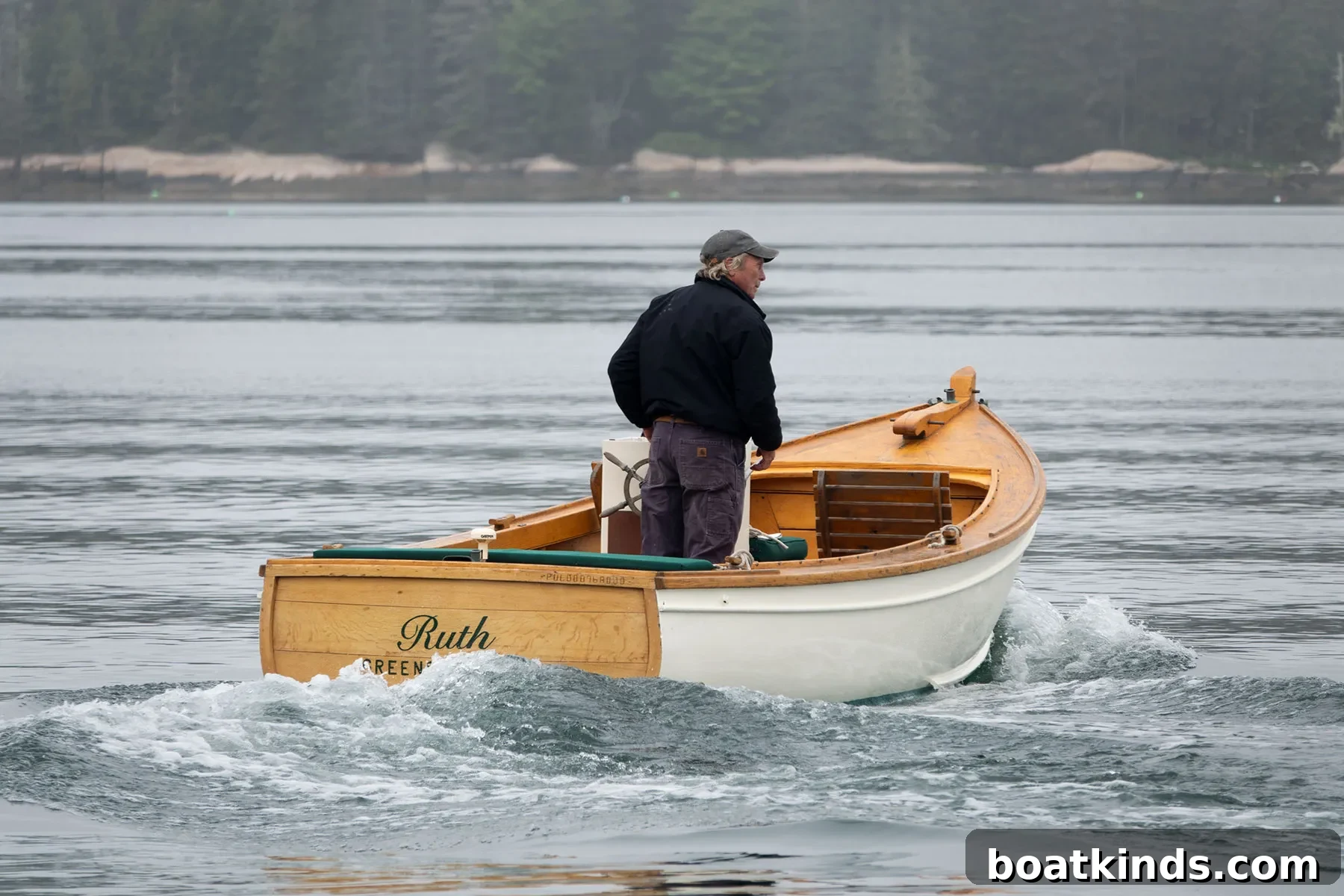
Cruising under Heron Neck Lighthouse, a lone lobsterman passed behind us and offered the typical understated Maine greeting: a barely perceptible lift of thumb and forefinger. The Hampton’s 27-horsepower Yanmar thrummed a balanced three-cylinder note beneath my seat—neither silent nor intrusive. Hamptons are long and narrow and economical; at a cruising speed near 9 knots Ruth drinks about half a gallon of diesel per hour. With a 12-gallon tank she can easily run a full day on the water.
Fog, Wildlife, and Island Histories
The fog thickened again, but Jackson seemed unbothered. He’d texted me the night before about the forecast: “It lends itself to a more authentic Maine experience,” he wrote. In the mist the world shrank to a small, intimate circle of visibility, which focused attention on whatever broke through the haze—lobstermen, seals, or tidelines.
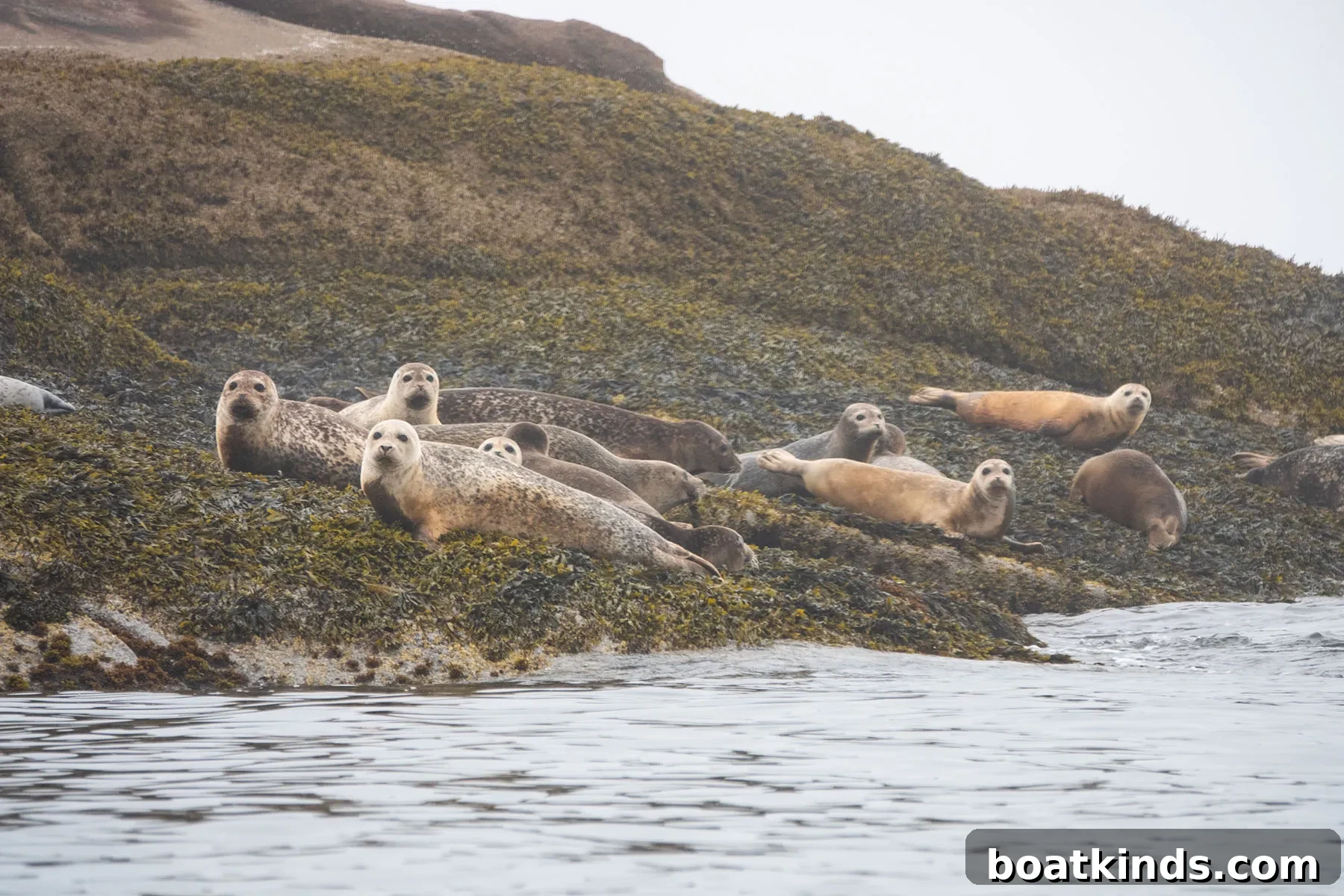
We found a haul-out of harbor seals on Deadman’s Ledge, a couple dozen quietly hauled out on the granite. Their dark eyes looked almost mechanical in the fog as they weighed whether to slip into the water or stay put. Jackson eased Ruth toward Hurricane Island next. Once a bustling quarry community of 600 people until 1914, it later served as an Outward Bound campus and now houses the Hurricane Island Center for Science and Leadership. On this trip the fog made the island feel uninhabited; Jackson said COVID-19 had canceled programs and the place seemed quiet.
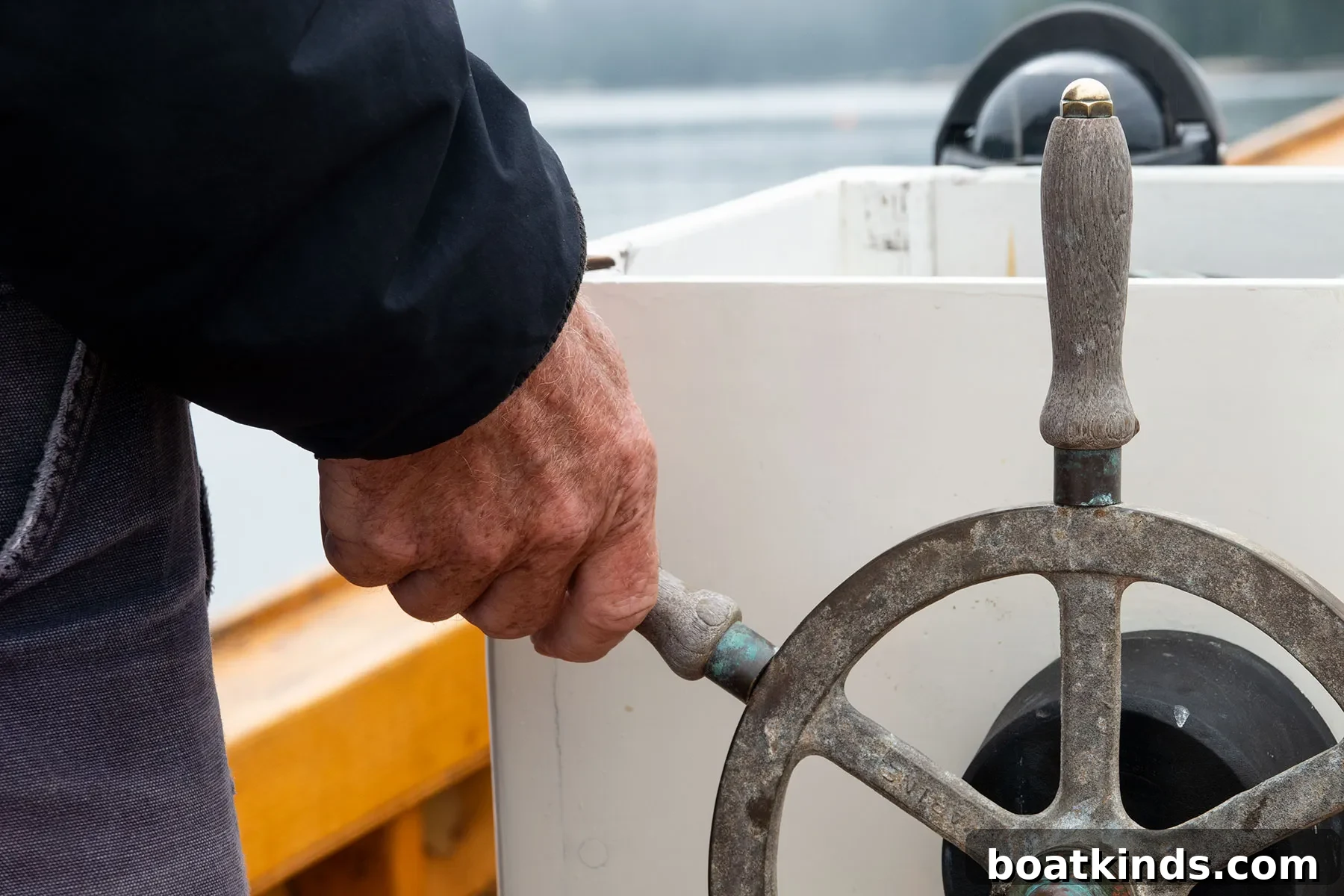
As we threaded through moorings and moved into Hurricane Sound, Jackson relied on a chartplotter tucked into his console—not sight alone—and joked about throwing potatoes off the bow to check for splash. We passed islands scarred by quarrying and islands used for wildlife: a blue heron rookery, sightings of bald eagles in season, and always the hardworking ospreys. Jackson sometimes brings divers to harvest sea urchins from the White Islands’ urchin-covered bottoms, where public trust access allows visitors to hike and explore many of the smaller islands.
He pointed out Bald Island, which supplied granite for the Rockland breakwater, and Leadbetter Island, home to Vinalhaven’s first quarry. We passed the spot that inspired Margaret Wise Brown’s The Little Island; Brown wrote many of her books on Vinalhaven, and after she died her ashes were spread on her island home.
Back to Harbor and Island Life
By the time we reached the old Wharff Quarry, visibility had cleared. Jackson mentioned that columns cut there were used in St. John the Divine in New York City; I noticed a massive cylindrical granite block at the water’s edge that looked as if it had sat there for over a century. We followed Vinalhaven’s forested shoreline back to Carvers Harbor, passing eiders, guillemots and cormorants drying their wings on a solitary rock.
On the dock we talked briefly about recent local headlines involving visitors and quarantine disputes. Jackson said islanders generally get along, but tensions run higher these days. On return to the harbor, several lobsterboats flew Trump 2020 flags and displayed M.A.G.A. on their sterns. “People have always gotten along,” Jackson observed, “but things are tenser now.”
Jackson warned me that on a Monday lunch options would be limited, and he was right. The village felt sleepy: a weathered cedar-shake fish shack housing a real estate office, a supermarket closed for stocking, and a cafe with a sign warning patrons about island quarantine rules. I ended up buying a Hershey bar and peanuts at the ferry terminal before boarding.
The ferry left with the sun finally breaking through. A dolphin surfaced nearby, then slipped beneath the wake. An hour later, passing the Rockland breakwater under clear blue sky, I glanced back at Vinalhaven. A fog bank had already rolled in and the island slipped again into mist. Despite politics, pandemic worries and meager Monday menus, Vinalhaven had captured my attention—quiet, weatherworn, and waiting for another visit.
This article was originally published in the September 2020 issue.