
In offshore sportfishing circles, the 42-foot Merritt stands out for its seaworthy hull, classic lines and purpose-built features that make it exceptional for big-game fishing. These boats are prized by anglers because they were designed and built specifically to catch large fish and endure demanding offshore conditions.
Few older sportfishing boats have the structure and receive the care necessary to survive 50 years of hard fishing, but the Merritt 42 Picaflor—Merritt hull No. 18—has done exactly that. Launched in the spring of 1969, she has been continually updated and carefully maintained throughout a storied career that reflects the pedigree of her builder and the devotion of successive owners and crews.
Picaflor has logged trips across the Atlantic, Pacific and Caribbean and has been skippered by seven of the sport’s most respected captains. She’s hosted International Gamefish Association Hall of Fame anglers, set records, and won tournaments—achievements that underscore her lasting reputation as a true sportfishing legend.
The Original Build
In the fall of 1968 a young Roy Merritt stood beside an overturned 42-foot hull at Merritt’s Boat and Engine Works in Pompano Beach, Florida. He was learning the craft from his uncle, Buddy Merritt, and the small but skilled yard crew. Roy had recently fiberglassed hull No. 17, and hull No. 18 was next.
The yard’s earlier 34-, 35- and 37-foot Merritts had already earned a reputation fishing for bluefin tuna in the Bahamas during the 1950s and 1960s. Brothers Buddy and Allen Merritt were relentless competitors in Tuna Alley, the productive stretch off Cat Cay, and Allen’s intuitive fishing sense paired with Buddy’s disciplined boatbuilding made them a dominant team.
Buddy, diagnosed with ALS in early 1968, set out to build a boat he intended to call his own—later known as Picaflor. He planned a more powerful engine than typical for the design, and that summer the family’s 42-footer, painted Caliban II, ran Cat Cay before heading north to Newfoundland for a prolific tuna season.

Roy and Buddy completed the fiberglassing of hull No. 18 in one intense day, with Buddy mixing resin and Roy laying the cloth. Buddy then commissioned an 8-71 General Motors Detroit Diesel for the new hull. The boat proved fast and capable and, after the Bahamas season, the family voyaged several thousand miles north to fish the tuna grounds of Newfoundland.
Record Giants
Buddy found exceptional fishing in Notre Dame Bay and Lewisporte, where a single day of trolling produced 16 giant bluefin—surpassing a prior family record. Fishing alongside well-known anglers of the era, Buddy’s crew experienced one of those rare days when everything came together; they even stopped to eat lunch and called it early, still ending the day with a remarkable catch.
Buddy’s illness eventually curtailed his fishing and he passed in 1971. The boat changed hands several times over the following decades, adopting new names—Quail, Sachem, Marauder, CMC, and Livewire—and receiving mechanical and structural updates. Under different owners and captains she was converted to twin diesels, fitted with new towers, and campaigned in the Florida, Bahamas and Caribbean tournament circuits, as well as cruising to Central America.
Notable highlights include a likely thousand-plus-pound blue marlin landed during the mid-1980s and a deliberate Pacific cruise in the mid-1980s when Capt. Bubba Carter moved the boat to Costa Rica with heavy-duty engines and mounts to ensure reliable, long-range performance. Through these years she proved herself as both a tournament weapon and a good-raising boat in the tropics.
Gracie’s Marlin
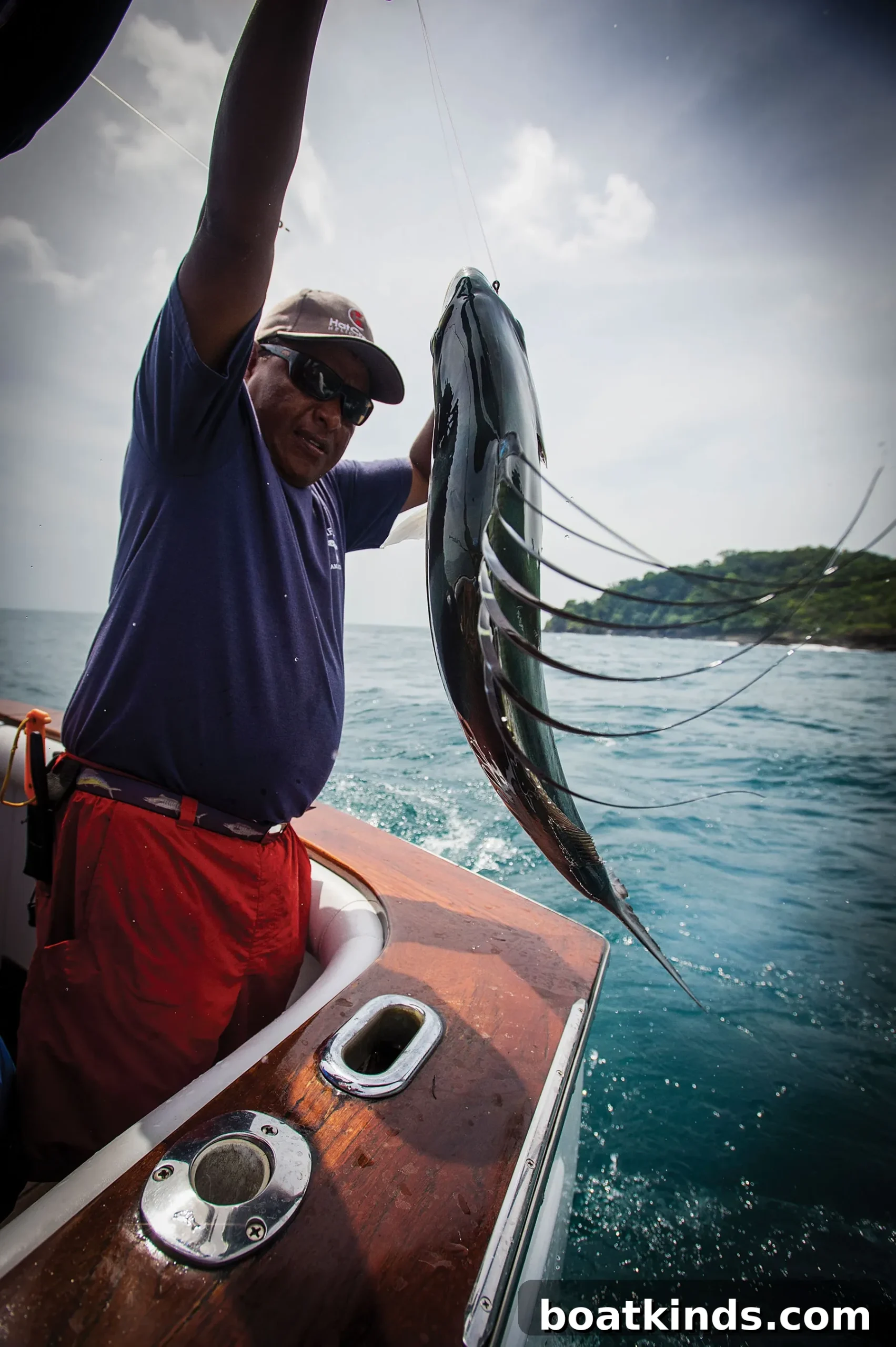
In 2001 John Richardson purchased the boat, restored her historic name Picaflor and took her to fish Panama’s rich Pacific waters for more than 15 years. Richardson, who grew up in the Canal Zone, hired local crews and logged many memorable trips, including explosive sailfish action around the Perlas Islands and a run of big yellowfin tuna.
One of the boat’s most cherished moments occurred in 2007 when Richardson and his crew hooked a massive black marlin near San Jose Island. After a dramatic fight and a temporary engine problem, the fish was brought alongside and measured. Recognizing it as a potential IGFA world record on 50-pound tackle, Richardson chose to release the fish alive rather than kill it, naming the marlin “Gracie” after his granddaughter. The decision exemplified a conservation-minded respect for the species even amid the adrenaline of sportfishing.
The Refit
After nearly 16 years fishing the Pacific and having gone through a couple of engine packages, Picaflor was shipped back to Florida for a comprehensive refit. Offloaded in Palm Beach in December 2017, she returned to Merritt’s for a 15-month restoration overseen by Roy Merritt, who had worked on her original fiberglass layup decades earlier.
The refit turned into a full-scale renewal. Removing obsolete systems revealed the extent of deferred maintenance: air-conditioning and refrigeration compressors, redundant pumps, and about 600 pounds of old wiring were stripped out. The salon sole, which had sagged over time, was leveled and reinforced with composite beams.
In the cockpit the old freezers and deck were removed, fuel tanks and the in-deck livewell were extracted, and the rudder shelf was replaced. New twin 450-hp Cummins diesels were installed, and the original marginal 6-inch exhaust was upgraded to an 8-inch linear system to allow the engines to breathe properly. Through-hull intakes and drains were replaced to match modern equipment and reliability standards.
Her gelcoat was stripped back to the original primer over sound fiberglass. Older repairs were faired with glass and epoxy, the chine rails were faired over and the hull bottom sealed. The project revealed the excellent condition of her structural timbers—mahogany frames that reminded the crew of traditional boatbuilding as the restoration married that heritage with modern systems.
A new 100-gallon livewell with a three-pump sump system was installed in the cockpit, designed to flood or isolate easily to protect bait while running or fishing. The livewell sits forward of the fighting chair and doubles as a bench and rigging table: practical, modern touches completely unlike the original 1969 equipment. Her tower was rebuilt as an exact reproduction of the original, preserving the boat’s iconic profile.
Cosmetic and functional updates included fresh paint, new varnish on the toe rail, a teak transom with Picaflor in gold leaf, and contemporary Garmin electronics to support navigation and fishing. Much of the work was installed by craftsmen who knew the boat from earlier days, ensuring continuity between the boat’s original character and its renewed capability.
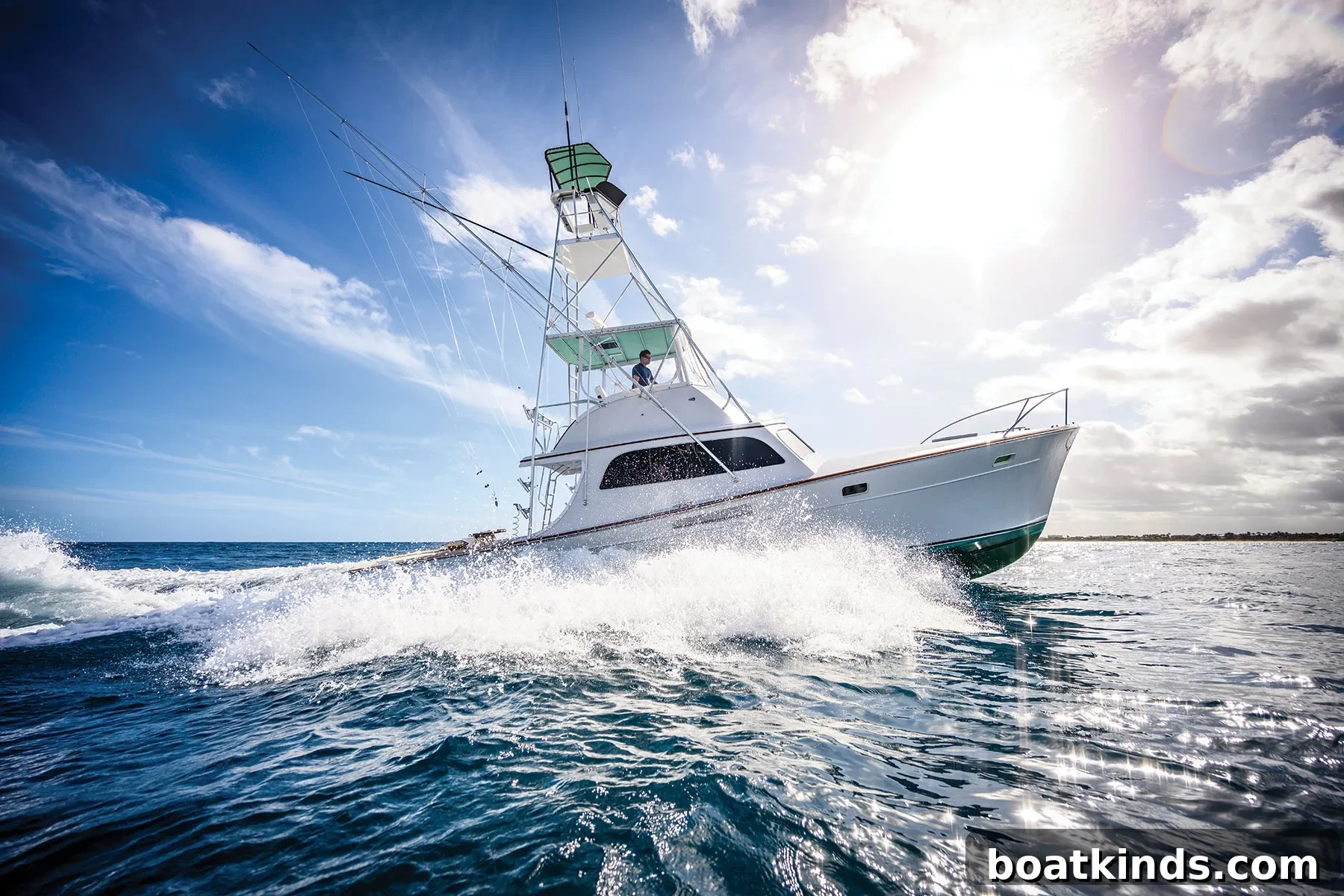
Because Picaflor began life as a well-built, well-loved hull, the refit was a logical investment for an owner who appreciates maritime history more than quick financial return. The result is a collector-quality Merritt that retains its original charm while being fully equipped to pursue big game anywhere in the world.
With her restoration complete, Picaflor left Merritt’s for a new chapter of offshore fishing, carrying a legacy of record catches, legendary captains and decades of service that few sportfishing boats can match.
This story was originally published in the Fall 2020 issue of Anglers Journal.