
Marine Industry Responds to COVID-19: Boat Builders Donate Masks and PPE
When the COVID-19 pandemic placed extraordinary pressure on hospitals, first responders and long-term care facilities, several companies in the marine industry rapidly redirected resources to help protect health care workers and vulnerable communities. Boat manufacturers and related suppliers shifted production lines, donated protective equipment, and funded local relief efforts to respond to the immediate needs for personal protective equipment (PPE) and other supplies.
Chaparral Boats: Local Donations and Community Support
Chaparral Boats, a manufacturer of fishing and recreational craft based in Nashville, Georgia, responded to the crisis by donating hundreds of N95 respirator masks to area hospitals and nursing homes. Recipients included the South Georgia Medical Center’s Berrien campus and other nearby healthcare providers in need of certified respiratory protection.
Beyond PPE donations, Chaparral’s parent company, Marine Products Corporation, contributed $100,000 to The Caring Place, an organization that distributes food to families throughout the county. Company leadership emphasized the importance of supporting employees, their families, and the broader local community during the pandemic.
Brunswick Corporation: Repurposed Production and PPE Contributions
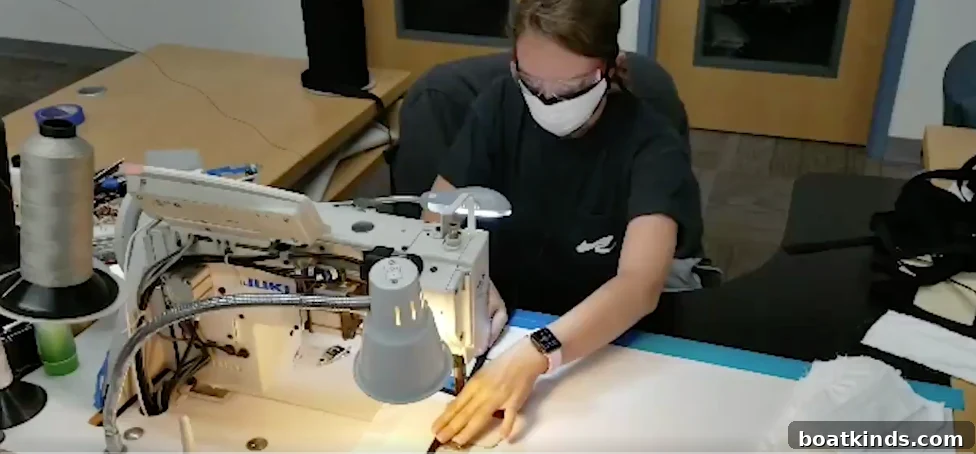
Brunswick Corporation, which owns brands such as Boston Whaler and Sea Ray, adapted its upholstery and manufacturing teams to produce masks and other protective items that meet CDC guidance. Upholsterers who normally work on boat interiors began sewing and assembling face coverings for colleagues and essential personnel within the company’s global operations.
In addition to internally focused production, Brunswick donated 15,000 previously purchased masks to hospitals and first responders, helping to replenish supplies in frontline facilities. The company also moved to develop parts for face shields and ventilators, combining in-house manufacturing capabilities with emerging design work to support medical personnel and critical equipment needs.
Despite these new efforts, Brunswick has continued to maintain its core manufacturing operations, balancing ongoing boat production with pandemic-related support initiatives.
Viking Yachts: N95 Masks, Protective Suits and 3D-Printed Face Shields
Viking Yachts joined other boat builders in contributing significant quantities of PPE to healthcare providers. The company donated 2,650 3M N95 masks and supplied approximately 100 Tyvek suits, boots and hoods to medical facilities in need of full-body protective gear.
Viking also deployed 3D printing technology to produce face shields for frontline workers. The company set an initial goal of manufacturing more than 1,000 shields for the medical community. After meeting that first target, Viking planned to produce shields for its own employees as well. To accelerate broader production by others, Viking made its face shield design available to anyone with access to 3D printing capabilities.
Industry Impact and Ongoing Efforts
These efforts illustrate how the marine and boat-building industry used its manufacturing expertise, supply chains and skilled workforce to meet urgent public health needs. By donating masks, producing face shields, contributing to ventilator part efforts, and funding community relief organizations, companies such as Chaparral, Brunswick and Viking helped fill critical gaps in PPE supply during a period of acute demand.
While the pandemic prompted rapid short-term changes to production and resource allocation, these actions also underscored the relationship between regional manufacturers and their communities. The coordinated response by boat builders provided both immediate protection for frontline workers and tangible support for families coping with the broader economic and health impacts of COVID-19.
As hospitals and first responders continue to face variable demand for PPE and medical equipment, the ability of manufacturers to pivot production and share designs—especially for items like face shields that can be produced with additive manufacturing—remains an important component of community resilience during public health emergencies.