
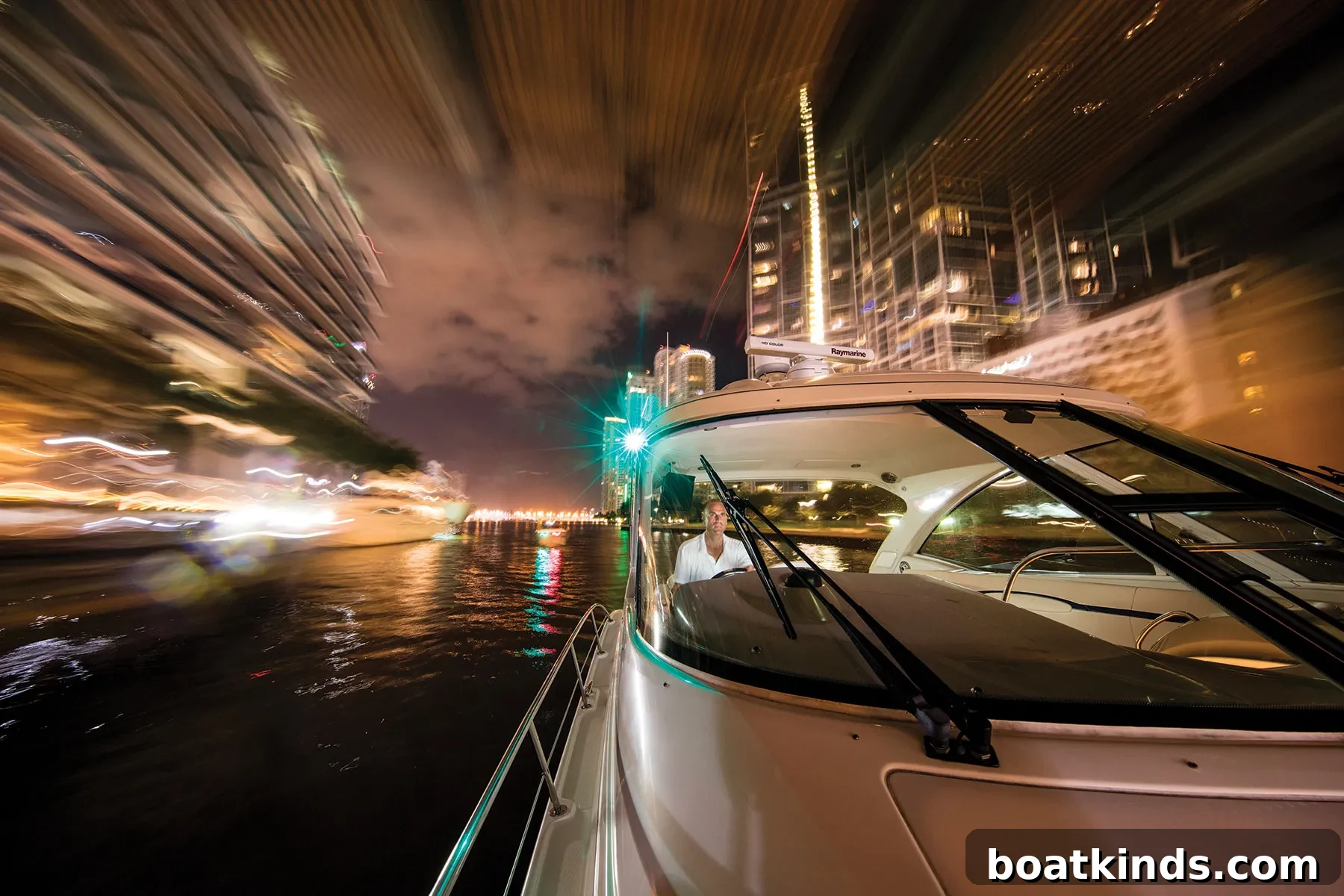
Night Navigation and Maintenance: Why Proper Navigation Lights Keep You Safe Offshore
The tuna were biting offshore and the boat was loaded with bait, tackle, crushed ice and an eager charter party ready for action. Our plan was to sneak out in the dark and have lines in the water before first light, since the fish had taken up residence in the Hudson Canyon off the New Jersey coast about 75 miles from Manasquan Inlet.
Just before casting off I discovered my starboard green navigation light was out. A hurried search of the boat revealed no spare bulb, but I did find a pair of green Cyalume glow sticks left over from a swordfish trip. I snapped both sticks to activate them, taped them to the side of the flybridge wing, and reminded everyone to stay alert on the starboard side. The fix was far from Coast Guard-compliant, but it allowed us to leave on schedule while I made plans to properly repair the fixture at the first opportunity.
Navigation Lights: The Basics You Need to Know
Navigation lights are required from sunset to sunrise and whenever visibility is reduced by rain, fog, smoke or snow. They serve several purposes: informing other vessels of your position, indicating heading and intent, and showing whether a vessel is underway, anchored or engaged in fishing. This is especially important in busy areas with shipping lanes, commercial fishing boats and recreational traffic, where being easily seen reduces collision risk.
Sidelights are colored—red on port and green on starboard—and are designed to show an unbroken light from straight ahead to 22.5 degrees abaft the beam. A masthead white light shows 225 degrees forward and a stern white light shines 135 degrees aft. Together, these lights provide 360-degree coverage and can also serve as an all-round anchor light when combined correctly.
How you interpret what you see at night matters: if you see red and green plus a white light, that vessel is ahead of you and approaching. If you only see a white light, you are closing in on a vessel that may be underway or at anchor. Light intensity also matters and is specified by vessel length. Boats under 12 meters (about 39.4 feet) must display a masthead white visible for two miles, green and red sidelights visible for one mile, and a stern white visible for two miles. Vessels between 12 and 50 meters (up to about 164 feet) require sidelights and sternlights visible for two miles and a masthead light visible three to five miles, depending on size.
Rule 20 in the Navigation Rules & Regulation Handbook governs the display of lights in both international and inland waters: from sunset to sunrise no other lights should be shown if they might be mistaken for navigation lights. That’s why excessive deck lights, floodlights or decorative lighting on a vessel can actually reduce safety by masking or confusing the required navigation signals.
Visibility Challenges and Real-World Examples
On our run to Hudson Canyon we passed a pair of scallop boats lit up like a used-car lot as the crew worked the decks. Their bright working lights made it hard to identify red or green sidelights that would have indicated their current status. Commercial fishing vessels often display a green-over-white light to show they are fishing and stationary, but heavy deck lighting can obscure those signals.
Later, a high-speed center console with bow and spreader lights and a powerful floodlight approached from astern and overtook us on the port side. The boat was moving fast, and I never saw clear navigation sidelights—either they weren’t turned on, or the white lights overwhelmed them. The incident underlined how critical proper light placement and intensity are for visibility.
Closer to shore, distinguishing navigation lights from land-based lighting such as traffic signals and taillights can be tricky. I remember a case where a boater mistook traffic lights for inlet jetty lights and nearly ran onto the surf line. Vigilance and an awareness of local landmarks are essential when navigating restricted or congested waters at night.
Maintenance Tips to Keep Your Navigation Lights Reliable
Maintaining navigation lights is one of the simplest and most effective ways to protect your crew. Make checking the lights part of your routine each time you board—flip the switch and confirm circuits are functioning. Seasonally, disassemble fixtures carefully to inspect bulbs, sockets and wiring. Saltwater corrosion is common; a light coat of dielectric grease on bulb bases and terminals helps protect connections. The plastic globes that cover the lights often dull from UV exposure, so polishing them can restore clarity and improve light transmission.
When working on nav lights, take your time. Many housings are in tight spaces with small screws that are easy to strip or drop overboard. Keep track of wiring and terminal positions so the fixture goes back together exactly as it came apart. If you don’t carry spare bulbs, note the bulb part number during maintenance and add it to your shopping list—marine stores may not stock every type.
Consider upgrading to high-intensity LED navigation lights if replacements are hard to find or if you want improved reliability and visibility. LEDs are energy-efficient, durable and often brighter than older incandescent bulbs, which translates directly to better safety on the water.
On the water, to be seen is to be safe. Regular maintenance, correct light placement and an understanding of how navigation lights communicate intent and position will keep you and your crew safer after dark.
This article was originally published in the January 2021 issue.