
Steve White is the president of Brooklin Boat Yard in Brooklin, Maine, a full-service facility on Eggemoggin Reach between Blue Hill and Penobscot bays that specializes in the design, construction and restoration of wooden boats. The yard became his family’s business when his father, designer Joel White, took sole ownership in 1960. Steve grew up learning the trade at his father’s side and today leads a team of highly skilled craftsmen who produce distinctive, handcrafted vessels that sail and cruise around the world.
Tell us about the custom work at Brooklin Boat Yard. Brooklin has always focused on custom building. We have never produced mass-market boats. Since the yard’s founding we’ve completed more than 120 custom vessels and typically launch two to three boats each year. Our work spans traditional yachts, high-performance racing boats, and finely finished powerboats, all tailored to each client’s needs and preferences.
Do you build more sailboats? The mix has changed over time. Under my father the yard did a lot of powerboats through the late 1970s; since then sailboats have been more common. That said, our project slate varies year to year—this season three of the four new launches are powerboats, including an exquisitely finished 28-foot varnished mahogany runabout destined for Lake Winnipesaukee. We’ve never limited ourselves to one type; we follow the best opportunities for craftsmanship and fit for the owner.
Why do clients choose you for custom builds? Reputation, longevity and process. There are very few true custom boatbuilders left in the U.S., and Brooklin has operated continuously for six decades. Prospective owners come because we consistently deliver high-quality results, and because we’re known for detailed estimating and project management that keep builds on schedule and within budget. Before signing a contract we invest time in accurate material and labor estimates so clients understand costs and timelines.
Why are there fewer custom yards in the U.S. today? The market has shifted. Production builders offer more variety and better-built boats than in the past, reducing demand for one-off construction. Custom building is also financially challenging; margins are often slimmer than those on storage, maintenance and repair work. We continue building custom boats because the work attracts and retains top craftsmen—people who want complex, rewarding projects rather than routine tasks.
Do you enjoy the creativity that comes with custom projects? Absolutely. There’s a special satisfaction in starting with an empty shop and, nine months later, launching a 50-foot sailing yacht. Many of our boats have crossed oceans or circumnavigated the globe, and it’s gratifying to reconnect with them years later and learn where they’ve been. Custom work keeps the shop intellectually stimulating and allows us to solve unusual challenges.
Has the custom customer changed over the years? Yes. Ordering a custom boat was more common 30 years ago. Today, custom clients are typically those who can’t find what they want in the production market—owners with specific ideas about aesthetics, performance or layout. We don’t get a lot of wildly experimental designs, but occasionally a client brings a radical concept that tests the boundaries of our expertise.
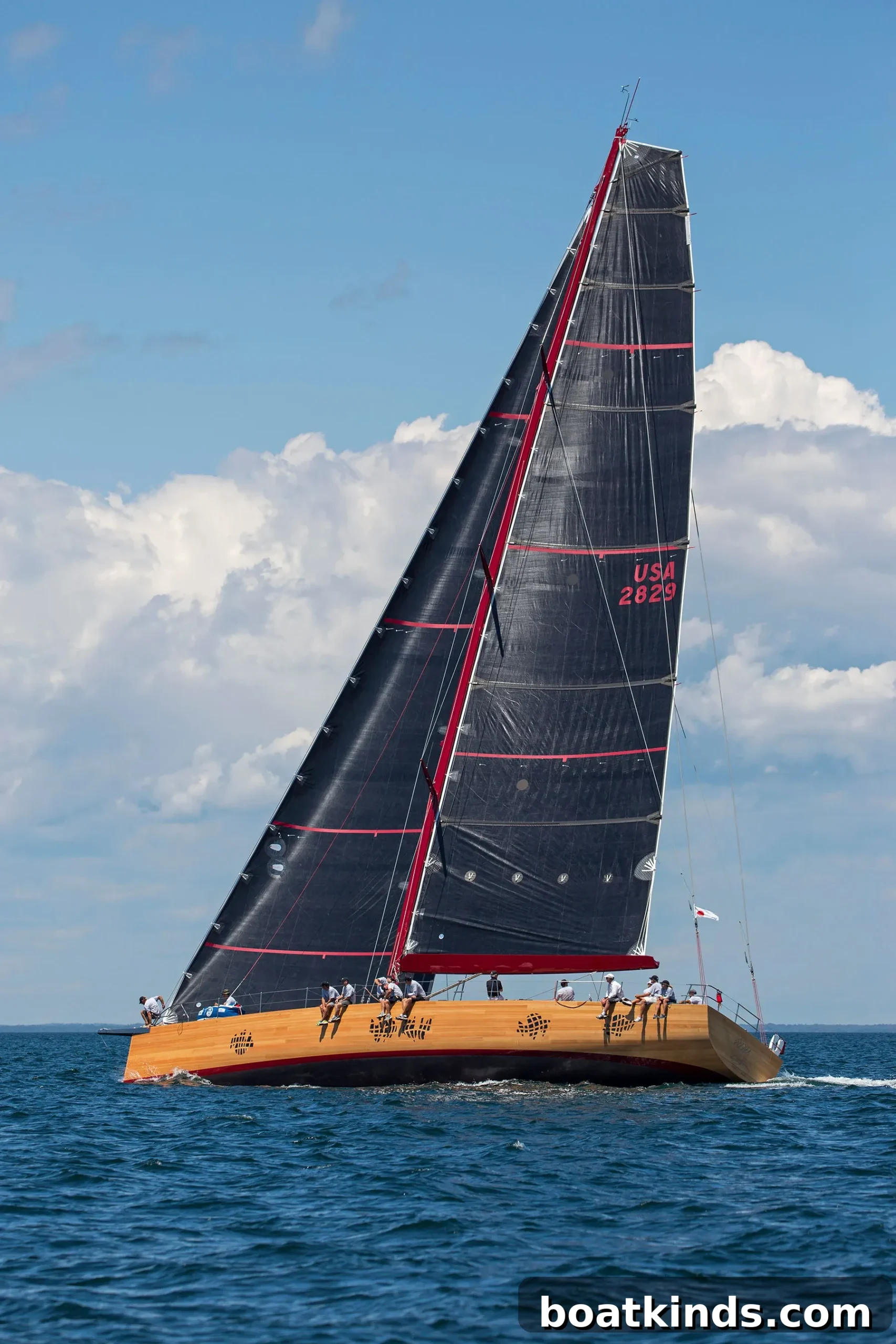
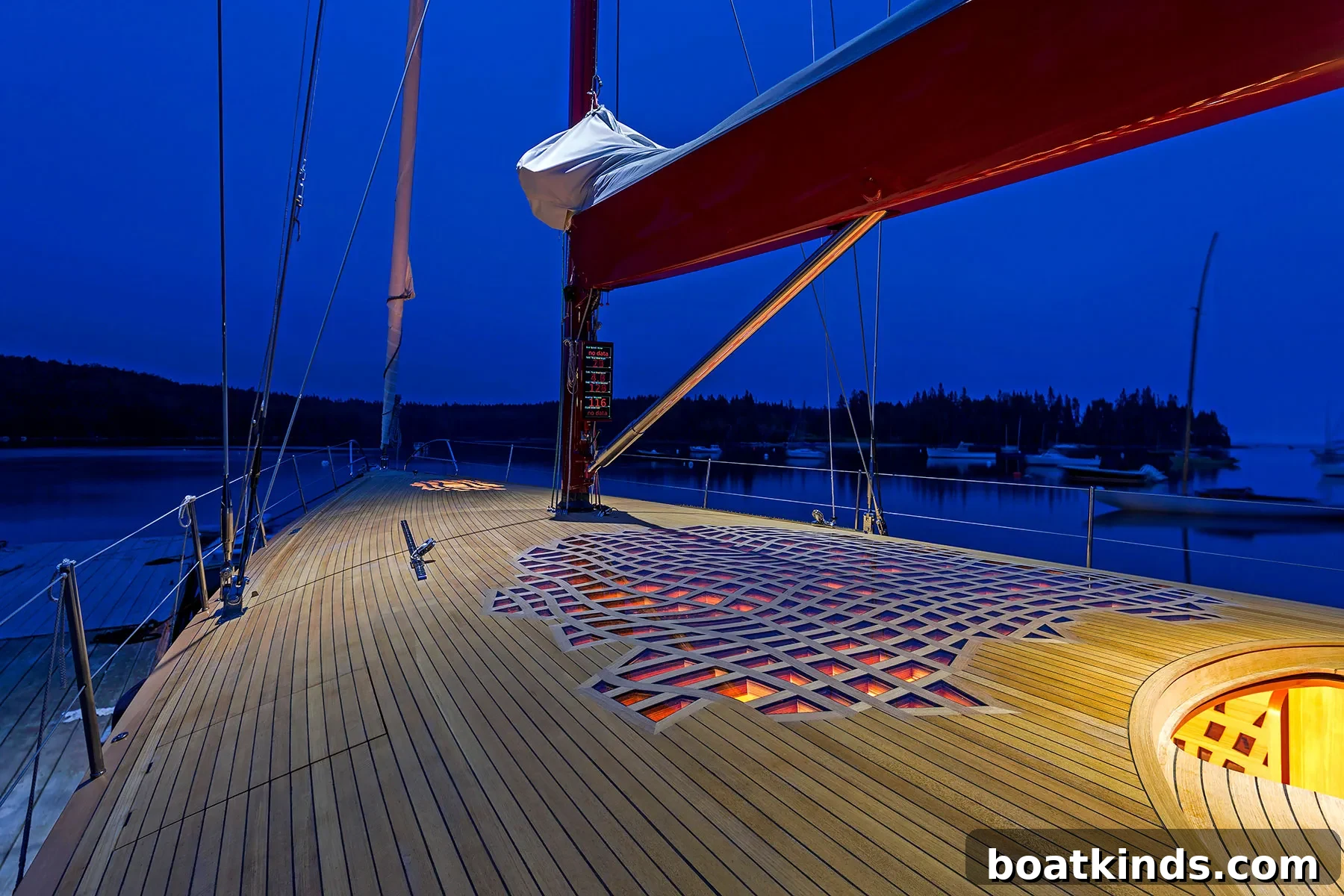
What’s the most unusual design to come from the yard? The sloop Foggy was one of the most memorable. Frank Gehry provided the design concepts and German Frers was the naval architect. Gehry’s ideas were bold and often unconventional; his brief included elaborate hull and deck windows and a nearly invisible windshield that had to be both elegant and strong enough to withstand heavy seas. Figuring out how to engineer those aesthetic elements without compromising safety was a real challenge. Projects like that require confidence, skill and a willingness to accept some risk—many yards would avoid them.
Which build stands out as a favorite? I have several favorites. A 55-foot IMS racing yacht designed by Bill Tripp was a standout: it was large for our yard at the time and came with an aggressive schedule. We delivered on time and then I had the privilege of racing aboard her in events like the Pineapple Cup and the Trans-Atlantic Gold Cup from New York to Southampton. That combination of building and then campaigning a yacht was immensely rewarding.
Any other special boats? Wild Horses, a 76-foot Spirit of Tradition sloop, holds special meaning because it was my father’s final design—he saw the hull completed but not the launch. My own boat, Vortex, launched in 1990, was another turning point. Concerned about losing traditional wooden construction, we built Vortex using cold-molded techniques that were relatively new here at the time. I built her on spec as a demonstration of the process and ended up keeping her. Cold-molded construction proved to be an excellent fit for our work.
Which projects would your father have appreciated? I believe he would have liked most of our work, though Foggy’s dramatic styling might not have been to his taste. He favored purposeful design and sometimes found exuberant aesthetics excessive when they didn’t serve a clear function.
Did you grow up in Maine? Yes. I worked at the yard as a child but left when I was 15 to attend prep school in Massachusetts. I later spent time at Cornell and studied briefly abroad in Switzerland, and I even worked on tugboats in Louisiana for a period. Those experiences made Brooklin look more appealing, and I returned to the yard at 25 to continue the family tradition.
Have you been boating since childhood? Sailing has been central to my life. My father bought me a Beetle Cat when I was young, and I sailed every summer in Maine. Over the years I’ve owned many boats—at one point joking that I had more boats than fingers and toes.
How does hands-on boating inform your boatbuilding? Actively sailing and racing the boats we build sharpens attention to detail. When you use a boat regularly you notice what works and what doesn’t—how systems perform, how structures hold up under strain, and how ergonomics impact comfort and safety. Racing Aurora taught me about building for performance and durability in real-world conditions.
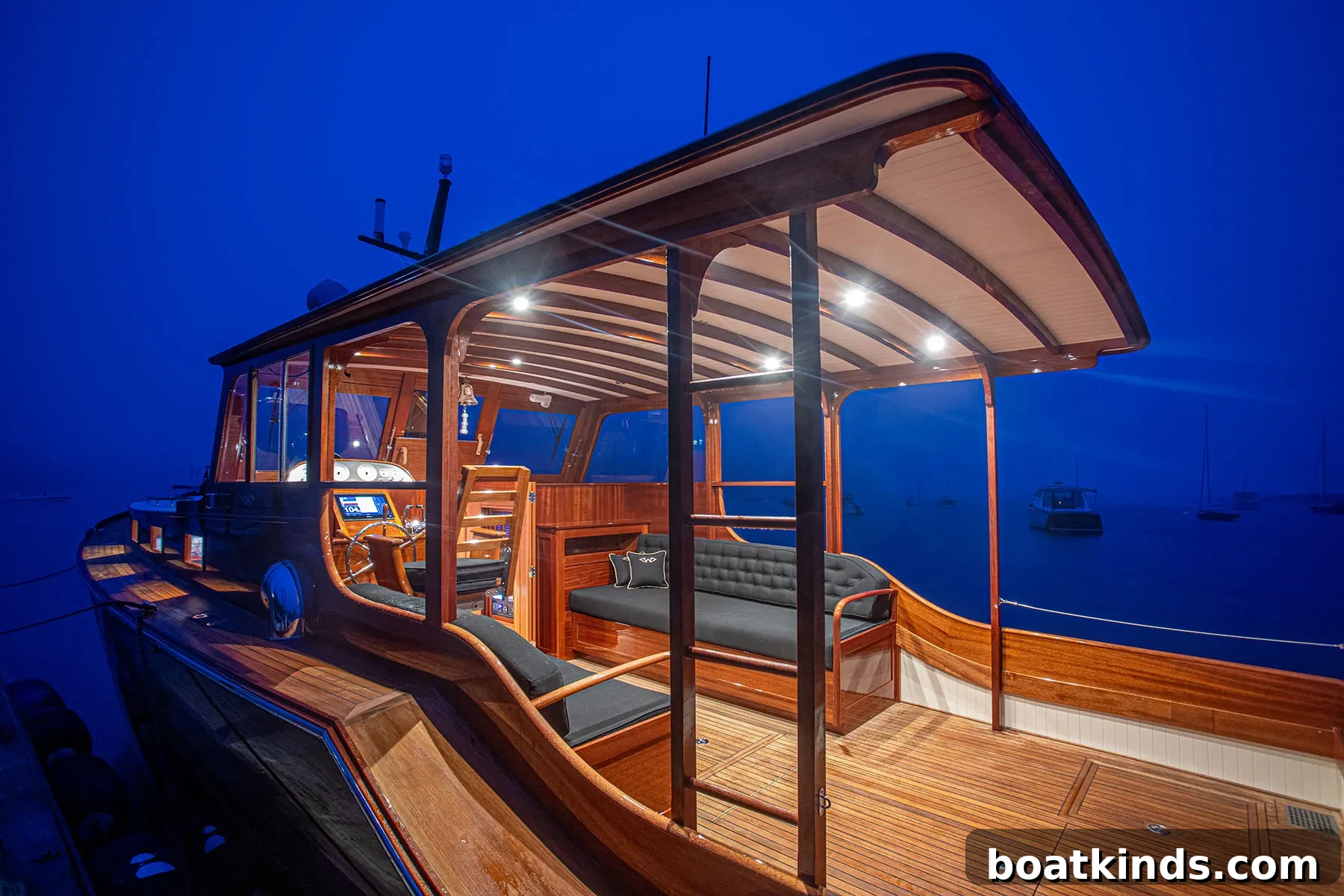
How do you view the Wheeler 38 reinterpretation of Hemingway’s Pilar? That project was a pleasure. Wes Wheeler brought passion and respect for his family’s heritage—the Wheeler Yacht Company—while insisting the design be modern in performance and systems. The Wheeler 38 includes contemporary conveniences Hemingway didn’t have: integrated Can Bus electronics, modern switching, air conditioning and even a Seakeeper. I had the opportunity to cruise the boat to Annapolis and it performed beautifully as a coastal cruiser. We are the official builder for Wheeler Yacht Company and we expect to construct more models, possibly including a 46-foot version.
What other projects are on the horizon? In the near term we’ll finish the 28-foot varnished mahogany speedboat designed by Michael Peters. That runabout, scheduled for completion later this summer, represents our first collaboration with Peters and reflects a shared aesthetic—classic proportions with streamlined, modern touches. We continue to balance traditional craftsmanship and modern systems across both sail and power projects.
What advice would you give your younger self about running a successful boatyard? Persevere and do what you love. If you stay committed and enjoy the work, it doesn’t feel like a job. Consistency, craftsmanship and a clear process are what sustain a small, specialized yard over decades.
This article was originally published in the February 2021 issue.