
Robert Sticker — Marine Artist Capturing Life on the Water
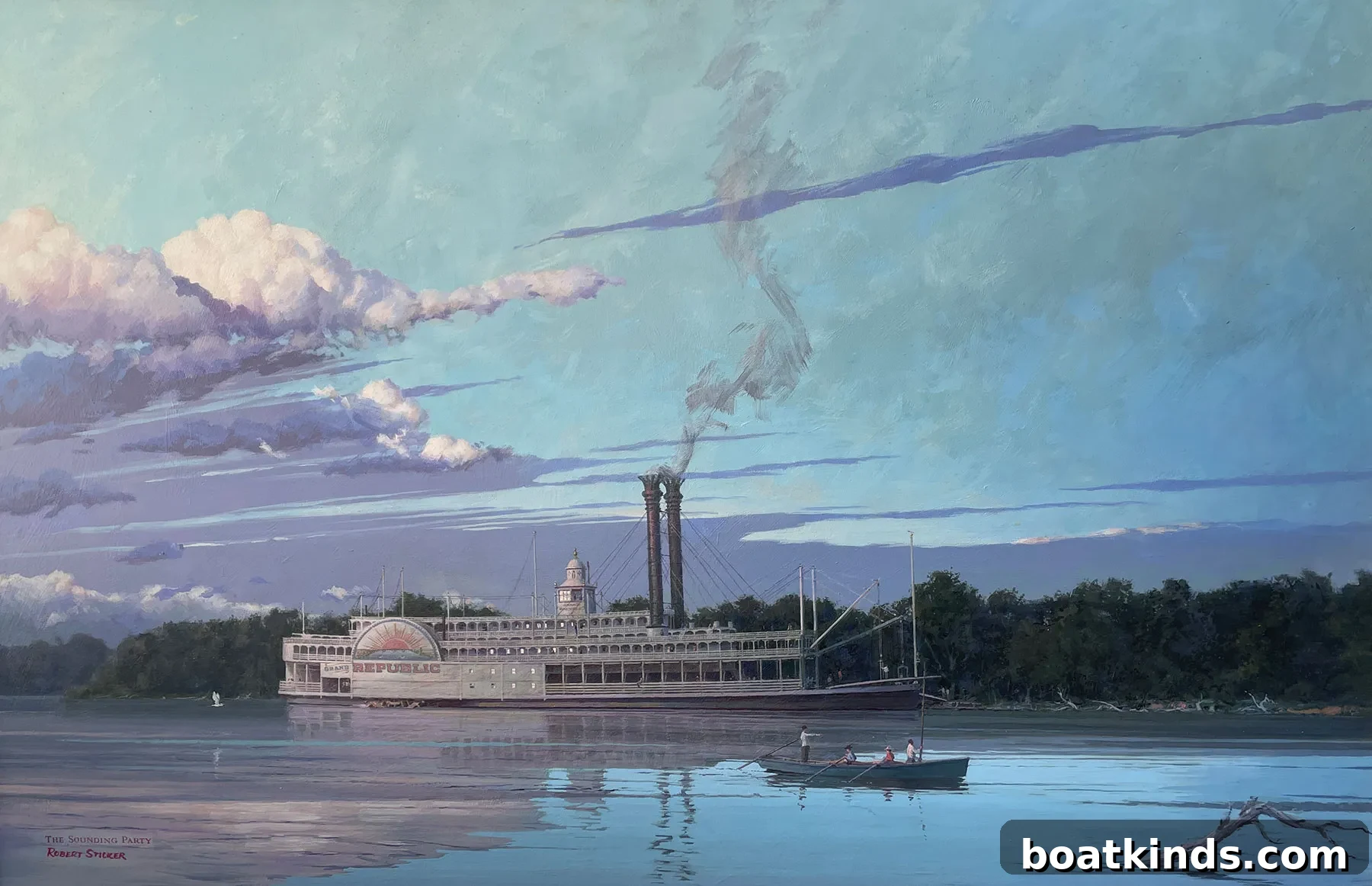
Over a long and productive career, marine artist Robert Sticker offered viewers an intimate, behind-the-scenes look at many corners of maritime life. His paintings portray a range of subjects — from whalers and fishing vessels to warships, steamers and riverboats — and focus on the ordinary tasks that kept ships and communities afloat. Sticker’s scenes often show crews at work: handling sails on a square-rigger, a helmsman braving rough weather, or men unloading a riverboat. What might have seemed mundane to contemporaries now serves as a valuable visual record of a bygone era.
Sticker grew up on Staten Island, New York, where he watched the constant traffic of ships and boats in New York Harbor. That early exposure to the water and the rhythm of maritime life informed his lifelong fascination with seafaring subjects. After serving in the U.S. Navy during World War II, he took up painting as a hobby and pursued formal study, attending The Art Students League of New York part-time. Later, at age 41, he returned to school as a full-time student, deepening his commitment to art and to capturing life at sea.
The Sounding Party: The Mississippi as Subject
One of Sticker’s most evocative works, “The Sounding Party,” transports the viewer to one of America’s most iconic rivers: the Mississippi. In the painting, the sidewheeler Republic sits idle along the far bank while a small crew in a skiff takes soundings. At the bow, a man uses a long pole to probe the riverbed, checking depth and searching for hidden hazards. The act of sounding — testing the bottom to ensure safe passage — underscores both the skill and the constant vigilance required of river men and pilots.
The Mississippi River presented unique challenges: muddy shallows, shifting sandbars and powerful currents created a moving and sometimes treacherous landscape. Eddies, submerged snags and unexpected shoals could endanger wooden hulls and demand local knowledge to navigate safely. Sticker’s depiction of the sounding party is as much about the human work of navigation as it is about the river itself, and his attention to these practical, hands-on moments gives the painting a strong sense of authenticity.
Riverboats and the Culture of Travel
In the late 19th century, hundreds of steamboats and riverboats plied the Mississippi, forming a vital transport and cultural network. Some vessels moved goods up and down the river; others served as social centers and floating venues for celebrations, performances and everyday travel. Sticker’s choice to include a named vessel like the Republic highlights the era’s mix of commerce and comfort. The Republic was reputed for luxurious appointments: salons with cut-glass windows and cushioned seating, dining rooms offering refined meals, oil paintings in the corridors, and heated staterooms that provided a level of comfort rivaling many land-based hotels and private homes of the time.
Sticker’s paintings of riverboats do more than document hardware and decoration. They capture the atmosphere of travel — the quiet waiting at a riverbank, the concentration of crew members at work, the contrast between a vessel’s interior luxury and the gritty labor required to keep it afloat. By focusing on these contrasts, Sticker emphasized the human stories at the heart of maritime life.
Legacy and Artistic Focus
Robert Sticker, who died in 2011 at the age of 89, built a devoted following over the decades. Collectors and maritime enthusiasts admired his ability to render both the broad sweep of seascapes and the small, telling details of daily work on the water. Whether portraying merchant steamers, fishing craft, military ships or passenger riverboats, he consistently centered the people who operated them, giving viewers a clear sense of the labor and skill involved.
Sticker’s work is valued for its narrative quality and its respectful, observational approach. He avoided romanticizing maritime life; instead, he presented it with practical clarity and emotional resonance. The result is a body of work that acts as a visual archive of nautical routines and river culture, preserving scenes that might otherwise have faded from public memory.
This article was originally published in the May 2021 issue.