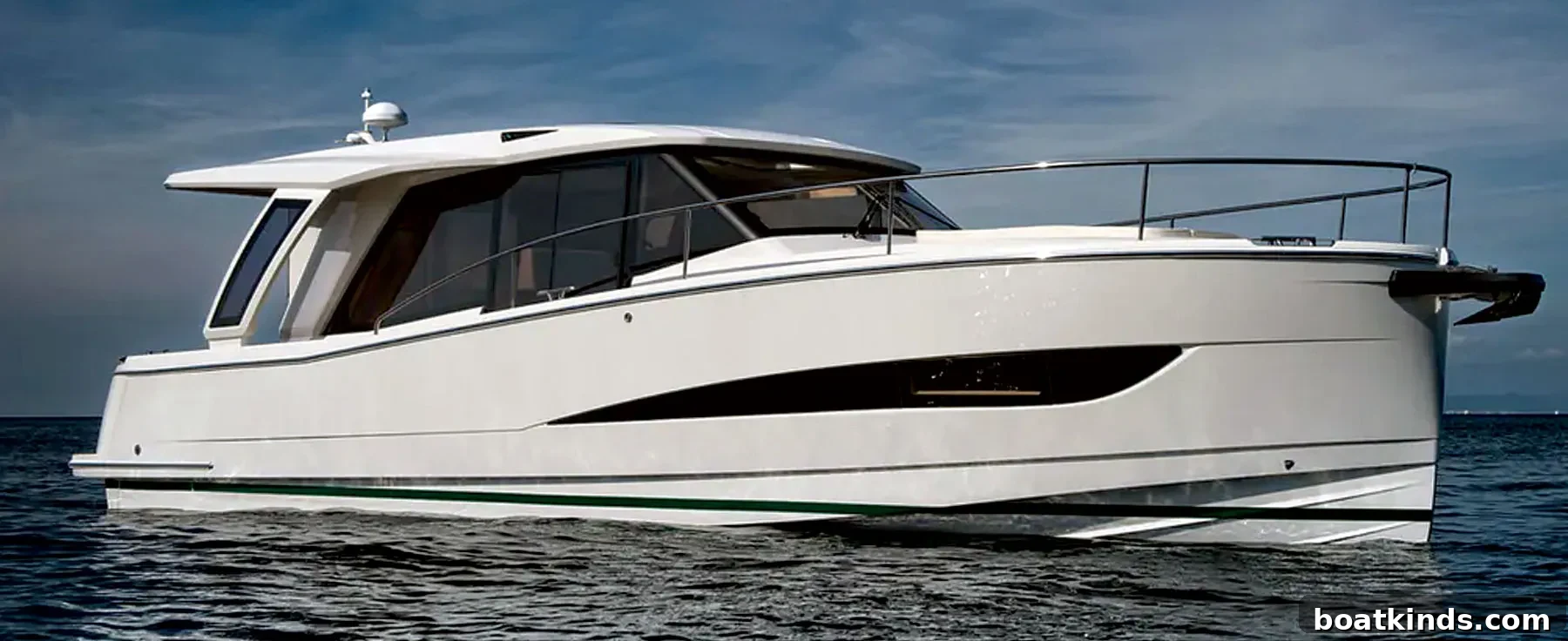
The global shift toward electric propulsion for recreational boats is accelerating and impossible to ignore. In late 2020, Slovenia-based Greenline Yachts partnered to supply boats for the world’s first all-electric charter company on Norway’s Telemark Canal. In Sweden, Candela — a maker of foiling electric boats — teamed with solar-energy provider Nordsol to roll out a charging-station network across the archipelago.
Other notable developments include Vetus, the Dutch firm known for bow and stern thrusters, introducing electric motors for sailboats and smaller craft, and Quebec’s Vision Marine Technologies raising $27.6 million in an initial public offering to begin production of a 180-hp electric outboard. Volvo Penta has also collaborated with Fountaine Pajot on a 40-foot catamaran powered by electric motors developed by the Swedish engine maker.
One clear pattern is that many leaders in electric-marine propulsion are based outside the United States. Stricter emissions policies, growing acceptance of electric vehicles, and interest from major automotive brands have driven demand in Europe and elsewhere, while the U.S. market has lagged for a mix of practical and economic reasons.
U.S. boaters often have usage patterns that electric systems currently struggle to match. “On a normal weekend, I might be fishing in the morning, come back in, grab the family and head back out to the sandbar, and there’s no way electric propulsion could meet the need for that,” says Chris DeBoy, president of U.S. operations for Vetus. Luca Raumland, Greenline’s head of sales and marketing, notes the impact of fuel pricing: “Nowhere else in the world is gas so cheap.” Those two factors—operational expectations and low fuel cost—help explain slower adoption in the United States.
Leading the Charge
That doesn’t mean U.S. companies are absent from the electric-marine scene. Correct Craft launched the world’s first electric wakesports boat with its Ingenity project in 2020, and legacy players such as Elco in California have long experience with electric propulsion. Washington-based Pure Watercraft also raised $37.5 million in Series A funding late last year to expand its line of electric outboards and e-propulsion systems.
Nonetheless, many of the most visible advances are coming from abroad. Greenline builds roughly 75 to 100 boats a year, mostly hybrid diesel-electric models, and sells about 25 of them into the U.S. market through its Florida operation. The company introduced its first all-electric 39-foot yacht in 2019, delivering one to the United States and others to Europe. Demand has continued, with additional deliveries and orders lined up for subsequent model years.
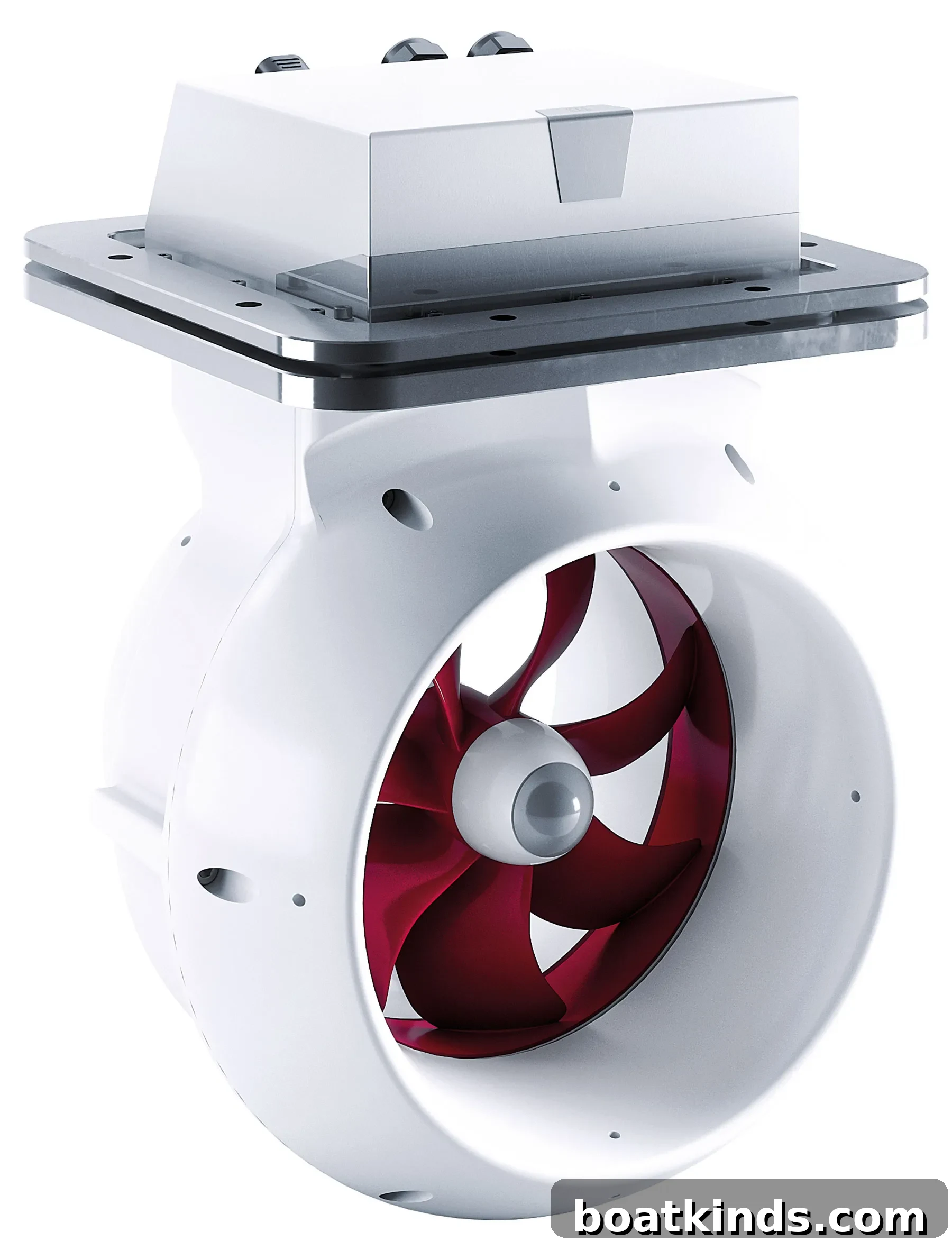
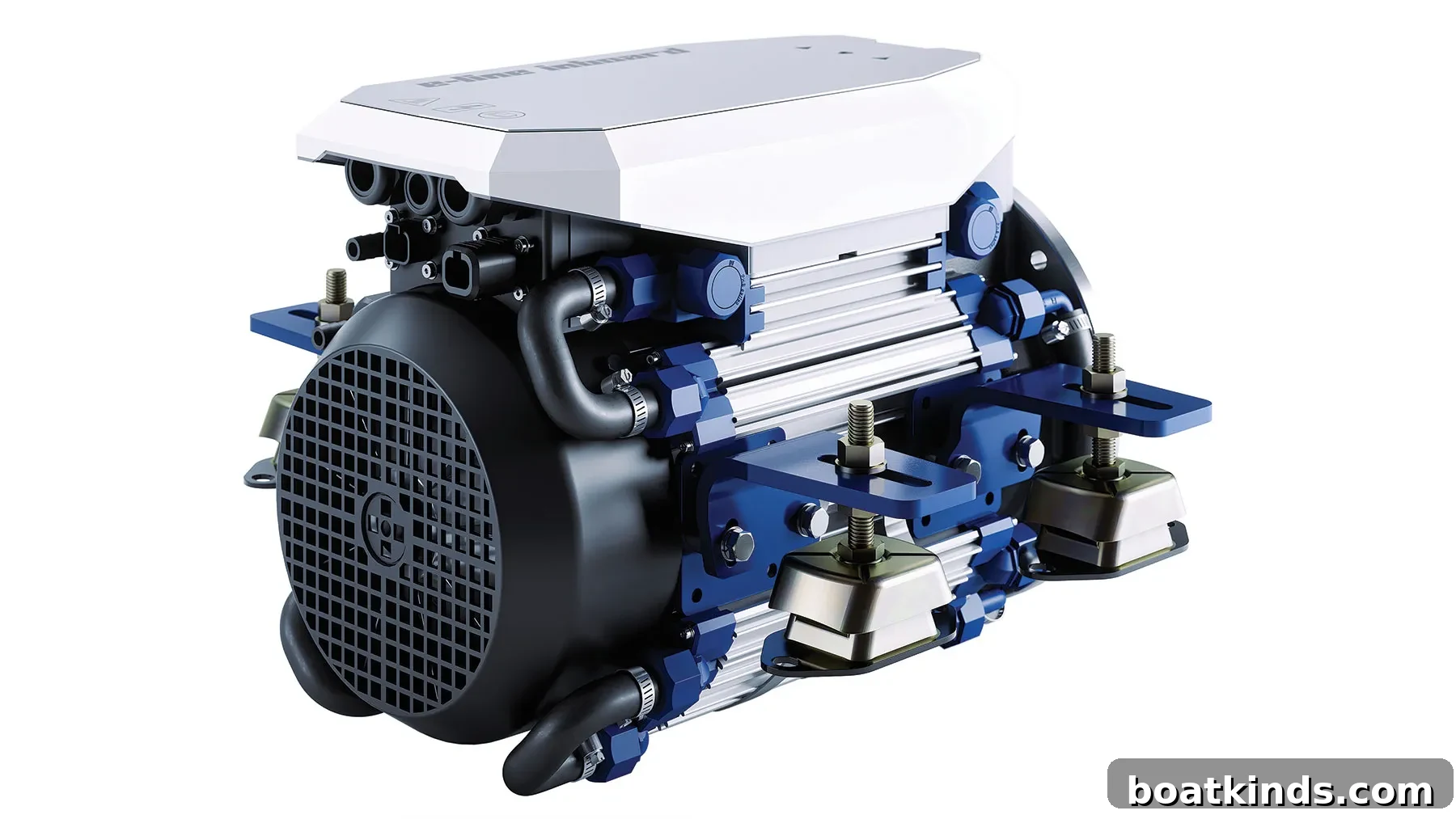
Vetus has also evolved quickly after resolving a major limitation of traditional thrusters. Its Bow Pro thruster, introduced in 2018, could run continuously without overheating, paving the way for Vetus’s E-Line and E-Pod electric propulsion systems. The E-Line is an electric motor that connects to an inboard shaft, while the E-Pod is a self-contained pod drive.
Both systems use motor controllers to manage power output and battery charging. Vetus offers the E-Line with either a closed-loop keel cooling or a raw-water cooling option and supplies integrated packages for complete inboard installations. The E-Pod houses coils in an aluminum housing; when energized, those coils produce a magnetic field that drives the impeller. Because the pod doesn’t steer independently, a conventional rudder remains necessary.
Builders can choose absorbed glass-mat or lithium batteries supplied by a European manufacturer and private-labeled for Vetus. The company has developed a proprietary V-Can bus system for its propulsion products and is working on NMEA 2000 integration to allow multifunction displays and onboard GPS to inform range and performance estimates. “We really feel the NMEA interface is going to be a big plus for the consumer,” DeBoy says.
Staying the Course
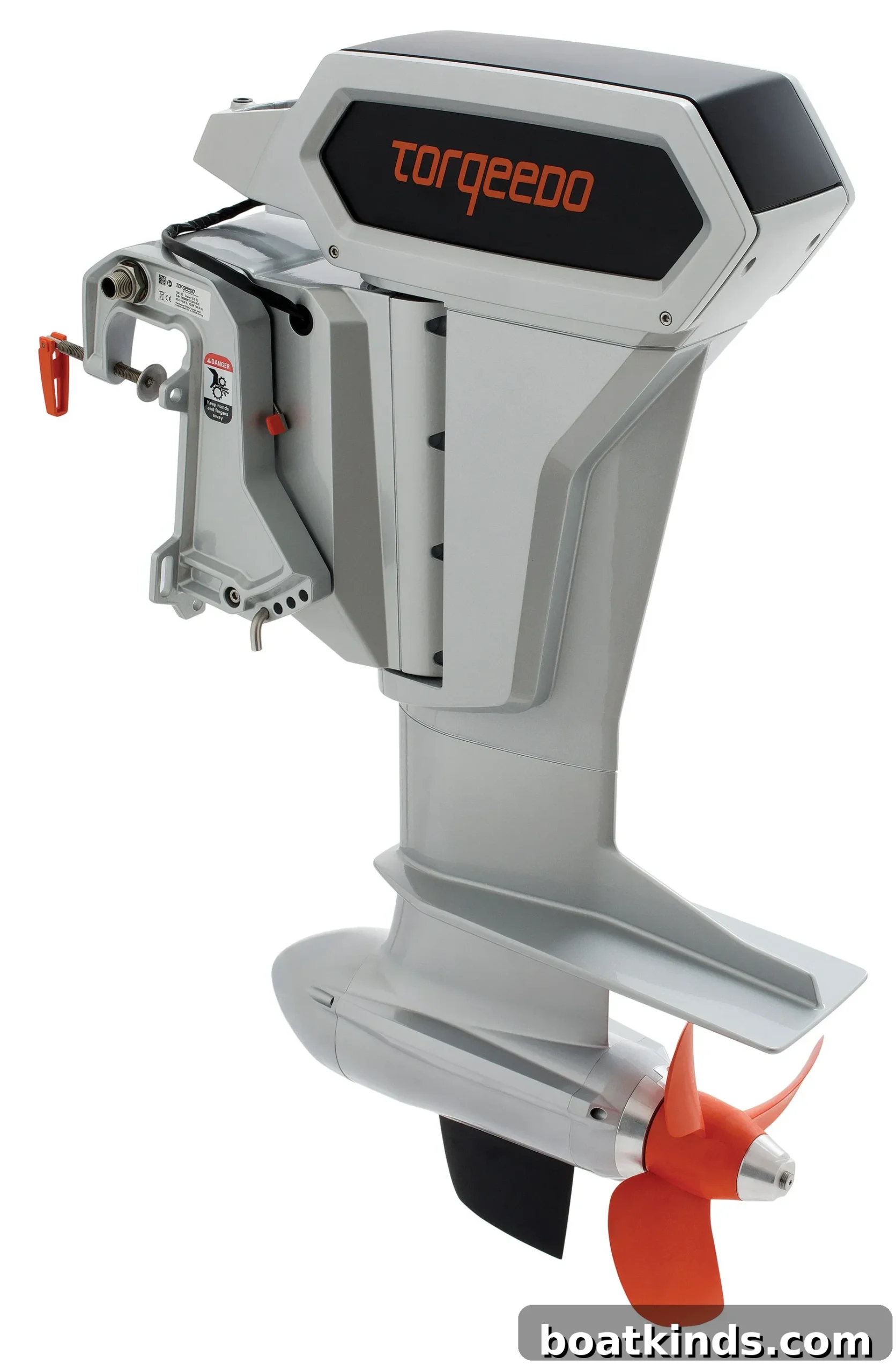
Torqeedo, founded in 2005 to enable boating on Germany’s Lake Starnberg where combustion engines are restricted, is among the best-known electric-motor manufacturers today. The company produces motors up to 80 hp and sells a significant portion of its Travel and Cruise outboards in the United States, though Germany remains its largest market.
Sailboats are a natural fit for electric propulsion: sailors can accept smaller engines and can supplement range with hydro-generation from the propeller and solar charging. Torqeedo supplies motors to builders like Greenline and Candela and has created its TorqLink bus network to connect engines, batteries and chargers. The TorqLink platform simplifies installation of complex systems and enables integrated packages that combine engines with battery banks and solar panels.
Power Surge
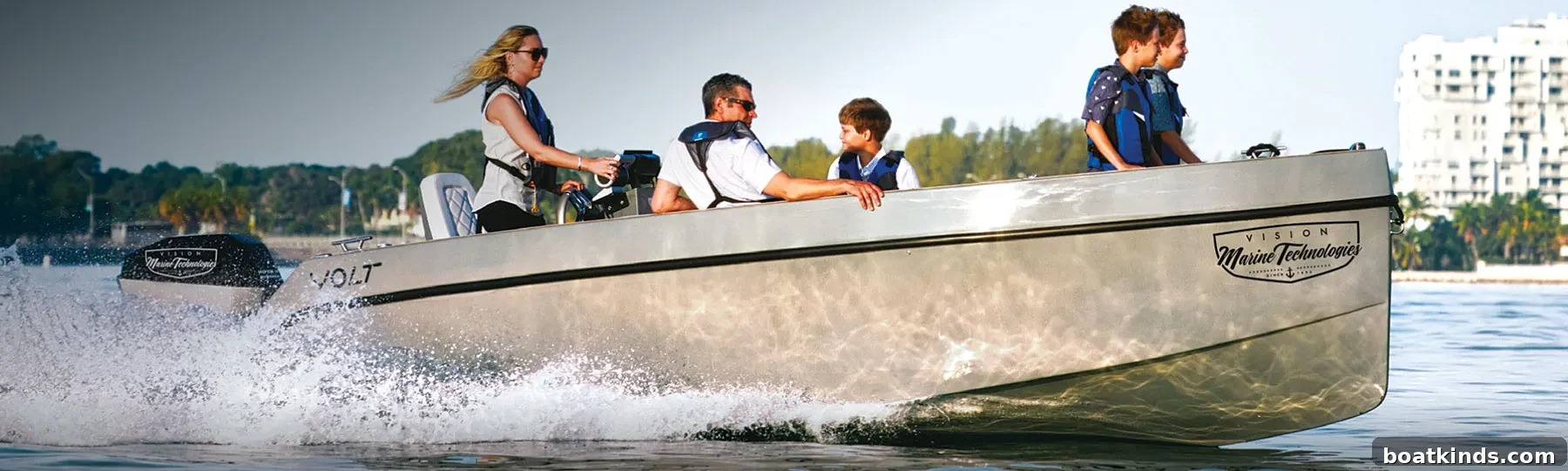
Vision Marine Technologies, the successor to the Canadian Electric Boat Co., is introducing a high-power electric outboard called the E-motion, rated at 180 hp and intended for production soon. Company co-founders Alex Mongeon and Patrick Bobby designed the E-motion, and the company highlights proprietary mapping of electrical output as a key differentiator. Range will vary by application; company representatives suggest that at a cruising speed of about 25 mph, the motor could deliver six to eight hours of operation depending on configuration.
The company, which employs roughly 15 people in Quebec, aims to scale production and has letters of intent from OEMs for significant initial volumes. Estimated retail pricing has been communicated by the company, and Vision Marine’s plans include expanding capacity to meet anticipated demand.
Inevitable Evolution
U.K.-based Cox Powertrain, which supplies diesel outboards globally, has noted early uptake of its technology in the recreational market and sees opportunities in hybrid diesel-electric systems for users who need offshore range but want zero-emission operation near shore. “Fishing fleets going offshore aren’t going to be using electric motors anytime soon,” says Hugh Huddleston, head of sales for Cox, “but many are looking at having no emissions near the coast, and diesel gives the range to go offshore.” Cox expects the U.S. to be a major market and is planning production closer to customers in the coming years.
Overall, the marine industry appears to be on a steady path toward greater electrification. Early adopters and innovators—mostly based outside the United States—are proving what electric and hybrid systems can do, while U.S. manufacturers and consumers watch, experiment and prepare for broader adoption as technology, infrastructure and economics continue to evolve.
This article was originally posted on our sister site Trade Only Today from the February 2021 Issue.