Running Tide Restored: Beau Van Metre Prepares for the Newport Bermuda Race
When the Newport Bermuda Race begins on June 17, 2022, Beau Van Metre expects to be back where he spent much of his youth—aboard the 60-foot Sparkman & Stephens design Running Tide. Now in his 70s, Beau intends to demonstrate that the 52-year-old yacht’s recent restoration at Safe Harbor New England Boatworks in Portsmouth, Rhode Island, has returned her to the competitive form she had in her prime.
Although racing is the primary focus, Beau also wanted the yacht to serve for relaxed day cruises with family and older crewmembers. That dual purpose shaped a restoration that was extensive but thoughtful: modern comforts were added where they would enhance usability without compromising the boat’s original racing character.
“I wanted to be able to use it with my family, and with some older sailors that I’ve sailed with over the years,” Beau told Soundings. After sailing with a friend on a Swan equipped with power winches and roller-furling sails, he decided to bring similar sensible upgrades to Running Tide. “When I do three or four races a year—whether it’s in Newport, the Chesapeake, or Florida—I wanted to make it as easy as possible for us guys in our 70s. I wanted to enjoy it with my kids and my family.”
Running Tide has a distinguished origin. Commissioned in 1970 by a shipping magnate, she was designed by Sparkman & Stephens as a radical racer of her time, with a relatively narrow 14-foot, 3-inch beam. Built through a collaboration between Wolter Huisman in the Netherlands and Kretzer Boat Works in New York, she was one of the early stripped-out racing yachts intended to be sailed by a small crew.
The original owner chartered the boat for a period, and among her charterers was Ted Turner, who sailed her to several wins. In 1972 she was purchased by American developer Albert Van Metre and raced with a crew that included his son Beau. Her victory in the 1976 Bermuda Race and wins in the Southern Ocean Racing Circuit earned her high praise; The New York Times dubbed her “Al Van Metre’s black beauty.” Beau remembers a busy racing schedule: “We raced every week—twice a week sometimes. And if we weren’t racing, we were delivering it.”
In the mid-1980s the Van Metres sold Running Tide, and she eventually ended up in Europe where neglect left her in poor condition. By the time Beau repurchased her, she required a complete overhaul. Conrad Hunter, Beau’s representative, sailed the seaworn vessel from France to Italy in a tense passage, and from there she was transported back to the United States. Arriving at Safe Harbor New England Boatworks, the Project Manager Bob Sharkey and his team found the boat in such dire need that they called the work a restoration rather than a refit.
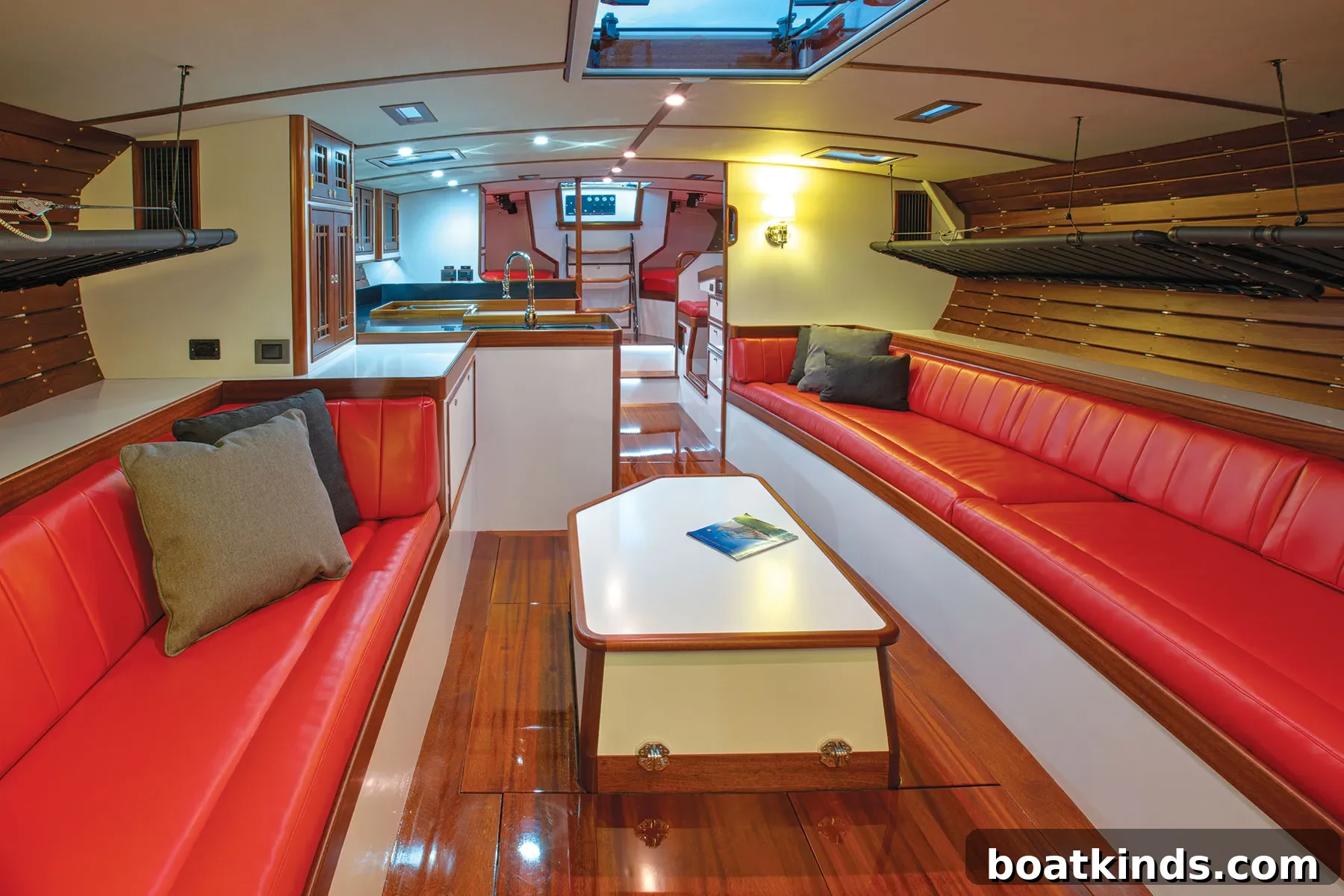
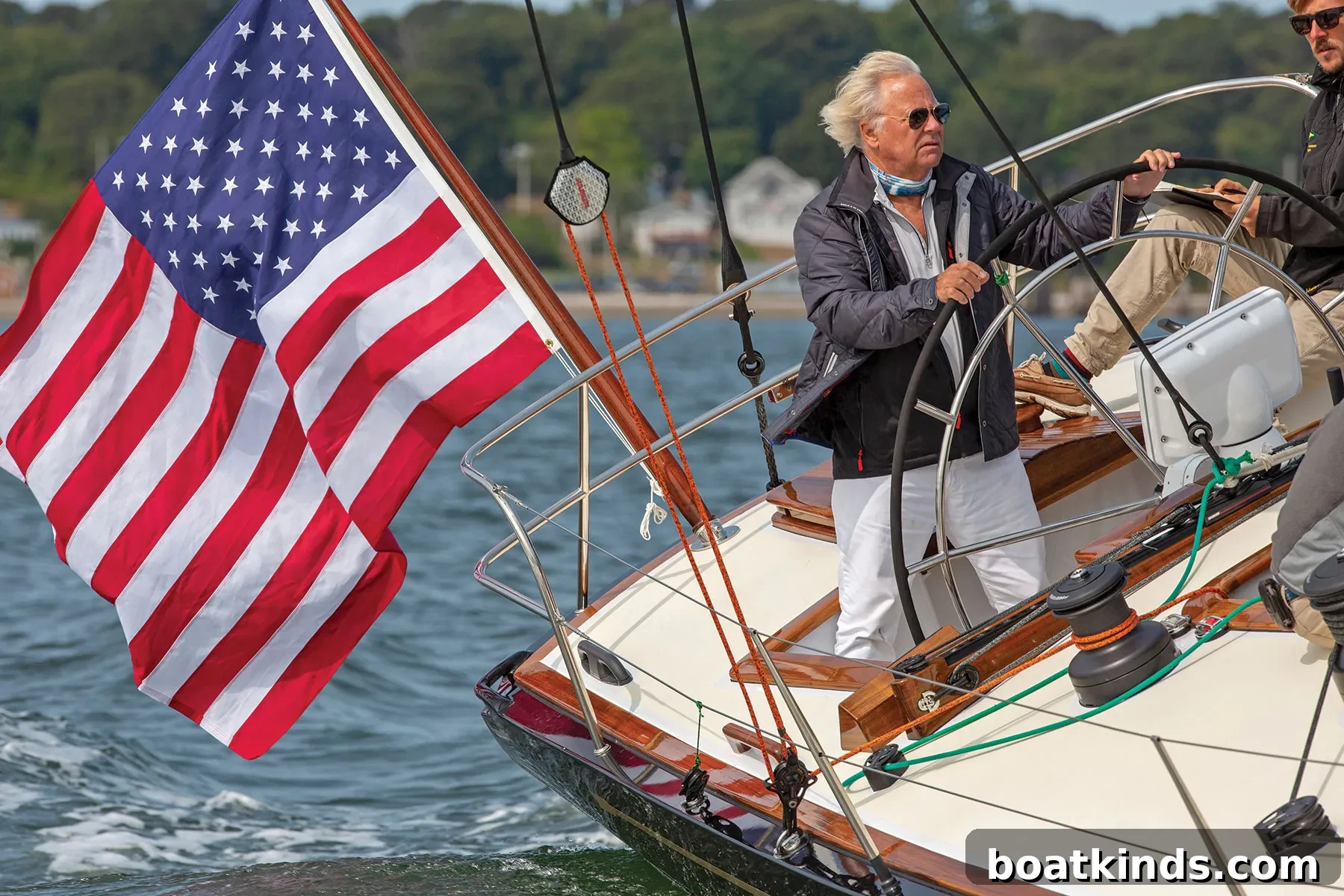
The restoration was thorough. The hull was sandblasted to bare aluminum, the interior was removed and rebuilt from scratch, and sections of the aluminum hull were replated where necessary. The keel from 1987 was retained, and much of what you see today has been rebuilt, though the stainless steel Destroyer wheel at the helm is original. Sharkey describes the project as one of the most significant restorations the yard has undertaken, a job that brought together specialists in aluminum boatbuilding, joinery, woodworking, composites, and glasswork.
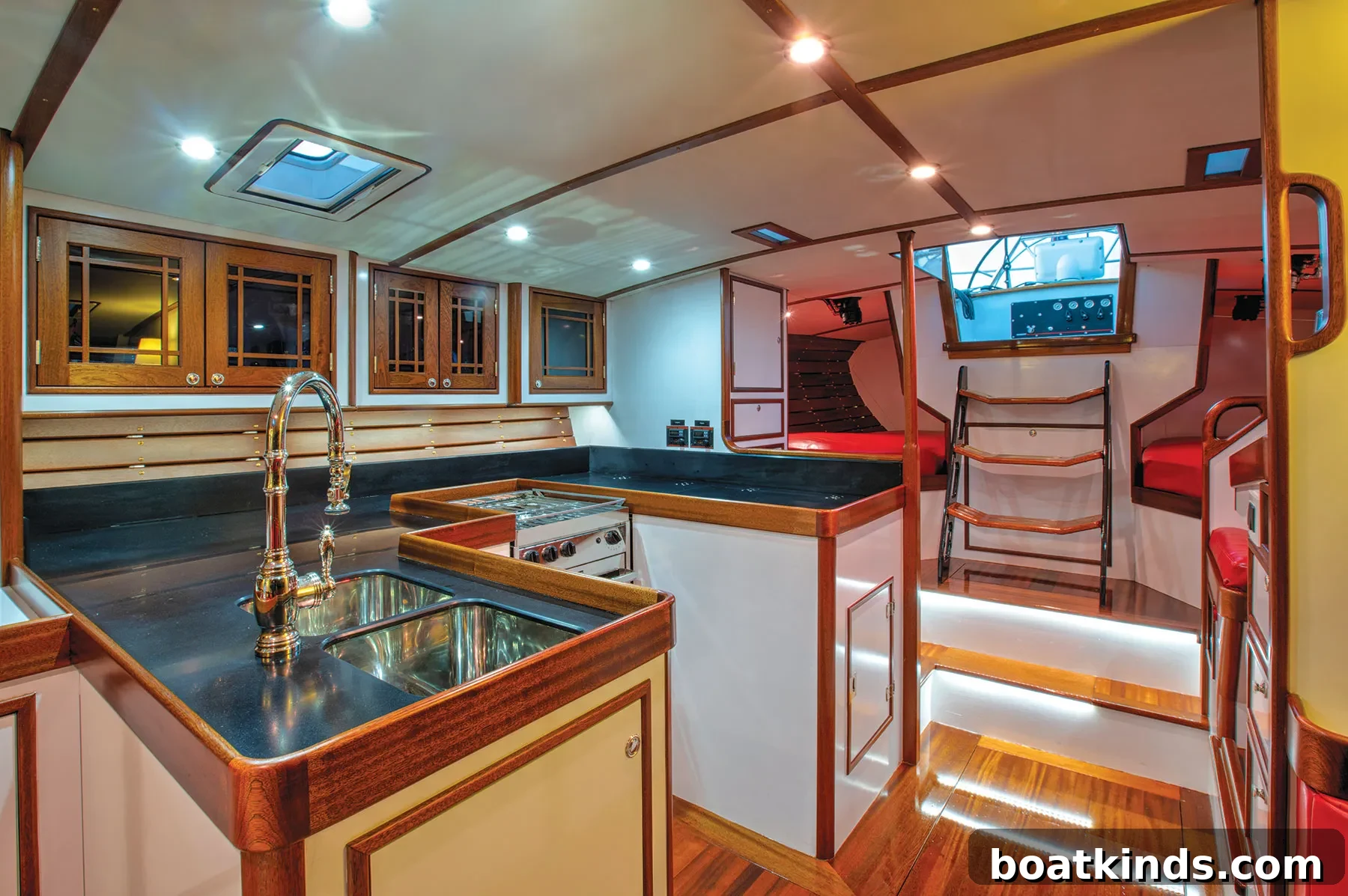
Visually, Running Tide looks much like she always has, though cleaner and updated in performance areas. The refit added electric winches and replaced the old aluminum mast with a carbon fiber spar to save weight and improve performance. “It’s so great now, I don’t want to take it out and scratch it,” Beau says. “It’s painted exactly the same. The gauges are all in the same places. The hatches are all in the same places. It’s shinier and prettier, and the teak on deck is varnished, but it’s really polished up.”
Belowdecks the upgrades support comfort and practical use without undermining racing goals. MarinAire air conditioning was installed but configured to run on house batteries that are recharged by alternators driven by the diesel engine—there is no generator aboard in order to save weight. A water-jet bow thruster was added to simplify docking, a Tecma electric toilet replaced the old manual head, and a Lumishore LUX lighting system was installed with help from Imtra. The lighting can reproduce a classic soft white glow or vibrant colored effects, and it also adds safety functions: red night-vision lighting in the cockpit and passageways allows crew to move about at night without blinding lights.
John McCabe, Technical Sales Manager at Safe Harbor New England Boatworks, says the yard plans to continue fine-tuning the yacht with minor modifications over the coming winter to prepare for future racing seasons. “We take pride in our work, and this is a perfect example,” he says. “It shows why people come to us—for boatbuilding roots and the ability to do more than paint a hull. We can nurture a yacht back to better condition than before.”
Beau appreciates how personally invested the yard became in the project. “When we finally got the boat in the water, I said, ‘He’s never going to give me the keys to this thing and let me take it home,’” he laughs of Sharkey’s attachment. Sharkey, in turn, notes the pride the shipyard feels in the boat’s restoration. Although the transom may say Annapolis as her home port, many at New England Boatworks feel Running Tide belongs to their yard—an emblem of craftsmanship and a vessel they’re proud to have restored.
This article was originally published in the October 2021 issue.