
Smart Connectivity for Modern Boaters: How to Stay Online at Sea
Today’s boaters expect reliable internet and communications whether they’re docked, cruising offshore or anchored in a remote cove. From streaming and video calling to cloud file access and remote work, people want the same connectivity on their boats that they have on land. That demand has only grown since the Covid-19 pandemic, as more couples and families choose to extend time aboard and combine work, leisure and travel.
Robert Kinney, owner of Alcom Marine Electronics in California since 1993, has watched that shift firsthand. What began decades ago as modest electronics packages has evolved into comprehensive systems for owners who want near-continuous connectivity. Kinney notes that a quarter-century ago buyers might invest tens of thousands of dollars; today many consumers expect far more feature-rich systems, sometimes approaching six-figure totals.
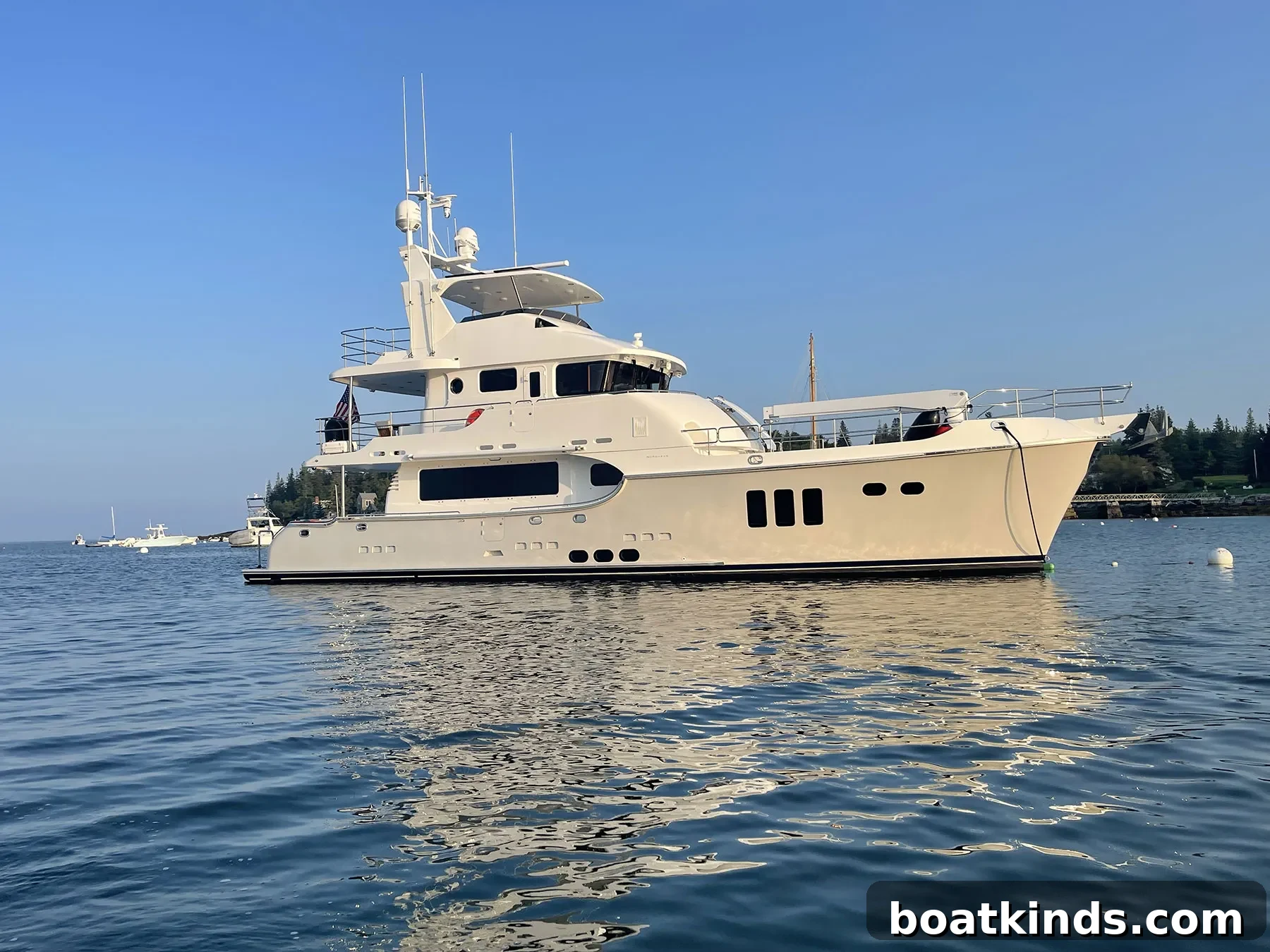
One recent example is the Nordhavn 68 Sunday Morning, where Kinney worked with owners Van and Tracy Anderson to design a flexible, multi-layered communications system. The Andersons had previously cruised aboard a Nordhavn 55 for nearly two years across the United States, Mexico and Central America. During that time Van Anderson realized how important constant connectivity is—not only for his daily meetings, but for safety, monitoring and emergency communication.
Rather than relying on a single cellular modem, Sunday Morning’s setup was built to use the best available link at any given time: cellular, marina Wi‑Fi, or satellite. Kinney explains that adding satellite changes the cost profile significantly—the hardware alone starts around $15,000—so each owner’s priorities and budget define the final design. What was once common only on 100‑ to 130‑foot yachts is increasingly being specified for midrange cruising boats as expectations rise.
Owners often follow a pattern: they see a well-equipped boat, want that setup plus some newer features, and the next owner raises the bar again. Kinney calls that a snowball effect—each generation of buyers pushes the technology envelope, and integrators must design systems that are adaptable and serviceable for future upgrades.
Choosing the right equipment starts with the real-world needs of the owner. Kinney asks practical questions: Do you need to download large files while far offshore, or is reliable voice and low‑bandwidth data sufficient? Do you require remote access to cameras and onboard sensor systems? The answers guide whether a system should be compact or robust—“a nuclear power plant” versus “a Bunsen burner,” as Kinney puts it.
The Andersons applied several bandwidth-management strategies. For satellite use, they opted for a KVH plan that provides unlimited low‑bandwidth access with a limited allotment of high‑speed data. To avoid excessive satellite charges, Van changed email settings so only headers download initially; he then chooses which full messages or attachments to retrieve. That approach helps control costs and ensures essential communications arrive promptly.
File management is another key consideration. The Andersons use Microsoft OneDrive to access documents across devices, but they plan ahead which files remain on a local machine and which stay in the cloud. Without that planning, a folder of large documents offshore can take hours to download and quickly become expensive.
When selecting hardware, Van looks for future-proof features like 5G support, depending on price and coverage. He pairs a SureCall cell-signal booster with a Poynting antenna to extend cellular reach in many areas. Trial and error has helped him map where that combination works best, but the improvements are noticeable.
For network routing and automatic failover, he favors a Pepwave Max Transit router. The router can prioritize connections—5 GHz Wi‑Fi, 2.4 GHz Wi‑Fi, cellular or satellite—and perform simple DNS checks to detect failures and switch to the next available link. That automatic failover keeps systems online without constant manual intervention.
Beyond work-related connectivity, remote monitoring and security are major benefits. The Andersons run a Maretron monitoring system and multiple cameras, enabling them to monitor batteries, bilges, temperature and other critical systems from shore. With current monitoring and alerting technologies, many common post‑cruise surprises—like returning to a dead battery bank—can be avoided.
Kinney emphasizes that the right installer or systems integrator is as important as the hardware itself. A good integrator understands local coverage variations, service plans, antenna placement and long‑term service needs. Building a reliable system requires a relationship with someone who will support it over time, not just sell and install components.
Well-planned connectivity delivers comfort, safety and productivity on board. Whether an owner needs basic phone and email service or a full suite of high-availability communications, careful planning, the right hardware and bandwidth strategies can make remote living and working at sea practical and secure.
This article was originally published in the February 2022 issue.