
Crossing the Gulf Stream: A Beneteau Swift Trawler 48 Trip from Florida to Bimini
I love boating, but past experiences have made me selective about when I go and who’s in charge. Decades ago an editor sent me 100 miles offshore with two volatile fishermen. When the sharks refused to bite, they got drunk, pulled a .44 magnum and began shooting seagulls feeding on the bait. The return trip in a 32-foot boat across 8-foot seas at full throttle nearly broke my back. I vowed then that I would not step on a boat again unless a level-headed captain was at the helm.
Another early lesson came soon after college, when I left Nantucket without radar or Loran because I felt pressured to be back to work on Monday. I sailed into five hours of thick fog, made no progress, and finally returned to kiss the dock. Since then I refuse to let a calendar or schedule force me into unsafe conditions.
So when I was invited to cross from Florida to Bimini on a set date in March, with an unfamiliar captain and a fixed schedule, I hesitated. Local boaters warned me March can be a rough month to cross the Gulf Stream: winter northerlies meeting the Stream’s current can create uncomfortable, even dangerous conditions. But the trip details eased my concerns. A professional captain, James Marshall of Reliable Yacht Deliveries, would command a Beneteau Swift Trawler 48, and I’d be accompanied by trusted colleagues — Power & Motoryacht Editor Dan Harding and Passagemaker Editor Jeff Moser. We also agreed we would only depart in safe conditions.
Forecasts in the week before departure called for strong northerly winds that were expected to shift south and ease on our day. The night before leaving, Marshall confirmed by email that the wind would veer to the south and that he wouldn’t let us go until speeds fell to a safe level. Departure was set for no earlier than 11 a.m.; when someone suggested 8 a.m. to maximize time in Bimini, Marshall insisted we would not depart before noon.
The next morning we met at Marina Dania, stowed gear in the forward cabin of the Swift Trawler and familiarized ourselves with Beneteau’s latest model. A 1989 Formula 242 SS owned by Beneteau America Powerboat Manager Justin Joyner and his family would accompany us as a photo boat; Justin, his father John and brother Jonathan planned to follow once they sorted a mechanical issue on the Formula.
We topped off the Swift’s tanks with 142 gallons of diesel and pushed down the Stranahan River. The wind had begun veering south but still blew 20–25 knots with 4–5-foot seas. The Beneteau handled the conditions well, but spray reached the flybridge and cockpit. The ride was manageable but slow; Marshall elected to turn back after about 25 minutes because our late start meant we couldn’t safely reach Bimini’s channel before dark. Returning to Marina Dania, we watched the Joyners test their alternator on the Formula and agreed that crossing in those conditions would have been unwise.
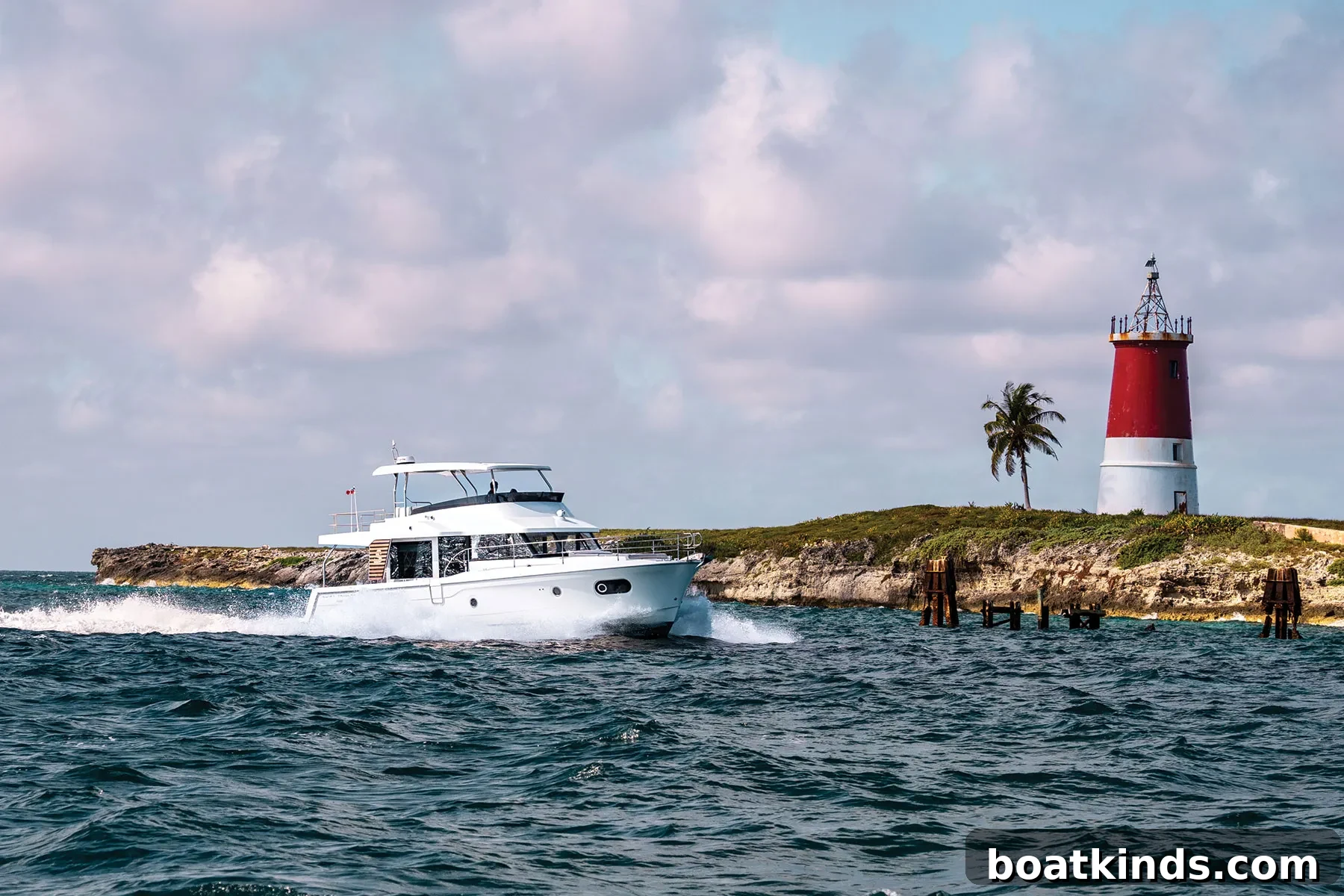
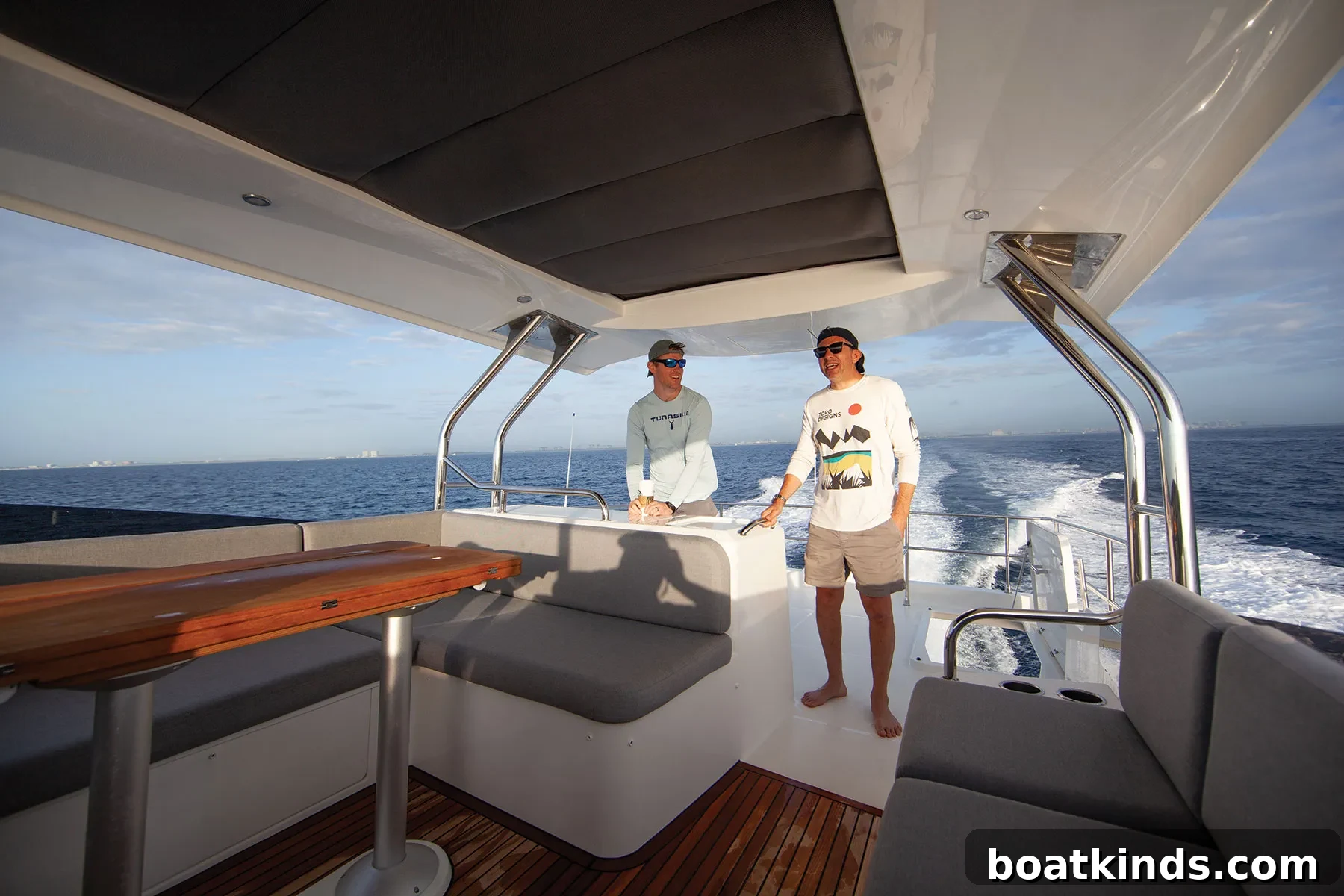
Early the next morning conditions had improved. With 15 knots from the southeast and 2–3-foot seas, the Swift Trawler and the Formula crossed the Gulf Stream at 20 knots. Harding, Moser and I kept the flybridge while Marshall piloted from below, watching our progress on dual Raymarine multifunction displays. The Swift’s optional hardtop let us enjoy the sun and breeze while the Joyners bashed through seas on the Formula, at times launching clear off waves in a spray of salt.
At 28,000 pounds the Swift didn’t leap waves like the lighter Formula, but it offered comfortable seating and abundant space across flybridge, cabin and cockpit for the seven onboard. At a 20-knot cruise the Swift Trawler 48’s semi-displacement hull reduced a traditional eight-hour displacement run to roughly three hours. Beneteau advertises a 1,000-mile range at 8 knots with the standard twin 380-hp Cummins QSB6.7 diesels; our boat had optional 425-hp engines. With a 3-foot-10-inch draft, the Swift 48 makes the shallow Bahamas waters an appealing destination.
Beneteau created the 48 by combining the proven hull of the Swift Trawler 47 with the layout of the Swift 41. The 48 replaces the 47 and swaps the center lower helm and forward galley for a starboard lower helm and a large aft galley. That layout supports a roomy C-shaped settee forward of the galley and better social interaction between passengers and the captain. A sliding side door provides quick access to the starboard sidedeck and bow. The asymmetrical layout gives the starboard deck extra width, but both sides are easily navigable. High bulwarks, solid handrails and substantial stainless- and teakwork — notably the elegant ladder to the flybridge — contribute to a secure and refined feel.
Like the 47, the 48 offers three cabins and two heads, plus a salon settee that converts to a double berth with a privacy curtain. Less than three hours after departing Florida we slipped into the Bahamas’ clear turquoise water. Marshall’s decision to turn us back the previous day proved wise: Bimini’s channel markers aren’t lit, and outdated charting meant a GPS-only approach at night could have routed us into a shoal. Marshall later noted that a navigator who relies solely on GPS and charts could easily run aground.
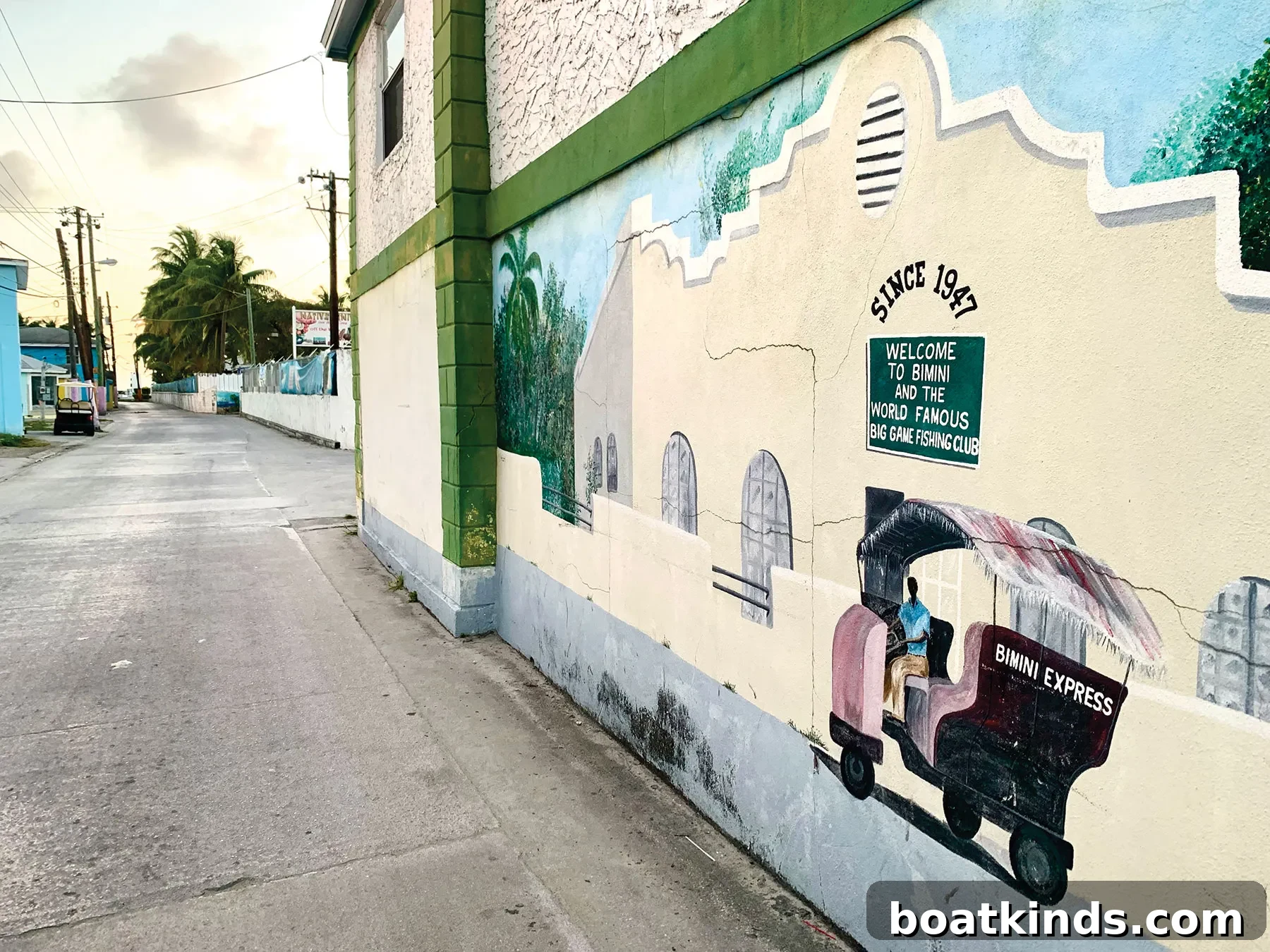
We docked at the Bimini Big Game Club and completed Bahamian customs. The pre-entry online paperwork and Covid procedures were cumbersome; even though we had all pre-submitted our information and test results, it took Marshall two hours and a demonstration of our paperwork on his computer to get clearance. Once processed, we checked into the Big Game Club, a place with echoes of the island’s storied past.
Hemingway visited Bimini in 1935 to fish and wrote about it for Esquire, later setting the opening act of his novel Islands in the Stream on the island. Dr. Martin Luther King Jr. retreated to Bimini in the 1960s, where he wrote his Nobel Prize acceptance speech and later the “Mountain Top” address. A plaque at the Big Game Club commemorates King’s visit and guests still ask after the room he occupied.
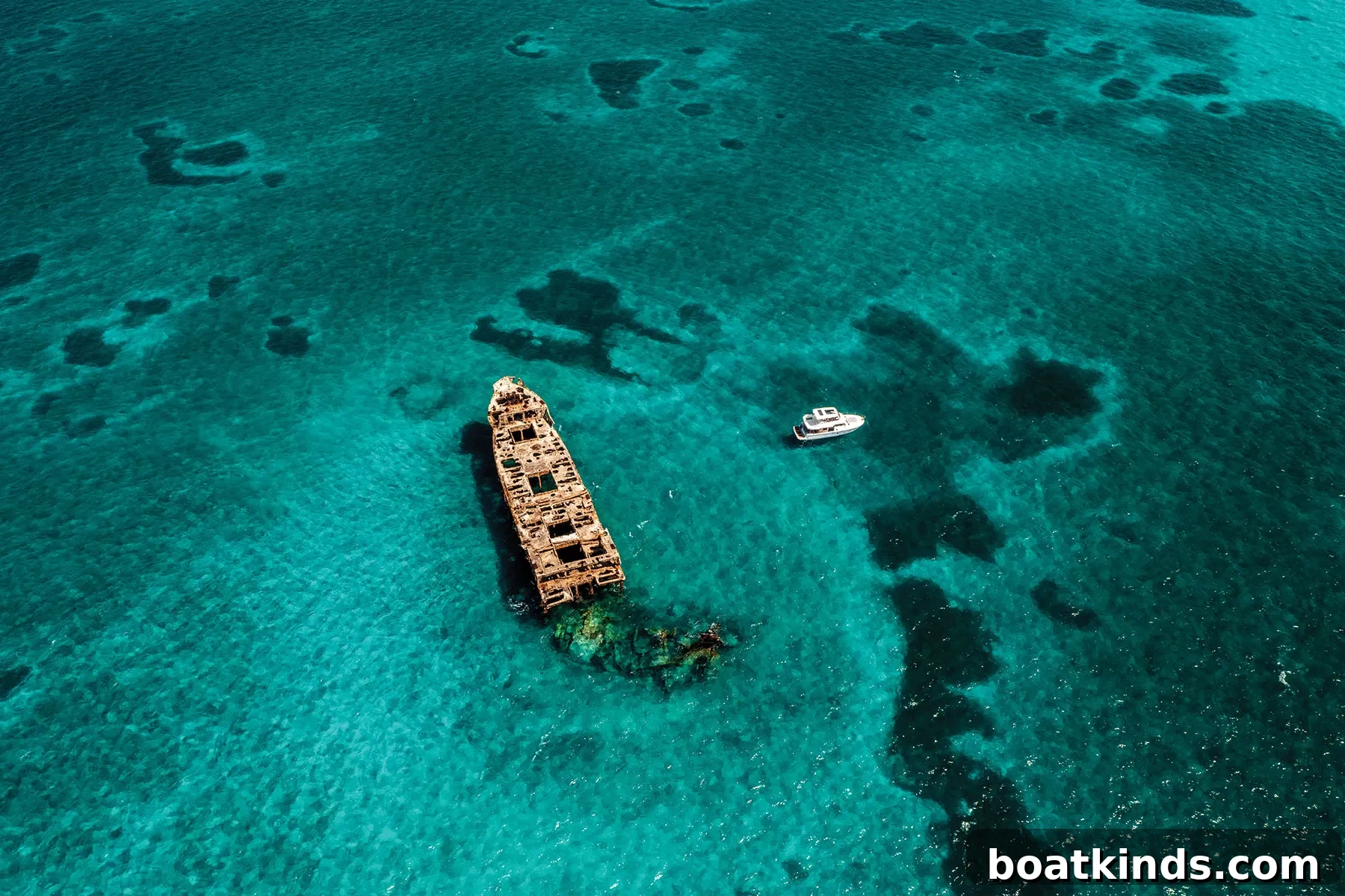
After lunch we ran 10 miles south to Gun Cay for a photo shoot. Bimini is a chain of islands rather than a single landmass: most residents live on North Bimini, and South Bimini hosts the airport. Settled in the mid-19th century by wreckers, the islands later supported fishing, sponging and agriculture. Today Bimini attracts anglers, divers, beachgoers and tourists who come to see stingrays — which we enjoyed at Gun Cay — as well as the island’s history and natural beauty.
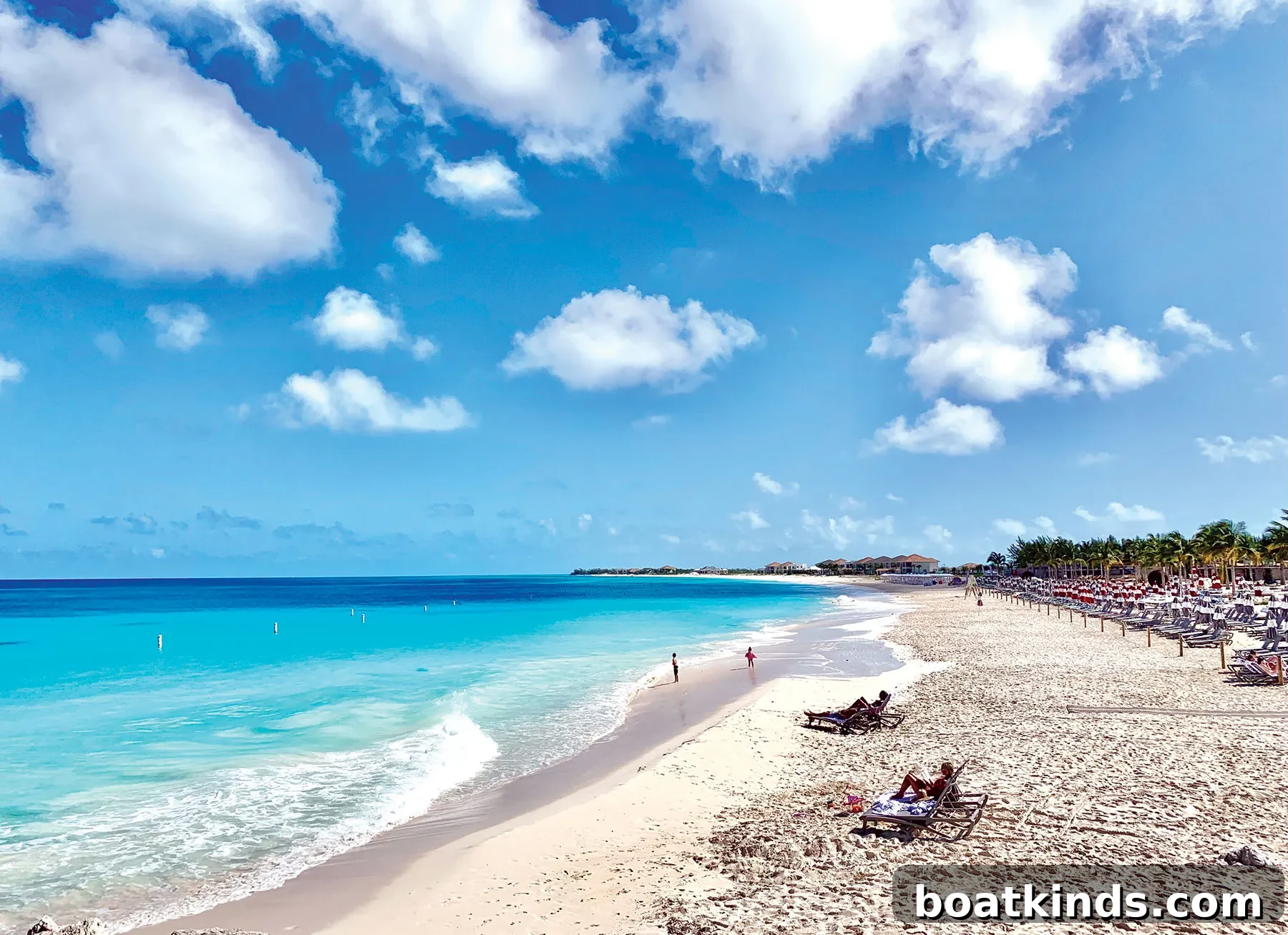
The next morning we returned to the Big Game Club, underwent Covid testing, rented a golf cart and toured the island on its narrow roads. The island’s contrast struck me: pockets of well-kept resort development sat beside neighborhoods of dilapidated homes, derelict boats and discarded golf carts. Resorts World Bimini stood out with manicured lawns, a Hilton hotel, casino and a polished beach area that felt worlds apart from the more weathered parts of the island.
Two hours later we were at the airport headed back to the United States. The trip reinforced a few simple truths: crossing the Gulf Stream in March is possible under the right conditions, but it’s safer with a skilled captain, patience and a capable boat. With Capt. James Marshall’s cautious judgment and the Beneteau Swift Trawler 48’s range and comfort, all three were on our side.
This article was originally published in the June 2022 issue.