East Coast Boaters Push Back Against NOAA Proposal to Expand Right Whale Speed-Restriction Zones
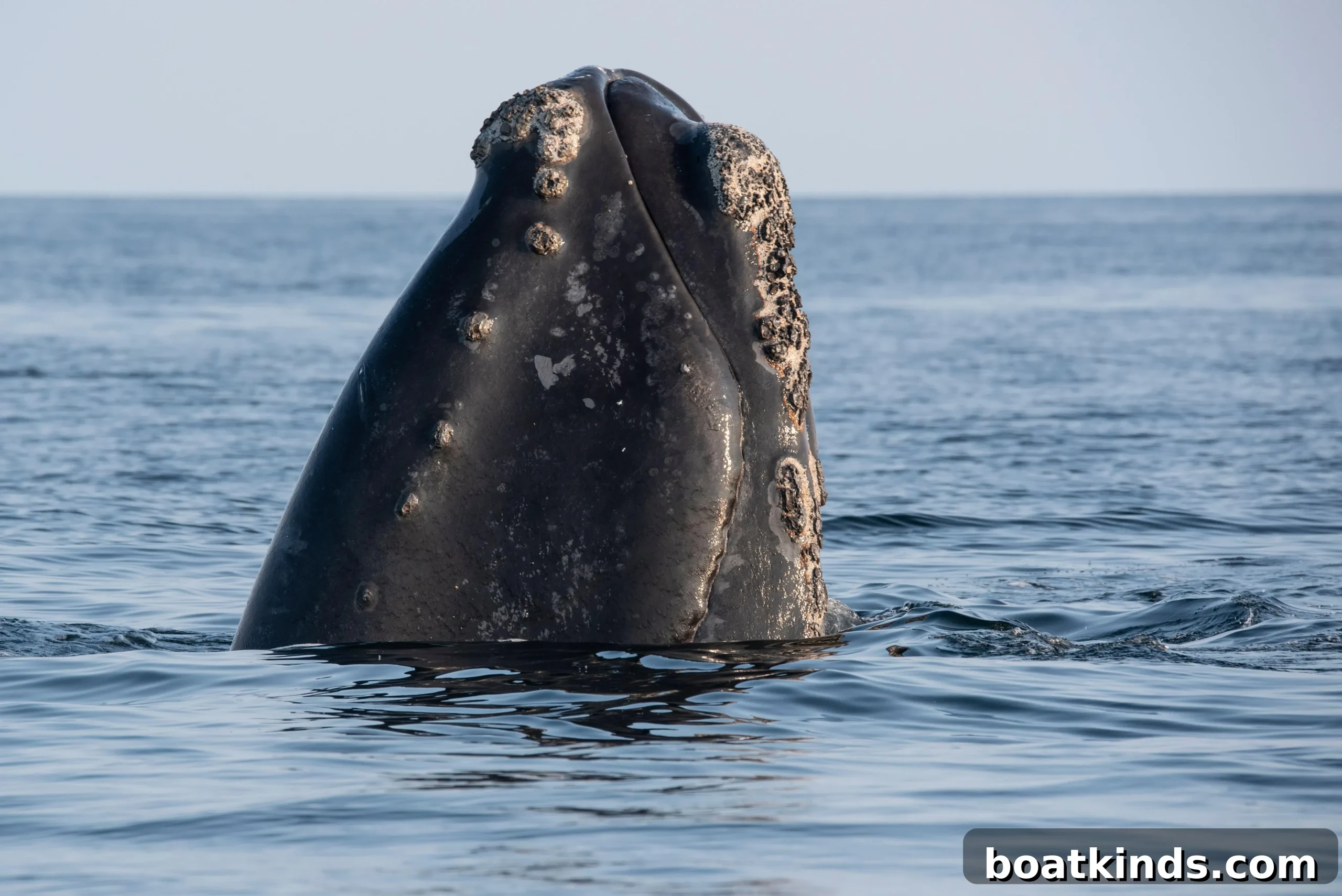
Boat owners up and down the U.S. East Coast — including skippers of vessels as small as 35 feet — are criticizing a proposed revision from NOAA Fisheries that would greatly expand the areas where speed limits are imposed to protect endangered North Atlantic right whales. The draft rule would require many recreational and commercial boats to slow to 10 knots or less in defined zones during specified months to reduce the risk of vessel strikes.
Industry Reaction: Sudden and Severe
Many captains and industry groups say the proposal came as a surprise and that the revisions were rushed. Capt. Craig Thatcher, who runs the 35-foot Bertram Never Enough out of Beaufort, North Carolina, described the plan as “just stupid,” arguing that mariners already avoid whales and that sudden regulatory changes are poorly thought out. “Fishermen are all talking about this. If you see one of these whales, you just get out of the way unless you want to tear your damn boat up,” he said.
Representatives from national boating organizations echoed that sentiment. Chris Edmonston, vice president of public affairs at BoatUS, said many groups that represent mariners and the recreational industry had no warning of the proposal. A coalition of organizations — including the American Sportfishing Association, the Guy Harvey Ocean Foundation and the National Marine Manufacturers Association — wrote to NOAA Fisheries in August to raise concerns about what they called a “complete lack of coordination with affected industries.” The letter warned that thousands of recreational vessels, marinas and tackle shops could be affected.
Scope of the Proposal
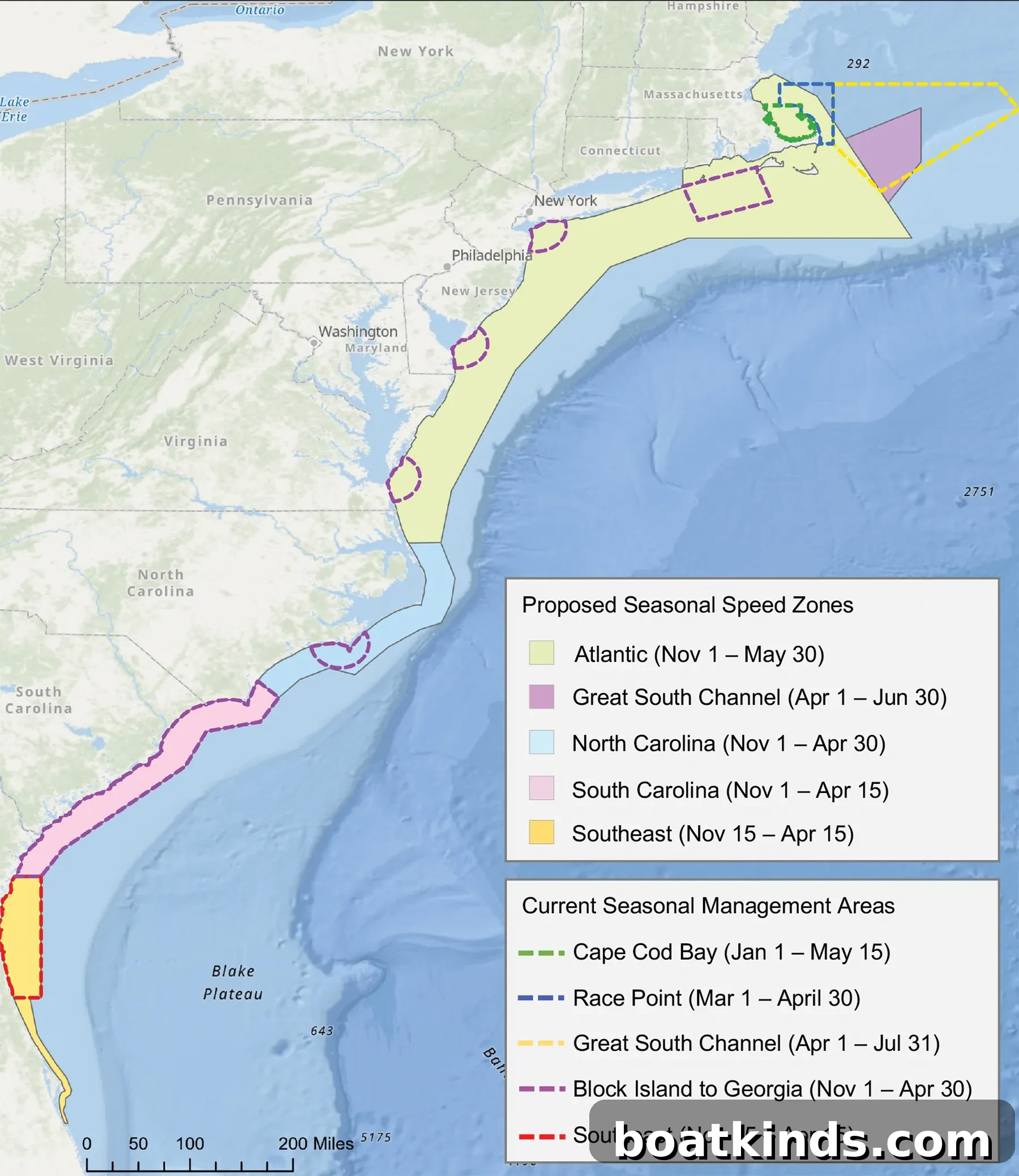
NOAA Fisheries formally published the proposed revision to the Right Whale Vessel Strike Reduction Rule in the Federal Register on August 1. Officials say the change continues a process that began with an assessment of the prior rule’s effectiveness in January 2021. The proposed rule would expand slow-speed areas dramatically, in some cases extending restrictions dozens of miles offshore where they were not previously in effect.
Under the draft rule, speed-restriction regions would operate seasonally: November 1 to May 30 in a broad Atlantic Zone reaching as far north as Massachusetts; April 1 to June 30 in the Great South Channel Zone; November 1 to April 30 in the North Carolina Zone; November 1 to April 15 in the South Carolina Zone; and November 15 to April 15 in a Southeast Zone that includes parts of Florida.
Who Would Be Affected
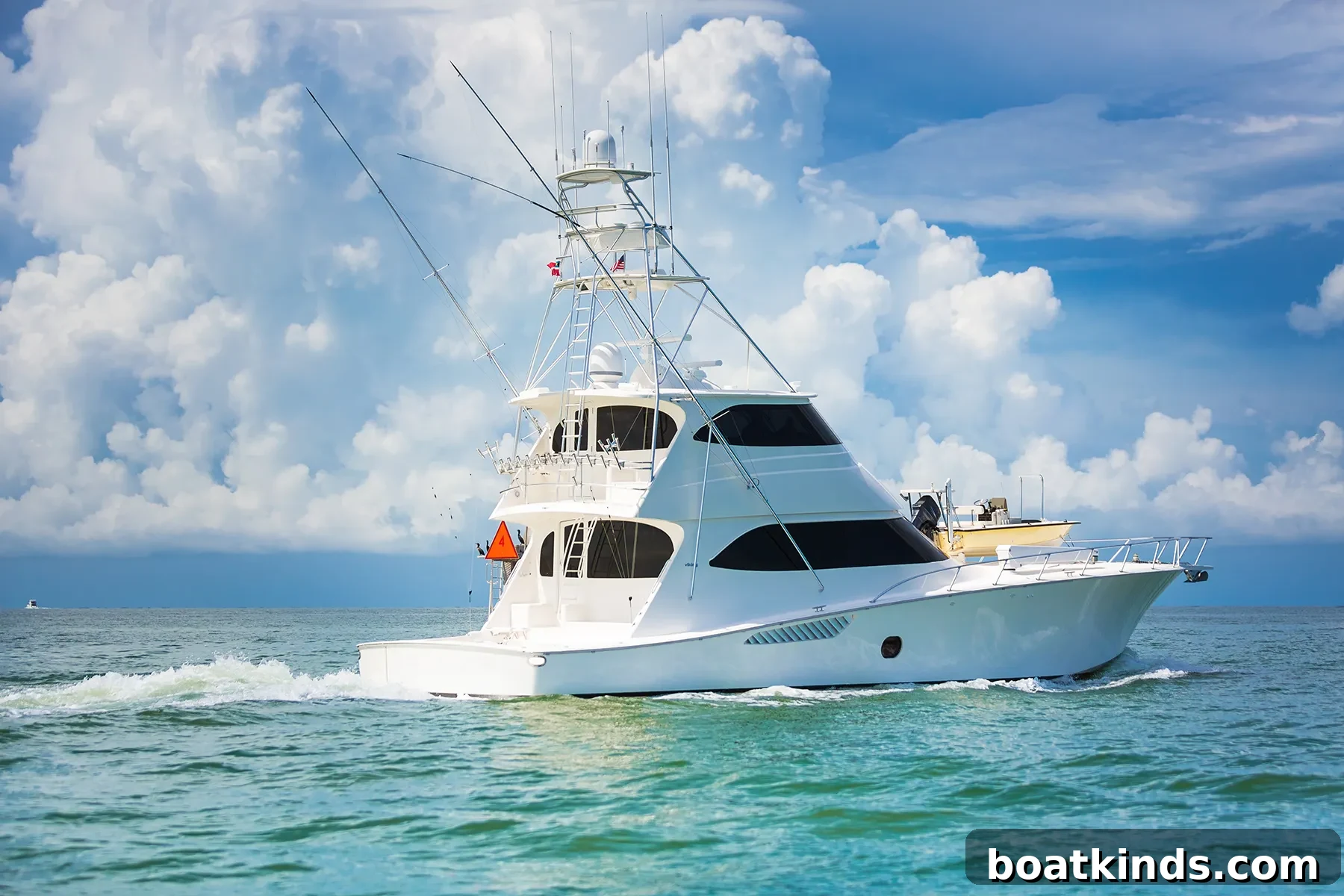
Previously, the rule applied only to larger vessels, generally excluding boats under 65 feet. The proposed change would require power and sailboats between 35 and 65 feet to reduce speed to 10 knots or less within the designated zones, unless a vessel is reacting to an immediate threat to human life or safety, or operating under an official National Weather Service warning for gale-force winds or greater. Operators who exceed 10 knots without an eligible exception would be required to file a report within 48 hours explaining their reasons for doing so.
NOAA’s Rationale
NOAA Fisheries says the expanded measures are necessary because the North Atlantic right whale population is critically low. The agency reports fewer than 350 individuals remain, including under 100 reproductively active females. NOAA officials argue that when mortality or serious injury averages as little as one animal per year caused by human activity, the species cannot recover.
Caroline Good, a marine mammal ecologist with NOAA Fisheries’ Office of Protected Resources, explained that strikes are not confined to a single hotspot or a short season. “We have a problem that is coastwide and covers large swaths of the year,” she said, noting that documented vessel collisions involving vessels under 65 feet demonstrate that smaller boats can pose significant risks.
Enforcement and Compliance Concerns
NOAA’s Office of Law Enforcement could use patrols, electronic vessel monitoring and investigations to ensure compliance, the agency said. That raised alarm among some mariners who worry the agency may increasingly rely on Automatic Identification System (AIS) tracking. “We are concerned that they’re going to use AIS to track violations,” Edmonston said. “We think that will suppress the use of AIS systems — people will just turn them off.”
Economic and Operational Impacts
Many charter captains and commercial operators say slowing to 10 knots would make long trips to productive fishing grounds impractical, threatening livelihoods. Capt. Thatcher described typical runs of 40 miles at speeds of 18 to 20 knots to reach fishing areas off North Carolina; cutting speed nearly in half, he argued, would leave little time for fishing and undermine charter operations. “Who’s going to pay me to take them on a 10-hour boat ride?” he asked.
Other mariners emphasized their cautious practices. Capt. Robert Bogan, who runs the 90-foot charter boat Gambler out of Point Pleasant, New Jersey, said his family’s raised pilothouse and experience help them avoid whales, and that they maintain large distances when whales are sighted. Longtime angler Scott Starratt noted he has seen right whales only once in 47 years of offshore fishing and questioned the practical effect of broad closures.
Scientific and Policy Debate
Critics argue that the main conservation problem is low reproduction rates rather than vessel strikes alone, and question whether broad speed reductions are the most effective use of resources. Bruce Pohlot of the International Game Fish Association acknowledged the need to act for whale recovery but said the evidence provided by NOAA raises new questions and that alternative approaches — such as improved whale tracking — merit consideration.
NOAA officials maintain that every vessel strike, even infrequent events, accumulates to depress the population and impede recovery. “It’s a very challenging problem because these events occur infrequently, but the totality of these events is just hammering this population,” Good said.
Public Comment and Next Steps
By early September, the proposed rule had attracted more than 1,200 public comments. Boating and fishing organizations have requested additional time to respond, and NOAA Fisheries extended the public comment period to October 31. Industry groups and some manufacturers have started outreach to inform boat owners about the proposal and how to submit comments through the Federal eRulemaking Portal.
Edmonston summarized the industry stance: “This is a monumental extension of a closure area. It’s in everybody’s best interest to protect the environment. We just think there are more viable ways of addressing this issue than shutting off the entire East Coast.”
This article was originally published in the November 2022 issue.