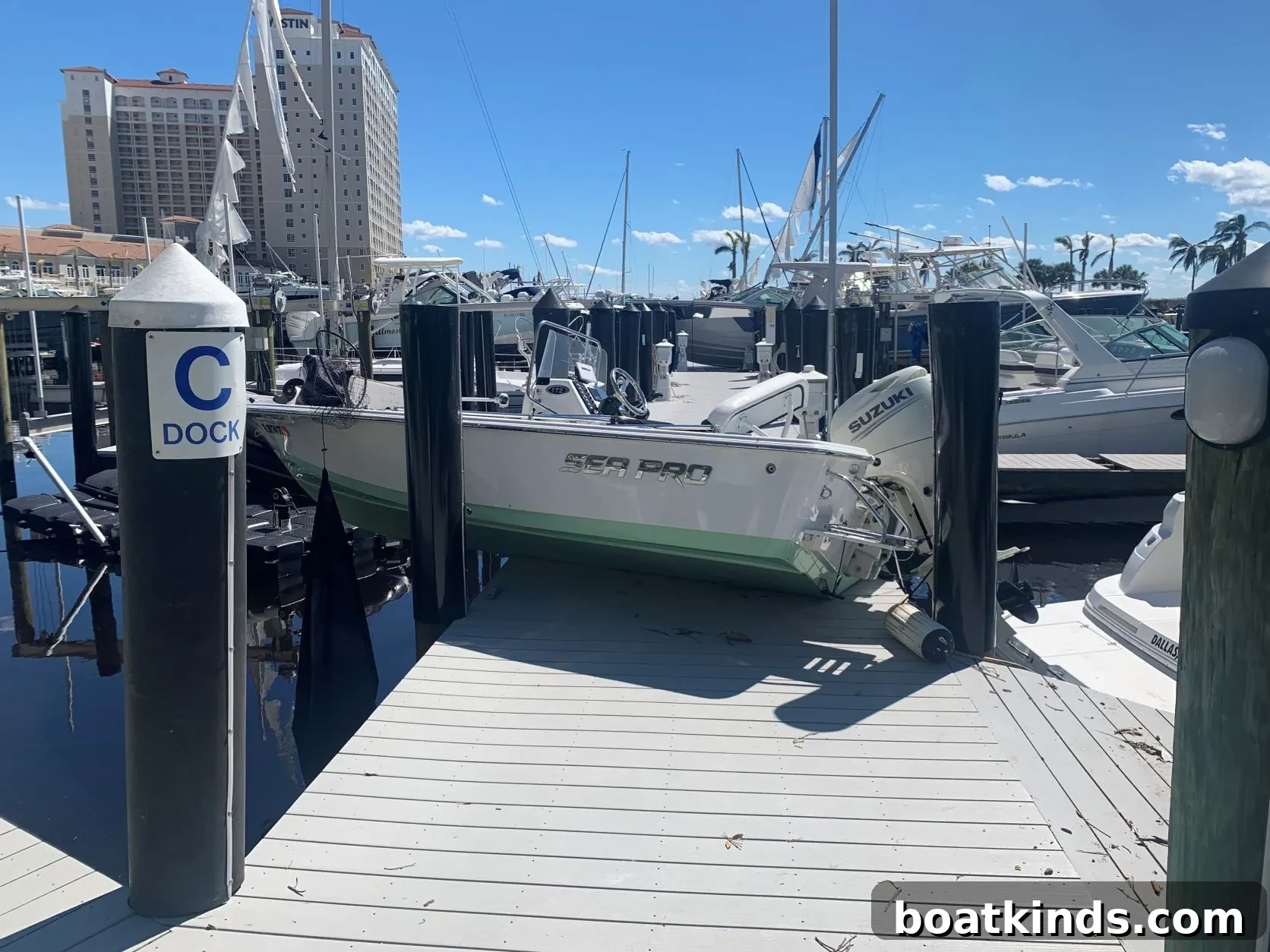
After a hurricane, recovering a damaged vessel requires careful planning, documentation, and a focus on safety. The Boat Owners Association of The United States (BoatUS) provides five practical tips to begin the post-hurricane salvage process. These guidelines help boat owners protect property, reduce further damage, and preserve insurance coverage during recovery.
1. Obtain permission and prioritize safety
Never attempt to access a marina, boatyard, or storage facility that has been affected by a storm without explicit permission from the facility owner or local authorities. These locations can be extremely hazardous after a hurricane: spilled fuel, downed electrical wires, unstable docks, and submerged hazards pose serious risks. Carry proof of ownership and identification, and observe any posted warnings or closures. Avoid smoking or creating any ignition sources near fuel or debris. Do not attempt to climb on boats that are piled together, hanging from pilings, or otherwise unstable. If in doubt, wait for professional guidance from marina staff, emergency responders, or licensed salvage professionals.
2. Remove, secure, and document valuables
As soon as it is safe to do so, remove electronics, documents, personal items, navigation equipment, and any other valuables from the vessel. Place removed items in a secure, dry location to protect them from looters, vandals, or further weather events. Photograph and inventory every item you remove and everything left on board—take multiple photos showing serial numbers, hull identification numbers, and overall condition. Mark the boat clearly with your name, phone number, and a contact email, and consider placing a visible “No Trespassing” sign. Good documentation will support insurance claims and help recovery efforts.
3. Minimize further damage and guard against mold
Take steps to prevent additional harm while awaiting repairs. Cover exposed areas with tarps, board up broken windows and hatches, and secure loose lines and canvas. Remove wet cushions, bedding, carpet, and other absorbent materials—these should be retained for potential insurance inspection but moved to a dry, ventilated area as quickly as possible. Begin the drying process using sunshine, air movers, dehumidifiers, or electric fans when power is available. Time is critical: mold and mildew can begin developing within 24–48 hours in warm, wet conditions. Keep a log of drying efforts, dates, and any expenses associated with temporary protection or cleanup.
4. Preserve wet machinery: basic steps and professional inspection
Engines and onboard machinery exposed to saltwater or floodwater require immediate attention to prevent long-term damage. As a general precaution, do not attempt to start any engine that has been submerged or heavily soaked. A common preservation approach is to flush affected systems with fresh water and then protect internal components using appropriate protective fluids, but exact procedures vary by engine type and manufacturer. Consult your owner’s manual and a qualified marine mechanic before attempting repairs. Keep records of any preservation steps taken and any fluids or materials used. Plan for a thorough inspection, fluid changes, and professional servicing before placing the vessel back in operation.
5. Coordinate with your insurance company before signing salvage contracts
If your boat must be removed by a salvage or wreck-removal company, contact your insurance provider before signing any contracts. BoatUS and many insurers advise owners not to sign salvage or removal agreements without insurer approval because acting without authorization can jeopardize coverage or complicate claims. Notify your insurer promptly, provide full documentation and photos, and keep receipts for any emergency actions you take. When dealing with salvage firms, request written estimates, proof of appropriate licenses and insurance, references, and a clear description of environmental containment and disposal measures. If possible, obtain multiple quotes and keep all communications in writing.
Post-hurricane boat recovery involves balancing immediate protective actions with careful documentation and professional guidance. Prioritize safety, secure valuables, limit further damage, protect machinery, and keep your insurer informed. For more detailed guidance and authoritative resources on post-hurricane salvage and recovery, consult BoatUS resources and a licensed marine mechanic or salvage professional when planning repairs and recovery actions.