
All-Female Team Aims to Break Jules Verne Trophy Record Aboard 100-foot Ultime Trimaran IDEC sport
The Jules Verne Trophy rewards the fastest non-stop circumnavigation of the world by any type of sailing yacht with a crew of any size. The route begins and ends on an imaginary line linking Le Créac’h Lighthouse on the island of Ouessant (France) and Lizard Point in Cornwall (United Kingdom). The course covers a minimum distance of 21,600 nautical miles and challenges teams with the full range of ocean conditions, from temperate zones into the brutal Southern Ocean and back under changing trade winds and storm systems.
The current record for the Jules Verne Trophy is held by skipper Francis Joyon, who set a time of 40 days, 23 hours, 30 minutes and 30 seconds. Attempts to beat that mark are launched regularly; teams must combine exceptional seamanship, cutting‑edge multihull design and careful weather routing to maintain the very high average speed required to succeed. To surpass Joyon’s time a crew must sustain an average speed in the region of 21.96 knots over the entire route, day and night.
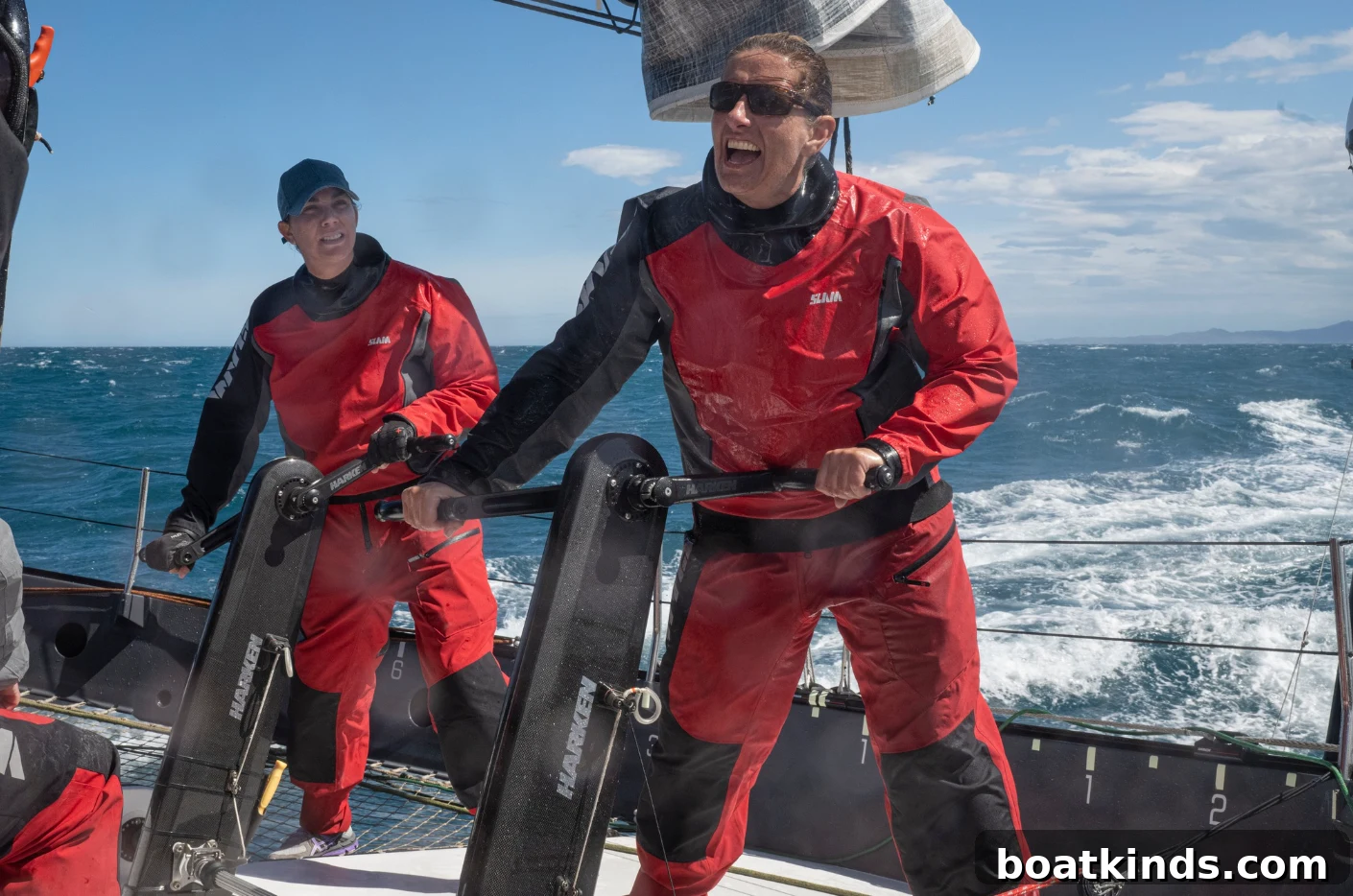
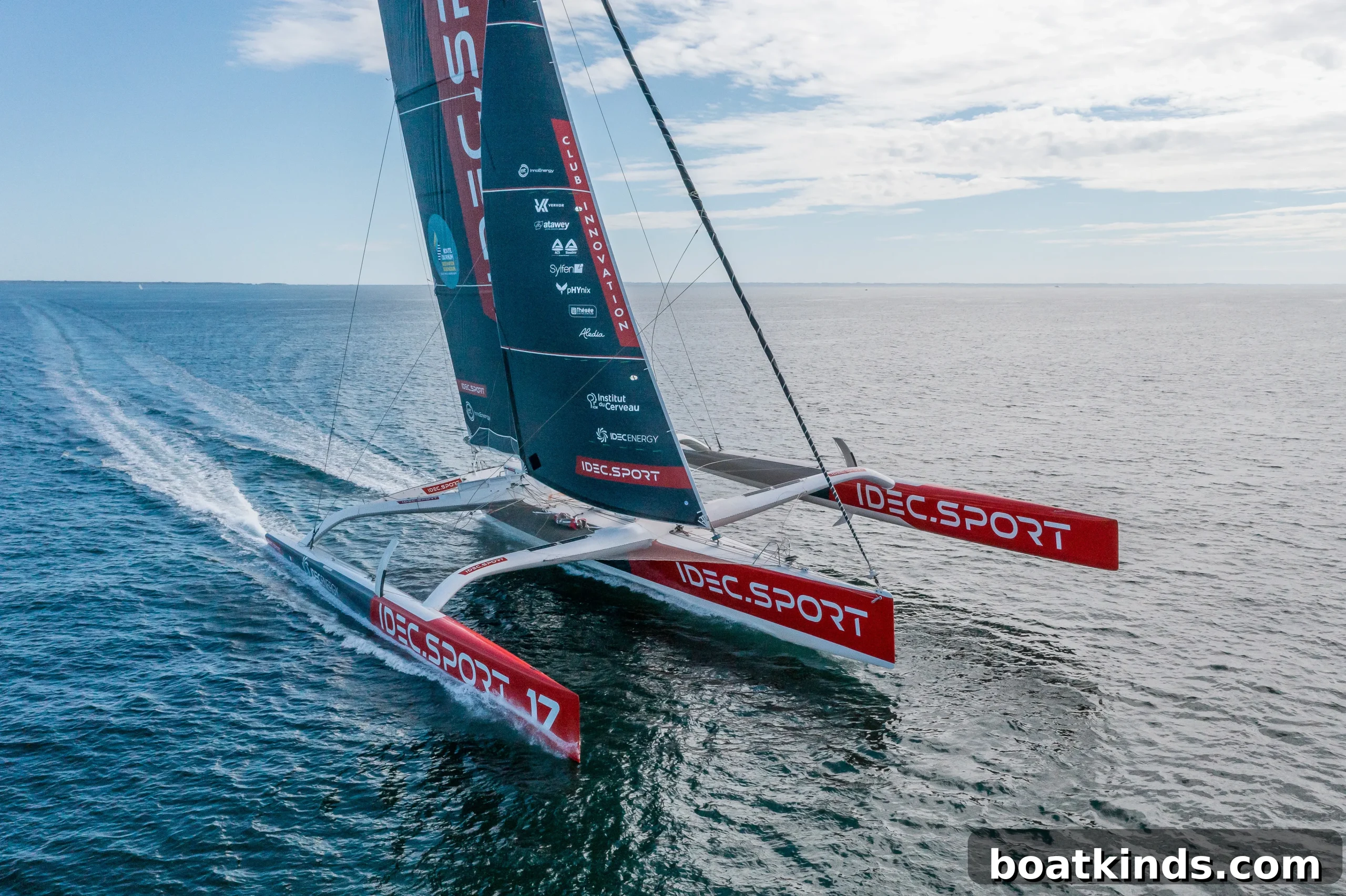
For the first time in the history of the event, an all-female crew has announced an organized attempt to take the Jules Verne Trophy. French skipper Alexia Barrier and British co-skipper Dee Caffari will lead the team aboard the 100-foot Ultime trimaran IDEC sport, with plans to launch their challenge in October 2025. The choice of an Ultime multihull reflects the modern reality of high‑speed round‑the‑world records: these large, powerful trimarans are built for sustained speed across the oceans and can achieve the averages necessary to contest the trophy.
Both Barrier and Caffari bring extensive blue‑water experience. Alexia Barrier has completed the equivalent of ten laps around the world in cumulative offshore miles, finished the solo, non‑stop Vendée Globe and has crossed the Atlantic numerous times. Dee Caffari is one of the most accomplished ocean racers of her generation, having circumnavigated the globe six times and completed solo solo circumnavigations in both directions — a unique achievement among female sailors. Together they combine solo experience, crewed race leadership and the endurance mindset required for a nonstop global push.
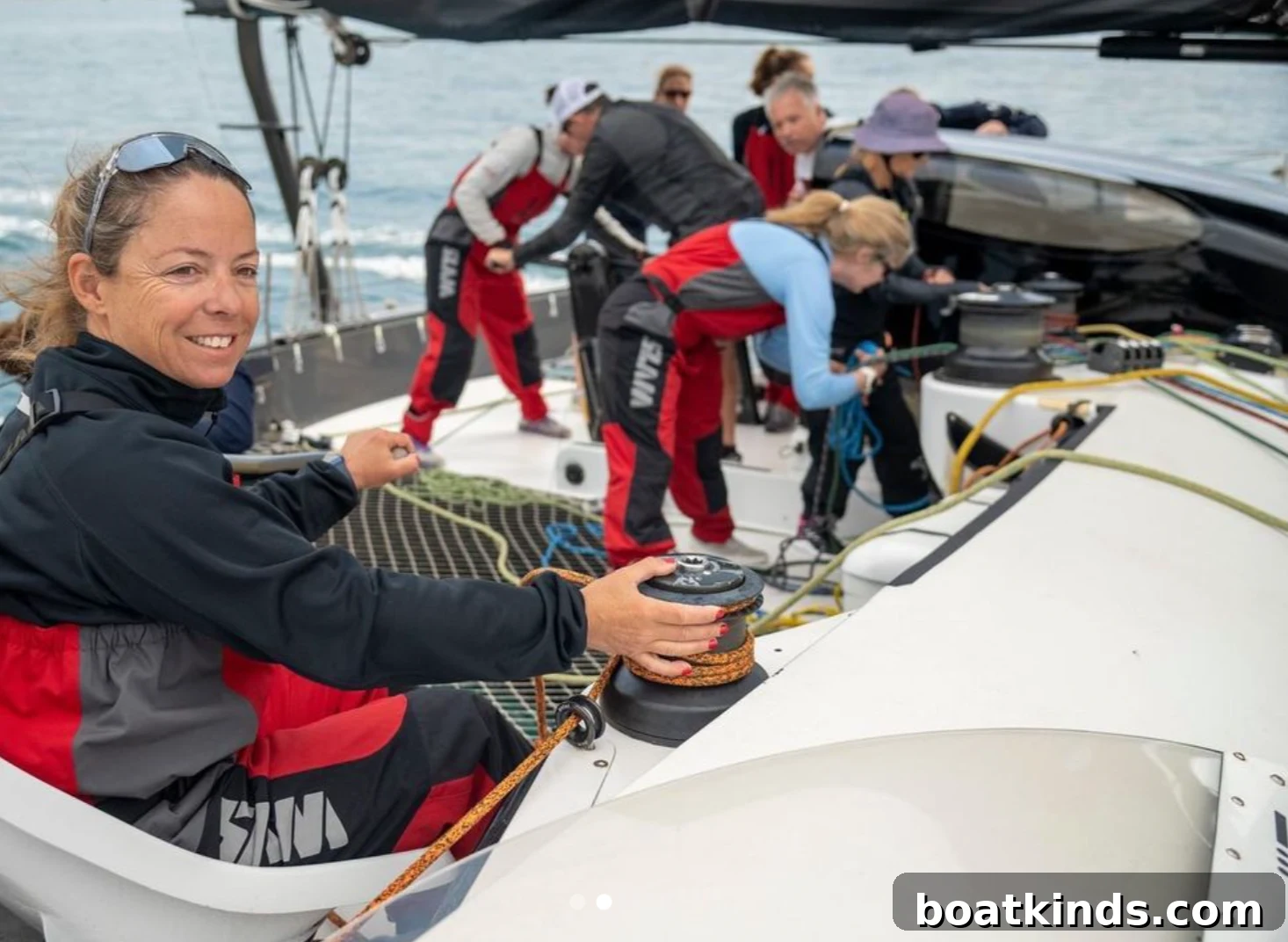
“This project will break down barriers,” Caffari said. “It will be the pinnacle of my career, a special record that few people have achieved or even attempted before. It’s a great sporting challenge, but the project in itself is so much bigger. This is about creating an impact for women all around the world.” The significance of an all‑female challenge goes beyond the stopwatch: it aims to inspire new generations of women to pursue competitive offshore sailing at the highest level.
Preparing for a Jules Verne Trophy attempt requires meticulous planning. Teams must devise a watch system that balances sleep and performance, maintain complex onboard systems while sailing at high speed, manage sail changes and navigation through volatile weather, and make strategic routing decisions based on real‑time meteorology. In an Ultime multihull, structural integrity and systems monitoring are also essential as the boat operates at the edge of its design limits for extended periods.
Current Crew
• Helena Darvelid (SWE) — Holder of 12 world speed sailing records, bringing unmatched experience in high‑speed sailing and record attempts.
• Sara Hastreiter (USA) — Around‑the‑world sailor and mountain adventurer whose endurance and multi‑discipline experience support the physical and mental demands of long offshore watches.
• Elodie Jane Mettraux (SUI) — A leading multihull specialist with deep technical knowledge of foiling and trimaran performance, vital for extracting speed from IDEC sport.
• Joan Mulloy (IRL) — Offshore solo specialist with proven capability to manage a boat and make critical decisions under pressure during long solo watches.
• Marie Riou (FRA) — The Ocean Race winner, experienced in high‑intensity crewed offshore racing and in systems and sail handling on high‑performance boats.
• Marie Tabarly (FRA) — Skipper of Pen Duick VI, bringing a heritage of oceanic seamanship and leadership on classic and modern multihulls.
The Famous Project, as Alexia Barrier has named the initiative, is positioning itself not only as a sporting effort but also as a cultural and social statement. By aiming to set a new benchmark on one of sailing’s most iconic records, the crew hopes to accelerate visibility for women in high‑performance sailing, expand opportunities for female athletes in offshore racing and demonstrate that elite ocean voyaging is accessible to diverse teams.
Between now and October 2025 the team’s focus will be on boat preparation, physical conditioning, coordinated training, safety drills and strategic weather planning. Success will depend on the cohesion of the watch system, the crew’s ability to keep the multihull sailing fast and intact through extreme conditions, and the capacity to make split‑second tactical calls as the globe’s weather systems unfold. If they achieve their objective, this all‑female crew will make history by claiming one of the fastest and most revered accolades in offshore sailing.