
Piracy Today: Fighting Villainy on the High Seas — Book Review
While fictional pirates in adventure stories are often romanticized as daring and heroic, modern piracy is a serious and dangerous reality. John C. Payne’s book Piracy Today: Fighting Villainy on the High Seas (Sheridan House, Inc., 2010; $29.95) offers a hard-hitting, firsthand look at contemporary pirate attacks and the growing threat they pose to commercial shipping and the lives of seafarers.
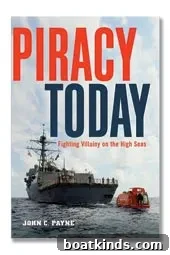
Overview of the Book
Payne’s account is direct and unflinching. He recounts disturbing incidents such as the April 2009 hijacking of the container ship Maersk Alabama by Somali pirates and the subsequent unsuccessful attempt later that year. These episodes serve as clear examples of how modern pirates operate: heavily armed, opportunistic, and willing to use extreme violence to seize vessels and hold crew for ransom.
What Makes This Threat So Dangerous?
The book explains that contemporary pirates exploit gaps in international law, inconsistent enforcement, and commercial pressures that leave many merchant vessels under-crewed and insufficiently protected. Payne documents how attackers are frequently equipped with automatic rifles like the AK-47 and with small rocket-propelled weapons, enabling them to intimidate and overpower ships that lack adequate defenses. He highlights how a mix of legal complexity, limited regional resources, and the sheer vastness of the ocean make effective prevention difficult.
Contents and Presentation
Published in hardcover, Payne’s work includes maps and black-and-white photographs that help readers visualize the locations and methods of notable attacks. The narrative blends technical insight with clearly described case studies and ends with a focused discussion on practical measures that can reduce the risk of piracy. The structure is designed to inform maritime professionals and concerned readers alike, presenting both the human consequences and the operational challenges at sea.
About the Author
John C. Payne draws on more than three decades of hands-on maritime experience. He has spent 35 years afloat in the merchant and offshore oil industries, and he holds qualifications as a maritime safety auditor and marine surveyor. Payne also cruises for pleasure and maintains professional engagement with maritime and offshore projects in regions such as Asia and the Middle East. In addition to this book, he has authored more than a dozen titles, including The Marine Electrical and Electronics Bible. His background gives the book an informed, technically grounded voice that complements its reporting and analysis.
Why This Topic Matters to Seafarers and Shippers
Modern piracy affects more than the crews of the ships that are attacked. It raises insurance costs, disrupts global supply chains, and creates long-term psychological and financial consequences for seafarers and shipping companies. Payne emphasizes that every stakeholder in maritime commerce — from shipowners and captains to insurers and flag states — has a role to play in reducing risk. Understanding how and why attacks occur is the first step toward better prevention and response.
Practical Measures and Recommendations
While the book avoids offering a single “silver-bullet” solution, it outlines a range of measures that, when combined, can significantly reduce vulnerability. These include improved onboard security procedures, better training for crews in anti-piracy protocols, stronger international cooperation and information sharing, legal and regulatory reforms to close enforcement gaps, and practical shipboard modifications that make vessels harder to board. Payne advocates a multi-layered approach that balances operational readiness with legal and diplomatic measures.
Conclusion
Piracy Today: Fighting Villainy on the High Seas is a clear-eyed, professional examination of a growing maritime problem. It is particularly useful for maritime professionals, policy makers, and informed readers who want a practical, experience-based appraisal of modern piracy and realistic steps that can be taken to protect ships and crews. Originally published in the September 2010 issue, this review underscores the urgent need for continued attention and action to address piracy on the world’s oceans.