
Nonskid decks used to be viewed as purely functional and, frankly, a bit dull. That perception has changed over the past decade thanks to a marine flooring revolution sparked by adhesive-backed foam nonskid products. What began as small pads and swim-platform kits has evolved into full-deck solutions that combine safety, comfort and custom style—a trend that continues to grow in the boating world.
The trend gained traction in Florida with the arrival of SeaDek, which introduced EVA (Ethylene Vinyl Acetate) foam nonskid sold initially as helm pads, cooler-top covers and casting-deck kits. As boat owners and builders discovered the benefits—soft underfoot comfort, cooler surface temperature in sun, and reliable slip resistance when wet—the material found broader use across decks, swim platforms and even gunwales. Its barefoot-friendly feel and ability to personalize a boat’s appearance were major selling points for many owners.
However, early versions of EVA deck material revealed some limitations. A full soft-deck installation on an average-size boat can be costly, and many early products didn’t always justify the expense because they wore prematurely in harsh conditions. Durability became a bigger concern as the trend moved north into colder climates, where boots and freezing conditions accelerated wear and made removal difficult once the material degraded.
Despite these challenges, competition and innovation surged in the soft marine-flooring market. One notable entrant, Aquatraction Advanced Marine Flooring, took a different engineering approach. Josh Clymer, Aquatraction’s founder, drew on decades of fishing experience in colder regions where carpeted decks proved problematic—slippery, mold-prone and difficult to maintain. That insight drove a focused effort to create a more durable, low-maintenance nonskid suitable for heavy use and varied climates.
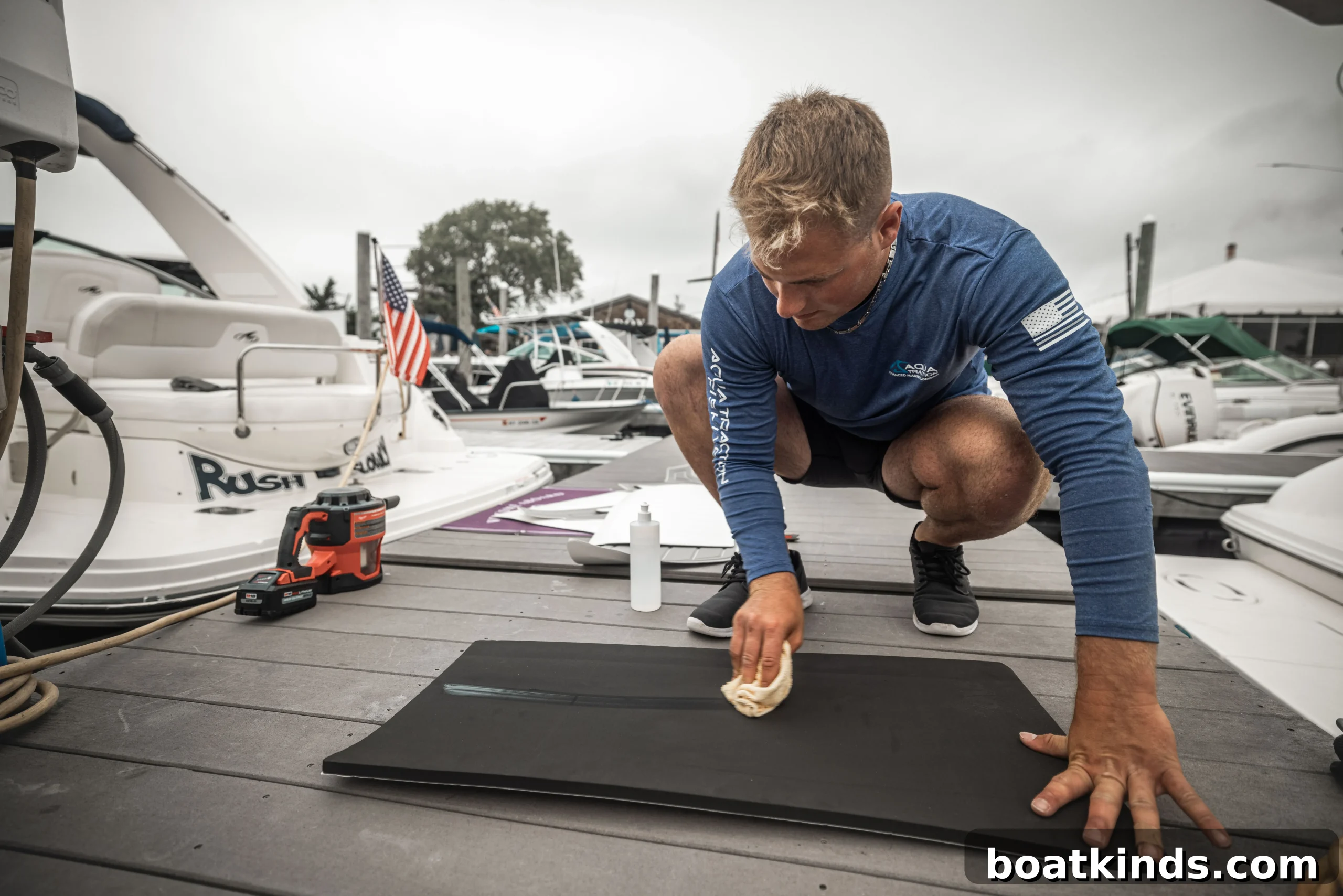
Aquatraction’s solution uses xPE (cross-link polyethylene) foam, which the company developed to deliver higher density and improved durability compared with traditional EVA. The xPE formulation is designed to resist ultraviolet fading, repel stains and shed dirt and biological residues like fish slime—making cleanup easier with biodegradable soaps. The brushed surface provides a soft, comfortable foot feel similar to EVA but with enhanced slip resistance, particularly when wet. Aquatraction also emphasizes an adhesive backing engineered to bond securely to fiberglass, painted and metal decks for years while allowing eventual removal without damaging the underlying substrate.
“We set out to push the bar with an xPE flooring material that stands up to fishing abuse and cold-weather challenges,” says Clymer. Aquatraction’s business model centers on a network of authorized, trained dealers and a streamlined manufacturing process. Tanner Ouellette, the company’s marketing director, notes that Aquatraction now has 57 dealers nationwide and that their products originally targeted commercial and sport-fishing markets—tuna boats in the Northeast and salmon boats in Alaska—where durability and slip resistance are essential. Over time, the product’s balance of toughness, aesthetics and foot comfort drew recreational boaters as well.
Research by the company indicates a clear link between polyethylene content in the foam and long-term performance. Some competitors have added polyethylene to EVA blends to boost durability; Aquatraction built its platform around xPE from the start. The result is a marine flooring option that withstands harsh environments, resists staining, and requires minimal maintenance—benefits that appeal to both commercial operators and pleasure-boat owners seeking an upgrade.
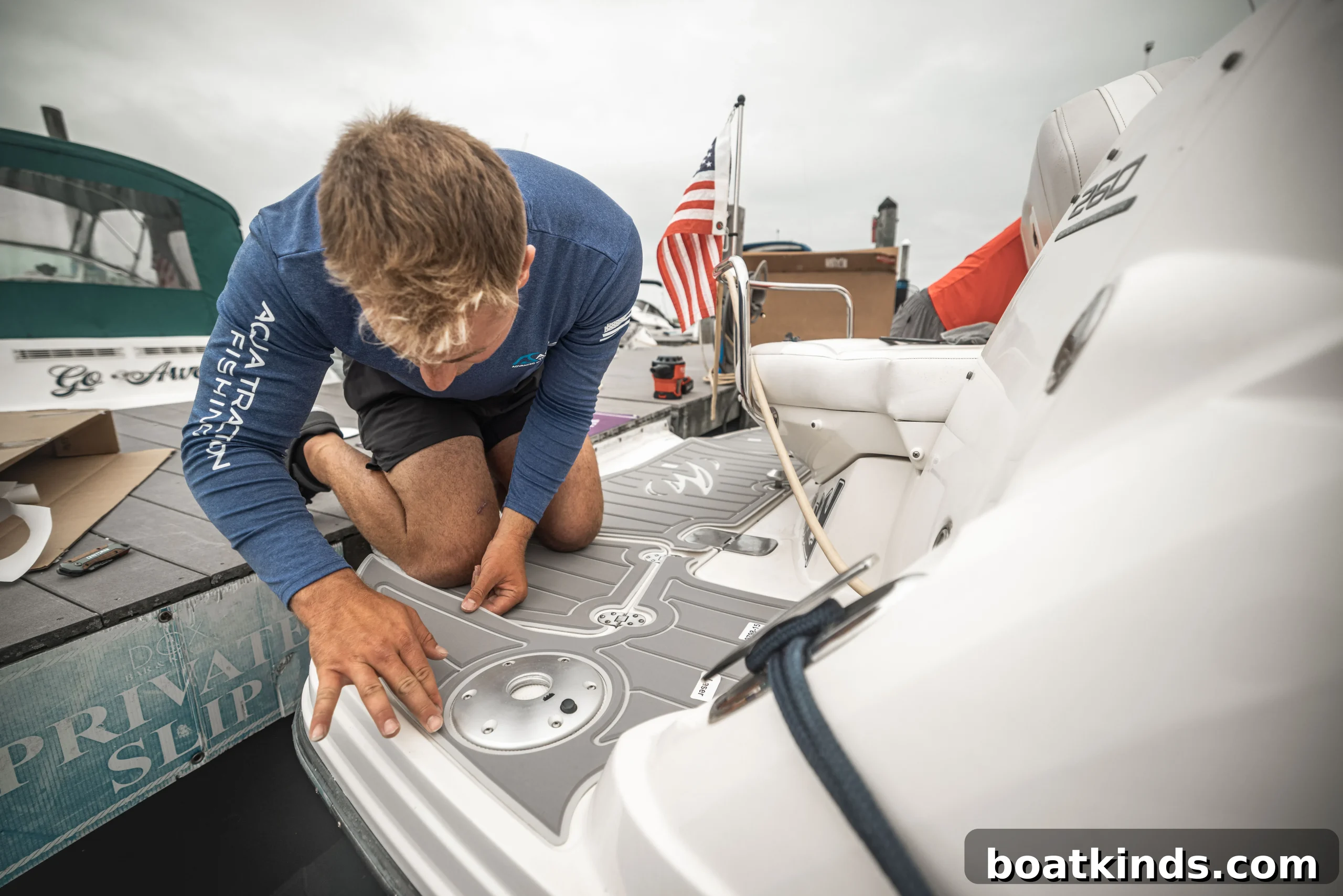
Most Aquatraction sales today come from aftermarket installations rather than OEM fits, reflecting growing interest among owners who want to modernize and improve comfort without replacing their boats. The installation process is fully customized and begins on the company website, where prospective customers can view color and pattern options, find local dealers and request samples. From there, an authorized dealer provides a quote based on boat size and the desired coverage, then performs precise digital measurements.
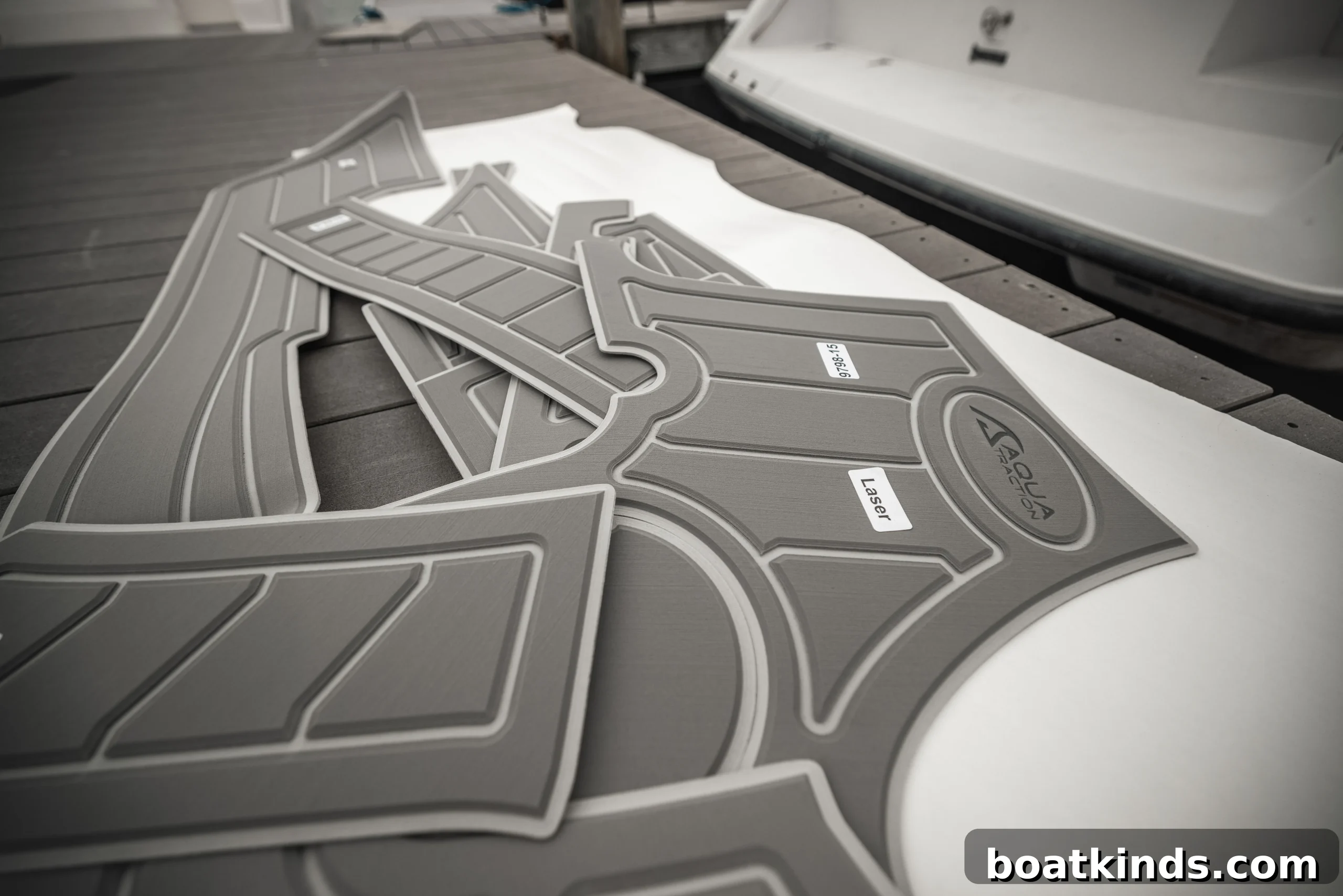
The measuring system collects roughly a thousand reference points to deliver industry-leading tolerances—reported at about 1/16th of an inch—around hatches, deck plates and hardware. Those digital files are transmitted to Aquatraction’s manufacturing facility, where technicians create a detailed blueprint of the finished deck for customer approval. Once approved, the material is cut with computer-driven CNC routers and lasers, and custom options like engraved boat names can be added. Typical turnaround from approval to shipment to the dealer is about two weeks, after which the dealer schedules the installation.
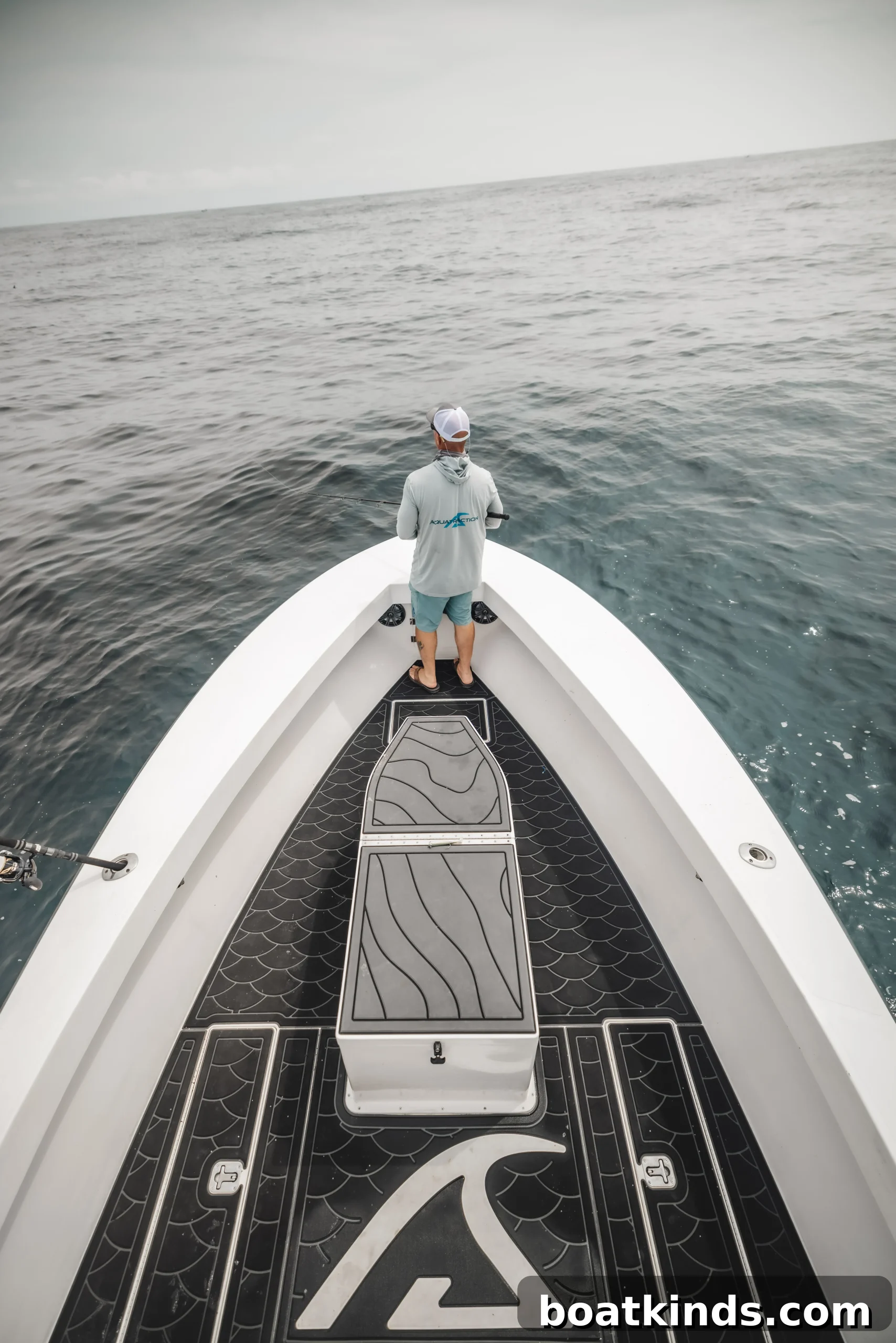
Owners who have installed xPE-based flooring report dramatic improvements in safety, cleanliness and onboard comfort. For example, a charter captain recently upgraded his 35-foot Contender with Aquatraction on deck and gunwales; the floor not only gave the boat a refined, custom look but also enhanced traction and reduced fatigue for anglers during long days on the water. Installations like that demonstrate how modern marine flooring provides tangible benefits—improving aesthetics while increasing functionality and ease of maintenance.
If you’re considering a flooring upgrade, evaluate material composition, UV and stain resistance, adhesive performance and the installer’s measuring and fabrication process. Well-engineered xPE solutions offer a compelling blend of durability, slip resistance and comfort that can transform a boat’s appearance and practicality without altering its structure. For many boat owners, the move from traditional nonskid or carpet to high-quality foam decking is an investment that pays off in enhanced safety, easier upkeep and a more personalized, comfortable riding experience.